Related Posts

The recent wildfires in Los Angeles are now among the most destructive recorded in California’s history. Thousands of structures have been damaged or destroyed, and many families are facing the heartbreaking loss of their homes, businesses and personal belongings. The fires have also tragically claimed lives and caused significant injuries. In the wake of such devastation, the immediate priority for everyone is, of course, ensuring the safety and well-being of themselves and their loved ones. As communities come together to navigate this challenging time, we are committed to being a resource to consumers. Our hope is to help those impacted by the fires preempt or prevent potential impacts to their financial health and identity where possible. If you or someone you know has been impacted by the Los Angeles fires, here are some key points to keep in mind. 1. Safeguard Your Identity Natural disasters can unfortunately create opportunities for identity theft. Important documents containing personal information may be lost or scattered. According to the Federal Trade Commission, instances of identity theft have nearly tripled over the last decade and scammers often exploit chaotic situations and vulnerable consumers. Be Wary of Scammers: Sadly, following natural disasters, opportunistic fraudsters often deploy schemes tied to charity and donations, insurance, new financing, construction or clean up, and more. These perpetrators may lift and deploy tactics that were successful following natural disasters in other areas and deploy them to target those impacted by the LA wildfires. Stay vigilant against fraudsters who may try to steal your personal information or money through disaster-related schemes or offers that sound too good to be true. Use Free Credit Monitoring and Fraud Alerts: Take advantage of these services to keep an eye on your credit activity. If you notice anything suspicious, report it immediately to your bank or financial institution. Consider Freezing Your Credit: If your personal information has been compromised, freezing your credit with the three major credit reporting agencies can prevent new fraudulent credit applications. You can freeze your credit for free with Experian by clicking here or enrolling in its free app on your mobile device. 2. Contact Your Lenders In times of crisis, many financial institutions are willing to work with affected consumers. If you’re worried about paying your bills on time due to the fires, reach out to your mortgage, auto loan, and credit card companies as soon as possible. Your lenders can report accounts as deferred or in forbearance if you live in an area impacted by the fires. This means no late payments will be reported, allowing you to focus on immediate concerns. However, interest might continue to accrue on the balance, so be sure to understand the terms of any agreement. 3. Use Your Credit Report as a Financial Tool Tracking down contact information for each of your lenders can be overwhelming. Your credit report, which you can access for free at annualcreditreport.com or via the Experian website or its free app on your mobile device, can be a helpful starting point. While, understandably, protecting your credit history or identity may not be your immediate concern, taking a proactive approach could help prevent any or further damage to your financial health at a time when you need access to credit the most. For more tools and resources to protect your credit standing and financial health, please visit Ask Experian.
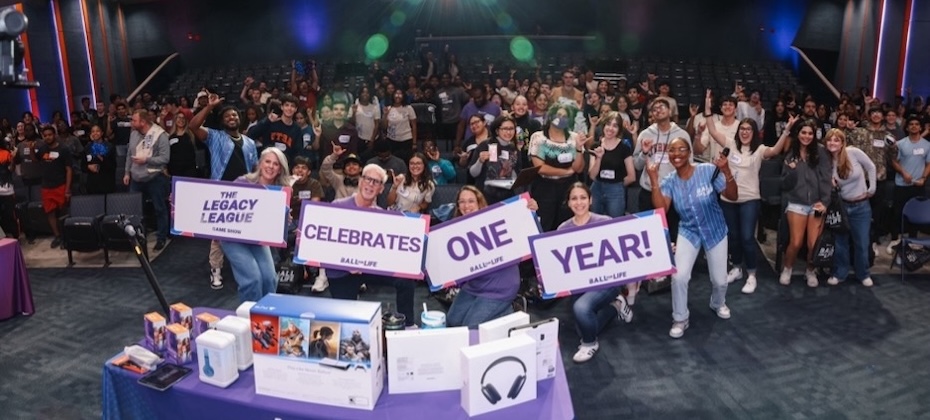
Experian is celebrating the one-year anniversary of The Legacy League Game Show™, a dynamic and interactive event that has revolutionized financial literacy education for students at Historically Black Colleges and Universities (HBCUs) and Hispanic Serving Institutions (HSIs). This innovative program, part of the B.A.L.L. for Life™ initiative, combines the excitement of a game show with essential lessons on credit and financial management. We marked the occasion where it debuted in 2023: at EntreprenUTSA at the University of Texas San Antonio. The Legacy League Game Show™ has traveled to ten universities such as Morgan State and Shaw Universities and major events across the United States. The National Urban League describes the event as transformational; HomeFree-USA calls it a “model for how to teach anything to Gen Z and other generations.” Thousands of students have participated across the country, and more than 99% report an increase in their financial literacy after the experience. As someone whose family didn’t discuss money matters growing up, this impact is especially gratifying. In addition to making learning fun, The Legacy League Game Show™ addresses a critical issue: financial invisibility among young consumers, particularly within communities of color. Forty percent of consumers under 25 are credit invisible, with 26% of Hispanic and 28% of Black consumers affected, compared to 16% of their white and Asian peers. Special guests, including rapper and college basketball standout Flau’jae, comedian and actor Mike Merrill, Louisiana State University wide receiver Chris Hilton, Jr. and Grammy-nominated D Smoke have joined the game show, adding star power and excitement. Next year, The Legacy League Game Show™ will hit the road again, visiting more schools and events. We already have stops planned at the #IYKYK Pitch Competition in partnership with HomeFree-USA, the University of Illinois in collaboration with the Hispanic Alliance for Career Enhancement (HACE), and the UnidosUS National Conference. Check out the action from our 2024 stops by clicking here.Learn more about Experian’s commitment to underserved communities in The Power of YOU 2024: Diversity, equity, inclusion and social impact report.

Modernizing the conversation around credit and financial literacy is a key commitment for Experian, especially for young adults. That’s why we partner with organizations like the Singleton Foundation to produce “Your World on Money,” to meet young people where they are, with engaging, easy-to-understand video shorts about credit, budgeting, and saving and more. We’re thrilled this commitment and creativity has earned both Gold and Bronze Anthem Awards, which recognize excellence in social good, celebrate the impactful work of organizations and initiatives that are driving positive change. Financial literacy is often not taught in schools, and the language around credit and personal finance can be intimidating. By normalizing these conversations, we hope to inspire confidence and action, helping young adults make informed financial decisions as they navigate life’s milestones. Our United for Financial Health partnership with the Singleton Foundation continues with our new series, the Finance Couch, where college students join our experts on a coach in the middle of a Los Angeles campus to answer their money questions. And our Anthem Award-winning series, HeartBroke, helps couples whose relationships are tested with financial issues to determine if they can work through it or end up HeartBroke(n).

Harnessing Generative AI for Financial Success: Transforming Financial Literacy and Health in the Digital Age
Financial EducationThroughout time, we’ve seen examples of how new technologies can reshape the way we live our lives and manage our finances. As a millennial, the standouts to me are the start of the internet and the rise of the smart phone and mobile banking. Each innovation has opened new ways of learning and simplifying the way we do things. Now, we find ourselves on the brink of another intriguing shift with the rise of generative AI. This development is especially timely, as we know consumers are hungry for information and resources to improve their credit scores and overall financial health. To get a better sense of how consumers are tapping into this technology, we deployed a survey which showed a significant number of Americans are already embracing generative AI. In fact, 63% of consumers are familiar with generative AI, including 84% of Gen Zers and 79% of millennials. Having learned about finances through trial and error (an approach I wouldn’t recommend), and now dedicating myself to consumer education advocacy, I find this incredibly exciting. Especially considering many consumers, nearly half, are also beginning to tap technology to help manage their personal finances. It’s perhaps no surprise this resonates most for America’s youngest consumers, with 67% of Gen Zers and 62% of millennials stating they use or are considering to use the technology to manage their personal finances. The good news is consumers who are using the technology for personal financial management are reporting an overwhelmingly positive experience – an impressive 96% reported positive experiences and 77% stated they use generative AI for personal financial tasks at least once a week. Key findings include: FINDINGSTOTALGEN Z (18-27)MILLENNIAL (28-43)GEN X (44-59)BOOMER (60-78)SILENT (79+)Indicate they are somewhat or very familiar with GenAI technology63%84%79%58%40%29%Indicate using GenAI to learn about a new topic or personal finances33%46%43%28%19%18%Indicate they are using or considering using GenAI powered tools or apps to help with managing personal finances47%67%62%41%28%23% As we continue to explore the benefits of generative AI, it’s clear this technology can be a valuable resource for improving financial literacy as we look ahead. We believe that the responsible use of AI can open new opportunities for consumers seeking to enhance their financial health. However, as with anything new, there are a few things consumers should keep in mind if they are currently leverage, or considering leveraging generative AI to learn about or manage their finances or credit scores, including: Don’t forget the basics: While there’s no question generative AI can be a helpful tool for managing your finances, consumers shouldn’t lose sight of the “old school” ways to protect their financial health and credit standing. This includes checking your credit report and scores regularly. You can get a free copy of your Experian credit report and FICO® Score[1] updated daily at www.experian.com or via Experian’s free mobile app. Consumers can also get a free credit report from each of the three credit reporting agencies once a week at www.annualcreditreport.com. Verify your findings: Generative AI tools are only as good as the information they consume and there’s no shortage of misinformation about managing your credit scores and finances that exists online. Always cross-check AI-generated financial advice with reputable sources. You can find answers to many personal finance and credit-building questions on Ask Experian—Experian’s free credit advice blog. Be safe and use generative AI responsibly. Many of the generative AI tools that exist today collect and store user data. Be mindful of the personal information you share with generative AI tools to ensure your information is protected. In short, the rise of generative AI marks a pivotal moment in personal finance education, and an exciting one for me. As we embrace this technology, I believe we can create a more informed and financially empowered consumer base. [1] Credit score calculated based on FICO® Score 8 model. Your lender or insurer may use a different FICO® Score than FICO® Score 8, or another type of credit score altogether. Learn more.

We believe that financial literacy leads to empowerment. That is why Experian supports initiatives and partners with community organizations to deliver financial education. We also develop products and services that give more control to consumers over their credit profile and financial health. As part of advancing our mission of Financial Power to All®, we are proud to announce we are helping more than 5,000 Hispanic individuals nationwide by relieving $10 million dollars of consumer debt. To provide families with this boost, we joined forces with ForgiveCo, a Public Benefit Corporation (PBC), to administer the acquisition and cancellation of qualifying consumer debt for the selected recipients. Beneficiaries will also receive a one-year premium Experian membership for free that offers access to their Experian credit report in English and Spanish[i], FICO® Score[ii], bilingual educational content, and other financial resources. We hope this effort helps raise awareness of the importance of financial literacy for everyone, and that Experian has resources to help individuals reach their financial dreams. To amplify the message, we collaborated with multi-platinum, award-winning singer and songwriter Prince Royce and you can see his video here. In fact, we have been making a concerted effort the last several years to evolve our educational resources and products to better support all underserved communities. Some of our other activities include the creation of the B.A.L.L. for Life initiative that connects African American and Hispanic youth with financial education, supporting scholarships for Asian Americans through the Ascend organization, providing custom resources for Out & Equal and Born This Way Foundation for the LGBTQ+ community, supporting the NextGen Innovation Lab for Disability:IN, and sponsoring credit counseling for the military community with Operation HOPE. For resources in Spanish, Experian offers a credit e-book and consumers can access a full suite of articles at the Ask Experian blog here. [i] Only Experian credit reports are available in Spanish. All other services associated with an Experian membership are available in English only. English fluency is required for full access to Experian’s products. [ii] Credit score calculated based on FICO® Score 8 model. Your lender or insurer may use a different FICO® Score than FICO® Score 8, or another type of credit score altogether. Learn more.

Increasing Financial Literacy is Key to Helping People Make Smart Money Decisions in Turkey #ExperianStories
Diversity & InclusionIn 2012, employees across Experian’s Turkish office began a program to promote financial awareness and education for young people ages 18-30, which we called the Manage Your Future Now Project. For young people pursuing higher education in universities, financial literacy is a required life skill, especially since many depend on educational loans and credit cards to pay for their education. Bad loan management resulting in a poor credit score can hurt the financial future of these students. We found that most local universities lack the human resources necessary to train students on the topic. We decided that the best way to promote financial literacy was through a peer education model. Using this model, we would train volunteers to help their fellow students calculate their credit risk, manage their budget and understand the long-lasting effects of bad credit. We partnered with the Turkish Credit Bureau, the United Nations Development Program (UNDP) and the Happy Thought organization to launch the program. With our partners, we provide a two-day training session for student volunteers in Istanbul. We give our volunteers the resources and tools they need to train others on financial risk, while also training them on how to present the same materials to others. These volunteers then go back to their local communities to train their peers through one-on-one sessions, or – if they generate enough interest at a university – organize a conference where they invite Experian experts to share their knowledge with a group of 100 or more students and faculty. The Manage Your Future Now Project has become a leading contributor in improving the financial skills and knowledge of young people and improving the financial literacy rate throughout Turkey. Since we began the program, we’ve reached more than 8,500 people and offered more than 100 training courses at universities, carried out by our growing number of volunteers. For me, the most rewarding part of this project is helping inspire and equip these students. I recently traveled to a university in Turkey as a speaker, giving a financial literacy conference to about 200 people. After I taught them about their credit scores and ways to secure their financial futures, one of the students came up to me, telling me how passionate he was about financial education and how eager he was to become a peer volunteer with the Manage Your Future Now Project. Our team at Experian was able to help convince his family to let him join the program so he could attend a training session and become a speaker in that city. To date, he has met with and educated more than 100 fellow students, guiding them through the program’s tools. Understanding how finance works has a huge impact on people’s daily lives, because it’s relevant for both their present and future welfare. It’s amazing to see year after year how we are helping change people’s lives in Turkey, by opening new doors for them as they understand how to manage credit.

Big Data & Analytics Are Helping Businesses Mitigate Risk, Prevent Fraud & Optimize Marketing #ExperianStories
Data & AnalyticsI grew up in a major industrial city in Communist China just east of Beijing in a world where information was scarce. I was born into a pretty traditional Chinese family back in the 1960s and lived with my five siblings and parents in a small, crowded house. When the Cultural Revolution hit in 1966, the schools never officially shut down, but essentially nothing was taught at the time since students were expected to participate in the revolution. Throughout that period, almost all novels and movies were banned because they were not considered appropriate for educating students. But rather than causing me to lose my interest in learning, the ban led me to develop a habit for reading anything I could get my hands on, and my natural hunger for information grew. As my love for collecting and consuming information continued, I decided to become a data scientist. I moved to the U.S. to complete my Master’s degree and Doctoral Program. Today I work with “Big Data” at Experian, developing analytical solutions for financial telecommunication and insurance companies. What’s amazing to me about my job is the fact that 90 percent of the data in the world has been created in just the last two years. Data Scientists like myself retrieve, sift, analyze, process and store all the data according to a business or consumer’s needs. I believe that data tells a story; it’s business intelligence that can help an individual or business identify where they may need to change or adjust in order to move forward. For consumers, it can help them improve their credit scores and secure an affordable loan. It can help protect identities by detecting and stopping suspicious activity. For businesses, the data can mitigate risk, help prevent fraudulent transactions or even ensure they’re marketing to proper audiences. I believe that data has the power to transform lives and societies for the better. My job is to help clients and consumers understand the story of their data so they can take financial control, achieve their goals, and help meet the needs of customers. I have always told myself, “no matter the situation, do your best.” For me, doing my best is using this lifelong passion to help others succeed.

Using Alternative Data to Help Small Business Owners Access the Business Loans They Need #ExperianStories
Data & AnalyticsWhen it comes to credit for small businesses, it’s a classic chicken-and-egg situation: you can’t get credit until you have credit history, and you can’t get credit history until someone grants you credit. I know this first-hand because my own parents were small-business owners in California. My parents had built an independent insurance agency. I distinctly remember as a kid sitting in the backseat of our car and overhearing the discussions they would have about their struggles to grow the business or how they would make payroll that month. Many small businesses don’t have access to small-business loans or business credit cards, so they rely entirely on the business owner’s personal credit to make purchases. This means that while there may be a credit history for the individual, there is none for the business itself. This also means that whenever my parents needed money to get through the month, they essentially had to put their livelihood at risk because there was no separation between personal and business loans. The lack of access to funds, and the consolidation happening in the insurance industry at the time, led my parents to take another big risk – they sold the business and our house, and they liquidated their retirement accounts and put everything into a restaurant franchise. They felt there would be more stability representing an established brand owned by someone else. When I graduated from my MBA program years later, one of the things that first attracted me to Experian was the opportunity I had to ease the burdens of small business owners through my work here. The work I do really hits home, because I’m working every day to open up small-business credit, using different types of data. In today’s economy, a lot of great business ideas – profitable ones, at that – never get a chance to see the light of day simply because they don’t have the capital they need to grow. Experian is making business ideas a reality by gathering, analysing, combining and processing a breadth of new data that allows us to develop credit scores for more people and paint the most realistic picture of a situation. By verifying a business’s history, its social media accounts, its website sophistication and traffic, and customer reviews, we can measure a small business’s legitimacy, how long they’ve been operating and how they’re growing. This information, coupled with transaction data, all help determine a business’s credit worthiness and allow us to give its owners greater access to capital. Data is a huge enabler for positive change because it can give small-business owners access to credit that they wouldn’t receive otherwise. When used in the right ways, data can empower and enable small businesses to get the funding they need to hire employees, invest in their business or open a new location. In many ways, I’m helping people just like my parents.

Spring clean your credit during Financial Literacy Month with our finances in order. #FLM2017 is dedicated to teaching Americans healthy credit habits.

Alternative Data is Key to Helping People Build Credit Scores & Qualify for Loans #ExperianStories
Experian StoriesAbout a year ago, my colleague Natalia invited me to join her in a new volunteer opportunity with the Ministry of Housing in Colombia. The Ministry had created a new program called Mi Casa Ya – which means in English “My Own Home Now,” to help people in Colombia own their first homes. Excited and eager to lend a hand, Natalia and I introduced ourselves to Alejandro, the Director of the National Housing Fund at the Ministry of Housing. Alejandro told us how an unexpected roadblock threatened to derail the program. He had created Mi Casa Ya so that even the poorest people in the country could get a government subsidy to purchase a home. To get the subsidy, they just needed to qualify for a mortgage from a local bank. But that was the problem. In order to get the bank loan, applicants needed a strong credit history. Yet most of the people looking to take advantage of the subsidy through Mi Casa Ya, he explained, were considered “credit invisible.” That is, they had no viable credit history, thin or un-scoreable credit files, or they simply had bad credit. So banks had no choice but to reject them. Natalia and I heard the frustration in Alejandro’s voice, and we knew just how we could help. We told Alejandro that if the Ministry could determine which individuals were being rejected by the banks, we could come in and build credit scores for them using Experian’s data. You see, building credit histories is the sort of thing we do every day at Experian. Over the years, Experian has innovated with analyzing traditional and alternative data sources, such as public records and magazine subscriptions, to create the most accurate and realistic picture of someone’s credit. And by unlocking the power of this data, we are able to identify the data sets that can help lenders make better decisions when making loans, especially for people with thin credit files. Working with Natalia and Alejandro for Mi Casa Ya over the past year has been incredibly rewarding – and our work here isn’t done! Since I work in the legal department at Experian, I am now involved in reaching an agreement with the Ministry of Housing to help advance this project. The details are tricky and the process is tedious, but when I think about the people whose lives we have the ability to transform, I just get excited. Because of our work, many more families in Colombia will be able to fulfill their dream of owning their own homes – that’s huge.