- This mission is deeply personal to me. I was born in the United States but spent my formative years in Taiwan, where credit was not part of everyday life. When I returned to the United States for college, I realized that being financially responsible did not automatically translate into having a strong credit profile. I was fortunate that credit did not stand in my way, but that uncertainty stayed with me and shaped my perspective.
- That experience fuels my passion for building tools like EVA. Financial health shapes where we live, what we can plan for, and how secure we feel. Yet managing money and credit can still feel complex or intimidating. EVA helps cut through that complexity by meeting people where they are and adapting in real time to their needs with guidance that feels clear and relevant.
- Improved targeting and personalization: Demographic segmentation powers highly customized campaigns so you can cater to different income levels, family structures, job types, and so forth. B2C brands can provide offers based on factors like age, income, and gender, while B2B brands can target by occupation to reach decision-makers.
- Better product and service development: Understanding which demographics use your product or service is a great way to inform future improvements.
- Higher engagement: With highly customized content, you can speak directly to specific demographic groups and increase engagement.
- Cost efficiency: As you target the most relevant segments, you optimize your spending around the most likely buyers and will see better returns.
- Increased conversion and retention: Relevant, targeted messaging leads to higher conversion rates, and when people feel understood, they’ll want to keep coming back.
- Clearer customer insights: Demographic data provides precise, actionable insights for refining your marketing strategy.
- Simplicity and effectiveness: Demographic insights are immediately actionable and easy to implement, which gives you a great starting point for focused campaigns

Digital transformation is dramatically changing the way consumers and businesses interact. E-commerce and social media are setting the standards for digital experiences. The advance of fintech is driving competition. All while fraud reaches an all-time high, prompting an ever-stringent regulatory framework. This confluence of emerging technologies and intense competition adds even more pressure to grow business faster. In such a scenario, growth is fueled by acquiring more customers – those with whom you can build lasting, valuable relationships over time. However, traditional approaches for customer acquisition no longer suffice. As a business leader, how do you tackle these challenges? What can you do to attract and acquire new customers? To help answer these questions, we commissioned Forrester Consulting to survey over 900 key decision makers across industries. What we found is that getting actionable insights from complex data sources to make consistent, precise decisions is still a major challenge. The majority of executives also indicated that not having a single customer view had a direct impact on profitability. They struggle to make accurate decisions that are both meaningful for consumers and profitable for business. To overcome these challenges and realize their strategic priorities, businesses of all sizes are increasing their investment in advanced analytics and decision services. We understand that the current market environment can be daunting. But with challenges come new opportunities. We can help you modernise your digital decisioning approach to enable precise and profitable lending decisions across the life cycle. Using a unique blend of best in class data, advanced analytics and digital decision strategies you will know your customer better. As a result, you can, deliver the experiences they demand and make lending decisions with less risk. Download the executive summary of our Global Decisioning Report 2018 and discover how businesses of all sizes are leveraging data, advanced analytics and digital decisioning to better serve customers and future-proof growth.
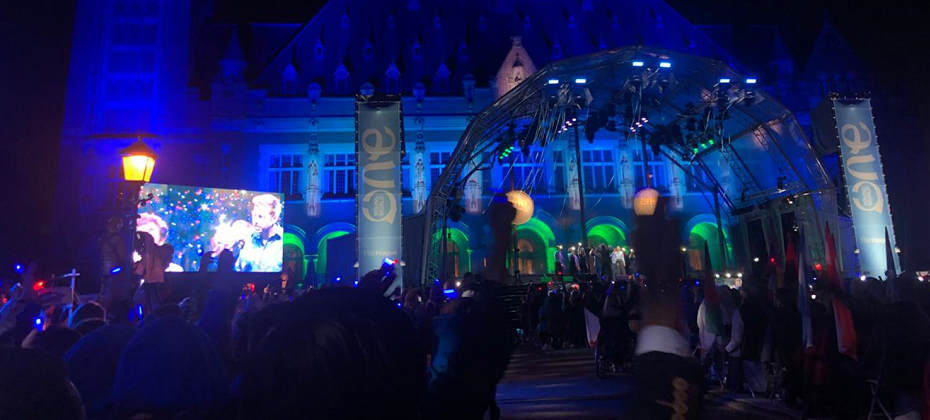
We’re committed to creating a better tomorrow for consumers, clients, our people and our communities. Experian enables life’s biggest moments and ambitions through the confident use of data. We’re unlocking the power of this data to help people access the essentials they need to fulfil their life ambitions. As the world’s largest credit bureau operator, we have an important role to play in enabling access to finance for millions of people who could otherwise be excluded from mainstream credit and services. We help people prove who they are and build a strong financial track record. Our data and analytics also gives lenders – our clients – the information they need to make fairer, faster decisions for people who are applying for credit. We deliver our purpose through our core business activities, our social innovation products and solutions, and our corporate responsibility (CR) programme. One of these initiatives is the annual One Young World competition. One Young World was founded in 2009 with the intent of bringing together young talent from around the world who are passionate about creating social change to address the most pressing issues the world faces. For the sixth year, Experian is proud to support One Young World and every year, we send five ambassadors, one from each of our regions, to attend the summit. To become a One Young World Experian ambassador, employees were asked to submit a proposal for a new product, partnership or initiative that supports our brand purpose of Creating a Better Tomorrow. The winning submissions, one from each region, were selected to become ambassadors. Over the coming months, they will work with employees across the organisation to bring their ideas to fruition. Meet the five Experian ambassadors we will be sending to the summit in October and the projects they will be driving throughout the year to create a better tomorrow. Be sure to follow @Experian on Twitter as we’ll be posting live updates from the event in October! Jessica Childs Jessica works in the Experian Marketing Services – Product Team in North America. She has worked at Experian for almost two and a half years. Last October, she went to Puerto Rico and the Virgin Islands to help people upended by the hurricanes. This experience inspired her to think about how Experian can use data to help people who are at the highest financial risk after natural disasters. Her project is made up of two parts: preparing for a disaster and understanding the financial risks posed by natural disasters; and disaster recovery which involves providing tools and resources to be successful after a natural disaster. “I am so excited to be selected as one of Experian’s 2018 One Young World Ambassadors and to continue my work that I started almost a year ago to help victims of natural disasters who are at the highest financial risk. The amount of natural disasters continues to increase year-over-year and while there has been an incredible outpouring of volunteers and support, there is always more to be done to not only educate those at risk, but also identify victims and help mitigate the inevitable financial repercussions.” Tanya Kostadinova Tanya is part of Decision Analytics, based in Bulgaria. She has worked at Experian for a year. Early this year, Tanya participated in a giving back day, organised by the Experian CSR team in Bulgaria, to paint houses for orphaned children and children in foster care. Inspired by what she saw, her idea involves creating an application for these children to give them the best start in life. The application would include information about their labour and healthcare rights, financial advice, advice on how to find a job, and this information will be presented in simple videos and easy-to-follow quizzes. “I am very happy and excited to be working on my project. I believe this idea will increase financial education and will help these vulnerable groups of people. In this way, we will create a better tomorrow not only for them but for all of us as society.” Larissa Alfino Larissa is part of our Internal Communications team based in Brazil and has been at Experian for a year. Larissa’s project is called Open Windows, it’s a global project aimed at promoting socioeconomic empowerment for refugees by breaking down social barriers, providing essential advice and helping them to gain access to credit and social services. This information would be served through an app allied with a network of partnership with financial and social institutions for a healthy social integration. “I am honoured to have the opportunity to be part of Experian’s One Young World Ambassadors and connect with other young leaders to create a better tomorrow. Many refugees are living extremely tough lives and Open Windows would be a simple and affordable way to help financially empower them.” Laura Thomas Laura is part of our Community Involvement team in the UK&I and has worked at Experian for almost 18 months. It’s predicted that there are over 40 million people trapped in modern slavery across the globe and Laura’s idea focuses on how Experian can help find and support these people. The projects aim is to develop the Experian Modern Slavery Assistance Programme – a collection of products that could be used in partnership with anti-slavery charities to identify people being kept in slavery and help rebuild the financial identities of those freed from slavery. “I am so pleased and excited to have been selected as one of Experian’s One Young World Ambassadors for 2018. It’s an amazing feeling to be chosen and I’m eagerly anticipating all that the summit has to offer.” Jasmine Rodil Jasmine is a Product Management Associate in the Credit Services Product Management team, based in Sydney, and has worked with the company for three months. An estimated 39 million people living in India are pushed into poverty each year because of healthcare expenses (a figure that is expected to rise) and Jasmine wants to do something about it. Her vision is to create a Health and Wellness indicator to improve a person’s ability to afford and access healthcare in India. The project would involve using data to look at the patient’s journey to access healthcare and the issues they face and suggest actions to gain access to quality healthcare and health insurance. “I am not only grateful to have been selected as one of Experian’s 2018 One Young World Ambassadors but I am proud to be amongst such a talented and amazing cohort of people with the same passion as myself, to drive change.” Our Ambassadors are currently collating their top takeaways on this year’s One Young World summit in the Netherlands – we’ll be updating this blog with those insights very soon so make sure you come back to have a read about their experience.

This article is by Michele Bodda, general manager of Experian Mortgage, and co-sponsor of Experian’s PRIDE employee resource group (ERG) Like most of us in the LGBT+ community, my coming out story is more like an unfinished novel than a tightly worded chapter in a book once read and forgotten on a bookshelf. It unfolded over the years. I wasn’t always confident enough to be fully out, but I never pretended to be something I wasn’t. For me, there wasn’t a day of reckoning or a loud declaration. I arrived at this point over the years, and there were two pivotal incidents that served as catalysts for me. First, after working at Experian for several years, a male colleague stunned me when he said his feelings were hurt that I didn’t trust him enough to bring my whole self to work. I was dumbstruck by his frankness and desire to know the real me. And second, I realized I couldn’t ask my children to go through life with two moms confidently and comfortable if I wasn’t truly authentic in every aspect of my life as well. For me, coming out happens again and again. I will always need the quiet confidence to say, “I’m a mom, a daughter, a friend. I’m an executive. And yes, I am gay.” When Experian asked me to lead our company’s LGBT+ ERG, I took a moment of pause. Yes, this was a big decision, but ultimately, drawing on that confidence, it was an easy decision to make. In light of the 30th anniversary of National Coming Out Day on Oct. 11, I want to assure people wondering if acknowledging diversity is significant, it is. The difficulty some of our LGBT+ colleagues face making daily decisions about where they can be fully present aren’t merely insecurities. They are the realities of being LGBT+. No federal law exists protecting the rights of employees from discrimination based on sexual orientation or gender identity in the United States. In 28 U.S. states, employees aren’t afforded state-level protection for sexual orientation, meaning they can be fired for being lesbian, gay or bisexual, and it’s even worse for transgender members of the workforce. The fear is real for many members of the LGBT+ community – but so is the motivation to seek change and create an inclusive workforce in America. Just imagine working in America if everyone felt as safe as I do to bring their whole selves to work? The mental and emotional energy I expended hiding my whole self from my colleagues many years ago saddens me. Could I have bonded with others quicker, positively affecting team performance and achieving goals faster? Could I have helped someone else know it was OK to be fully themselves at Experian and watched them confidently come into work every day? Today, I’m not raising my voice for myself. I’m raising it on behalf of talented LGBT+ employees across the country and to tell business leaders that the economic results they’ll receive by instilling and nurturing inclusion is worth it. According to research presented at Deloitte’s IMPACT 2017 conference, organizations with inclusive cultures are six times more likely to be innovative, six times more likely to anticipate change and respond effectively, and twice as likely to meet or exceed financial targets. It’s the right thing to do. I feel fortunate to have spent the last 20 years at a company that is overt in saying it’s OK to be who you are: You are not only welcomed here, you belong here.
Related Posts

Having a diverse workforce is vital to help us innovate and deliver on the needs of our increasingly diverse clients and consumers. Over the years, we’ve made some great progress, but there’s so much more we can do and it’s going to take the collective effort of all of us to continue to move the needle. That’s why we’re gearing up to celebrate International Women’s Day (IWD). It’s a day celebrated in many countries around the world to recognize the achievements of women and drive equality among men and women. At Experian, IWD activities are extending throughout the month of March. Have a look at what’s going on around the world as Experian celebrates this important day: Asia Pacific The Asia Pacific region is hosting a range of activities across our offices in March, which will include round-table and speaker events as well as an opportunity to network and pledge their support for IWD. EMEA and UK&I EMEA and UK&I are joining together for IWD to support and celebrate diversity and inclusion. The week started with a video of employees from both regions reflecting on what diverse teams bring to our business. Employees will also be invited to a variety of events to engage and network with inspirational women and hear stories from our leaders on what diversity means to them personally. Latin America Throughout the month of March, Latin America has been running a campaign to share stories of achievements in their region and raise awareness about breast cancer prevention and other diseases more common in women. On IWD, there will be a panel of women leaders who will address issues such as the social inclusion of women in the region, women’s participation in the labor market, Experian’s commitment to female leadership and the importance of a work/life In Brazil, IWD is kicking off with a presentation by members of the United Nations to present their 50-50 Gender Equality program (which aims to eliminate gender inequalities by 2030) and how they are working with companies around the world to achieve this vision. Employees will have an opportunity to hear from leaders in our business about diversity and inclusion plans for the region, and listen to a panel of external speakers discuss diversity challenges and career development. North America Our employees in North America will be kicking off the week with celebrations across their ITS’ 13 offices in the region. Each office will have daily activities throughout the week, and all employees – including virtual and those based in smaller offices – will be invited to attend webinars focused on Diversity and Inclusion topics. On IWD, there will be panel discussions with senior leaders who will speak on various career development topics. To close out the week, there will be a special Book Club discussion on March 9. We will continue to update this blog post all week with pictures and other ways we’re celebrating IWD. Bookmark this page and come back.

I work at SEGA, a global games company. I first met Nakamura-san, my contact at Experian, about eight or nine years ago. I remember telling him at the time that I was a little sceptical of credit report and analytic companies – I thought they were either too expensive or their reports weren’t detailed enough. However, a year later I needed help from a company like Experian, and I thought I’d put them to the test. My team and I were starting to communicate with overseas markets, to work with companies around the world. So, I phoned Nakamura-san. It was a business negotiation, so I had my poker face on – I played the usual mind games you have to, insinuating that if Experian did this job well then our company might be able to offer them even more business in the future. Safe to say, they passed the test. We’ve been building a really positive relationship with Experian for the last eight years. We’re working with companies in Hong Kong, Taiwan and London at the moment. To work with them, we need information – for instance, we need to know if they’re actually located where they say they are. Even if a company gives us an address, it’s always possible that it operates from a different country – we’ve all heard about companies and their tax havens. When we have these questions, Nakamura-san and his team at Experian collect and analyse data on these companies, and give us very thorough information – breaking it all down and explaining everything to us really clearly. It’s really difficult to get the rich, detailed analysis of data you need, but Experian provides us much better data than any of our previous credit research companies managed to. They consult with us, and help us use this data to get our business to a better place. I’m very grateful for it – they’ve added great value to our business. Mr. Shinji Mutazono, Team Manager, SEGA Group Companies Finance Department, SEGA Holdings CO., Ltd.

In Malaysia, nearly 280,000 people live without electricity. By volunteering with the Liter of Light program, we’re bringing solar panel lights to remote villages, transforming the quality of life and brightening the darker hours for families. In Malaysia, more than 1 percent of the population lives without electricity – one of life’s basic necessities – which equates to nearly 280,000 people living in darkness after the sun goes down. Some people have never had electricity in their life, making simple tasks like cooking or reading nearly impossible after dark. I wanted to change that. My day job is to support and enable individuals within Experian to pursue various career opportunities, but what I’m most passionate about is the way Experian helps me invest in my local community through the Heart of Experian Corporate Social Responsibility program. This year, my team and I had the chance to collaborate with Liter of Light (LOL) – a global, grassroots movement committed to providing affordable, sustainable solar light to people with limited or no access to electricity. In February, we joined one of their projects to install 60 solar street lights in the village of Orang Asli, an indigenous community in the Cameron Highlands. Over the span of two days in February, a group of 30 Experian volunteers built and installed the solar panel lights. On the first day, the LOL team taught us how to build the panels, teaching us the skills needed to cut wire, assemble PVC pipes and drill holes. The second day, we rode in Jeeps through muddy roads and a three-foot deep river to reach the village. We spent hours unloading the lights and assembling the panel boxes, plotting the village maps and identifying the right spots to install the solar panel lights. I was happy to see some of the local villagers’ curiosity and participation throughout the day. Some helped us assemble the lights while others prepared the right spots for installation by building bamboo stands. The weather was kind to us, so by 5 p.m., nearly all the lights were installed – just before dark! After completing all the hard work, our team recorded a group video using a drone that all of the Orang Asli children chased after. Thanks to our service project providing light to a village in darkness, 150 villagers in Orang Asli will now have more productive, higher-quality lives during the dark hours of the day. I’m so glad I got to play a role in that.