Category: Innovation

At Experian, we are continually innovating and using technology to find solutions to global issues, modernize the financial services industry and increase financial access for all. Read about our latest innovation news below:

  • Here’s Why You Will Be Hiring a Data Scientist in 2016

    Eric Haller Inc

    In this article from Inc., Eric Haller, executive vice president of Experian DataLabs, discusses the data scientist role and why it is so important that many startups will likely need to hire one in 2016.

  • Data for Good: How Big Data and Social Media Can Help Small Businesses

    This Bloomberg Business Radio interview with Eric Haller, executive vice president of Experian DataLabs, covers Experian’s innovative approach to using big data and social media to help small businesses with credit verification.
    “The strongest value is for businesses that have not established credit in the past,” said Haller. “This is significant because one-third of all inquiries for commercial [lending] are businesses [without] established credit.”

  • Breakthrough Innovations at Experian’s DataLabs

    Haller

    In this article written for IT Business Net by Eric Haller, Executive Vice President of Experian’s DataLabs, he discusses how innovations at Experian DataLabs are using breakthrough experiments to do good things with data.

    According to Haller, Our world is filled with endless amounts of data. From credit card transactions to healthcare records to social media content, we are constantly surrounded by information that is vitally important to both ourselves and corporations around the world. While many companies are in the business of mining data for insights using time-tested algorithms and mathematical equations, few invest the resources to find new breakthrough data insights. This is understandable in many respects, innovation is hard – and not guaranteed to produce results, but it is exactly what we do in Experian DataLabs.

  • Dream Job: How I Became a Data Scientist

    ShanjiXiongThis Q&A interview that appeared on Monster.com with Dr. Shanji Xiong, Experian DataLab’s global chief scientist, discusses his career and provides advice for data scientist hopefuls.
    In this article, he talks about getting to use data for good to impact business and people’s lives. According to Xiong, being a data scientist is fun because data is alive. It talks to you and is always trying to tell you something about what is going on out there.

    View the full article here.

  • The Science of Big Data

    The Science Behind Big Data

    This article published in CIO Review magazine by Eric Haller, executive vice-president of Experian’s global DataLabs, discusses the science behind Big Data and how it can be used as a force for good.

    According to Haller, Big Data only becomes truly powerful when it is compiled, sorted, analyzed and manipulated – when it is translated into the language of business leaders and policymakers. And so the explosion of data has driven the emergence of fields built for the sole purpose of making data usable.

    View the full article here.


  • How We Make Big Data an Even Bigger Force for Good

    Through Experian’s long-standing partnership with the UCI Paul Merage School of Business, I had the pleasure of participating recently in UCI’s Distinguished Speaker Series. I spoke about the role big data plays in today’s economy, and how data is being used as a force for good.

    My message to the 300+ attendees was clear – big data is everyone’s business. And it’s only going to get bigger. We have 90% more data today than we had just 2 years ago. What will happen in the next 2 years, much less the next 10? As big data gets bigger, how can we use it in even better ways, as a much greater force for good in society?

    Where we’re headed

    In the next decade, I predict that:

    1. Every single industry – from food service to entertainment to technology to retail – will be using big data in some way. We’re moving quickly in that direction already. A recent Gartner survey found that three-quarters of companies plan to invest in big data over the next 2 years.
    2. We’ll be using big data to cure big diseases. I believe we can fully cure cancer and HIV, among others, if we can tap into new insights from wearable technologies and genetic mapping, and put all that data to good use.
    3. Big data will help our economy improve. The presidential candidates may argue about the best way to create jobs and increase wealth, but any way you look at it, big data has to be a part of it. The more we can capture trend data on spending patterns and investment returns, the more we can be smart about where we spend our tax dollars, and even how we manage our personal finances.

    In other words, big data is going to become the backbone of society in ways we least expect today. Sometime in the future, when you go to a museum or an art gallery, big data will make your experience  more personal, more customized, and more relevant to your interests. We’re starting to see hints of this now. Think of how you might receive coupons on your phone for cheaper drinks at the ballpark food counter, because your phone realized you were at the game.

    “But I think we’re going to take this to an even higher level.”

    Imagine if we could add virtual reality to your experience – so that, when you walk into an art museum, your phone generates a hologram of your favorite artist. Overall, you’ll be getting a lot more value out of your everyday experiences.

    Some of the best uses of big data will be in the public sector, an area we’re already achieving significant benefits. Right now, big data is helping to improve public services, transportation and land use. Of particular interest these days, big data is helping to protect public safety in large crowds. And it’s helping people at hospitals figure out how to pay for their care, and pinpointing the most cost-effective payment plans. I think opportunities for big data will continue to expand within the public sector.

    How we get there

    But this will only happen if we take the right steps now:

    1. We all need to keep learning. This is the message I emphasized with the audience at UCI. No matter where you are in your career, it can only help to sharpen your skills in data and insights analysis. There’s more to discover, every day.
    2. Develop policies that encourage data-sharing. We can only benefit from big data if we make it easy for companies and governments to exchange the type of information that will ultimately make our world better. We have a tremendous responsibility to help implement policies that support that goal.
    3. Look beyond the obvious. Keep thinking of new sources of data and new applications for it. We’ll all benefit from thinking creatively.

    That’s the focus we’ve been taking at Experian. One example is our DataLabs, where we are using breakthrough experiments to take risks, so we can do good things with data on behalf of our clients. And we think the world will be better in the long run because of it.

    Watch these video excerpts from this event:

    Using Big Data For So Much More
    DataformoreYT

    How is Big Data Helping Entrepreneurs
    DataEntrepreneurersYT

    Big Data Hurdles
    DataHurdlesYT

    ###

    Craig Boundy is the CEO of Experian North America
  • Politics and Small Business: How Business Owners Differ Along Party Lines

    Voter Reg

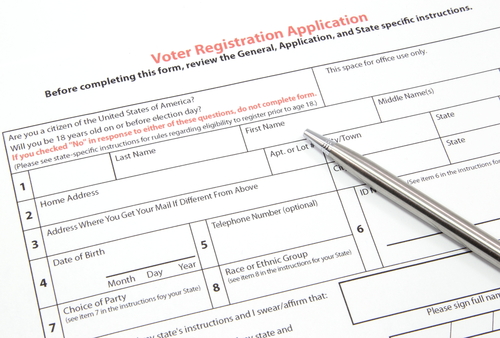
    On Nov. 8, 2016, citizens across the country will flock to polling stations to cast their votes for the 45th President of the United States. Until then, however, you can expect to hear a number of candidates offer their views on a plethora of political issues over the next year, including small business.

    As a battleground for political debate and its importance to economic success, small businesses can have a tremendous impact on the upcoming election, and those to follow. Gaining insight into the small business community is more important than ever and critical to understanding their needs and helping them grow.

    As part of its latest analysis on small businesses, Experian examined the financial and demographic characteristics of small-business owners by political affiliation. The research found that Republicans made up the largest percentage of the small business owner population at approximately 35 percent. They were followed by Democrats at 29.4 percent and Independents at 15.8 percent.

    Findings from the study also showed that small-business owners who identify as Independent may have the most education experience. More than 73 percent of Independents have some college experience, and 45 percent have earned a bachelor’s degree. Comparatively, 72.3 percent of small-business owners who identify as Republican have some college experience and 44.1 percent have earned a bachelor’s degree, while Democrats account for 66 percent and 39.3 percent, respectively.

    When it comes to the credit and payment behavior of these small-business owners, the research found that Republicans have the highest average business loan balances and the second-highest consumer loan balances at $9,823 and $193,483, respectively. Democrats fell on the other end of the spectrum with the lowest average business ($7,540) and consumer ($172,653) loan balances. Furthermore, Republican small-business owners demonstrated good payment behavior, with the lowest delinquency rates (91-plus days) for commercial and consumer credit cards at 0.98 percent and 5.8 percent, respectively.

    For a more in-depth look into the characteristics of small-business owners by political affiliation, register for our Webinar that will take place on Jan. 20, 2016 at 1 p.m. Eastern time.

    Painting a clearer picture of the small business community, enables government officials, lenders and business professionals to better understand the ins and outs of small-business owners, and gain insight into what matters most to them. Small businesses are the backbone of our economy and fixtures in the local community. By addressing the needs of small businesses, and setting them up for success, our economy and society can continue to prosper.

  • Setting Your Business Up for Success: 7 Tips for Keeping Business Credit on Track

    Small Business Bills

    Small Business Saturday is just around the corner, and as it approaches there are a growing number of advertising campaigns encouraging consumers to forego the big box retailers in favor of shopping local.

    As a supporter of my own neighborhood small businesses, I can appreciate the effort. After all, the success of small businesses is what really drives our economy forward. Not only do they provide employment opportunities for those in the community, but small businesses often bring a level of innovation and can stimulate growth.

    However, in the midst of the day-to-day activities, especially during the holiday season, small business owners often overlook a crucial component of their businesses – their business credit. While some small business owners may not realize it, a business’s credit profile can be as critical to its success as heavy foot traffic.

    At Experian, we’re committed to educating small business owners on the importance of business credit, as well as how they can make their business credit work for them. The actionable insights available through a small business’s credit profile can help position it for new growth opportunities. To help keep small business owners on track this holiday season, below are seven tips to help prevent these often overlooked aspects of business credit.

    1. Get your business credit profile into the best shape ever. A positive business credit profile can help your business grow. Lenders and suppliers often make lending decisions and determine interest rates based on the information within your business credit report. Access to financial capital at affordable rates enables small businesses to order inventory, pay employees or expand into new areas.
    2. Separate your business credit profile from your consumer credit profile. Building a separation between the two can help your business develop credibility that matters to banks, suppliers and other lenders, as well as protects your consumer credit should your business run into hard times or vice versa.
    3. Encourage your creditors and suppliers to report your payment history to commercial credit bureaus. Just because you have a business, do not assume you have a business credit report. Unless your creditors are reporting timely payments to commercial credit bureaus, a good track record will not impact your business credit profile.
    4. Pay bills on time! Sound payment practices are key to a solid business credit profile. Timely payments can demonstrate your ability to adhere to agreed-upon credit terms and show that your business is a low credit risk.
    5. Be consistent. Making timely payments for an extended period of time is healthy. Just as anything else, a longer track record indicates consistent behavior. The longer a positive commercial account is open, the more confidence a lender can when extending loan terms.
    6. Continually monitor your business credit report for accuracy. As small businesses grow and change over time, basic facts about the business can frequently change. It’s important to keep updated information and avoid unpleasant surprises, especially when applying for a loan. Consistent monitoring will also enable owners detect potential business fraud.
    7. Check the commercial credit reports of current and potential suppliers. Understanding a potential supplier’s credit history can help identify which businesses you want to do business with. For instance, you may gain insight whether or not a supplier can deliver materials to your business in a timely manner.

    Small business owners can also learn about the fundamentals of business credit and its impact on a business’s growth during an Experian hosted tweet chat on Thursday, Nov. 12 at 1:00pm Pacific time. You can follow the conversation using #BizSmallTalk.

    As the saying goes, “knowledge is power.” By gaining a deeper understanding of the ins and outs of business credit, and leveraging the insights from their business’s credit profile, small business owners will be able to open new doors and take their companies to new heights.


  • Insight into the Millennial Business Owner Paves the Way for the Future

    Millennial Business Owner

    It was only a few months ago when millennials officially surpassed baby boomers to become the largest living generation. Since millennials are so numerous, it stands to reason, that they could also become the most prevalent population of small business owners in the U.S. As a matter of fact, everyday there are hundreds of new start-ups being created by this younger demographic.

    Clearly, the millennial generation is gravitating toward entrepreneurship, but what do we really know about this segment of the population? While we know they are deeply rooted in technology, what industries are they most likely to enter? Where are millennials more apt to establish their companies? How do they handle credit?

    In order to put a face to the average millennial business owner, Experian recently conducted an analysis exploring the demographic and its credit characteristics. Interestingly, we found correlations between their education level and the industries in which they were most likely to start a business.

    Interestingly, the analysis showed millennial business owners had the highest percentage of those without a high school diploma and subsequently established companies in industries that typically do not require a college degree. For example, the top three industries for millennials include business services, building cleaning and maintenance and general contractors.

    From a geographic perspective, we found more than 68 percent of millennials establish businesses primarily in three states, including California, Texas and Florida. While the number may seem a bit high, it makes sense considering one of the states is a hub for technology, and the other two do not have state income tax.

    We also found millennial business owners have the lowest commercial* and consumer credit scores at 32 and 628, respectively. However, despite their low scores, millennials show to be the most credit active generation. More than 17 percent of millennials have opened a commercial account within past 24 months. While they have a brief credit profile, which can impact their credit score, millennials seem to understand the importance of building credit by opening new accounts.

    By putting a face to the name, so to speak, creditors and suppliers will have a better understanding of what drives the millennial business owner. These insights will enable them to better market to this growing segment of entrepreneurs, as well as position them to service these young business owners and uncover their own growth opportunities. Millennials are the future, and the more we understand how to help them succeed, the better off our economy and society will be.

    *Based on a scale of 1 to 100 (with 100 being least risky); predicts the likelihood of severe delinquency (more than 91 days past due) within the next 12 months