Category: Innovation

At Experian, we are continually innovating and using technology to find solutions to global issues, modernize the financial services industry and increase financial access for all. Read about our latest innovation news below:

  • Experian Recognized as a Finalist in the 2015 Data Impact Awards

    Experian is one of 25 data management organizations that will be honored at the 2015 Data Impact Awards in New York on September 29, 2015. The awards celebration, hosted by Cloudera, honors big data success stories and recognizes the impact data-driven technology can have on the organization, business, and society at large. The common link between each of these 25 Big Data success stories is CDH, the world’s most popular open source Hadoop-based distribution and key component of the Cloudera Enterprise platform. The event will kick-off the annual Big Data conference, 2015 Strata + Hadoop World and a weeklong series of events as part of Data Week in New York City.

    Data Impact

    Experian is a finalist in the category of “Data-Driven Transformation” for the launch and deployment of the Experian Marketing Suite. During the last two years, Experian made transformational decisions about their marketing portfolio to unify offerings in data, technology and services into a single platform that allows marketers to create rewarding and relevant customer experiences in any channel via any device. This transformation culminated in July 2014 with the launch of the Experian Marketing Suite, a cloud-based marketing platform that leverages Experian’s customer identity and recognition technology, consumer data (the largest in the world), analytics and interaction technology.

    Hadoop technology was a foundational element of the Experian Marketing Suite and in particular and allowed Experian to realize their vision of creating a platform that would put the data and technology into the hands of the marketers themselves, linking disparate and disconnected customer data from any difference sources at scale and then leverage that cross-channel intelligence in real-time.

     “Nobody is doing what we’re doing with Hadoop today, especially at this order of magnitude. The Experian Marketing Suite’s Identity Manager is the first real-time linkage engine that accepts data, links information together across an entire marketing ecosystem, and puts it into a usable format for a solid customer experience.” – Emad Georgy, SVP Global Software Development, Experian Marketing Services

    “It has been fascinating to see the growth in Data Impact Awards nominations every year – both in terms of total quantity and in the maturity and impact of each story shared,” said Alan Saldich, vice president of marketing, Cloudera said in a press release. “This year’s applicants represent organizations of all sizes, across all industries, and spanning locations around the globe, but they all have one thing in common: they’re using data to do something amazing. I’m continuously impressed and humbled by our customers, and am glad for this opportunity to showcase their achievements.”

    Follow the hashtags #DataImpact and #StrataHadoop on Twitter and other social media channels.


  • Leveraging Data to Find the Right Automotive Customer

    carlot

    Since Henry Ford invented the assembly line and mass automotive production began, the primary objective of all manufacturers and dealers has been to move new vehicle inventory off the lot year after year. But nowadays finding the right automotive customer can be a challenging task. Where do they live? How old are they? How much do they make? By leveraging data to answer these questions, manufacturers can market to the appropriate audience and manage inventory accordingly.

    In fact, a recent Experian analysis of the automotive market found that the top 10 states accounted for nearly 60 percent of all new vehicle registrations during the second quarter of 2015, led by California at 12.6 percent. The remainder of the top 10 included Texas (9.9 percent), Florida (7.9 percent), New York 5.7 percent), Pennsylvania (4.4 percent) Ohio (3.9 percent), Illinois (3.8 percent), Michigan (3.7 percent), New Jersey (3.5 percent) and Georgia (2.8 percent).

    Diving a bit deeper, the analysis also showed that through May 2015, nearly 50 percent of all new vehicle buyers fell within the 40-69 age range. Furthermore, 17.9 percent were between the ages of 50-59. The analysis also found that individuals with incomes from $50,000-$100,000 were the most active new car shoppers during the same time period, equating to nearly 36 percent of the market.

    Other findings include:

    • Los Angeles and New York were the two DMAs with the highest market share for new vehicle registrations at 6.8 percent and 6.7 percent, respectively
    • Toyota (13.5 percent), Ford (11.6 percent) and Chevrolet (10.8 percent) were the top 3 brands with highest new vehicle market share among retail buyers through Q2 2015
    • Entry-level CUVs accounted for the highest percentage of new vehicle registrations at 14.6 percent, followed by the small economy car (11.0 percent) and full-sized pickup trucks (10.7 percent)

    Leveraging data and analytics gives manufacturers and dealers a competitive advantage by enabling them to better understand the entire automotive market, specifically new vehicle trends. With these actionable insights, automotive companies will be positioned to make more confident inventory decisions and target specific consumers. And by better understanding whom they are targeting, manufacturers and dealers will be able to check their primary objective off the list.

  • Innovation + Big Data Proves Winning Formula for Experian

    shutterstock_110471801

    Forbes Magazine recently named Experian among the top 100 innovative companies in the world for the second year in a row.

    Forbes has a rigorous selection methodology that places an emphasis on what organizations’ investors see as the most innovative today, but also the companies that investors believe will continue to be the most innovative in the future; Forbes calls this methodology the Innovation Premium.  Put simply, it’s the expectation that a company will launch new products and services and enter new markets to generate growth.
    With this distinction, I am reminded of the many initiatives undertaken by Experian North America in the last year aimed at evolving its technologies and systems, all in an effort to deliver the highest-quality data, superior products, intelligent insights and best-in-class service to our customers.

    A few of these initiatives include:

    • Experian Data Quality launched its first eCommerce offerings, allowing businesses of any size to quickly and easily see better value from their data assets.
    • Experian Marketing Services transformed its marketing portfolio in the last two years – bringing together the synergies in the portfolio to deliver a differentiated proposition in the market. This transformation culminated with the launch of the Experian Marketing Suite, a marketing platform that unifies Experian’s unique capabilities in customer identity and recognition, consumer data, analytics and technology.
    • Experian Consumer Services offered new apps to help consumers quickly and easily review and understand their Experian credit reports and FICO Scores.
    • To ensure our ongoing commitment to data quality standards specific to consumer reported data, Experian created nimble technologies to identify business opportunities for clients and improve the quality of consumers’ credit reports.
    • Experian Health introduced a number of new and innovative solutions to help hospitals, medical providers and patients address challenges, such as continuation of care, financial assistance, fraud and identity protection throughout the healthcare process.
    • Our Business Information Services group introduced a new Global Data Network that provides businesses with insight into their international customers and vendors, enabling them to assess risk and become more competitive in the marketplace.
    • To help companies manage risk and mitigate fraud, our Decision Analytics business recently launched a new dedicated enterprise Fraud and ID business in North America to more aggressively address the growing variety of fraud risk and identity management challenges businesses, financial institutions and government agencies face.
    • In an effort to help its clients track loyalty rates, Experian Automotive reengineered its data sources to standardize a new loyalty measurement model at the manufacturer, brand and dealer levels.

    We’re proud that Forbes Magazine continues to view Experian as a forward-thinking and innovative company. But Experian isn’t resting on its laurels. We are continuing the ongoing process of looking at ways to serve our customers better by investing in innovation.

    In fact, Experian holds an annual innovation program that brings together talented employees from across our businesses to research, build and test new concepts that address emerging market challenges that can benefit from Experian’s data and insights.

    Data can be and must be used as a force for good. Match it with the proper technologies and systems, and we are in a position to help businesses, consumers, government and society overall.

  • With Big Data Comes Big Responsibility

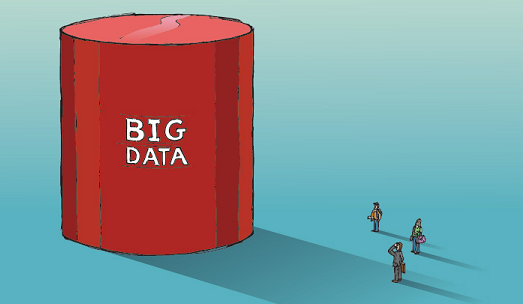
    Our world today runs on data. It’s changing the way we browse the Internet, run our businesses, treat medical patients and invest in technology. It’s the key to solving society’s biggest problems: famine, disease, poverty and ineffective education. And it is powering the global economy.

    But the data-driven economy is at a crossroads. With the eruption of information, we also open ourselves up to new risks and privacy concerns. As companies adopt more interconnected products and systems, the “Internet of Things” could usher in the next wave of challenges that range from data breaches to other potential privacy concerns if information is used improperly. As a society, we must decide whether to champion the explosion of connected information or allow its detractors to significantly constrain the innovation and growth ahead.

    Since 2007, data-related products and services have generated about 30% of real personal consumption growth, second only to healthcare goods and services, according to a 2014 report from the Progressive Policy Institute. The mobile app industry alone accounted for more than 750,000 jobs in 2013-jobs that didn’t exist a decade ago.

    Meanwhile, the explosion of the Internet of Things promises to mine our households’ daily or minute-by-minute behaviors to save money and improve lifestyles. Soon it is very likely that our personal genomic information will be used to clinically treat our current ailments and prevent the next ones. And of course, the financial industry is using big data to help consumers secure more affordable loans, improve their credit scores, protect their identities, ward off fraudulent transactions and ensure that they are marketing products and services to the right customers at the right time and across the right channels.

    Companies need to be able to sift through large amounts of data, find patterns and distill the key takeaways in order to make better decisions, improve our society and in turn, drive our economy forward.

    But with all the headline news surrounding fraud and data privacy, consumer confidence may be shaken. Over the last year and half, cyberattacks on corporations have become more common. Many consumers have fallen victim to the loss of personal identifiable information in many forms. These events have had a tremendous impact on the way consumers and companies think about data and the future of data.

    These are very real concerns, and they should be at the center of every discussion we have about the future of the data-driven economy. However, as challenging as these times may be, we cannot let these events dissuade us from realizing the full potential of data to help us do really good things for society as whole.

    Fortunately, today’s corporate leaders have an opportunity to proactively head off consumers’ uncertainty and fears about big data and keep the data economy open and healthy. But doing so will require businesses to operate differently than they have in the past.

    Companies need to operate on bedrock information values-values that dictate and ensure mandatory training for all employees, strict compliance rules and regulations, dedicated compliance officers and data governance experts and ongoing improvements to keep security and ethics at a company’s core.

    These philosophies should be so central to a company that they find their way into key business processes, and touch every single employee and every aspect of operations. It’s up to the business sector to earn the trust of consumers and lawmakers and create the legislative and regulatory conditions that allow the data-driven economy to thrive.

    And it’s up to the people and companies that work with big data every day to advance how data can be used for good.

    In the late fifth century, the emerging medical profession reached a point where it needed unifying principles to guide the actions of physicians across many countries and many time periods. Now data-driven industries also need a way to ensure they advance data for societal good even at expense of profit optimization. We can do this by establishing common goals that give data professionals core values to adhere to, irrespective of their location and their individual companies’ own culture and standards.

    The data economy has both incredible opportunity for growth and a real danger of stagnation. Only by committing to the responsible use of data can we transform our economy and the ways we operate within it.

    Originally Published: American Banker

  • Big Data: The Force That’s Good for Consumers and Society

    In the video and presentation, Craig Boundy, former CEO of Experian North America, discusses how big data is being used as a force for good. Good for consumers, good for business and good for society.He shares his perspective how Experian’s work in data and analytics has real-life applications.

    As part of this, he highlights how our business is predicated on the idea that Experian employees come to work every day to help society make better sense of the world by sifting through the information and coming up with solutions for real people, partners, governments and clients. Whether that helps consumers secure an affordable loan, understand their credit score, or protect their identity; or for a business to manage risk, help prevent fraudulent transactions, and to ensure they are marketing their products and services to the right consumers at the right time and across the right channels.

    As you will see, the force that is known as Big Data can be used for good and there’s still more we can do with it to drive growth and improve our economy.


    Big Data: The Force That’s Good for Consumers and Society from Experian_US

  • Big Data Helps Find Opportunity with Small Business Start-ups

    shutterstock_258242777

    If you were to survey American consumers whether or not they would like to be their own boss and successfully run their own business, I would imagine that a good majority would probably say yes. There is something empowering about the thought of setting your own hours and controlling your own destiny, but many people don’t actually take the steps to make that dream a reality.

    However, during the height of the recession and shortly thereafter, many consumers were forced to take the plunge and start their own business as a way to generate a source of income. As a result, entrepreneurism skyrocketed. While some struggled, others succeeded. But how have entrepreneurs fared in the post-recessionary period?

    As a way to better understand the start-up environment post-recession, Experian conducted an analysis on small business start-up trends from 2010-2014. Interestingly, the number of startups has decreased nearly 45 percent since 2010 – most likely due to a slowdown following the influx of businesses started during the recession. That said, the trend has become somewhat stable over the past few years. While the drop in the number of start-ups may appear discouraging, it isn’t necessarily a cause for concern.

    As we see employment rates trek higher, and the Gross Domestic Product climb, we’ve been able to experience an improved economy. This also means that fewer consumers feel the need to startup new businesses out of necessity.

    Furthermore, we’ve also seen that the start-ups that opened in 2010 have grown in size by nearly 29 percent, or added 1.2 employees in the four years that the analysis tracked. Additionally the data showed that of the businesses started in 2010, approximately 57 percent of them are still in business.

    The analysis also found that entrepreneurs tend to favor the restaurant industry when starting a new venture, as 10.6 percent of start-ups were in the food and drink business. Restaurants were followed by personal services, miscellaneous retail, business services and general contractors.

    Interestingly, the restaurant and personal services industries were also the two with the highest rates of failure at 9.2 percent and 8.1 percent, respectively.

    Gaining insight into the data and trends of small business start-ups can be extremely beneficial to new entrepreneurs and lenders, alike. On one hand, entrepreneurs can use the data to understand what types of businesses are the most popular, and which are most prone to failure.

    On the other, lenders can use the data to determine which start-ups present the least amount of risk and when it is most beneficial to market to prospective borrowers.

    Small businesses are the life blood of the economy, and their continued success is paramount to a well-functioning financial system. With the power of data and insights at their side, lenders can make better decisions when looking to fund new ventures and entrepreneurs become more empowered to take that leap and turn their dreams a reality.

    Overall, a winning recipe that any restaurant owner can get behind.

  • Fraud-prevention Best Practices for Online Merchants to Use for 2015 Holiday Season

    Today, Experian’s global Fraud and Identity business released its analysis of client transaction data from the 2014 holiday season, showing an 80 percent reduction in the number of manual reviews among online merchants using the company’s fraud and identity products and services compared with the industry average. These results and other observations indicate that a customer-centric approach to fraud prevention would be more effective for many online merchants, leading the company to recommend five best practices for online merchants preparing for the 2015 holiday season.

    Holiday Fraud
    [View our Customer Centric Fraud Prevention Strategy infographic]

    Experian’s holiday fraud data highlighted the performance delta between the company’s technology and alternative approaches. Many merchants, for example, will loosen their fraud rules to process more orders during peak periods. To compensate for the increased risk of fraud caused by this approach, more manual reviews were conducted. This is a counterproductive approach that drives up operating costs and increases customer friction. Despite the increase in manual reviews, undetected fraud can occur and good revenue can be left on the table.

    “Good fraud detection should be about more than preventing loss. It should increase revenue by allowing more good customers through and providing a hassle-free shopping experience, especially during the critical holiday shopping season,” said Steve Platt, Global EVP, Fraud and Identity, Experian. “To help our clients with this, we combine insights derived from device intelligence and digital behavior, with the contextual data about the event itself (e.g., transaction, application, login, etc.). We analyze millions of transactions per day, evaluate risk in real time and deliver responses in mere milliseconds. With this approach, our clients are catching more fraud and reducing customer friction, leading to fewer manual reviews and lower operational costs. It’s a win-win-win.”

    For one U.S. multichannel retail client, this “win” translated into a 95 percent detection rate (amount of fraud caught) valued at $17.3 million during the fourth quarter alone. This is just one example of how applying the following recommended best practices can help clients reduce fraud and drive top-line growth.

    Best fraud-prevention practices for the holidays

    With the 2015 holiday shopping season less than five months away, now is the time for merchants to prepare to effectively protect themselves and their customers during the busiest time of the year. Experian® shares five fraud-prevention best practices for a stronger 2015 holiday sales cycle:

    • Avoid one-size-fits-all approaches — Many online merchants make a general temporary adjustment to loosen fraud-prevention rules, supplementing with additional manual reviews to accommodate the increased holiday volume. Not only does this increase operational costs for the business, but it also translates to an insult rate (falsely identifying good customers) of 29 percent to address a 0.9 percent problem. This is a significant imbalance. By leveraging the right fraud-prevention measures at the right time, you’ll see increased and sustainable top-line growth.
    • Make your customer data work for you across the business — While many risk teams already use internal customer data to improve fraud detection, the explosion of channels and devices means there are other data sets across the enterprise that can be leveraged effectively to maintain visibility and authenticate identities across the digital ecosystem. Further, by establishing and maintaining a single, persistent customer view, companies benefit from additional, actionable insights throughout the customer journey. According to Experian Marketing Services’ 2015 Digital Marketer Report, 89 percent of marketers globally say that they have trouble achieving a single customer view. By using technology to link data sets and identities together — like customer loyalty data with customer transactional data, social and digital behavior, demographics and more — merchants are getting a clearer picture of who their customers are. In addition, they have a better understanding of how those customers engage across channels. It is also critical to understand that the amount of data alone is not the answer; the insights and intelligence gleaned from or applied to that data must be considered as well.
    • Bring fraud and marketing efforts together — Although this is not an obvious combination at first glance, this relationship can be one of the most powerful in the enterprise. Just last year, a survey by Experian Marketing Services reported that 80 percent of marketers planned to run cross-channel marketing campaigns in 2014. More channels, more campaigns and increased volume mean new challenges for fraud-risk managers. Together, fraud and marketing teams can help the top line and the bottom line by preventing bad transactions without impacting the customer experience. The past often can tell a lot about the future. These groups should jointly review past holiday performance in terms of both top-line growth (i.e., successful campaigns) and successful risk strategies that complement those growth objectives and use the insight to form future strategies.
    • Establish a dedicated team responsible for the customer experience — Several of our financial services clients are reporting notable success with digital groups. These teams are responsible for bringing together marketing, risk and consumer experience experts to create and maintain a directional and strategic customer purview across channels. Formalizing the sharing of data, processes and best practices among these traditionally siloed departments is a way to process more customers while reviewing fewer transactions, catching more fraud and providing a hassle-free customer experience.
    • Stay ahead of evolving market conditions — There are some things that are out of retailers’ control, such as the impending October 2015 EMV rollout in the United States. While most point-of-sale transactions will be vastly safer and more secure as a result of the rollout, we have seen card-not-present fraud rise in Europe, where EMV already is in place. This is because criminals will focus their energies on the fraud they can still perpetrate. We also have the proliferation of personalized mobile transactions. While this technology aids in ensuring a seamless customer experience, personal and/or financial information now is being exchanged at an increasing rate and exposing businesses to new fraud risks. Being aware and having a plan to react quickly to the ever-changing fraud landscape can significantly increase the chances of thwarting criminals and keeping businesses safe.

    Listen to a recording of our 2015 Holiday Fraud webinar to learn how your business can prepare its fraud strategy for this season.

  • Healthcare Data Explosion Reveals the Need for Protection

    Medical Data

    Health information security breaches and identity theft have become an epidemic with losses occurring across the country.

    In fact, according to a recent Ponemon Institute study sponsored by the Medical Identity Fraud Alliance, medical ID theft has increased by 21.7 percent since 2013. Additionally, data from the Department of Health and Human Services indicates that health data on more than 120 million people has been compromised in more than 1,100 separate breaches since 2009.

    In May 2015, CareFirst BlueCross BlueShield, the largest health insurer in the Mid-Atlantic region, reported a cyber-attack that affected 1.1 million past and present customers. This comes on the heels of the February 2015 data breach at Anthem, the second-largest health insurer in the United States that affected about 80 million customers, and Premera Blue Cross’ reported cyber-attack that may impact as many as 11 million people.

    These attacks reflect an unsettling pattern in cybercrime as identity thieves expand their target from the financial sector into healthcare.The mere fact that health records are now digital makes them a prime target. Providers have now moved rapidly into the digital space and many don’t deploy the same robust security measures taken by their banking counterparts.

    Furthermore, patients now have unprecedented access to their health information thanks to the widespread use of patient portals. With providers, payers, pharmacies, labs and patients all having access to sensitive records, information security becomes vulnerable to the weakest link in the data chain.

    To compound the issue, stolen medical identity information is extremely valuable. While a purloined credit card number might fetch $10 on the black market, a stolen medical identity can bring in more than five times that amount.

    So, what’s the solution? Other major industries including financial services, telecommunications and insurance have been using Big Data and analytics for years to protect their online portals, minimize risk and reduce fraud losses.

    When applied in a healthcare setting, it is these same techniques that will enable professionals to gain insights that can be turned into actions to protect patient data. For example, identity-matching tools can confirm whether a patient or a physician is who they claim to be, and analyzing data and usage characteristics can more effectively assess the risk of a patient’s remote interaction.

    In essence, by utilizing these techniques, data can be a force for good – good for the patient, good for the healthcare provider and good for the industry.

  • Using Data to Manage the Cost of Healthcare

    Screening

    With rising insurance costs, deductibles and copays, some people struggle to afford the out-of-pocket expense that can come with seeking medical treatment. Because of this, some consumers decide not to seek treatment, which could have negative effects on their health and overall well-being.

    While it’s true healthcare organizations do provide financial assistance and often have charity programs to help offset the costs, most do not have the financial resources to absorb a substantial increase in patient debt that is being driven by consumers selecting high deductible health insurance plans then not being able to pay.

    The additional challenge is that many hospitals and healthcare providers do not have the means to quickly and accurately determine which patients qualify for charity programs, which are able to pay for care, and which patients need payment plans to help them soften the blow from an unforeseen healthcare event.

    To help address the problem, Experian provides hospitals, medical offices and clinics with unique data and analytics to provide insight into each patient’s financial situation. By leveraging healthcare-specific predictive models, Experian enables healthcare organizations to easily and efficiently determine which patients qualify for financial assistance programs.

    In short, Experian is using its data for good by helping make patients aware that they qualify for federal benefits or financial assistance, and effectively pairing them with the right program.

    From a provider standpoint, the data and insight that we provide not only enables them to determine which patients meet the requirements for Medicaid and other grant or charity programs, but also allows them to do so during the registration process, saving them time and effort on the back-end.

    Gaining insight into a patient’s financial situation also enables healthcare organizations to minimize or avoid potential bad debt, and improve reimbursement rates by connecting patients with financial programs or setting up a payment plan that fits within their current budget.

    The bottom line is, in order for healthcare organizations to continue to exist and assist patients in need, it’s important for them to remain financially secure. When healthcare organizations are better able to identify the difference between the patients who can pay versus those that are truly in need of and qualify for financial assistance, everybody wins.

    The patient doesn’t have to worry about a financial burden that they can’t afford and the healthcare organization can operate without the threat of closure.

    In order to protect their financial well-being, it’s important for healthcare organizations to identify those patients who qualify for financial assistance and those who can afford treatment. Dan Johnson, Experian’s Executive Vice President of Healthcare Strategy, discusses how big data can help answer that question.