sdfsad sddfs sdfsdf sdsf sd sfsdfsdf s
asdf sa dsdfdsf ds dsf sdfsdf sdfsd sdf
In this article…

Half of married couples in the U.S. say that credit scores were important to them when choosing a mate, according to the latest Experian Consumer Services survey comparing the relationship between marriage and credit. The study also showed that 95% of participants rate “financial responsibility” as important, with “physical attractiveness” and “career ambition” following at 86% and 77%, respectively.
According to new research from Experian Marketing Services, a global provider of integrated consumer insights, targeting, data quality and cross-channel marketing, mobile devices are playing an increasingly important role in how users make purchases across all categories. While purchases using a computer or digital tablet still reign supreme, transactions via mobile phones are on the rise, and marketers are poised to take advantage of this trend. The adoption of mobile marketing increased 17 percent in 2013, while 71 percent of marketers currently are engaging consumers in the mobile channel. This trend, among others, is highlighted in Experian Marketing Services’ recently released 2014 Digital Marketer: Benchmark and Trend Report. The report is an annual go-to resource for marketers looking for key industry benchmarks, insights, technology trends and consumer data.
 Experian® is pleased to announce its partnership with Clear Channel and the premiere of its iHeart Radio show, Credit & Finance Talk with Experian, which is already gaining lots of listeners.
The first 24 hours of a Data Breach Response are the most critical and we have the most important seven steps to insure that your organization does not go off track. A data breach of personal identity information or protected healthcare information is a breach of trust. Employees, patients, consumers or even partners are put at risk if their information is disclosed during a security incident.
The Small Business Credit Share is a “give-to-get” data consortium in which members provide more detailed data about the performance of the accounts in their portfolios. In exchange for expanded contribution, members get exclusive access to enriched information that is deeper in content than what is available to standard Experian clients or through competitive credit share programs. They benefit from the more comprehensive reports, business credit scores, attributes, and reporting that are available. The Small Business Credit Share is open to all credit granting institutions, including financial institutions, companies that issue trade credit, telcos, utilities and others. The tradeline performance reporting from this broad swath of B2B companies helps drive the effectiveness of the products that are available to members. The Small Business Credit Share has firm qualification standards to insure consistent information and regular reporting guidelines are followed, to help protect the interests of all members.
 Did you know that this week is National Small Business Week? It is a time dedicated entirely to acknowledging the positive impact small businesses have on our economy. So let’s take a moment to recognize the contributions that millions of entrepreneurs and small business owners have made to our local communities. Whether it’s creating jobs or providing our favorite products and services at convenient locations, here’s to Small Business – they are truly the backbone of our nation’s economy.

Read Moreio55 Button 2- Learn more Primary button Secondary button Related Posts
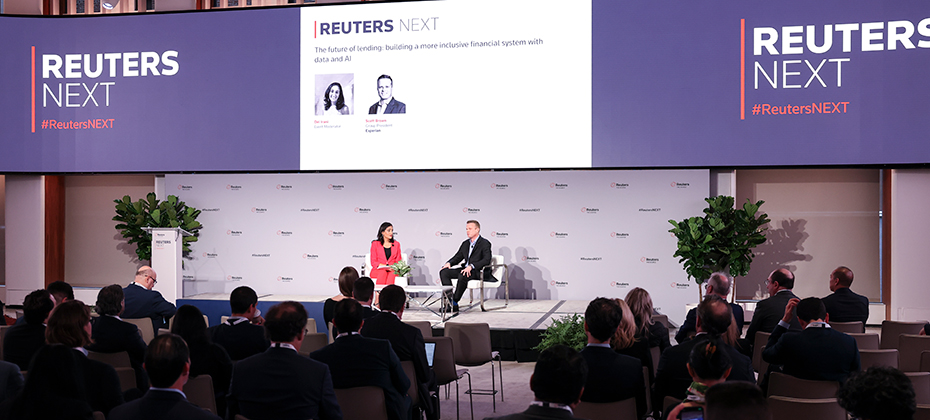
Today, we stand at the forefront of a digital revolution that is reshaping the financial services industry. And, against this backdrop, financial institutions are at vastly different levels of maturity; the world’s biggest banks are managing large-scale infrastructure migrations and making significant investments in AI while regional banks and credit unions are putting plans in place for modernization strategies, and fintechs are purpose-built and cloud native. To explore this more, I recently had the privilege of attending the annual Reuters NEXT live event in New York City. The event gathers globally recognized leaders across business, finance, technology, and government to tackle some of today’s most pressing issues. On the World Stage, I joined Del Irani, a talented anchor and broadcast journalist, to discuss the future of lending and the pivotal role of data and AI in building a more inclusive financial system. Improving financial access Our discussion highlighted the lack of access to traditional financial systems, and the impact it has on nearly 100 million people in North America alone. Globally, the problem affects over one billion people. These people, who are credit invisible, unscoreable, or have subprime credit scores, are unable to secure everyday financial products that many of us take for granted. What many don’t realize is, this is not a fringe subset of the population. Most of us, myself included, know someone who has faced the challenges of financial exclusion. Everyday Americans, including young people who are just starting out, new immigrants and people from diverse communities, often lack access to mainstream financial products. We discussed how traditional lending has a limited view of a consumer. Like looking through a keyhole, the lender’s understanding of the person in view is often incomplete and obstructed. However, with expanded data, technology, and advanced analytics, there is an opportunity to better understand the whole person, and as a result have a more inclusive financial system. At Experian, we have a unique ability to connect the power of traditional credit with alternative data, bringing a more holistic understanding of consumers and their behaviors. We are dedicated to leveraging our rich history in data and our expertise in technology to create the future of credit and ultimately bring financial power to everyone. The future of lending After spending two days with over 700 industry leaders from around the world, one thing is abundantly clear: much like the early days of the internet, today, we are at the cutting-edge of a technical revolution. Reflecting on my time at Reuters NEXT, I am particularly excited by the collective commitment to drive innovative, and smarter ways of working. We are only beginning to scratch the surface of how data and technology can transform financial services, and Experian is positioned to play a significant role. As we look to the future, I am excited about the ways we will create new opportunities for businesses and consumers alike.
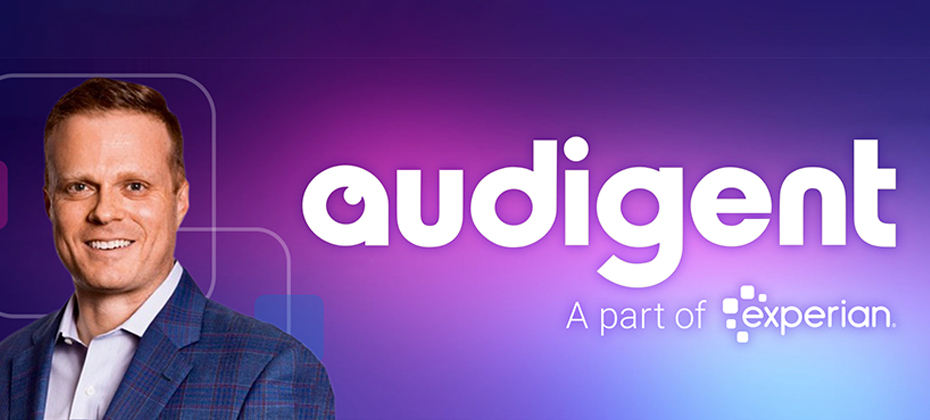
The advertising ecosystem has seen significant transformation over the past few years, with increased privacy regulation, changes in available signals, and the rise of channels like connected TV and retail media. These changes are impacting the way that consumers interact with brands and how brands understand and continue to deliver relevant messages to consumers with precision. Experian has been helping marketers navigate these changes, and as a result, our marketing data and identity solutions underpin much of today’s advertising industry. We’re committed to empowering marketers and agencies to understand and reach their target audiences, across all channels. Today, we are excited to announce our acquisition of Audigent—a leading data and activation platform in the advertising industry. With Audigent’s combination of first-party publisher data, inventory and deep supply-side distribution relationships, publishers, big and small, can empower marketers to better understand their customers, expand the reach of their target audiences and activate those audiences across the most impactful inventory. I am excited to bring together Audigent’s supply-side network as a natural extension to our existing demand-side capabilities. Audigent’s ability to combine inventory with targeted audiences using first-party, third-party and contextual signals provides the best of all worlds, allowing marketers to deliver campaigns centered on consumer choices, preferences, and behaviors. The addition of Audigent further strengthens our strategy to be the premier independent provider of marketing data and identity, ultimately creating more relevant experiences for consumers. To learn more about Experian and Audigent, visit https://www.experian.com/marketing/ and https://audigent.com/.

test