
Today at Money 20/20 in Las Vegas, Experian unveiled Experian Assistant, a groundbreaking toolset that transforms analytics and modeling for financial institutions. By leveraging Generative AI (GenAI), this revolutionary solution slashes model development turning months-long processes into days—or even hours. Positioned as a game-changer, Experian Assistant offers businesses the equivalent of a seasoned expert, guiding them through complex use cases with ease and redefining how financial organizations approach data-driven insights. Revolutionizing Modeling with Generative AI Experian Assistant marks a significant leap forward in how businesses handle the modeling lifecycle. Integrated into the Experian Ascend Technology Platform™, Experian Assistant is designed to streamline data analytics processes, enhance accuracy, and promote efficiency. This debut underscores Experian’s commitment to responsible AI innovation, ensuring that organizations benefit from advanced analytics without compromising on privacy or ethical standards. “Many financial institutions are looking to invest in new generative AI use cases, often focused on banker specific support,” said Craig Focardi, Principal Analyst at Celent. “Experian Assistant focuses on developer support to accelerate the development lifecycle by having a digital model building consultant available to users.” Empowering Data Scientists and Analysts With its powerful natural language processing (NLP) capabilities, Experian Assistant is reshaping how data scientists and analysts approach complex tasks. Traditionally, navigating large datasets and building models required extensive technical expertise. But now, Experian Assistant allows users to query data, write code, and build models in plain language—democratizing access to sophisticated analytics. The tool not only boosts productivity but also fosters collaboration and accessibility. This innovation will drive financial inclusion by broadening access to data-driven insights and responsible use of data across organizations. Developed in Collaboration with Leading Financial Institutions A standout feature of Experian Assistant is its development in close partnership with the world’s largest financial institutions. This collaboration ensures that the tool is finely tuned to real-world challenges, delivering deep insights into Experian’s data assets. By optimizing analytics processes, businesses can achieve proven cost savings, enhanced data visibility, and faster product deployment. Continental Finance Company, for example, reduced data-building time by a remarkable 75% after adopting Experian Assistant. This kind of impact highlights the tool’s ability to accelerate model development while maintaining strict data privacy standards—a vital consideration for financial institutions. Advanced Compliance and Transparency In today’s highly regulated environment, businesses must not only meet compliance standards but also provide transparency into their processes. Experian Assistant is designed with these needs in mind, offering advanced features that support regulatory reporting, identity management, risk assessments, and transaction monitoring. A Competitive Edge through GenAI With more than a decade of AI expertise, Experian is leading the charge in responsible AI development. At Money 20/20, Experian Assistant stood out as a testament to this leadership. The tool is positioned to offer financial institutions a competitive edge, improving risk assessment, enhancing customer experiences, and promoting financial inclusion. As the financial services industry continues to evolve, businesses that embrace GenAI solutions like Experian Assistant will be better positioned to succeed. This groundbreaking tool is not just an enhancement—it’s a fundamental shift in how analytics and modeling are conducted, offering the speed, accuracy, and transparency that today’s market demands.

In the aftermath of a natural disaster, the furthest thing from your mind is your personal finances, and rightfully so. Ensuring the safety of family and friends, as well as securing shelter, food and water, all take precedent. However, once you’ve addressed your most immediate concerns, understanding your financial health can help protect you during these challenging times. While a natural or declared disaster, in itself, doesn't directly impact your financial health, it can have an indirect impact by making it harder to pay your bills. Potential income disruption caused by the disaster, like job loss or damage to your property, can potentially lead to late payments and negatively impact your credit, if not managed properly. Fortunately, there are several steps you can take to protect your financial health. Contact your lenders The financial effects of a natural disaster can be devastating in a variety of ways. If your car or home is damaged or destroyed, and insurance won't cover some or all of it, you may get saddled with bills or take on new debt. Lack of transportation may affect your ability to get to or perform your job. You might be injured and face medical bills, or you could have to miss work to take care of family or your home in the aftermath. Although it's ideal to prepare your finances for emergencies before a natural disaster hits, it's not always possible. If you’re facing a disaster, you’ll want to be as proactive as possible to protect your credit and finances. To the best of your ability, it’s important to continue making your monthly bill payments on time. Paying at least the minimum payment on your accounts will help you protect your credit. However, if you’re unable to make your payments, it’s important to take action immediately. Contact your lenders and credit card issuers as soon as possible to ask about hardship options. Don't wait until you've already missed a payment. In some cases, you won't be eligible for hardship options unless you contact lenders before the payment is due. In addition to contacting your lenders and creditors, reach out to your utility, mobile phone and cable providers, as well as any other monthly services you pay for, to see if they can offer flexible payment options. Monitoring your credit is key Unfortunately, times of crisis are times when fraudsters and scammers work hard to take advantage of people. Be sure to regularly check your credit with all three nationwide credit reporting agencies (NCRAs) during this time. You can access a free weekly credit report from all three NCRAs at annualcreditreport.com. Review your credit report carefully, looking for any inaccuracies or suspicious activity. If you find anything you believe to be inaccurate, you can dispute the information with the credit reporting agency where you found the information. Disputing information on your credit report is free and easy to do online, by phone or by mail. Recovery Plan As you recover from disaster and begin to rebuild your life, savings and possibly your home, know there is a host of resources and programs available to help, and creditors and utility providers will often grant hardship relief. By reaching out to creditors quickly and monitoring your credit report, you can protect your credit and bounce back from a disaster with your credit score intact.

We believe that financial literacy leads to empowerment. That is why Experian supports initiatives and partners with community organizations to deliver financial education. We also develop products and services that give more control to consumers over their credit profile and financial health. As part of advancing our mission of Financial Power to All®, we are proud to announce we are helping more than 5,000 Hispanic individuals nationwide by relieving $10 million dollars of consumer debt. To provide families with this boost, we joined forces with ForgiveCo, a Public Benefit Corporation (PBC), to administer the acquisition and cancellation of qualifying consumer debt for the selected recipients. Beneficiaries will also receive a one-year premium Experian membership for free that offers access to their Experian credit report in English and Spanish[i], FICO® Score[ii], bilingual educational content, and other financial resources. We hope this effort helps raise awareness of the importance of financial literacy for everyone, and that Experian has resources to help individuals reach their financial dreams. To amplify the message, we collaborated with multi-platinum, award-winning singer and songwriter Prince Royce and you can see his video here. In fact, we have been making a concerted effort the last several years to evolve our educational resources and products to better support all underserved communities. Some of our other activities include the creation of the B.A.L.L. for Life initiative that connects African American and Hispanic youth with financial education, supporting scholarships for Asian Americans through the Ascend organization, providing custom resources for Out & Equal and Born This Way Foundation for the LGBTQ+ community, supporting the NextGen Innovation Lab for Disability:IN, and sponsoring credit counseling for the military community with Operation HOPE. For resources in Spanish, Experian offers a credit e-book and consumers can access a full suite of articles at the Ask Experian blog here. [i] Only Experian credit reports are available in Spanish. All other services associated with an Experian membership are available in English only. English fluency is required for full access to Experian’s products. [ii] Credit score calculated based on FICO® Score 8 model. Your lender or insurer may use a different FICO® Score than FICO® Score 8, or another type of credit score altogether. Learn more.

People rely on credit cards, personal loans, mortgages and auto loans, among other financial products to buy homes, fund college educations, weather temporary income disruptions and finance billions of daily transactions for goods and services. Credit is the cornerstone of the pursuit of our financial ambitions. That’s why the credit reporting industry is deeply committed to broadening access to fair and affordable financial resources for all consumers, particularly for individuals and households from underserved communities. The commitment is underscored by the continual effort to evolve the credit reporting system and incorporate new data sets to provide lenders a more comprehensive view of consumers’ ability and capacity to repay outstanding debt. Although progress has been made to extend credit to more prospective borrowers across the risk spectrum, if we want to continue to broaden the scope, we need to encourage the consistent reporting of additional predictive data sources to help lenders assess consumers’ creditworthiness. A proven track record but there’s more work to do Over the past century, the credit reporting industry transitioned from an opaque system founded on relationships to one rooted in data. Lenders lean on past payment history on similar loans (i.e., auto loans, mortgages, credit cards, etc.) as a reliable predictor of a borrower’s future loan payment performance—it’s a way for them to mitigate risk and say “yes” to more borrowers. And it works. The comprehensive reporting of past loan performance, coupled with increasingly sophisticated statistical prediction models, as well as the adoption of risk-based pricing, accelerated the extension of credit to more consumers. Yet, according to research from Experian and Oliver Wyman, millions of Americans lack access to mainstream credit because they are credit invisible, unscorable or have a subprime credit score. It’s particularly challenging for younger individuals, newly arrived immigrants and historically underserved communities, such as racial and ethnic minorities. At times it can be a catch-22; in order to get credit, you have to have credit. More predictive data is key At Experian, we’ve long understood that expanding the universe of creditworthy borrowers requires more data. In addition to some of the more conventional tradelines, such as mortgages, auto loans and credit cards, we have to explore expanded data sources that are predictive of a prospective borrower’s credit risk. For instance, more consumers are using buy now, pay later (BNPL) products, and nearly every consumer makes recurring monthly payments for rent, utilities, cell phones and even video streaming services, yet oftentimes, these data points are not consistently reported to the credit reporting agencies nor considered during lending decisions. Collectively, the industry and regulators, need to do more to encourage the consistent reporting and inclusion of expanded data onto consumers’ credit reports. In fact, based on our research, we’ve found that some of the aforementioned expanded data sources can empower lenders to assess the credit risk of a significantly larger pool of consumers. These expanded data sources have been shown to be highly accurate predictors of future loan payment behavior. And, when expanded data is combined with advanced analytics, up to 96% of the population can be scored, including an estimated 65% of credit invisibles.1 Broadening access to fair and affordable credit for more consumers means leaning into combining conventional tradelines with expanded Fair Credit Report Act-regulated data sources. The more information lenders have available to them about prospective borrowers’ past payment performance the more empowered they are to minimize risk and more confidently extend credit. Pushing for more data is the best path forward.

In an era where financial transactions occur at the click of a button, the significance of accurately verifying and authenticating consumers’ identities cannot be overstated. From online purchases to mobile banking, ensuring secure and reliable digital connections and safeguarding consumers’ information are table stakes for any business operating in the digital ecosystem. Unfortunately, some advocacy groups are calling for stricter regulatory guidelines that may impede business’ ability to effectively and efficiently protect a consumer’s financial information and identity. We’re, of course, referring to the push to classify credit header data— identifying information, such as name, current and former addresses, phone number and Social Security number, found at the top of credit reports—as a consumer report under the Fair Credit Reporting Act (FCRA). Subjecting credit header information to the FCRA will unnecessarily limit its permitted use, and effectively make it more difficult—and potentially impossible—for banks and other businesses to use the information to authenticate and verify consumers’ identities. It’s an unintended consequence that will surely compromise the security of our digital identities. Foundational to fraud prevention Credit header data plays a pivotal role in helping businesses detect suspicious activity and stay ahead of increasingly sophisticated fraud schemes. With credit header information, banks and other financial institutions cross-reference loan applications against transactions from hundreds of thousands of contributors to spot anomalies and thwart fraudsters before they inflict harm. In fact, many of the industry’s most advanced fraud prevention tools and signals rely on credit header data to verify the legitimacy of any given transaction. Keep in mind, the transactions we’re referring to are transactions of consequence. For instance, opening a new bank account, applying for a loan or transferring money. This level of activity carries inherent risk, and without proper vigilance, could result in significant financial or reputational harm to consumers and businesses. But it’s not only lenders that leverage credit header data, the use cases for credit header data are broad. Government agencies and businesses in the public sector, law enforcement, and some pharmacies use the information to issue one-time passcodes for identification purposes, find missing persons, or verify consumers’ identities prior to prescriptions being filled. Credit header data is already regulated Some of the concern surrounding credit header data centers on consumer privacy, and rightfully so. Protecting consumers’ privacy should be central to the use of sensitive information; however, credit header data is already regulated by the Gramm-Leach-Bliley Act. In fact, for more than 25 years, the Gramm-Leach-Bliley Act specifically provides that the permissible use of credit header data includes fraud prevention, while also mandating consumer privacy and data protection. Subjecting credit header data to additional FCRA regulation, which does not clearly allow for fraud prevention, could make it impractical or impossible for many businesses to use it for that purpose. Not only is additional regulation unnecessary, but it potentially creates a contradictory web of regulations that increases the compliance burden and confusion for many businesses. This ultimately thwarts the purpose of GLBA by delaying fraud prevention efforts and potentially raising costs for consumers. Credit header data is far more than information included at the top of consumers’ credit reports, it is a linchpin that powers many of the most advanced fraud prevention and identify verification tools in the market. Before any further regulation is considered, we have to acknowledge the role that credit header data plays in keeping consumers’ information safe and how any changes may impact the safety and soundness of our digital economy.

Experian continues to affirm its leadership in financial technology, earning the 7th spot on the 2024 IDC FinTech Rankings. This is the third consecutive year that the company has ranked among the top 10 providers, reinforcing its position as a key player in the FinTech space. The IDC FinTech Rankings assess the top 100 financial technology providers based on revenues generated in 2023 from financial services and FinTech sectors. In addition to this notable achievement, Experian has been awarded the 2024 IDC Real Results Award for Bank Deposit Transformation. This award highlights Experian's innovation in driving measurable and impactful changes within the financial services industry. The recognition is particularly focused on the company’s success in helping banks transform their deposit processes through advanced fraud prevention technologies. Experian's Ascend Fraud Sandbox: A Game-Changer A key factor behind this award is Experian's Ascend Fraud Sandbox, a groundbreaking tool that offers financial institutions a comprehensive platform for fraud detection and prevention. The Ascend Fraud Sandbox empowers organizations to analyze data, identify new fraud patterns, and quickly build, test, and deploy models. This technology enables banks to enhance their fraud detection capabilities, leading to higher approval rates for online deposit accounts and reduced fraud-related losses. The sandbox operates with over 10 billion identity and fraud events, which include applications, login activities, and transactions. It also continuously incorporates tens of millions of new events each day. This expansive dataset allows banks to stay ahead of increasingly sophisticated fraud attempts, especially those driven by artificial intelligence (AI). Experian's success in Bank Deposit Transformation demonstrates the company’s ability to help financial institutions improve their processes while simultaneously enhancing fraud protection. By providing advanced fraud-prevention and identity-protection technologies, Experian enables its customers to optimize their operations, reduce risks, and achieve better financial outcomes. Recognition of Experian's Innovation This dual recognition—ranking 7th in the IDC FinTech Rankings and winning the Real Results Award—further solidifies Experian’s standing as a leader in technology. These accolades underscore its capacity to offer data, technology, and scalable solutions that allow financial institutions to make informed business decisions at the necessary speed to remain competitive in an evolving market. Now in its 21st year, the IDC FinTech Rankings evaluate technology providers based on the revenue they generate from financial institutions, including banks, insurers, and capital markets firms. With both the FinTech Rankings and the Real Results Award in hand, Experian continues to deliver innovative solutions that help financial institutions navigate the complexities of modern finance with confidence.

Read Moreio55 Button 2- Learn more Primary button Secondary button Related Posts
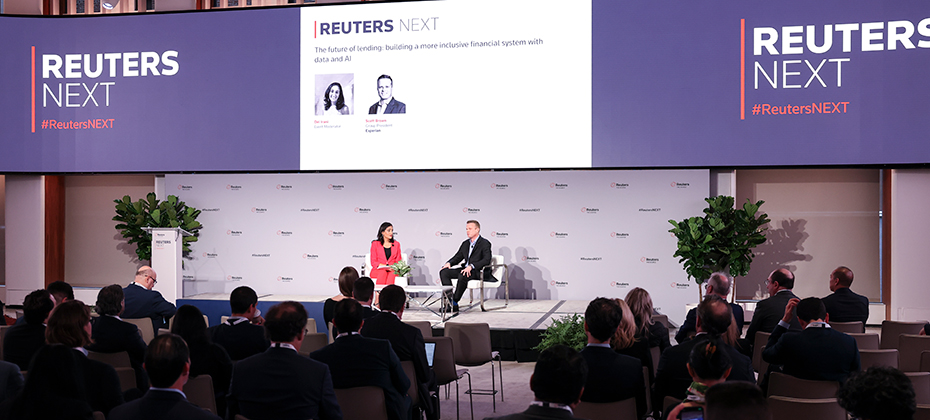
Today, we stand at the forefront of a digital revolution that is reshaping the financial services industry. And, against this backdrop, financial institutions are at vastly different levels of maturity; the world’s biggest banks are managing large-scale infrastructure migrations and making significant investments in AI while regional banks and credit unions are putting plans in place for modernization strategies, and fintechs are purpose-built and cloud native. To explore this more, I recently had the privilege of attending the annual Reuters NEXT live event in New York City. The event gathers globally recognized leaders across business, finance, technology, and government to tackle some of today’s most pressing issues. On the World Stage, I joined Del Irani, a talented anchor and broadcast journalist, to discuss the future of lending and the pivotal role of data and AI in building a more inclusive financial system. Improving financial access Our discussion highlighted the lack of access to traditional financial systems, and the impact it has on nearly 100 million people in North America alone. Globally, the problem affects over one billion people. These people, who are credit invisible, unscoreable, or have subprime credit scores, are unable to secure everyday financial products that many of us take for granted. What many don’t realize is, this is not a fringe subset of the population. Most of us, myself included, know someone who has faced the challenges of financial exclusion. Everyday Americans, including young people who are just starting out, new immigrants and people from diverse communities, often lack access to mainstream financial products. We discussed how traditional lending has a limited view of a consumer. Like looking through a keyhole, the lender’s understanding of the person in view is often incomplete and obstructed. However, with expanded data, technology, and advanced analytics, there is an opportunity to better understand the whole person, and as a result have a more inclusive financial system. At Experian, we have a unique ability to connect the power of traditional credit with alternative data, bringing a more holistic understanding of consumers and their behaviors. We are dedicated to leveraging our rich history in data and our expertise in technology to create the future of credit and ultimately bring financial power to everyone. The future of lending After spending two days with over 700 industry leaders from around the world, one thing is abundantly clear: much like the early days of the internet, today, we are at the cutting-edge of a technical revolution. Reflecting on my time at Reuters NEXT, I am particularly excited by the collective commitment to drive innovative, and smarter ways of working. We are only beginning to scratch the surface of how data and technology can transform financial services, and Experian is positioned to play a significant role. As we look to the future, I am excited about the ways we will create new opportunities for businesses and consumers alike.
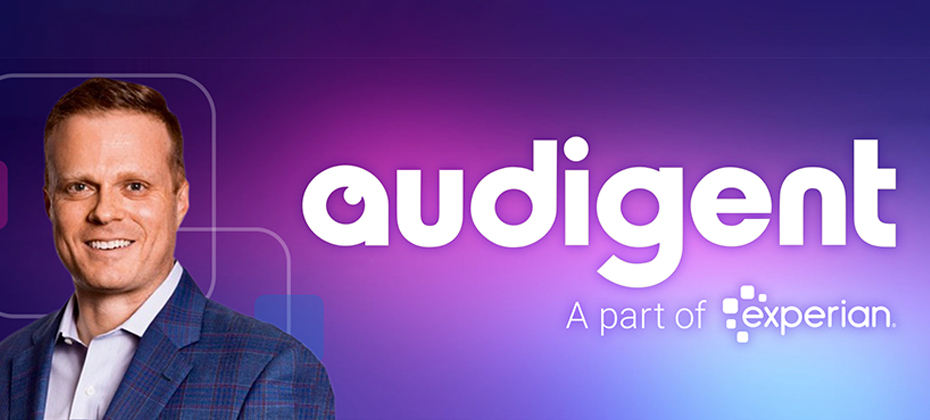
The advertising ecosystem has seen significant transformation over the past few years, with increased privacy regulation, changes in available signals, and the rise of channels like connected TV and retail media. These changes are impacting the way that consumers interact with brands and how brands understand and continue to deliver relevant messages to consumers with precision. Experian has been helping marketers navigate these changes, and as a result, our marketing data and identity solutions underpin much of today’s advertising industry. We’re committed to empowering marketers and agencies to understand and reach their target audiences, across all channels. Today, we are excited to announce our acquisition of Audigent—a leading data and activation platform in the advertising industry. With Audigent’s combination of first-party publisher data, inventory and deep supply-side distribution relationships, publishers, big and small, can empower marketers to better understand their customers, expand the reach of their target audiences and activate those audiences across the most impactful inventory. I am excited to bring together Audigent’s supply-side network as a natural extension to our existing demand-side capabilities. Audigent’s ability to combine inventory with targeted audiences using first-party, third-party and contextual signals provides the best of all worlds, allowing marketers to deliver campaigns centered on consumer choices, preferences, and behaviors. The addition of Audigent further strengthens our strategy to be the premier independent provider of marketing data and identity, ultimately creating more relevant experiences for consumers. To learn more about Experian and Audigent, visit https://www.experian.com/marketing/ and https://audigent.com/.