sdfsad sddfs sdfsdf sdsf sd sfsdfsdf s
asdf sa dsdfdsf ds dsf sdfsdf sdfsd sdf
In this article…
![Big cities, big debt? [Infographic]](https://stg1.experian.com/blogs/news/wp-content/uploads/default-post-image.png)
Debt is often thought of as a scary word and many spend their lives trying to avoid it at all costs. Understanding what credit is, why you need it and how to build it can help make it less frightening and can actually put you in control. Debt doesn’t have to be a four-letter word. To wrap up Financial Literacy Month, Experian released a study this week that takes an in depth look at debt and credit scores in the 20 largest cities across the U.S. and compares the numbers to where these cities were four years ago. The findings show that Detroit residents have the least amount of debt, while the residents of Dallas have the most.
Did you know children are increasingly vulnerable to being a victim of identity theft? Their clean credit history is an easy target for perpetrators. Thieves often can profit for years before the crime is detected. In general, minors should not have credit activity or a credit report until they apply for loans or a credit card. That said, it is possible that they may have a credit history if you have added them as an authorized user to your credit accounts during their teen years.
Experian-Oliver Wyman data reports a 46 percent increase in home equity lending; 19 percent increase in bankcard origination volume Costa Mesa, Calif., April 30, 2014 — Experian®, the leading global information services company, today released year-end analysis of credit and mortgage trends from the 2013 Q4 Experian–Oliver Wyman Market Intelligence Report that showed positive economic indicators along with smarter consumer spending. “Overall from 2013 we saw a strong steady improvement in the economy similar to our 2012 year-end review. Consumer confidence increased as they continue to be resilient during the ongoing recovery,” said Linda Haran, senior director of product management and strategy for Experian Decision Analytics. “While overall consumer debt increased 6 percent, it was not heavily weighted in one particular VantageScore segment. Debt increases occurred across all VantageScore consumer segments equating to a balanced distribution of increases in total debt year-over-year. That represents smarter spending among all consumers.” “Other positive indicators coming out of 2013 include bankruptcies declining 12 percent from 2012 and consumer delinquency trends continuing to decrease. Home Equity originations realized strong growth in 2013, exceeding 2009 levels as new lending was up 42 percent in Q4 2013 over the same period a year ago.” Watch Experian Decision Analytics analysts Linda Haran and Alan Ikemura discuss the latest trends from the Experian-Oliver Wyman Q4 2013 report on consumer debt, bankcards, mortgages and auto. 2013 Mortgage trends included: Overall mortgage origination volume in 2013 was $2 trillion up from $1.9 trillion in 2012 2013 saw annual growth of 25% in new home purchase volume compared to 2012 Overall mortgage 30+ day mortgage delinquency rates were down 14 percent in 2013 versus 2012 The West region saw 30+ day mortgage delinquency rates drop 23 percent in 2013 versus 2012. California saw a 24 percent decline in late mortgage payments. 2013 Bankcard trends included: Analyzing the data for 2013 shows a 19 percent increase in bankcard origination volume, growing from $228 billion to $271 billion year over year. Two-thirds of new bankcard originations occurred among the Super Prime (781 – 850) and Prime (661-780) VantageScore tiers. The U.S. 60+ day delinquency bankcard rates overall improved 14.5 percent in Q4 2013 versus Q4 2012. All 50 states saw bankcard delinquency rates improve for the 60+ day category. California, Tennessee, Massachusetts, Michigan and Wisconsin were the top 5 states that improved their 60+ day delinquency bankcard rates in Q4 2013. Arizona, New Mexico, Arkansas, West Virginia and Alaska were the bottom 5 states in terms of overall percentage improvement among 60+ day delinquency bankcard rates in Q4 2013. Experian has dedicated educational resources to help consumers understand the impact debt has on credit. Consumers can visit our Live Credit Smart website to learn more. For more insight from Experian Decision Analytics, watch our 2013 Q4 Experian–Oliver Wyman Market Intelligence Report presentation: http://ex.pn/1eJaRZB. Make sure to join us for Q1 2014 Experian–Oliver Wyman Market Intelligence Report webinar. About the data The data for this insight and analysis was provided by Experian’s IntelliViewSM product. IntelliView data is sourced from the information that supports the Experian–Oliver Wyman Market Intelligence Reports and is easily accessed through an intuitive, online graphical user interface, which enables financial professionals to extract key findings from the data and integrate them into their business strategies. This unique data asset does this by delivering market intelligence on consumer credit behavior within specific lending categories and geographic regions.
Experian is in final preparations for our upcoming Vision Conference, taking place May 4-7 in Dallas, Texas at the OMNI Hotel. This year’s theme “Quality Growth – Defining New Strategies” is supported consistently throughout our event agenda starting with an impressive group of speakers in our general session including President Bill Clinton, Chief Investment Strategist James W. Paulsen Ph.D. and Heisman Trophy winner, Super Bowl MVP and Pro Football Hall of Famer and Executive Chairman of Jones Lang LaSalle Americas, Roger Staubach.
In honor of Earth Day, Experian Automotive released findings from an analysis comparing electric and hybrid* vehicles. Findings from the analysis showed that in 2013, more than 45 percent of hybrid car buyers were 56 years old or older, while roughly 26 percent of electric car buyers were of the same age. The greater percentage (55 percent) of electric buyers were between the ages of 36 years old and 55 years old. Additionally, nearly 21 percent of consumers purchasing an electric car had an average household income of $175,000 or more. Conversely, only 12 percent of consumers purchasing a hybrid had an average household income of the same level.
The Information Age transformed our way of life. It gives us new ways to communicate, have instant access to resources and the power to share information freely. Unfortunately the luxuries of this new age pose unique threats to consumers that were unconceivable in years past. It opens doors for thieves to capitalize on unsuspecting and innocent consumers. Fraud and identity theft is a booming business. Fraud and identity theft are important concerns for people today. Understanding the tools available to help you prevent fraud and recover from it can help you reduce concerns about your personal information being compromised.

Read Moreio55 Button 2- Learn more Primary button Secondary button Related Posts

Today, we stand at the forefront of a digital revolution that is reshaping the financial services industry. And, against this backdrop, financial institutions are at vastly different levels of maturity; the world’s biggest banks are managing large-scale infrastructure migrations and making significant investments in AI while regional banks and credit unions are putting plans in place for modernization strategies, and fintechs are purpose-built and cloud native. To explore this more, I recently had the privilege of attending the annual Reuters NEXT live event in New York City. The event gathers globally recognized leaders across business, finance, technology, and government to tackle some of today’s most pressing issues. On the World Stage, I joined Del Irani, a talented anchor and broadcast journalist, to discuss the future of lending and the pivotal role of data and AI in building a more inclusive financial system. Improving financial access Our discussion highlighted the lack of access to traditional financial systems, and the impact it has on nearly 100 million people in North America alone. Globally, the problem affects over one billion people. These people, who are credit invisible, unscoreable, or have subprime credit scores, are unable to secure everyday financial products that many of us take for granted. What many don’t realize is, this is not a fringe subset of the population. Most of us, myself included, know someone who has faced the challenges of financial exclusion. Everyday Americans, including young people who are just starting out, new immigrants and people from diverse communities, often lack access to mainstream financial products. We discussed how traditional lending has a limited view of a consumer. Like looking through a keyhole, the lender’s understanding of the person in view is often incomplete and obstructed. However, with expanded data, technology, and advanced analytics, there is an opportunity to better understand the whole person, and as a result have a more inclusive financial system. At Experian, we have a unique ability to connect the power of traditional credit with alternative data, bringing a more holistic understanding of consumers and their behaviors. We are dedicated to leveraging our rich history in data and our expertise in technology to create the future of credit and ultimately bring financial power to everyone. The future of lending After spending two days with over 700 industry leaders from around the world, one thing is abundantly clear: much like the early days of the internet, today, we are at the cutting-edge of a technical revolution. Reflecting on my time at Reuters NEXT, I am particularly excited by the collective commitment to drive innovative, and smarter ways of working. We are only beginning to scratch the surface of how data and technology can transform financial services, and Experian is positioned to play a significant role. As we look to the future, I am excited about the ways we will create new opportunities for businesses and consumers alike.
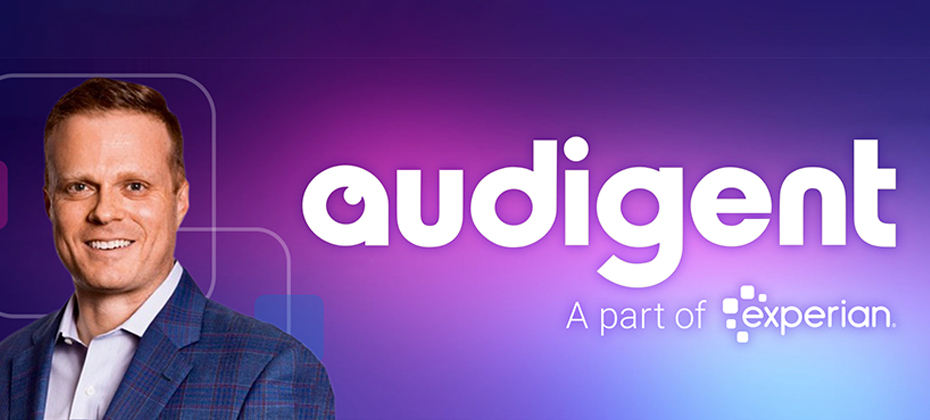
The advertising ecosystem has seen significant transformation over the past few years, with increased privacy regulation, changes in available signals, and the rise of channels like connected TV and retail media. These changes are impacting the way that consumers interact with brands and how brands understand and continue to deliver relevant messages to consumers with precision. Experian has been helping marketers navigate these changes, and as a result, our marketing data and identity solutions underpin much of today’s advertising industry. We’re committed to empowering marketers and agencies to understand and reach their target audiences, across all channels. Today, we are excited to announce our acquisition of Audigent—a leading data and activation platform in the advertising industry. With Audigent’s combination of first-party publisher data, inventory and deep supply-side distribution relationships, publishers, big and small, can empower marketers to better understand their customers, expand the reach of their target audiences and activate those audiences across the most impactful inventory. I am excited to bring together Audigent’s supply-side network as a natural extension to our existing demand-side capabilities. Audigent’s ability to combine inventory with targeted audiences using first-party, third-party and contextual signals provides the best of all worlds, allowing marketers to deliver campaigns centered on consumer choices, preferences, and behaviors. The addition of Audigent further strengthens our strategy to be the premier independent provider of marketing data and identity, ultimately creating more relevant experiences for consumers. To learn more about Experian and Audigent, visit https://www.experian.com/marketing/ and https://audigent.com/.

test