Loading...

Test Latest Posts

Published: September 26, 2025 by Krishna.Nelluri@experian.com

Loading…
Millennials Can Use the Power of Credit Cards for Good

This guest post from Erin Lowry. Erin is the founder of Broke Millennial, where her sarcastic sense of humor entertains and educates her peers about finances. Erin lives and works in New York City, so she's developed quite the knack for finding deals and free events. At the tender age of 18 I opened a letter from my bank to find my first credit card. I peeled the card off the letter and took a moment to stare in awe at this powerful little piece of plastic that suddenly offered me access to money. This was 2007, pre-Credit CARD Act of 2009, when all a college student had to do to get a credit card was head down to the local back — or in some ghastly cases walk through vendor tables set up during orientation days. Students scribbled down their information in exchange for a free t-shirt or water bottle and gleefully received plastic cards that seemingly offered “free money.” After calling to activate my card I suddenly heard my father’s voice in my head, “It’s important you have a credit card. It will help you build credit for life after college, but in order to do so, you must use it responsibly.” “Responsibly” my father had explained, meant never exceeding my credit limit. It required that I pay off my card on time – and in full – each month with no exceptions. It meant not signing up for every credit card deal that would be offered to me, no matter how many frequent flyer miles or ridiculously high limits they tried to lure me in with. Taking his words to heart I used my credit card sparingly my first year in college. Once a month I’d charge an affordable purchase to the card, like filling up my gas tank, and pay it off on time and in full. As the year’s progressed, I became comfortable charging more than $30 or $50 a month – but always ensuring I would be able to pay off the card in full when the bill was due. Unfortunately, plenty of parents, teachers and peers spread myths about credit cards and credit scores. They may suggest carrying a balance, claiming it helps with your credit score. Or conversely, they warn to never get a credit card in college because it’s too tempting to rack up debt. Both schools of thought do a disservice to millennials. Carrying a balance does nothing more than rack up interest. Failure to own a credit card keeps you from developing your credit score. In Experian’s recently published study, millennials need the most guidance when it comes to handling credit. As a generation, we’re not only over-utilizing our credit cards, but more than 50% of us are failing to pay our bills on time. Late payments result in more money owed in interest and lowers credit scores. Instead of creating yet another stereotype about millennials – it’s time to reverse these trends and become a fiscally responsible generation. Credit cards offer a simple solution for building credit and learning to budget your money, but only if you’re using them responsibly. Set reminders for when bills are due. It’s easy — there’s even an app for that. Create a weekly (or monthly) budget and ensure you don’t charge more to your card than is allocated in your budget. And whatever you do, don’t pay off your student loan bills on a credit card. Credit cards don’t create bad habits, lack of awareness about your financial situation creates money problems. When properly utilized, credit cards can help you achieve financial goals — and get you those sweet rewards. Hey, we’re millennials – we all want trophies and rewards for good behavior.

Nov 21,2013 by

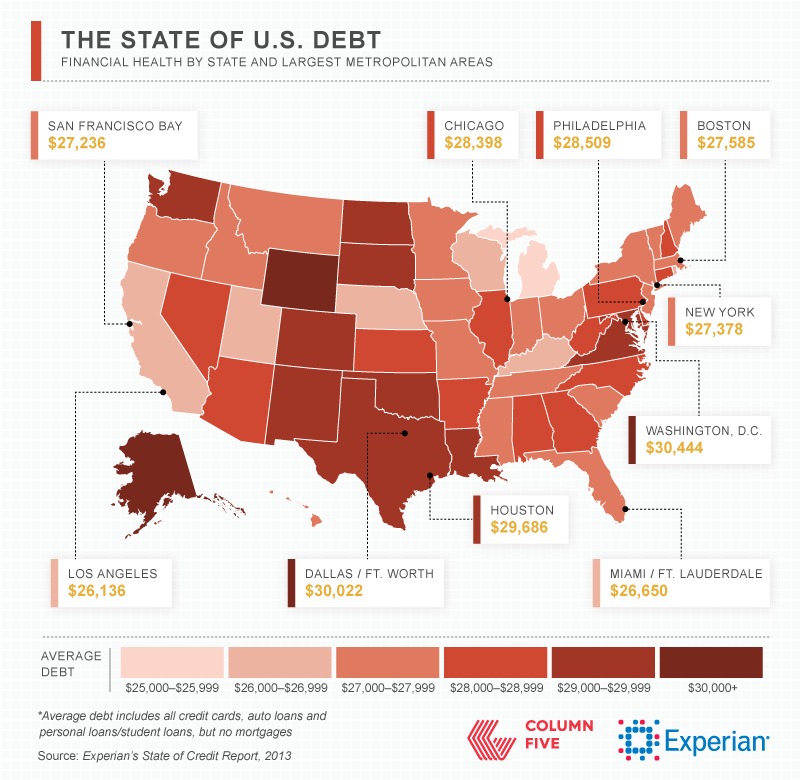
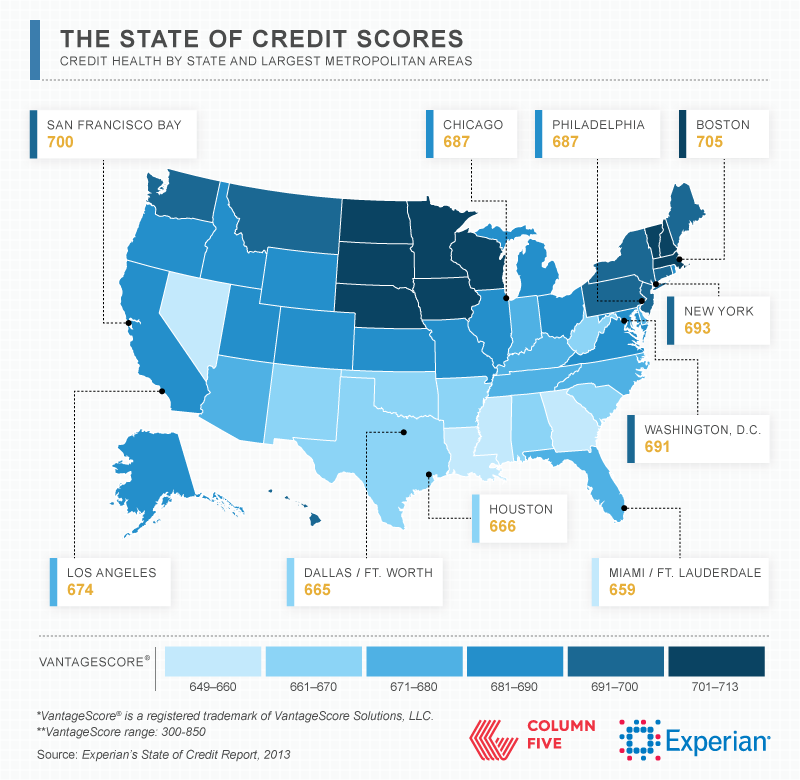
State of Credit 2013 [Infographic]

The Fourth Annual State of Credit report is Experian’s comprehensive look at nationwide data to determine how four different generations are managing their debts by analyzing their credit scores, the number of credit cards they have, how much they are spending on those cards and the occurrence of late payments. Additionally, credit scores were examined in Metropolitan Statistical Areas (MSAs) to provide the 10 highest and 10 lowest credit scores in each generation across the nation. The study creates an opportunity for consumers to better understand how credit works so they can make informed financial decisions and live credit smart even in the face of national economic challenges. Check out the full infographic.

Nov 20,2013 by

What do Baby Boomers and millennials have in common?

This guest post is from Donna Freedman (@DLFreedman). Donna is a former newspaper journalist and staff writer for MSN Money and Get Rich Slowly. Currently she writes for Money Talks News and for her own website, donnafreedman.com. What do Baby Boomers and millennials have in common? Stereotyping, retirement issues and, sometimes, a residence. About that last: According to a Pew Research Center study called “The Boomerang Generation,” 29% of adults aged 20 to 34 live with their folks. Which leads us to a two-pronged stereotype: Boomers were overly indulgent parents who never let their kids suffer even a moment of The Sadz, which is why millennials are such an entitled, failure-to-launch cadre. Maybe that’s true in some cases. Definitely not all. Technically I’m a Boomer (December 1957) but neither I nor anyone I know lived as an aimless, self-centered, smash-the-state brat – and ask my daughter whether I made her write thank-you notes and go to bed on time. As for those much-maligned millennials: Plenty would love to have decent jobs and places of their own, thankyouverymuch. Don’t blame them if sometimes the only available gigs are part-time and poorly paid. According to the Experian State of Credit report, their average debt load is $23,332 – and not necessarily as a result of riotous living, since that amount includes student loans. In fact, millennials have the fewest bank cards of the four generations studied – but they are developing some disturbing habits, such as late payments and overutilization of credit. Are they buying daily lattes and semi-annual tech upgrades with those cards? Hard to say. They could also be using them for things like groceries and utility payments, if they’re servicing student loans with less-than-ideal salaries. Which brings us to another Pew study: Some 27% of people in their 40s and 50s are providing primary support to a grown child, and more than one in five have provided some financial help to a parent in the past year. Maybe that’s one of the reasons this generation has the highest number of bankcards and carries the highest balances of the four generations studied. They’re managing it well (i.e., they have good credit scores) but that could change if, say, their job situations did. More to the point: If these sandwiched Boomers are carrying consumer debt and helping their kids and/or their parents, how much can they set aside for their own golden years? Especially since recent data from Interest.com indicate that seniors in 48 states run the risk of outliving their money. Not that the young folks are sitting in butter: If 29% of millennials can’t afford to make it on their own (hello, student loans!) what’s the likelihood that they’re saving for retirement now, when compound interest is on their side? The bad news, for both groups: Retirement is inexorable, whether it’s four years or four decades away. The good news: It’s not too late to catch up, or to get started – but it probably won’t be easy. Making conscious choices The trick is not to think of it as sacrifice or deprivation, but rather as living intentionally. That means finding new ways to meet today’s expenses without letting them overshadow future wants and needs. A tight budget does not necessarily preclude a meaningful life. Entire books and countless blogs are written on the subject of living frugally and creatively. (Everyone does this differently, by the way. You don’t have to dumpster-dive or make your own laundry soap unless you want to.) Start with a free budgeting tool such as Mint.com or PowerWallet. You might be shocked to find out how much of your paycheck is dribbling away on things that don’t really matter. Once you know where your money is – and isn’t – going, you can start redirecting it to where it will do the most good. These sites help you define goals and figure out new ways to reach them. Hint: Celebrate every victory, even if it’s just “I set aside another $20 for my Roth IRA.” That double sawbuck might not feel like much, but you are making progress. You are taking control of your finances by making smart, conscious choices about spending. No more second-guessing What you shouldn’t be spending? Another moment’s energy moaning about the past, e.g., “Why didn’t I make retirement a priority?” or “Why didn’t I choose a cheaper university?” News flash: The past is past and can’t be retrofitted with smarter behavior. We’re human. Sometimes we make the wrong choices. Sometimes we have “choices” thrust upon us: inflation, layoffs, illness, lack of jobs in our fields. Again: Focus on the progress you’re making vs. what went wrong in the past. For far too long I obsessed over what I considered my “lost” years, a time marked by depression, little to no financial planning, a protracted divorce that left me in my late 40s with zero savings. Frugality and creativity got me through and I came out on the other side with a university degree, rebuilt savings, a Roth IRA and – most important of all – the determination to live intentionally. Am I all set up for a cushy retirement? Not yet. But I’m working on it, and also working to live as intriguing a life as possible even though I don’t have a 9-to-5 paycheck. No more looking back to second-guess past mistakes. Instead, I decided that I don’t want to lose any more time focusing on the time I’ve lost. Here’s hoping you won’t, either.  

Nov 20,2013 by

State of Credit 2013

The Fourth Annual State of Credit report is Experian’s comprehensive look at nationwide data to determine how four different generations are managing their debts by analyzing their credit scores, the number of credit cards they have, how much they are spending on those cards and the occurrence of late payments. Additionally, credit scores were examined in Metropolitan Statistical Areas (MSAs) to provide the 10 highest and 10 lowest credit scores in each generation across the nation. The study creates an opportunity for consumers to better understand how credit works so they can make informed financial decisions and live credit smart even in the face of national economic challenges. Check out the full infographic.

Nov 20,2013 by

Experian Provides 80,000 free memberships to the National Foundation for Credit Counseling®, the nation’s largest financial counseling organization

The National Foundation for Credit Counseling® (NFCC) and Experian® jointly announced today that Experian committed 80,000 free, 12-month memberships to its freecreditscore.comTM product, in support of the NFCC’s Sharpen Your Financial Focus™ program. The NFCC program, launched in September of this year, includes a broad cross-section of supporters – Experian and others – who are committed to increasing the financial well-being of Americans. The donation, the largest of its kind ever awarded by Experian and part of the company’s continued commitment to financial education, will be used by the NFCC to complement financial education provided by NFCC member agencies to individuals who take part in the program. “Experian’s generous gift in support of the Sharpen Your Financial Focus program underscores its commitment to financial education and to the American consumer,” said Susan C. Keating, president and CEO of the NFCC. “The NFCC network is proud to join forces with Experian, as together we help Americans emerge from one of the most difficult financial crises of their lifetimes and rebuild their financial futures.” Experian and NFCC have worked together on several occasions, equipping consumers with information and resources to better understand and, consequently, approach credit use and management more intelligently. According to Victor Nichols, Experian’s North American CEO, the donation is a logical next step toward making a difference through the partnership with NFCC. “Contributing these memberships is a very tangible way to simultaneously educate consumers and demonstrate the impact that credit education products can have on a person’s long-term financial wellness,” said Nichols. “Doing that through a trusted credit counseling organization like the NFCC is a natural extension of our commitment to helping consumers and our commitment to giving back to the communities where we work.” There are many ways Experian contributes to consumers’ personal finance knowledge, but the partnership with NFCC, enabling free, hands-on access to credit scores and reports – as well as the resources to improve understanding of each – is another example of how the company is committing itself and its resources to improve financial literacy for consumers.

Nov 14,2013 by

Experian and the Small Business Administration lending a hand to small businesses

Owning your own business is what many perceive to be as the American dream. And if you’ve been fortunate enough to make that dream a reality, then you’ve certainly heard how indispensable your business is to the country’s economy. But as invaluable as your small business is, many small business owners face daily challenges when it comes to sustainability, profitability and growth. For the last year, Experian and the Small Business Administration (SBA) have lent a helping hand to small businesses that are facing those types of challenges. As a part of their efforts, all Historically Underutilized Business Zone (HUBZone) firms and small businesses that are considered to be socially and economically disadvantaged under the SBA’s 8(a) business development program have full access to BusinessIQ Express. BusinessIQ Express is an online tool that improves cash flow by providing small businesses with the resources they need to better manage their business relationships quickly and easily. It does this in three key ways: • Evaluate — BusinessIQ Express users can evaluate prospects, customers, suppliers and partners on their likelihood to pay or deliver on time. • Monitor — Users can easily monitor their business relationships with alerts and notifications of key changes, allowing them to take appropriate account actions and maintain beneficial relationships. • Collect — The tool offers small-business users unique options that may have been never before easily accessible to them to help collect on outstanding debts and avoid future losses. With access to BusinessIQ Express, small businesses will have a powerful resource at their fingertips to help meet business obligations and improve profitability, ultimately enabling them to address some of those challenges head on.

Nov 13,2013 by

Latest Post Related Post

Read Moreio55 Button 2- Learn more Primary button Secondary button Related Posts
Mar 27,2025 by qamarketingtechnologists

Insights from Reuters Next: Building a More Inclusive Financial System with Data and AI

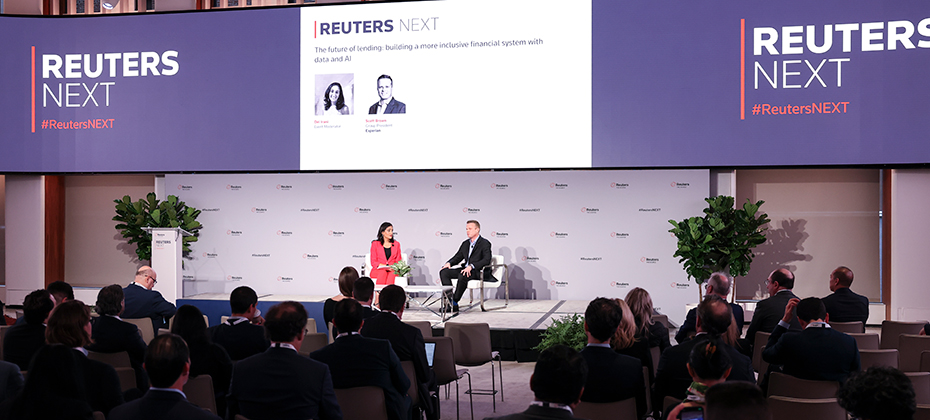
Today, we stand at the forefront of a digital revolution that is reshaping the financial services industry. And, against this backdrop, financial institutions are at vastly different levels of maturity; the world’s biggest banks are managing large-scale infrastructure migrations and making significant investments in AI while regional banks and credit unions are putting plans in place for modernization strategies, and fintechs are purpose-built and cloud native.  To explore this more, I recently had the privilege of attending the annual Reuters NEXT live event in New York City. The event gathers globally recognized leaders across business, finance, technology, and government to tackle some of today’s most pressing issues.  On the World Stage, I joined Del Irani, a talented anchor and broadcast journalist, to discuss the future of lending and the pivotal role of data and AI in building a more inclusive financial system. Improving financial access Our discussion highlighted the lack of access to traditional financial systems, and the impact it has on nearly 100 million people in North America alone. Globally, the problem affects over one billion people. These people, who are credit invisible, unscoreable, or have subprime credit scores, are unable to secure everyday financial products that many of us take for granted.  What many don’t realize is, this is not a fringe subset of the population. Most of us, myself included, know someone who has faced the challenges of financial exclusion. Everyday Americans, including young people who are just starting out, new immigrants and people from diverse communities, often lack access to mainstream financial products.  We discussed how traditional lending has a limited view of a consumer. Like looking through a keyhole, the lender’s understanding of the person in view is often incomplete and obstructed. However, with expanded data, technology, and advanced analytics, there is an opportunity to better understand the whole person, and as a result have a more inclusive financial system.  At Experian, we have a unique ability to connect the power of traditional credit with alternative data, bringing a more holistic understanding of consumers and their behaviors. We are dedicated to leveraging our rich history in data and our expertise in technology to create the future of credit and ultimately bring financial power to everyone. The future of lending After spending two days with over 700 industry leaders from around the world, one thing is abundantly clear: much like the early days of the internet, today, we are at the cutting-edge of a technical revolution. Reflecting on my time at Reuters NEXT, I am particularly excited by the collective commitment to drive innovative, and smarter ways of working.  We are only beginning to scratch the surface of how data and technology can transform financial services, and Experian is positioned to play a significant role. As we look to the future, I am excited about the ways we will create new opportunities for businesses and consumers alike.    
Dec 13,2024 by Scott Brown

Powering the Advertising Ecosystem with Our Identity and Activation Capabilities

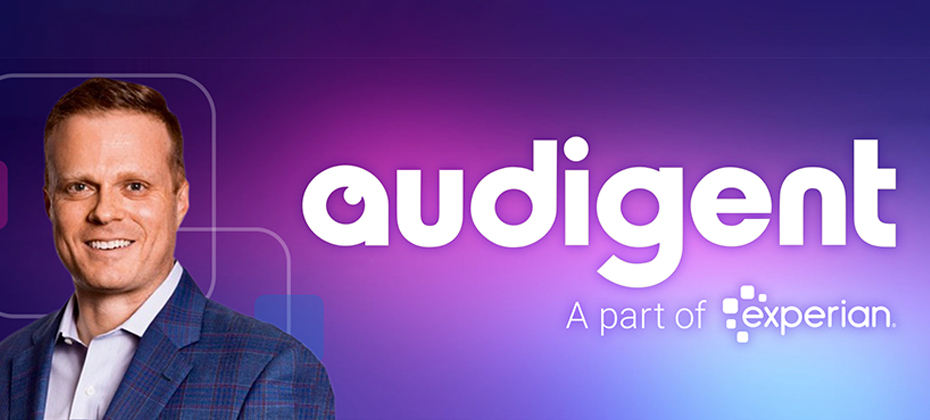
The advertising ecosystem has seen significant transformation over the past few years, with increased privacy regulation, changes in available signals, and the rise of channels like connected TV and retail media. These changes are impacting the way that consumers interact with brands and how brands understand and continue to deliver relevant messages to consumers with precision.   Experian has been helping marketers navigate these changes, and as a result, our marketing data and identity solutions underpin much of today’s advertising industry. We’re committed to empowering marketers and agencies to understand and reach their target audiences, across all channels. Today, we are excited to announce our acquisition of Audigent—a leading data and activation platform in the advertising industry.   With Audigent’s combination of first-party publisher data, inventory and deep supply-side distribution relationships, publishers, big and small, can empower marketers to better understand their customers, expand the reach of their target audiences and activate those audiences across the most impactful inventory.      I am excited to bring together Audigent’s supply-side network as a natural extension to our existing demand-side capabilities. Audigent’s ability to combine inventory with targeted audiences using first-party, third-party and contextual signals provides the best of all worlds, allowing marketers to deliver campaigns centered on consumer choices, preferences, and behaviors.    The addition of Audigent further strengthens our strategy to be the premier independent provider of marketing data and identity, ultimately creating more relevant experiences for consumers.   To learn more about Experian and Audigent, visit https://www.experian.com/marketing/ and https://audigent.com/.  

Dec 04,2024 by Scott Brown