
During the National Football League’s biggest weekend, it’s often the commercials that take center stage. It’s every advertiser’s dream. The world as your audience. But how do advertisers capitalize on the opportunity and connect with viewers?

I’m the Head of Utilities in Experian’s Energy and Water Sector. I handle a very specialized form of fraud called “energy theft,” where an individual or business steals electricity by tapping a line or bypassing the energy meter. Back in 2010, the process for handling this type of fraud was broken. Few companies bothered investigating instances of theft; they just accepted the pervasive issue as a cost of sale. This fraudulent activity was costing energy consumers approximately £30 per year, while putting countless homes and offices at risk, since faulty wiring for gas and electricity often leads to house fires or even explosions. Energy regulators decided the time had come for energy providers to crack down on the practice. My team and I at Experian were invited to a consultation to discuss how to use data and innovative techniques to end energy theft. The model we suggested was adopted as the preferred approach, and in the last year the project has been implemented across the entire industry in the UK. Our model combines data from the big energy companies with Experian’s own database to identify which residential or business properties may be stealing energy from the network. We can determine this by comparing energy consumption trends with information on how many people actually occupy the property. With both data sets, we can determine the amount of energy we believe the property should be consuming. If the energy consumption is lower than it should be on a particular piece of property, we look at fraud and credit data sets to see if the case qualifies as a genuine instance of low consumption (such as an older woman living alone), or if someone is perpetrating theft. We send that information back to the supplier so they can prioritize it for investigation. Through this program, I’ve helped protect countless homes and saved consumers from having to pay for energy they’re not using. I love that what I do not only gives me the opportunity to be creative in how I use data, but also helps protect businesses and everyday people. Read more #ExperianStories from our colleagues around the world.

Today we are living in a world of data. It is everywhere, affecting many aspects of not only how our businesses are run, but our individual lives. It is growing in value and becoming more significant with each year. When used correctly, it has the potential to make positive changes. The challenge is that while data is everywhere, we don’t always trust it. While many businesses today say that data is driving new opportunities around increasing revenue and better serving their clients, the level of accuracy within their data is lacking. According to new Experian Data Quality research, less than half of organizations globally trust their data to make important business decisions. That level of doubt is causing 52% of organizations to rely on educated guesses or gut feelings to make decisions based on their data. That lack of clarity is causing businesses to not only operate with less efficiency, but 73% of c-level executives indicate that inaccurate data is undermining their ability to provide an excellent customer experience. While many are making strides to try to improve the quality of data and the trust level, they are often hindered by departmental silos and a lack of consistency across data sources. Much of that comes down to basic communication and an ability to talk about data. Departments lack understanding of how information is used across an organization or what the true impact is of poor data. In my discussions across the industry, it is clear that data lacks a consistent, meaningful language. We tend to focus on the level of pure accuracy levels, rather than the effect to the business or the customer. Data strategies need to more closely relate to defined business goals, outcomes and use cases, rather than just a data policy that sits within a vacuum. In the year ahead, we expect that many businesses will make strides within their data management programs and improve the quality of data. However, for those programs to be successful, they need to tie to broader business objectives. In those instances, developing more trusted data will certainly pay off. To learn more, check out the new global data management benchmark report.
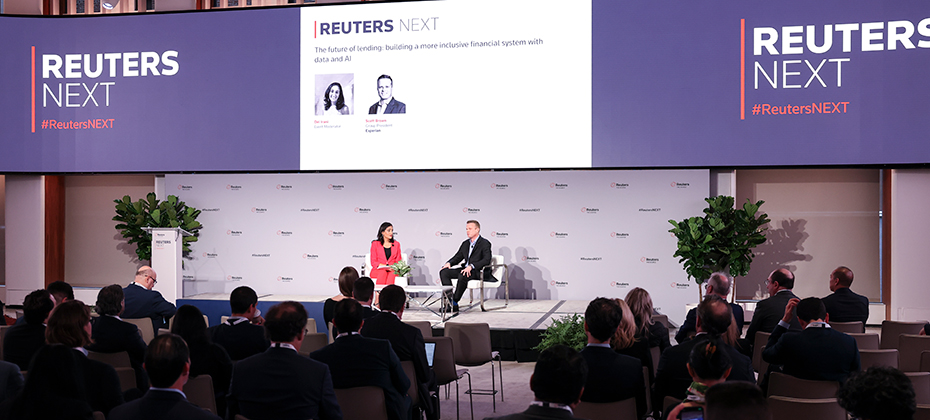
Today, we stand at the forefront of a digital revolution that is reshaping the financial services industry. And, against this backdrop, financial institutions are at vastly different levels of maturity; the world’s biggest banks are managing large-scale infrastructure migrations and making significant investments in AI while regional banks and credit unions are putting plans in place for modernization strategies, and fintechs are purpose-built and cloud native. To explore this more, I recently had the privilege of attending the annual Reuters NEXT live event in New York City. The event gathers globally recognized leaders across business, finance, technology, and government to tackle some of today’s most pressing issues. On the World Stage, I joined Del Irani, a talented anchor and broadcast journalist, to discuss the future of lending and the pivotal role of data and AI in building a more inclusive financial system. Improving financial access Our discussion highlighted the lack of access to traditional financial systems, and the impact it has on nearly 100 million people in North America alone. Globally, the problem affects over one billion people. These people, who are credit invisible, unscoreable, or have subprime credit scores, are unable to secure everyday financial products that many of us take for granted. What many don’t realize is, this is not a fringe subset of the population. Most of us, myself included, know someone who has faced the challenges of financial exclusion. Everyday Americans, including young people who are just starting out, new immigrants and people from diverse communities, often lack access to mainstream financial products. We discussed how traditional lending has a limited view of a consumer. Like looking through a keyhole, the lender’s understanding of the person in view is often incomplete and obstructed. However, with expanded data, technology, and advanced analytics, there is an opportunity to better understand the whole person, and as a result have a more inclusive financial system. At Experian, we have a unique ability to connect the power of traditional credit with alternative data, bringing a more holistic understanding of consumers and their behaviors. We are dedicated to leveraging our rich history in data and our expertise in technology to create the future of credit and ultimately bring financial power to everyone. The future of lending After spending two days with over 700 industry leaders from around the world, one thing is abundantly clear: much like the early days of the internet, today, we are at the cutting-edge of a technical revolution. Reflecting on my time at Reuters NEXT, I am particularly excited by the collective commitment to drive innovative, and smarter ways of working. We are only beginning to scratch the surface of how data and technology can transform financial services, and Experian is positioned to play a significant role. As we look to the future, I am excited about the ways we will create new opportunities for businesses and consumers alike.
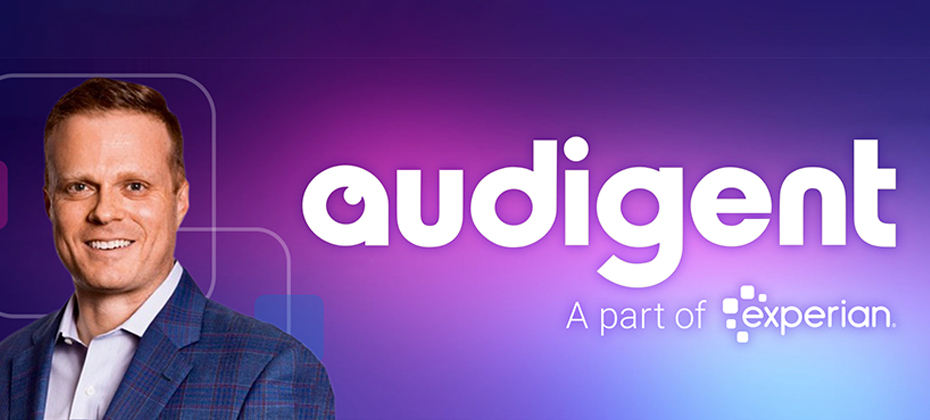
The advertising ecosystem has seen significant transformation over the past few years, with increased privacy regulation, changes in available signals, and the rise of channels like connected TV and retail media. These changes are impacting the way that consumers interact with brands and how brands understand and continue to deliver relevant messages to consumers with precision. Experian has been helping marketers navigate these changes, and as a result, our marketing data and identity solutions underpin much of today’s advertising industry. We’re committed to empowering marketers and agencies to understand and reach their target audiences, across all channels. Today, we are excited to announce our acquisition of Audigent—a leading data and activation platform in the advertising industry. With Audigent’s combination of first-party publisher data, inventory and deep supply-side distribution relationships, publishers, big and small, can empower marketers to better understand their customers, expand the reach of their target audiences and activate those audiences across the most impactful inventory. I am excited to bring together Audigent’s supply-side network as a natural extension to our existing demand-side capabilities. Audigent’s ability to combine inventory with targeted audiences using first-party, third-party and contextual signals provides the best of all worlds, allowing marketers to deliver campaigns centered on consumer choices, preferences, and behaviors. The addition of Audigent further strengthens our strategy to be the premier independent provider of marketing data and identity, ultimately creating more relevant experiences for consumers. To learn more about Experian and Audigent, visit https://www.experian.com/marketing/ and https://audigent.com/.
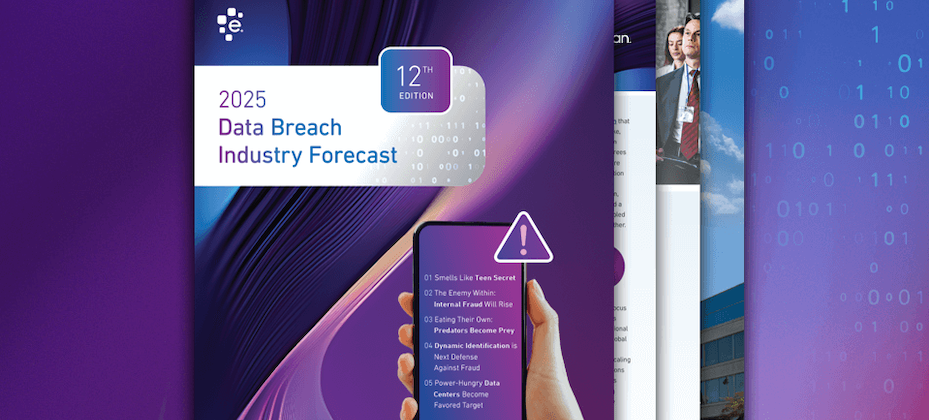
When it comes to cybercriminals and threat vectors, we need to expect the unexpected. Experian’s 12th annual Data Breach Industry Forecast highlights several potential trends for 2025, with AI playing a central role. This year has already seen more data breaches and impacted consumers than 2023, indicating that global data breaches are not slowing down. Some things to watch out for next year includes the potential for more internal fraud. As companies train employees on AI, there is a growing risk that some will misuse their knowledge for internal theft and sourcing sensitive information. Another trend may be cyberattackers targeting large data centers, with the growth of generative AI introducing power as a new attack vector. It’s reported that a single ChatGPT query uses significantly more electricity than a standard Google search, making data centers and cloud infrastructure vulnerable, especially in countries with varying security standards. We expect AI-related attacks to dominate the headlines next year and investments in cybersecurity will increase to tackle this emerging threat, as hackers leverage AI for phishing, password cracking, malware, and deepfakes. Jim Steven, Head of Crisis and Data Response Services at Experian Global Data Breach Resolution in the UK, anticipates that global data breaches will persist at their current rate next year. He notes that ransomware attacks are likely to become even more sophisticated with the integration of AI. Additionally, Steven predicts that threat actors will escalate their tactics to achieve greater rewards, and the misuse of consumer data to damage reputations will increase in 2025. To access the complimentary report, click here.