
Through Experian’s technology and cutting-edge innovations, we’re helping consumers build their credit histories and access affordable, mainstream financial products. We are truly improving consumer’s financial lives in a meaningful way. But, with all the exciting innovations in technology, sometimes, it’s easy to forget the impact we can create in our everyday interactions with people. Let me give you an example. I recently traveled to Nashville, TN for a conference. Since I didn’t know my way around the area, I hired a driver to pick me up and take me to my hotel. As I was heading to the airport exit, I saw a woman holding a sign that read “Experian.” I introduced myself and we both got into the car and headed for the hotel. As we were driving, she asked, “So, do you really work at Experian?” “Here we go…” I thought as I responded, “Yes, I do.” She went on to tell me she was a Desert Storm veteran who faced some real financial hardships that tanked her credit score when she returned home from war. She saw a commercial for Experian Boost, our new tool that allows people to get credit for paying their telecom and utility bills on time. After trying the free tool, her score went up 11 points. This boost got her thinking about other ways she could improve her credit score. I spent the rest of our drive sharing some credit education including the importance improving her debt to income ratio, lowering utilization rates and making on time payments. As we pulled up to my hotel and I got out of the car, she asked if she could give me a hug. “Of course,” I said. I was touched and slightly surprised, to see how much of an effect I had on her. Only, I didn’t realize then just how much of an impact our conversation would truly make on her life. I recently had a chance to reconnect with Renee Preston. She told me about the dramatic changes she’s made since we met that are creating a lasting impact on her financial health. At the time Renee picked me up, she was $56,000 in debt and her credit score was 605. Just a few months after meeting her, Renee put some of the credit education tips I shared with her into practice. Since then, she’s lowered her debt by $36,000 and her credit score has improved by more than 60 points. While Renee knows she still has work to do, she is inspired to continue to improve her financial wellbeing. “I’ve been driving for more than 26 years. I’ve met all kinds of celebrities like Pink and Justin Timberlake. The fact that Alex took the time to talk to a little person like me, it really meant a lot. Since we met, I’ve taken a lot of steps to improve my credit and finances including getting a job with a much higher salary. I truly feel I owe all of these changes to Alex.” Renee Preston, Nashville, TN As a company, we are committed to helping people improve their financial lives. When we talk about being the consumer’s bureau, this is exactly what we mean. I’m so thankful I had the opportunity to meet Renee. I’m inspired to continue to find new ways to improve people’s financial health, both personally and as a leading member of Experian’s team.

As 2019 comes to a close, many people are outlining their goals for the new year. For some people, this means making plans to get healthier, reconnect with old friends or find a new job. For many, improving financial health comes in at the top of the list. In fact, we know saving more is a top resolution for 50% of people and one in three want to improve their credit scores in 2020. Saint Exupery once said, “a goal without a plan is just a wish” and he was right. When setting any goal, it’s important to put a plan in place. An essential first step toward creating an effective plan of action is getting a grasp of your current situation. The same is true for creating and achieving goals related to improving your financial health. Each year, we take a look at how Americans across the country are managing their credit to help people understand the purpose and impact of their credit scores. Our annual State of Credit report highlights average credit scores, debt levels and delinquency rates of people across America. In releasing this report, we hope to give people insight to help them make more informed decisions about credit use as we prepare to head into a new decade. Our latest report showed the average credit score hit an eight-year-high at 682. While people are taking on slightly more credit card, mortgage and nonmortgage debt year-over-year, delinquency rates are decreasing on average and utilization remains consistent at 30%, which means people are responsibly managing the debt they’re carrying. If your credit score is lower than you’d like, or if you’re looking for ways to maintain a positive credit history and improve your financial health, here are five ways you can better your financial standing in 2020: Check your credit report and credit score. Your credit report serves as your financial references. Take care of your credit report and you will take a big step toward better financial health. Credit scores play an important role in your financial journey. They translate the information in your credit report into a number reflecting the risk of doing business with you. Check your credit score at the same time you check your credit report. When you get credit score you should receive an explanation of what the score means and what from your credit report is most affecting it. This is an important step to gauge your current standing and to develop a plan to improve your credit report and scores. You can get a free credit report once every 12 months from Experian by visiting www.annualcreditreport.com or through the Experian app. Keep your utilization rate low. Your utilization rate, or balance-to-limit ratio, should never exceed 30 percent of your credit limit. At a maximum, your total credit card balances should not be more than 30 percent of your total credit card limits, and you don’t want any one card to have a balance of more than 30 percent of the limit of that one card. Both can hurt you. This doesn’t mean that you want to get your balances up to 30 percent and keep them there. The lower your utilization rate, the better. People with the best credit scores have utilization rates of less than 10 percent. As you head into 2020, focus on reducing your credit card balances and keeping your balances low. Use the tools available to you like Experian Boost. If you’re paying your cell phone, cable, satellite and utility payments on time, you can use our free tool, Experian Boost, to potentially increase your credit scores in the new year. We see scores improve for two out of three people who use Experian Boost with an average increase of more than 10 points. Plan ahead for major credit purchases. For many, the start of a new year can mean a new car, a new home and more. When preparing to make a major purchase, it is critical to demonstrate financial stability in the three to six months leading up to it. While it is important to optimize your scores before purchasing a house or a car, be careful not to make too many big moves right before your purchase. Closing accounts or applying for new credit could temporarily reduce your scores, so don’t open any new accounts during the months leading up to your purchase. Wait to close accounts or apply for new ones until after you have the keys to that car or house in hand. Pay on time, every time. Nothing will hurt your credit score more than missed or late payments. To maintain a positive credit history, make a plan to catch up on any missed payments. Enrolling in autopay can be a helpful way to stay on a payment schedule that works for you. Remember, credit can be a financial tool, but debt is a financial problem. Create your financial game plan for 2020 and use these tips to prepare for a financially healthy new year. If you need help along the way, visit the Ask Experian blog or tune into our weekly Credit Chat.
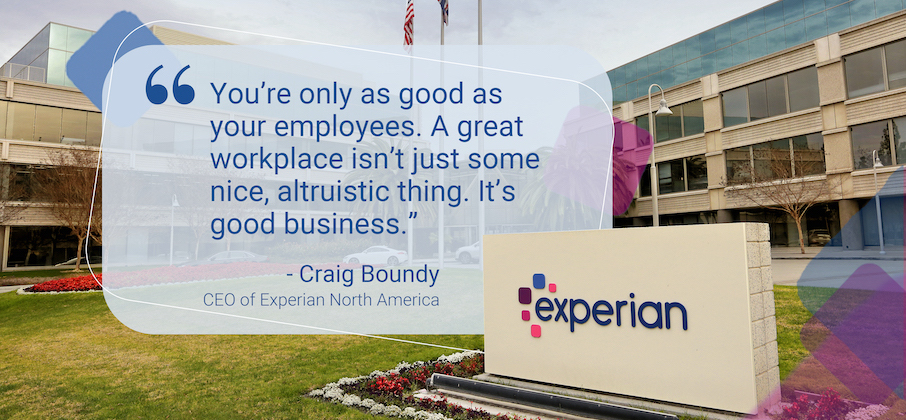
For the past seven years, Experian’s perennial presence on the Orange County Register’s list of Top Workplaces has been the cause for real celebration across our workforce, making this year more special with added honor of receiving the Award of Excellence for its corporate values. “We embrace strong corporate values and celebrate a diversity of ideas and backgrounds across the company. This diversity of thinking and the way we harness it at Experian helps to fuel our innovation and ultimately our ongoing success as a business,” said Craig Boundy, former chief executive officer of Experian North America. “This award is a credit to all the talented people who work here at Experian, bringing a strong drive to perform around a shared mission.” We celebrate our diversity through a range of fun, engaging and informative cultural events, including those supported by our Employee Resource Groups (ERGs). Employees can also join one of our many social clubs to share interests with colleagues, or volunteer with nonprofit organizations to give back to the communities of which Experian supports. Our culture of inclusion is truly something to celebrate and that’s because of every single person who makes up the Experian family and brings our brand to life every day. Experian’s mission is to create a better tomorrow through data, connecting consumers and businesses with more opportunities than ever before. This is supported by our culture of continuous innovation, from the way we work to the solutions we create. This commitment to innovation has helped us create a workplace where our teams across the world have a desire to help change the lives of millions for the better. The diversity of thinking across Experian, and the way in which we harness it, helps fuel our innovation and ultimately our ongoing success as a business. This makes our work relevant to our consumers and clients, adding more value in their own lives – creating a better tomorrow for them. As part of this, our culture works to connect employees to our brand, by involving them in the creation of new products and services. This has had a tremendous positive impact with employees providing valuable feedback and creating advocacy among team members. For example, when developing Experian Boost, which has helped millions of people raise their credit scores, we first beta-tested and shared the innovation internally and were able to garner valuable feedback and support from employees. As a result, we’ve seen tremendous success since the launch of Experian Boost earlier this year. Innovation and Business Success Our culture of diversity and inclusion has enabled Experian to grow and evolve while remaining at the forefront of innovation. For more than 40 years, Orange County has been the heart of our North America operations. We’ve remained focused on developing a culture that achieves and sustains higher performance while giving back to the community, and we’ve strengthened the business across every front. As a result, we continue to have a positive impact on consumers, businesses and the economy. We do this with our products, technology, and innovations — from finding breakthroughs around better utilizing data, to identifying ways we can make access to credit faster and simpler for millions around the world. We’re very proud to be named a Top Workplace by the Orange County Register for our positive workplace culture, which attracts and retains top talent in Orange County, as well as our other locations across North America.

This blog is written by Matt Dunn, GTM Managing Director at Experian. The Women in Sales Awards recognises the exemplary efforts of individuals in sales teams across Europe. Open by nomination only, the awards celebrate the achievement of women who go above and beyond in their career. It aims to promote the needs for greater gender diversity in sales and executive leadership teams across the corporate landscape. We place significant emphasis on helping and supporting women to reach senior roles, and I’m delighted that seven colleagues – Laura Webster, Kathryn O’Brien, Liz Clarke, Ivelina Mihaleva, Bally Ubhi, Clare Brown and Caroline McCrystal – were nominated as finalists at the awards. Even better, Caroline was named as the overall winner in the ‘2019 Best Woman in Inside Sales’ category. Not only that, Caroline was also the winner of the ‘Most Distinguished Saleswoman of the Year’ award too. In total, there were more than 1,000 nominations from companies in 22 countries, which goes to show what a remarkable and fantastic achievement to be recognised in such a way. We’re extremely proud of all their efforts this year and I’m sure you’ll join me in congratulating all of the nominees and Caroline on their outstanding success.

For many of us, the holidays are an exciting time filled with family, friends and a flurry of gift giving and receiving. Unfortunately, this time of year can also put a strain on finances and your financial health. In fact, we see many people start a new holiday season while they’re still working to pay off debt from the year before. Each year, our holiday spending survey takes a look at how people are feeling about holiday spending, how much they plan to spend and their financial goals for the new year. We found shoppers plan to spend 75% more this year on holiday spending than in 2018 with an average of $1,649, and 63% agree holiday expenses affect their finances negatively. We also found 38% of the people we spoke to are feeling stressed as the holiday season approaches. Getting a spending game plan in order now can help protect your financial health and keep your holidays merry and bright. Here are three ways to stay financially fit this holiday season and beyond: Create your holiday spending plan. Setting a budget is an important first step to ensure you’re not spending more than you can afford, but your holiday spending plan should include more than that. Think about who you need to shop for, where you’re going to shop and when you’re going to shop. Our survey showed the lure of a good deal can be hard for some to resist. In fact, one in five Americans said they would risk becoming a victim of identity theft for a good deal. Having a plan in place can help you avoid risky spending behavior while scrambling for last minute gifts. So, make that list and check it twice. Use credit as a financial tool. All year and especially around the holidays, I like to remind people that credit can be a financial tool, while debt is a financial problem. We know that about 44% of people plan to use credit to pay for gifts, and it’s important to do so responsibly. After all, the bills always arrive in January. If you’re going to use credit to pay for gifts, make sure you have a plan for paying your balances off to avoid missing payments and increasing your utilization rate – two critical factors that can have a negative impact on credit scores. Additionally, we found one in four shoppers plan to open a new credit card this season. Opening one or two cards to take advantage of in-store discounts or cash back offers can be a useful way to save money during the holidays, but don’t overdo it. If you take advantage of too many rewards offers, you may find you’ve saved yourself right into debt. Prepare your credit for holiday shopping and the new year. Getting your credit ready for the holiday season and the new year should be part of your holiday spending plan. That way, if you do plan to apply for new credit this shopping season or in 2020, your credit is ready to work for you. Get a copy of your credit report to ensure there are no surprises and catch up an any missed or late payments. This is also the first holiday season you can use free tools like Experian Boost to improve your credit scores if you’re paying your telecom and utility payments on time. We see scores improve for two out of three users with an average boost of more than 10 points. If you have a limited credit history or a thin credit file, you may see an even bigger boost to your credit score. We know almost have of those we spoke to for our survey will try to improve their credit score before the start of the new decade and Experian Boost is proving to be a valuable tool for consumers looking to do just that. There's often the temptation to overspend, but the best gift you can give yourself is being financially smart. My hope is these tips can help boost your holiday cheer while preparing you for a financially healthy new year. Happy holidays.

Technology revolutionizes the way businesses operate, but implementing change within a company is often challenging and company-wide support is vital to successfully undergoing a transformation. At Experian, we’re using technology and innovation to modernize an industry, and satisfy the real-time data demands of consumers and businesses. The success of this transformation is one of the reasons why we’re proud that our Global CIO, Barry Libenson, has been named the CIO of the Year. The 2019 Dive Awards recognize the industry’s top disruptors and innovators. These executives, companies, trends, and breakthroughs are transforming the industry. Winners were chosen by the editors of CIO Dive based on thorough and independent research, reporting, and analysis. Other award winners include Google Cloud and VMware. In 2015, Experian began the daunting task of moving from a traditional computing architecture to the cloud. Specifically, we put in motion a cloud strategy centered on flexibility and the ability to operate in any cloud. Such transformations often start by centralizing data and implementing new processes that minimize overhead and speed time to market, like cloud and mobile computing. This is a monumental job with our massive digital infrastructure and significant global reach, but it enables us to provide customers with real-time access to data. To do this we pioneered the use of Hadoop to store massive quantities of data for consumer credit scoring. Today, we maintain Ascend, a platform of 250 million redacted consumer records that enables our clients do real time queries on consumer credit data rather than batch processing. This has worked to digitally transform Experian from a traditional credit bureau to a technology and software provider. For us to further evolve we began working on APIs for internal use rather than going straight to customer-facing features. Today, we use APIs to help our clients and consumers access and make use of key data insights. For example, Experian Boost, which has helped millions of people raise their credit scores, is a result of information being accessed through API calls. As a result of our digital transformation, our API hub is processing more than 100 million transactions a month and Ascend is now one of our most successful cloud computing architectures. This all represents business opportunities that wouldn’t have been possible with a traditional digital infrastructure. Success for the technology team at Experian is found in the financial performance of the company. "What I tell my team is the biggest sign of us being successful is praise," said Libenson. "When the businesses at Experian tell us we're helping them or we're doing the right things, that's the best measurement I can think of, in terms of success." As one of the world’s most innovative companies, Experian’s business continues to evolve to deliver faster, better services for our clients and consumers. "The people and organizations that win the Dive Awards are trailblazers and leaders in their markets," said Davide Savenije, editor-in-chief of CIO Dive’s publisher Industry Dive. "Their achievements in 2019 are shaping the future of where the latest strategies and trends are going." While industry accolades like CIO of the Year are important, the truth is that any transformation isn't an endpoint, but a journey. To succeed, we are in it for the long haul to use technology to help deliver results for our clients. Read the full article on CIODive to learn more about Experian’s digital transformation.

Read Moreio55 Button 2- Learn more Primary button Secondary button Related Posts

Today, we stand at the forefront of a digital revolution that is reshaping the financial services industry. And, against this backdrop, financial institutions are at vastly different levels of maturity; the world’s biggest banks are managing large-scale infrastructure migrations and making significant investments in AI while regional banks and credit unions are putting plans in place for modernization strategies, and fintechs are purpose-built and cloud native. To explore this more, I recently had the privilege of attending the annual Reuters NEXT live event in New York City. The event gathers globally recognized leaders across business, finance, technology, and government to tackle some of today’s most pressing issues. On the World Stage, I joined Del Irani, a talented anchor and broadcast journalist, to discuss the future of lending and the pivotal role of data and AI in building a more inclusive financial system. Improving financial access Our discussion highlighted the lack of access to traditional financial systems, and the impact it has on nearly 100 million people in North America alone. Globally, the problem affects over one billion people. These people, who are credit invisible, unscoreable, or have subprime credit scores, are unable to secure everyday financial products that many of us take for granted. What many don’t realize is, this is not a fringe subset of the population. Most of us, myself included, know someone who has faced the challenges of financial exclusion. Everyday Americans, including young people who are just starting out, new immigrants and people from diverse communities, often lack access to mainstream financial products. We discussed how traditional lending has a limited view of a consumer. Like looking through a keyhole, the lender’s understanding of the person in view is often incomplete and obstructed. However, with expanded data, technology, and advanced analytics, there is an opportunity to better understand the whole person, and as a result have a more inclusive financial system. At Experian, we have a unique ability to connect the power of traditional credit with alternative data, bringing a more holistic understanding of consumers and their behaviors. We are dedicated to leveraging our rich history in data and our expertise in technology to create the future of credit and ultimately bring financial power to everyone. The future of lending After spending two days with over 700 industry leaders from around the world, one thing is abundantly clear: much like the early days of the internet, today, we are at the cutting-edge of a technical revolution. Reflecting on my time at Reuters NEXT, I am particularly excited by the collective commitment to drive innovative, and smarter ways of working. We are only beginning to scratch the surface of how data and technology can transform financial services, and Experian is positioned to play a significant role. As we look to the future, I am excited about the ways we will create new opportunities for businesses and consumers alike.
The advertising ecosystem has seen significant transformation over the past few years, with increased privacy regulation, changes in available signals, and the rise of channels like connected TV and retail media. These changes are impacting the way that consumers interact with brands and how brands understand and continue to deliver relevant messages to consumers with precision. Experian has been helping marketers navigate these changes, and as a result, our marketing data and identity solutions underpin much of today’s advertising industry. We’re committed to empowering marketers and agencies to understand and reach their target audiences, across all channels. Today, we are excited to announce our acquisition of Audigent—a leading data and activation platform in the advertising industry. With Audigent’s combination of first-party publisher data, inventory and deep supply-side distribution relationships, publishers, big and small, can empower marketers to better understand their customers, expand the reach of their target audiences and activate those audiences across the most impactful inventory. I am excited to bring together Audigent’s supply-side network as a natural extension to our existing demand-side capabilities. Audigent’s ability to combine inventory with targeted audiences using first-party, third-party and contextual signals provides the best of all worlds, allowing marketers to deliver campaigns centered on consumer choices, preferences, and behaviors. The addition of Audigent further strengthens our strategy to be the premier independent provider of marketing data and identity, ultimately creating more relevant experiences for consumers. To learn more about Experian and Audigent, visit https://www.experian.com/marketing/ and https://audigent.com/.