Test Business Information Page
Experian and Moody’s Analytics accounce the release of teh Q2 2017 Main Street Report. Small business delinquencies push lower.
The Consumer Financial Protection Bureau (CFPB) is engaged in increasing its understanding of the opportunities and potential challenges associated with consumer permissioned account data. The agency launched a request for information on the topic in November 2016 and is currently analyzing information it received prior to the February 2017 comment deadline. In remarksat a field hearing in conjunction with the launch of the RFI, CFPB Director Cordray stated, that "access to digital financial records is critical. As with your student records or medical records, your financial records tell an important story about you. With health care, for example, if you can see your records, it is easier to participate.”
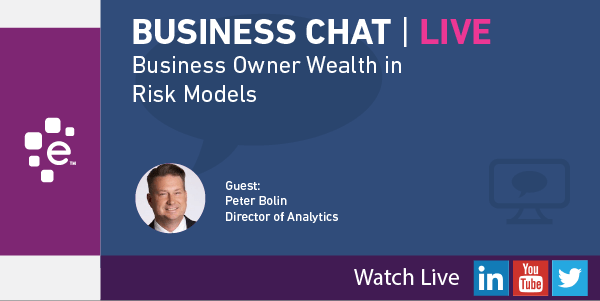
This week for Business Chat | Live we interviewed Peter Bolin about business owner wealth, and how lenders are finding new ways to evaluate entrepreneurs in the underwriting process. Gary: Today we're going to have a discussion on business owner wealth and evaluating business owner wealth in risk models. Joining me today is Mr. Peter Bolin. He's the Director of Analytics and Consulting for Experian. Good morning Peter. Peter: Good morning Gary. Good morning everyone. Gary: Let's just kick off this discussion. Business owner wealth and small business owners and evaluating risk. What's it all about? Peter: Yeah, thanks Gary, thanks everyone. As I travel around talking to a hundred clients a year, one theme that always comes back is, "Hey Pete, can you and Experian help us get to yes?" We know that there is a pool of small businesses, a pool of small business owners out there that are small, that are emerging, that are cutting edge, maybe not solid yet, but they don't have a credit file, what we typically call maybe credit invisibles or maybe thin files, but we know that they have a good idea, we know that they've good product and services, but we can't approve them. Is there anything you can do to help us get to yes? At Experian we got to thinking about that. We have a tremendous amount of data assets as everyone know. We looked around and we said, "Hey, there is this new product that we have called the Wealth Opportunity Score," and that estimates, based on our proprietary database, the wealth of an individual. We got to thinking, does wealth of a business owner affect the opportunity to be approved? That's what we're here to talk about today, Gary. Can we use the Wealth Opportunity Score on a business owner based on a sample of our data, we have some great results, and we definitely feel that we can help lenders, wholesalers, target marketers, get to yes. Gary: Okay. So you mentioned getting to yes. What does that mean in terms of say, a new business or a business that has say, a very thin credit file? How does that work? Peter: The first thing that we do when we're evaluating any new data source, and while wealth insights have been at Experian for a year or two, it's new, we're introducing it for the first time to the commercial space for the business owner, the first thing we do is say, "Okay, can we get a predictive lift by using this data?" The answer is yes. In particular, can we use this in the thin file, in the very, very small, emerging businesses that maybe we could refer to as the credit invisibles. It's kind of an overused term. Invisible to who? So, we're using this in this example as credit invisible are a very thin file or maybe have no file on the commercial credit report. We took a sample of business owners in that population and we added this Wealth Opportunity Score as an attribute within our demographic only segment, and we said, "Yes, indeed, this does help the predictive power of that segment." Going from a KS of a 16 to a 23. A KS for those of you who might not know, that's the Kolmogorov-Smirnov statistic, that's the industry standard for measuring the predictiveness of the model, the higher the KS the better the separation between the goods and the bad. We're seeing that yes, by just including this data, on the credit invisible/thin file, that segment was able to improve the predictive power by 43%. Gary: Wow, that's incredible. So, we discussed the better prediction of risk using the owner wealth. What does rank ordering have to do with that, and why is that such a big deal? Peter: As quant jocks sometimes we get overly, overemphasize the KS, the rock, the Genie, area under curve and those are all important statistics, but we can't forget about another critical part, which is the stability of the model. That's where we look at how well it rank orders. We'd like to see a nice, smooth monotonic progression in the rank ordering of the bads throughout the decile. We would like to see a large number of bads pushed down to the riskiest scoring, and fewer number of bads pushed up to the least risky. As you can see, when we added the Wealth Opportunity Score to our demographic only file, we got a nice, more smooth monotonic progression, which says not only do we get lift like we talked about in the first slide, but we're also improving the stability of the model, which is very, very important. As you can see, it's still a little bit choppy. Some of you might say, the skeptics out there might say, "Gee, Pete, this is all pretty choppy." However, keep in mind this is a demographic thin file, not much to go on other than some key demographic items, but by adding the Wealth Opportunity Score we're able to increase the predictiveness and the stability of the model. Gary: Wow. Okay, so there's been a lot of talk about women-owned businesses, minority-owned businesses lately. How does wealth play in the role in accessing credit for minorities, and in particular women-owned businesses? Peter: Absolutely. Gary, that's a huge topic right now, access to credit. Do minority-owned businesses and especially women-owned businesses have access to credit? We're also looking at data to help evaluate that. The next thing we did was, we were curious. Okay, is there a difference between a male-owned business and a female-owned business when it comes to wealth? Really, if you look at the bottom two lines on the curve, you see that there's really not. They're pretty similar. They are fairly similar. There is some blips on the lower side, so if you're looking at the left side of the graph, you do see where that pink line is the female owner, they do tend to have slightly lower wealth, and that's measured on the first Y axis. What we're saying is that there's really no difference. If you're looking at wealth, there isn't much difference between a woman-owned business and a male-owned business, so that should not be a prohibitor in access to credit. The other thing that we looked at on the other, secondary X axis, is the whole concept around annual spend. This is annual spend on the business owner personally, not the business, so I just want to make that clear. We looked at that, and we saw similar trends, that there really wasn't much difference in spending except in the very, very high quadrant up there, there was a little bit of difference in the extremely wealthy. Actually, it says that male owners, male business owners, had much more annual spend. So, not only were we introducing the Wealth Opportunity Score, which is a new concept in commercial lending, we're also looking at the total plastic spend on the business owner personally, which we found is a very powerful indicator, especially when you're trying to target market. Gary: Excellent. Okay, changing gears a little now, to target marketing and how does wealth help with those that are maybe in the market for credit? Peter: Well, it's very interesting Gary, because what we find is that there's an inverse relationship between wealth and in the market, so very, very wealthy owners are not as in the market based on our in the market score. We have a business credit seeker model, which predicts the likelihood that someone's going to open up a new trade, so, that they're in the market. They're really serious about it. We threw these attributes and this scores into that model, and what we found is that intuitively I think that it makes a lot of sense as well. What we see is that lower wealthy business owners are more in the market, right? They don't have any personal wealth. They need capital. They need access to capital. They're anxious to get capital. There's a higher percentage of the lower wealth spectrum that are looking for credit. However, however, that's not to say that the high end, so if you look at the very high end, three million or more in wealth, there's also a percentage, 9.5% of the population that are also looking for credit. They could be a small business, they could have two employees or less, they could be around for two years or less, but they have high net worth. They might be invisible on the commercial side and this Wealth Opportunity Score will definitely help them, help lenders and wholesalers get to yes. Gary: Are there other particular industries that you recommend targeting with the new business credit seeker model? Peter: Sure, that was the other kind of thing that was surprising to me, I'll be very frank. This surprised me, because when we looked at the industries and then we plotted the risk scores, and then we plotted the bad rates, and then we looked at the wealth of the individual, or sorry, not the wealth at this particular point. What we're looking at here is the actual in the market. What we found is that the industries that have the highest in the market percentage, which is measured on the blue bar, and then we look at their average IPV2 score, that's Experian's commercial risk score predict a likelihood of a trade going 91-plus, we see a convergence that the agricultural, wholesale trade and mining industry, which surprised the heck out of me, were the three industries that have the highest percentage and likelihood to be in the market, and also had the highest IP score, which means they have the lowest risk. The mining industry in particular, Gary, is shocking, because over the last eight years, without me getting too politically sensitive, that industry has taken a battering in the last nine years. Big cuts, big cutbacks, in traditional coal mining, and what we're seeing now, with some of the new administration's outlook on mining, the regulations are coming off and we're predicting that this could be a very big growth opportunity for our clients in terms of marketing, in terms of wholesale credit, traditional lines of credit, and traditional term-type credit. The mining industry in the market and a very high IPV2 score, and later on we'll see also some interesting wealth information about that as well. Gary: Excellent. You talked about credit scores. What about bad debt rates and industry targeting? Can you talk a little bit about that? Peter: Yep, very similar results. We also wanted to look and see what the bad rates were for each of these industries to give the viewers an opportunity to see this trend. This is also the exact same thing as you saw with the score, relatively low risk. Agricultural, wholesale trade, mining again, when you look at their bad rates as measured on that secondary axis, but high in the market. Very, very surprising to me, once again, I did not expect to see especially the mining, given the fact that they've been hammered the last nine months, so again, if you're looking about low-risk industries to target, those are the three that I would recommend. Gary: Does owner wealth matter in these industries in particular? Peter: It does, it does, especially again in the mining industry. You see some interesting wealth statistics. If you look at the distribution of the Wealth Opportunity Score, which once again, predicts the wealth of the business owner, or the individual but in this case we scored it with business owners, you see some blips. Those yellow bars, some blips, and as you can see, there's also a tremendous opportunity really up there in that big, look at up there, there's a significant percentage in all three of these industries, but particular mining industry that have extremely high net worth. We already know from previous slides that they have low risk, low bad rates, so again, the mining industry, high wealth, high scores, low bad rates, again, another indication that using this data can help you get to yes. Gary: What about micropreneurs, you know, these businesses that are just emerging, just getting started, they're credit invisible, right? Does the business owner wealth factor come into lending and risk models? Peter: Certainly, and the whole concept of a micropreneur, that's kind of a new term, I'm not even sure it is a word, but maybe we invented it, the micropreneur, a great concept, very, very small businesses. It's not uncommon, Gary, that I get the following statement made to me when I'm talking to clients: "Pete, we don't approve anyone that's been in business for two years or less. We don't approve anyone that has two employees or less. We don't approve anyone who's a sole proprietor. We want to avoid those type of businesses," and I would urge all of the listeners and all of the viewers to think a second time about that, because even if you look at the far right-hand side bar, there are 28% of the population with three million or more in estimated wealth, 28% of that population have been in business or have one or two employees or less. That wealth could be used in your personal guarantee situation, that could be used as collateral. The other nice thing about the Wealth Opportunity Score before I forget is actually evaluating the net worth of an individual. It gives you the opportunity to verify that. It's very common in these situations that if a small business, one or two employees or less, goes in for an application, applies and they have to have a personal guarantee, and they say, "I'm worth $3 million," well, how do you know? Well, with this system you can come to Experian and at least get an estimate that that wealth is right, that you've verified that wealth and that you can set your credit limits, you can set your approval accordingly. So again, what does it mean for the micropreneur? It means that if they have wealth, it's another data point that can help you. Gary: It's helping them get their businesses started. It's helping to drive the economy, which is, at the same time this is good for everybody. It's a win-win situation of, it sounds like to me anyway. Peter: Absolutely. You know Gary, the whole concept of what we're talking about today comes from my personal passion, and I know Experian Business Information Services as an entity's passion, to be an advocate for the small business owners. What we talk about frequently. Through this passion, we're looking at all of our data assets. Can we use our data assets for good? And the good is, as small businesses goes, so goes the United States, and I'm really passionate, and I know Experian Business Information Services is passionate about turning over every leaf, every piece to data, that will fuel small business growth and fuel our economy. Gary: That's awesome. Okay, well this has been excellent Peter. I think if folks are interested in this, we just invite them to drop a comment on the video here if you find this on YouTube, or come to our website, experian.com/b2b. I'm sure we can connect you to Pete and his experts in business information if you want to talk about business owner wealth models. Pete I want to thank you so much for taking time out this morning to come on and talk to us about this topic. I really enjoyed our chat, and we'd love to have you back again in the future. Peter: Thank you Gary. I had a lot of fun. My first live TV spot. Gary: All right, thank you Pete. Have a good day, and- Peter: Thank you. Gary: And have a good day everybody. Thank you so much for coming to our live video. As I said, we're just wading into this. We'd love to have more of these live shows. If you've got ideas for live shows, if there's things about business information, things that would help you be more successful in business or evaluating risk, just send us a note on our YouTube channel. We'd be happy to consider that, and maybe put a show together. Maybe even invite you on as a guest. That's it for today, so thank you everyone and have a good day.

This article discusses changes in consumer behavior and why debt collection agencies should tailor debt collection outreach efforts for today’s technology.
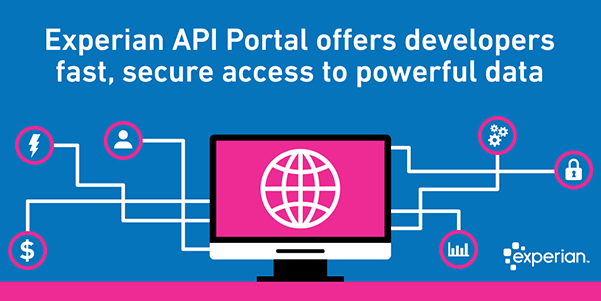
One of the world's largest financial institutions, Citi is determined to keep pace with rapid changes in international commerce. As detailed in the April 2017 issue of PYMNTS.com's B2B API Tracker Citi believes APIs – Application Programing Interfaces – are the key to getting international businesses the financial information they need to prosper.
On May 10th we hosted an episode of Business Chat | Live. This episode features an interview with Experian Director of Analytics and Consulting, Peter Bolin. Peter shared highlights from his "State of Small Business Credit" presentation, which he co-presented at our Vision Conference in Orlando with Cristian DeRitis of Moody's Analytics.
Senior business consultant, Gavin Harding provides a recap of the marketplace lending panel discussion, which took place at Experian’s Vision Conference.
The Experian/Moody’s Analytics Main Street Report provides small business credit trends and offers insight on the coming quarter.
Today Experian released the Q4 2016 Experian/Moody's Analytics Main Street Report. The report offers deep insight into the overall financial well-being of the small-business landscape, as well as providing commentary around what certain trends mean for credit grantors and the small-business community as a whole.
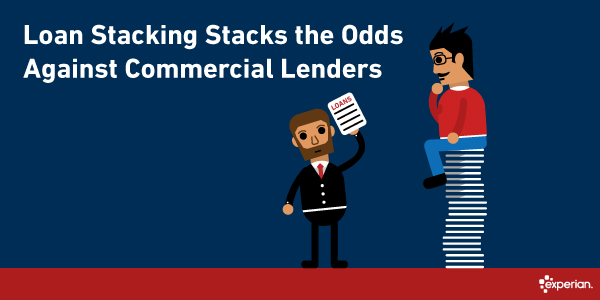
Loan stacking is the opening of multiple credit lines within a short period of time. It’s a serious problem for lenders. This post explores solutions.

This year’s Marketplace Lending and Investing Conference explored issues of transparency, partnership, consistency and sustainability. There was healthy debate on each of these topics and the audience, presenters and panelists frequently returned to the theme of the relationship between Marketplace Lenders, Fintech, Banks and Investors. As the conference unfolded I thought about the role of small businesses in the relationship between these stakeholders. How do mom and pop small businesses fit into these complex, rapidly evolving relationships?
Reporting business data to Experian is an important and essential part of the credit ecosystem. In this post we explain how to report data to Experian.
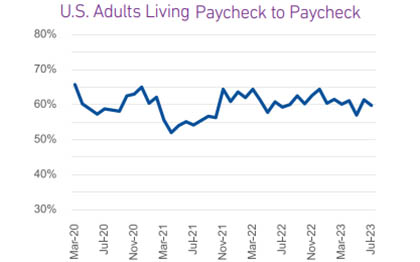
The aggressive interest rate hikes instituted by the Federal Reserve over the past year and a half may have achieved the desired goal. Easing inflation (3.2% in October) and strong GDP growth (4.9% in Q3) are some of the first indications that the economy may experience the “soft landing” hoped for instead of a recession. The consistently strong labor market produced low unemployment and increasing wages, enabling personal spending to increase. However, while spending continues to grow, the growth rate is on a downward trend. The high rate of spending has been driven by consumers digging into savings and borrowing more. As savings dwindle and the cost to borrow increases, it is likely that consumers will retreat and the pull-back will likely hit discretionary categories first. What I am watching: Heading into the holiday season, consumer spending is still strong but how long will it last? The National Retail Federation is projecting that November and December retail sales will grow 3-4% which is in line with the 3.6% average increase from 2010-2019 but lower than the past three years. People are already dipping into savings and borrowing more to continue their consumption but that well will run dry at some point. In addition, 36% of consumers cite December is a month for seasonal financial distress, according to PYMNTS. While consumers may continue spending through the holiday season, the tide may turn in early 2024 when bills hit with higher interest rates. Download Full Report Download the latest version of the Commercial Pulse Report here. Better yet, subscribe so you'll get it in your inbox every time it releases, or once a month as you choose.
If you want to get the most out of your marketing campaigns, it's important that they are tailored for a specific audience. We invited Tony Romero on Business Chat to talk about part two of his three-part Sip and Solve webinar series focused on B2B marketing where he explains how segmentation and targeting can make all aspects (landing page or email) more effective by using industry SIC as well as NAICS codes. Look-a-like analysis CMO's challenged with restricted budgets Analyzing portfolio diversity and targeting minority-led, women-led businesses Profiling prospects with limited data attributes Watch Our Interview What follows is a lightly edited transcription of our talk. [Gary Stockton]: So in our last chat, we talked about maintaining robust marketing data to power effective campaigns and how clean data really helps businesses conduct effective marketing campaigns. This week, we switch gears to discuss the power of segmentation and targeting using industry SIC and NAICS codes to optimize your marketing budgets. So let's dive in. In our previous chat, we spoke about the changes that tech companies have enacted to make the job of targeting business prospects harder, but it's not game over for marketers. [Tony Romero]: No, definitely not. You know, it's really important to know that there's still a lot of a wealth of data out there that can be used to identify and segment target customers. You know, the first-party data obviously is really key, as well as being able to take information that may be spotty. If, for example, you only have a name or address, you can be able to through services like ours, be able to get a full, comprehensive set of data on that customer, both firmographic, demographic, and credit information, and then be able to use that to promote to customers. [Gary Stockton]: So can you share some examples of how Experian data can help marketers hone in on their target customer, for example, how SICs and NAICS codes can help? [Tony Romero]: Yeah, Gary, you're right. SIC and NAICS codes provide information about what industry the business is in. And so, by knowing that, you're able to target those consumers. So again, as I mentioned before, you can take a look at your existing customer base and find out who's your ideal target customer. And from that, then you can compare that to prospective businesses that look just like that. And that's what's called a lookalike analysis. And by using SIC and NAICS codes, you're able to use that to segment the market and then be able to promote effectively. And Gary, you also mentioned that with the economic state, CMOs have to watch their budgets and be as efficient as possible these days. So again, by doing very good segmenting of your target audience, you are making sure that your finance and financial output to a campaign are as efficient as possible. [Gary Stockton]: Excellent, regulators, they're focusing on diversity, equity, and inclusion. How can Experian help clients in that effort? [Tony Romero]: You know? Yeah. That's a very key point and definitely more than ever. It's important to focus on identifying your existing portfolio and seeing how many customers in your portfolio are minority-led or women-led businesses. So you can do benchmarking, you can see how you fare against other businesses in your market space. And that helps you to determine how much more do you need to market to these minority or women-led businesses. So what's number one is the benchmarking, but secondly, you need to be able to go out and look at your prospective target list and find out who are minority-led or women-led. And there, getting an indicator about a Woman-led or Minority-led business allows you to promote specifically to those types of businesses to help increase your portfolio. [Gary Stockton]: That's good. So if all I have is a name and an email address, and in a lot of cases, you know, if we're driving a newsletter, can I still profile this contact? Or are there other ways to do that with minimal info? [Tony Romero]: Yes, there is. You know, even just having a name and address is enough data to go through our type of service and be able to append all of the other information that we talked about, whether it's firmographic with SIC or NAICS codes, it could be demographic information where we look at the business and find out who the consumers that are tied to that business are? So that's called a B2C linkage. And from that now, you know who the actual individual is and go target those specific individuals. So that's also another key point to bring out [Gary Stockton]: Excellent stuff, Tony. Well, folks, if you enjoyed this chat and want to go a level deeper, don't miss Tony's campaign targeting Sip and Solve webinar – Fine Tuning B2b Campaign Targeting. He goes into greater detail on targeting B2B prospects, just click the image to be taken over to the recording.
We’re talking B2B marketing data hygiene with Tony Romero from our product team today on Business Chat.
Experian can be your trusted provider to supercharge B2B marketing campaigns with powerful data, analytics and consulting services.
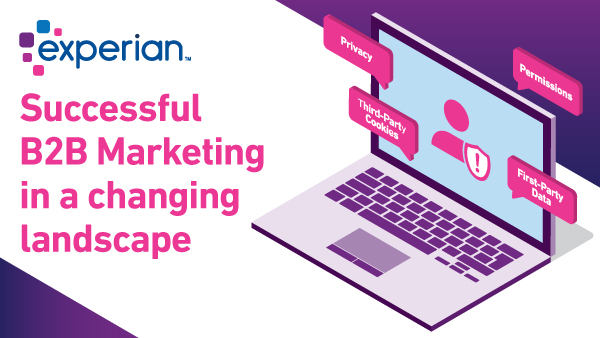
As data privacy regulations become more strict and tech firms implement change, we share how marketers can remain effective while remaining compliant.
Experian Business Information Services recently introduced a powerful new marketing platform called Business TargetIQ. Product Manager, Kelly DeBoer answered a few questions about the product and described use cases that promote greater collaboration between credit and marketing departments. What does Business TargetIQ do? Business TargetIQ is our new marketing platform so it's a B2B marketing platform where clients can access data for marketing applications. How is it different from other business marketing platforms? It is unique in that it not only includes your standard or core firmagraphic information but also includes Experian's credit attributes. Does it have credit data? What does that mean to marketing or collaboration? Typically marketing data and credit data are housed in separate silos of information. With this tool the information will be combined together which will allow the tool not only to be used in traditional marketing applications for targeting but can also be in that risk factor which applies to different divisions within our client's applications or use cases of the data. Who would most benefit from Business TargetIQ? The thing about Business TargetIQ is it truly applies to all different verticals, as well as all different contacts within the company. So whether it's a financial vertical or a trade vertical, retail, just across the board all clients can utilize this. Anybody that's doing marketing can utilize this platform. What core problems does Business TargetIQ solve? It solves a lot of different problems, so, the most common client issues that are brought to our attention are gaps in data, as well as in the marketing initiatives. So they may have data in-house but they have holes within the data. Our tool will allow them to not only upload their client records and fill in a lot of those gaps that they may have, whether it be contact information, or firmagraphics or address information. It will standardize that data and fill in those gaps. But will also provide the means to again use that data. Our business database which has over 16 million records. They can then utilize that information for prospecting, for data append, for analytics, for research applications, so it solves a lot of problems with regard to marketing and data concerns. How does credit data help with prospecting? So what we find is clients come to us and they may say you know I have an idea of what our clients look like, they're in this SIC or in this industry code, or they have this sales volume or employee size, but what they may not know is on the back end which really helps identify and target those businesses is the credit attributes, so the risk factors around those. So do they have delinquencies in their payments? Have they filed bankruptcies? Do they have UCC filings? So it allows them to take it that next step and not only really define what their clients look like, but identify clients that look like that. Learn More About Business TargetIQ

So you’ve created the perfect campaign with great creatives and an unbeatable offer. You deploy the campaign and sit on the edge of your seat waiting for all the leads to flood in. After a couple of days, you notice a couple of responses but nowhere near the volume of what you were hoping for, and you’re stuck asking yourself “why?” Here are a couple of hypotheses: 1.) the people you reached out to aren’t the right audience so they don’t care about your offer, or 2.) your target audience didn’t see your efforts because you used the wrong channel. The process of finding new business customers can be expensive and sometimes unpredictable, but it doesn’t have to be. Here are 3 tips to help improve your prospecting efforts: Tip #1: Define your ideal customer One of the most fundamental ways you can help grow your current customer base is to have a clear understanding of what they actually look like (or defining what they should look like). What’s their job title? What are their biggest business challenges? Are they web savvy? How do they prefer to get industry news? Addressing discovery questions like these allows you to better understand who you’re talking to and how to talk to them. Additionally, you’ll be able to use this profile to help you mimic your best customers and target look-a-likes. Tip #2: Target new businesses Get your products/services in front of new businesses before your competitors. Not surprisingly, many marketers overlook targeting new businesses because of the lack of data — how do you know a new company is in business? How do you know if they’re the right business for you to even target? Fortunately, there are many services in today's market that can help fill in the gaps. Using something like Experian’s US Business Database, which is a database of more than 16 million active U.S. companies, can help you discover new businesses sooner and beat out your competitors to reach them first. Tip #3: Find the decision-makers Identifying the right businesses to target is important, but ensuring that your offer gets in front of the right person – the decision maker – is even better. By finding the decision maker and directing your marketing efforts towards them, you can rest assure that your message lands in the hands of the person that matters most. Want to take it one step further? Once you know who you’re talking to, you can tailor the message and offer to be more relevant for that specific audience, which ultimately helps increase your chances of getting a response. Finding and reaching new business customers can be a daunting and expensive tasks, especially if you don’t target your prospecting efforts. Be sure to keep these tips in mind when approaching your marketing strategy and don’t let today’s data challenges hold you back. Learn more about Experian's US Business Database or our other marketing capabilities.
I had the pleasure of speaking with Kelly DeBoer recently. She is a Product Manager at Experian working in Business Information Services. Kelly leads product strategy for our business marketing products. In this Business Q&A we talk about B2B marketing trends and how Experian is helping business clients get the most out of their marketing initiatives. Gary: B2B marketing has changed significantly in the last five years. What are some of the important trends that you're seeing? Kelly: What we're seeing in the B2B space is really what we've seen in the B2C space for years, and that is, our clients are really trying to gain as much insight into their not only existing clients but potential clients as well? So you know additional firmographic information, credit information, anything that gives them a fuller picture of their clients, and then not only how to retain their existing clients and cross-sell, but also in terms of prospecting, how to best reach these targets once we've identified them what's the best channels to reach those prospects to get the best response. Gary: Kelly, most of our clients think of Experian Business Information Services as firstly business data and credit risk management. So how are we helping clients with their marketing initiatives? Kelly: With regard to B2B marketing, Experian has a tremendous amount of marketing assets including not only our U.S. Business Database which has over 16 million businesses. We also overlay that with our credit information, so clients can come and tap into this this huge resource to help them with their targeting in terms of selecting by firmographics, employee size, sales volume, as well as credit attributes, UCC filings, bankruptcies, information that can be translated to marketing campaigns. It can be utilized for direct marketing, for telemarketing, for digital applications – social media, email campaigns, analytical solutions, modeling. So it's a vast amount of resources that we can tap into to help with marketing campaigns. Gary: Can you share about some B2B marketing solutions we can look forward to from Experian? Kelly: Experian has a lot on the horizon with regard to B2B marketing. But one thing I'm particularly excited about is our new B2C linkage business to consumer linkage. Ultimately our clients have been coming to us saying you know, we're looking for a way to link our consumer records to any businesses that they may be associated with. So we create a customized linkage system that allows us to take in those consumer records, match them to our commercial repositories, and then provide back information that allows our clients to then not only target that consumer at their residential address but also their business address. So it gives them a chance to cross-sell and up-sell commercial offers as well as their consumer offers. Experian Business Marketing Solutions

Ten years ago movie night at our house would usually include a run to the video store where we would pick out a selection from the New Arrivals section, some candy, perhaps some popcorn and we would have our fingers crossed the selection was a good one. Nowadays it’s not uncommon to find us binge watching streamed episodes of “House of Cards” or “Mad Men on weekends.” What’s even more gratifying is after watching “House of Cards” unprompted, Netflix now recommends “The Newsroom” and other shows we invariably like. How do they know we would like these shows? This is predictive marketing at work, driven by big data. Netflix has developed sophisticated propensity models around each member’s viewing habits, and the net result is a better viewing experience with the service. We make amazing entertainment discoveries every week. In business marketing propensity models will determine which prospects or customers are likely to respond to a particular offer. For example, the marketing department of a large financial institution seeking to expand their commercial small business loan portfolio, might want to segment and target commercial lending offers to a concentration of customers most likely to accept a particular offer. When applied in business, propensity models can unlock opportunities for increased profit, share of wallet and deeper engagement with prospects and customers. At Experian, in a typical propensity modeling engagement we will first meet with our customers to understand their goals and objectives. We talk first about pre-screen criteria that enable us to screen out prospects that would not fit into the criteria. A sporting equipment manufacturer would probably not sell to companies in the mining or agriculture industries, so we weed out the ones least likely to lead to a successful conversion. Our data scientists and statisticians get to work on large data sets and evaluate a number of factors. Experian will then develop a customized response model that will identify significant characteristics of responders vs. non responders and therefore will maximally differentiate responders from non responders. Since (holding other factors constant) a higher response rate is preferred, a response model can help lower the cost per response. The response model will generate a “score” that can be used to rank order the prospects base in terms of response likelihood. The response model can be used in two different ways to achieve maximum effectiveness. It can be used to optimize the number of responders for a given sized solicitation, or it may be used to minimize the number of solicitations in order to achieve a budgeted number of responders. A high response score will indicate someone who is likely to respond, as is shown graphically in Exhibits 1 and 2. This work results in a model of the ideal target to which an offer would most likely resonate with. This is called a lookalike. The marketing department at our large financial institution might start off with a large list of potential candidates to send the offer via direct mail, 1 million for example. But mailing an offer to that many people may be cost prohibitive. A propensity model can identify prospects most likely to accept the offer, so your direct mail campaign is more targeted, thereby increasing ROI. A highly targeted mailing to your ideal targets is a safer bet, and would make for a much more predictable outcome. The marketer can feel more confident mailing an offer to lookalike prospects because the chances of successful conversion are that much higher. That’s the case for Woodland Hills based ForwardLine, who have been providing alternative short-term financing to small businesses since 2003. Working with Experian Decision Analytics, ForwardLine did an analysis of their direct marketing program and determined that 22 percent of direct mail was generating 68 percent of their underwriting approvals, exposing a significant gap in wasted marketing funds. The Experian Decision Analytics team developed a custom model which enabled ForwardLine to algorithmically target lookalike prospects with a higher propensity to convert into a successful loan engagement. Michael Carlson, V.P Marketing, ForwardLine ForwardLine Vice President of Marketing, Michael Carlson is thrilled with the initial results. “Working with Experian we were not only able to improve performance, but we are able to reduce our marketing spend, while achieving the same results. We have taken our direct marketing effort from a small program that was profitable, but not meaningful in terms of generating significant volume, to working with Experian to achieve remarkable results. It’s largely why we enjoyed 20 percent growth this year.” Best in Industry Credit Attributes Experian clients use our archived Biz AttributesSM along with collection specific data elements as independent variables for propensity model development. Experian’s Biz AttributesSM are a set of commercial bureau attribute definitions (includes several key demographic attributes as well) which are accurately developed off Experian’s Commercial BizSourceSM credit bureau. When used for response model development, Biz AttributesSM provides significant performance lift over other credit attributes. Biz AttributesSM are also effective in segmentation, as overlay to scores and policy rules definition, providing greater decisioning accuracy. Additionally, at Experian we are constantly monitoring our growing data warehouse looking for ways to develop new attributes. We live in an ever changing market place which requires us to develop new credit and demographic attributes as well as making enhancements to existing attributes. This process takes a disciplined, rigorous, and comprehensive approach based on experience guided by data intelligence. Our goal is to provide world-class service and the industry’s best practices for modeling attributes. To keep pace with market changes, new attributes are developed as new data elements become available, while raw data elements and existing attributes are monitored and managed following rigorous and comprehensive attribute governance protocols to ensure continued integrity of attributes. If you would like to learn more about propensity models, contact your Experian representative today.