At A Glance
this is aag test, add somemore content to aag 1columns filter to block add new coldasdumn
dsadsadd
dqwdqd
dqwdqwdqwd
dqwdqwd
hello this is text promo content goes here!!!!
dqwdqwd
dqwdqdqwd
heading 2
heading 3
heading 4
heading 5
Many desktop publishing packages and web page editors now use Lorem Ipsum as their default model text, and a search for ‘lorem ipsum’ will uncover many web sites still in their infancy.

Many desktop publishing packages and web page editors now use Lorem Ipsum as their default model text, and a search for ‘lorem ipsum’ will uncover many web sites still in their infancy.

Many desktop publishing packages and web page editors now use Lorem Ipsum as their default model text, and a search for ‘lorem ipsum’ will uncover many web sites still in their infancy.
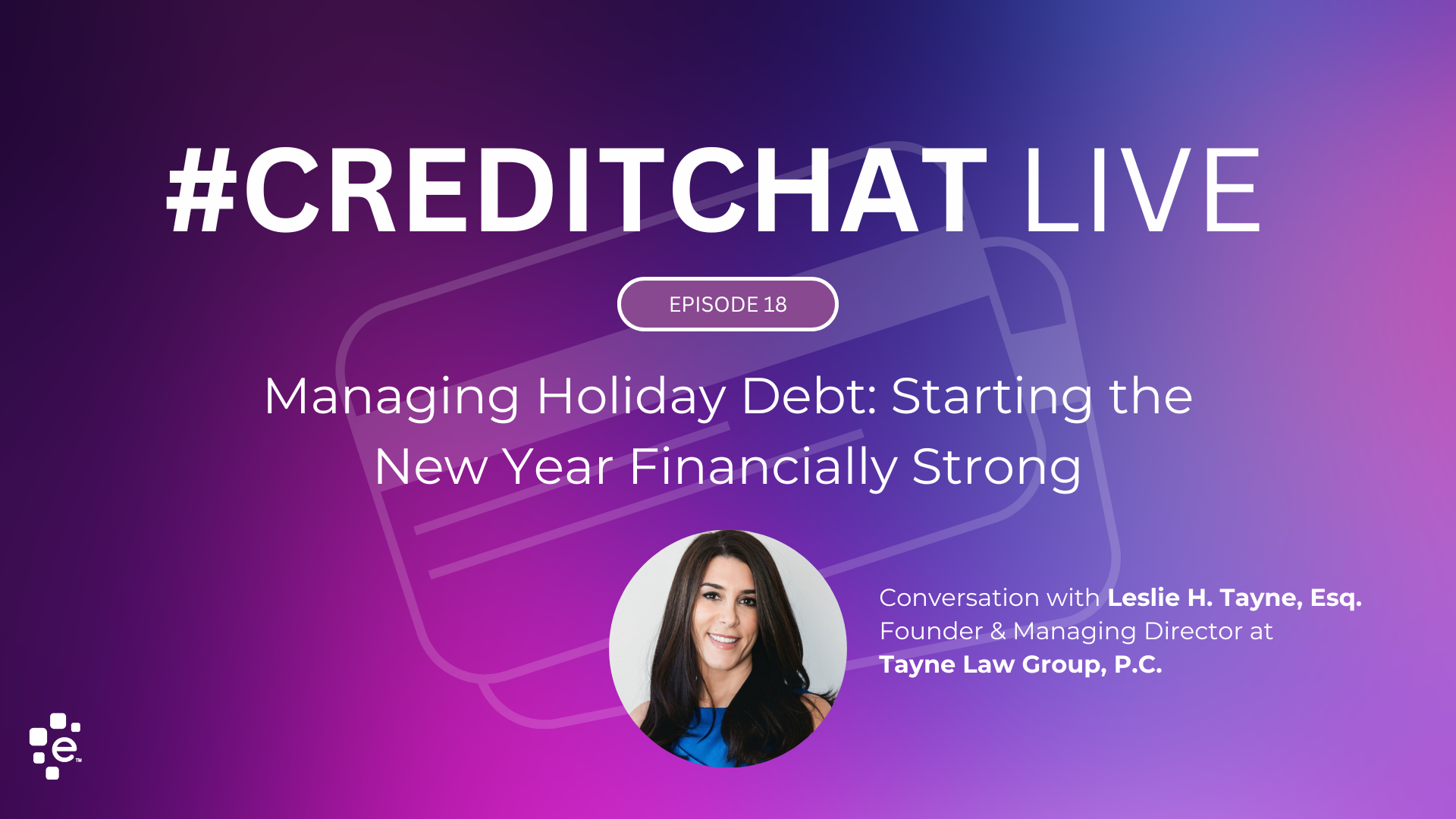
Managing Holiday Debt the Smart Way
Many desktop publishing packages and web page editors now use Lorem Ipsum as their default model text, and a search for ‘lorem ipsum’ will uncover many web sites still in their infancy.Many desktop publishing packages and web page editors now use Lorem Ipsum as their default model text, and a search for ‘lorem ipsum’ will uncover many web sites still in their infancy.Many desktop publishing packages and web page editors now use Lorem Ipsum as their default model text, and a search for ‘lorem ipsum’ will uncover many web sites still in their infancy.Many desktop publishing packages and web page editors now use Lorem Ipsum as their default model text, and a search for ‘lorem ipsum’ will uncover many web sites still in their infancy.
Many desktop publishing packages and web page editors now use Lorem Ipsum as their default model text, and a search for ‘lorem ipsum’ will uncover many web sites still in their infancy.Many desktop publishing packages and web page editors now use Lorem Ipsum as their default model text, and a search for ‘lorem ipsum’ will uncover many web sites still in their infancy.Many desktop publishing packages and web page editors now use Lorem Ipsum as their default model text, and a search for ‘lorem ipsum’ will uncover many web sites still in their infancy.Many desktop publishing packages and web page editors now use Lorem Ipsum as their default model text, and a search for ‘lorem ipsum’ will uncover many web sites still in their infancy.Many desktop publishing packages and web page editors now use Lorem Ipsum as their default model text, and a search for ‘lorem ipsum’ will uncover many web sites still in their infancy.

Many desktop publishing packages and web page editors now use Lorem Ipsum as their default model text
dasdsadThe Marketing Guy
The Marketing Guy speaks the truth
Many desktop publishing packages and web page editors now use Lorem Ipsum as their default model text, and a search for ‘lorem ipsum’ will uncover many web sites still in their infancy.Many desktop publishing packages and web page editors now use Lorem Ipsum as their default model text, and a search for ‘lorem ipsum’ will uncover many web sites still in their infancy.Many desktop publishing packages and web page editors now use Lorem Ipsum as their default model text, and a search for ‘lorem ipsum’ will uncover many web sites still in their infancy.

Guess That Credit Score
Many desktop publishing packages and web page editors now use Lorem Ipsum as their default model text, and a search for ‘lorem ipsum’ will uncover many web sites still in their infancy.Many desktop publishing packages and web page editors now use Lorem Ipsum as their default model text, and a search for ‘lorem ipsum’ will uncover many web sites still in their infancy.Many desktop publishing packages and web page editors now use Lorem Ipsum as their default model text, and a search for ‘lorem ipsum’ will uncover many web sites still in their infancy.
Check out the latest post

You may also like: Supercharge your COVID-19 vaccine management plan with digital solutions “Experian Health’s ability to move quickly and adapt their self-service platform to schedule vaccines for patients has been an invaluable improvement not only for our operations, but to the patient experience. The power to schedule the vaccine’s second dose after the first is administered helps us deliver on our commitment to providing reliable, quality care.” – Julie Frahm, director of consumer digital products at Sharp HealthCare The unpredictable nature of patient volume is a large part of what makes scheduling for the COVID-19 vaccine so difficult. Before now, providers haven’t had to manage mass appointment slots and registrations tied specifically to vaccinations. And even with those features streamlined, providers are still unsure of the best way to reach out to patients who are eligible for the vaccine to prompt them to schedule their appointment. Already a user of Experian Health’s Patient Schedule solution, Sharp HealthCare turned to online self-scheduling to improve patient access to the COVID-19 vaccine. With the solution in place, patients of Sharp HealthCare who are eligible for the vaccine can schedule their first dose online via computer or mobile phone. After answering a short set of questions, the scheduling solution will guide patients to a calendar of available day and time slots for receiving the first vaccination. After the first shot is administered, Sharp HealthCare staff can schedule patients for their second dose onsite, prior to leaving the office. Patients of Sharp HealthCare are consistently utilizing online self-scheduling to book appointments for their vaccinations. More than 1,000 vaccinations were scheduled in the first three weeks of online self-scheduling being available to patients. The ability for provider staff to help book the second dose of the vaccine for patients has also helped Sharp HealthCare deliver on their commitment to quality care, further ensuring the efficacy of the vaccine for each and every patient. Patients are also enjoying the expanded use of a self-service digital service, especially for a process that has been widely known to, at least thus far, be a detriment to the patient experience. Discover how Patient Schedule can improve vaccine management.

Learn how Coverage Discovery optimizes insurance verification for COVID-19 vaccinations, ensuring faster reimbursements for providers.

See how patient portal automation ensures secure access for vaccine scheduling. Simplify enrollment, reduce admin burdens, and more.

Take a poll of any healthcare facility’s visitors, and the majority will tell you they’d like to book appointments online. When Experian Health surveyed more than 860 consumers in late 2020 for its patient access trends survey, 78% of those surveyed said they wanted to schedule their own appointments, at any time of day or night, from their home or mobile device. But with only four in ten providers offering self-scheduling as a service, there’s a big opportunity for providers who offer digital patient access to attract and retain more patients by giving them what they want. Online self-scheduling allows patients to choose when and where they make their appointment. It is easier for patients, reduces no-shows, improves health outcomes and minimizes the risk of errors that can result in denied claims. But while online self-scheduling is meant to foster a better patient experience, not every solution is up to scratch. Providers need to offer an online scheduling experience that is user-friendly, reliable and accessible in order to create the best possible digital experience for both new and existing consumers. Patient portals can be a great location for existing patients to schedule appointments online, but what about new patients? Without an existing relationship or log in, new patients will likely click away from online scheduling services that require them to set up a new account or request a call. Unnecessary friction makes it harder to attract new patients. Given that 80% of patients would switch providers for convenience factors alone, offering online scheduling to brand new patients without requiring the additional step of creating an account could be a powerful attraction strategy. With manual scheduling, call center agents have to sift through multiple spreadsheets and binders to check calendars and scheduling rules in order to match patients with the right provider and appointment type. With a system like that in place it can be impossible to place more than a few patients each day. Patients that don’t want to wait or participate in lengthy calls often end up looking for care elsewhere. But if the right questions are guiding the online scheduling process, patients can be matched quickly to the right provider and book an appointment that fits with the provider’s calendar and scheduling rules. Adding a web-based scheduling service with guided search allowed Heritage Medical Associates to increase the number of patients placed from as few as three per day to as many as fifty per day, creating a better experience for patients, call center staff and physicians. Consumers want to schedule medical appointments the way they might book dinner reservation or a grocery delivery slot: they want to see all the available options for their preferred day, book on the spot and receive confirmation right there and then. They want to complete the scheduling process in real time – not waiting for a call back to confirm. CareMount Medical implemented an online scheduling platform to give patients real-time access to book appointments across all of their providers, which has appealed to both new and existing patients. Chief Information Officer, Nicholas Korchinski, says: “Yes, we have been able to acquire new patients, but our strategy was really about retention… Month over month we see double digit growth in use of the application, so our patients are benefiting more and more.” The ideal online scheduling platform will be flexible, accessible, and easy to use for both patients and staff. With Patient Schedule, providers can improve the patient experience, attract new patients and guide patients to the right provider without delay.

Providers know they need to improve their digital front door to withstand the financial impact of COVID-19, but change can feel risky, especially with so much uncertainty. Experian Health’s recent patient access survey offers a glimpse of what patients hope the digital front door will look like in 2021 and beyond. But what do providers see for the future of patient access? And are those views aligned? Providers that offer the most accessible patient access solutions in a post-pandemic world will secure greater patient satisfaction and loyalty.

The urgency to move quickly and vaccinate the population has introduced an entirely new set of challenges for providers regarding patient identity. Many continue to leverage existing processes and solutions already in place, manually handling the pain points that come with them, but now at scale and at an unprecedented rate. As the rollout moves forward, the strain on provider resources will only deepen, as will the risks associated with patient misidentification. The data mess behind the scenes Many patients are registering for the vaccine through a patient portal. While the self-service nature of signing up for the vaccine via a portal is beneficial, patients are unfortunately able to register for a portal account more than once. In fact, some of our clients have reported seeing as many as 1,800 duplicate records created per day. Those duplicate records are generated from some individuals who forgot their log-in account information and opted to create a new account, and others who simply forgot they had an account. With the sense of urgency to secure a vaccination appointment, consumers are moving at a rapid speed and simply want to grab a spot with the quickest credentials available. Regardless, multiple registrations for a single patient will create duplicate patient information. Duplicate records are not only costly (the estimated cost of remediation is $96 per duplicate pair), but they are an incredible drain on staff productivity, and ultimately, they are detrimental to patient safety. Multiple records of a single individual pose a risk for potential allergies, reactions, medical history and more. Even more, it is detrimental specifically to the efficacy of the vaccine as it will be harder to gauge in real time how many patients have been vaccinated, and at what stage, and make it more difficult to truly understand what percentage of the patient population has actually been vaccinated. UIM: not another stop-gap solution Experian’s Universal Identity Manager (UIM) platform is tailor-made for a situation like this as it was developed to create a single view of the same patient with their most current information. The matching technology accurately identifies patients and matches records within and across disparate healthcare organizations, providing a more complete understanding of who a patient is, despite the data gaps or errors that may exist in patient rosters. With it, providers are not only preventing duplicate and overlaid patient records but UIM can also minimize errors and fraud in patient records. It additionally improves staff productivity by decreasing the need for record reconciliation—a benefit likely welcomed by many if they are continuing to see anywhere near 1,800 duplicate records per day. When integrated with a solution like Precise ID, providers can both reconcile duplicate records, and effectively stop them from being created in the first place. By automating the patient portal enrollment process, healthcare organizations can remove the manual processes associated with portal enrollment, optimize critical IT staff resources while securing patient information and support a positive patient experience. State-of-the-art identity proofing, risk-based authentication and knowledge-based questions help providers securely verify each patient’s identity as they enroll for the patient portal. Explore how Experian Health can help resolve and enhance identities as part of the vaccine management process and beyond, not only by resolving duplicate records, but also by enhancing records with the best demographic and social determinants of health data available.
Many desktop publishing packages and web page editors now use Lorem Ipsum as their default model text, and a search for ‘lorem ipsum’ will uncover many web sites still in their infancy.
This is a pull quote
This is test
This is a heading
Many desktop publishing packages and web page editors now use Lorem Ipsum as their default model text, and a search for ‘lorem ipsum’ will uncover many web sites still in their infancy.
- Test 1
- Test 2
- Test 3

It was popularised in the 1960s with the release of Letraset sheets containing Lorem Ipsum passages, and more recently with desktop publishing software like Aldus PageMaker including versions of Lorem Ipsum.
My Company Experian
dsdsad
this is tex tpromo container
| this is table 1 | this is table 2 |
| this is table 3 | this is table 4 |
In this article…
It was popularised in the 1960s with the release of Letraset sheets containing Lorem Ipsum passages, and more recently with desktop publishing software like Aldus PageMaker including versions of Lorem Ipsum.
It was popularised in the 1960s with the release of Letraset sheets containing Lorem Ipsum passages, and more recently with desktop publishing software like Aldus PageMaker including versions of Lorem Ipsum.
heaidng 1
It was popularised in the 1960s with the release of Letraset sheets containing Lorem Ipsum passages, and more recently with desktop publishing software like Aldus PageMaker including versions of Lorem Ipsum.
It was popularised in the 1960s with the release of Letraset sheets containing Lorem Ipsum passages, and more recently with desktop publishing software like Aldus PageMaker including versions of Lorem Ipsum.
It was popularised in the 1960s with the release of Letraset sheets containing Lorem Ipsum passages, and more recently with desktop publishing software like Aldus PageMaker including versions of Lorem Ipsum.
It was popularised in the 1960s with the release of Letraset sheets containing Lorem Ipsum passages, and more recently with desktop publishing software like Aldus PageMaker including versions of Lorem Ipsum.It was popularised in the 1960s with the release of Letraset sheets containing Lorem Ipsum passages, and more recently with desktop publishing software like Aldus PageMaker including versions of Lorem Ipsum.
heading 2
It was popularised in the 1960s with the release of Letraset sheets containing Lorem Ipsum passages, and more recently with desktop publishing software like Aldus PageMaker including versions of Lorem Ipsum.
It was popularised in the 1960s with the release of Letraset sheets containing Lorem Ipsum passages, and more recently with desktop publishing software like Aldus PageMaker including versions of Lorem Ipsum.
It was popularised in the 1960s with the release of Letraset sheets containing Lorem Ipsum passages, and more recently with desktop publishing software like Aldus PageMaker including versions of Lorem Ipsum.
heaidng 3
It was popularised in the 1960s with the release of Letraset sheets containing Lorem Ipsum passages, and more recently with desktop publishing software like Aldus PageMaker including versions of Lorem Ipsum.
It was popularised in the 1960s with the release of Letraset sheets containing Lorem Ipsum passages, and more recently with desktop publishing software like Aldus PageMaker including versions of Lorem Ipsum.
It was popularised in the 1960s with the release of Letraset sheets containing Lorem Ipsum passages, and more recently with desktop publishing software like Aldus PageMaker including versions of Lorem Ipsum.
It was popularised in the 1960s with the release of Letraset sheets containing Lorem Ipsum passages, and more recently with desktop publishing software like Aldus PageMaker including versions of Lorem Ipsum.It was popularised in the 1960s with the release of Letraset sheets containing Lorem Ipsum passages, and more recently with desktop publishing software like Aldus PageMaker including versions of Lorem Ipsum.
heading 4
It was popularised in the 1960s with the release of Letraset sheets containing Lorem Ipsum passages, and more recently with desktop publishing software like Aldus PageMaker including versions of Lorem Ipsum.
It was popularised in the 1960s with the release of Letraset sheets containing Lorem Ipsum passages, and more recently with desktop publishing software like Aldus PageMaker including versions of Lorem Ipsum.
It was popularised in the 1960s with the release of Letraset sheets containing Lorem Ipsum passages, and more recently with desktop publishing software like Aldus PageMaker including versions of Lorem Ipsum.
this is columns block #1
this is column block #2