At A Glance
this is aag test, add somemore content to aag 1columns filter to block add new coldasdumn
dsadsadd
dqwdqd
dqwdqwdqwd
dqwdqwd
hello this is text promo content goes here!!!!
dqwdqwd
dqwdqdqwd
heading 2
heading 3
heading 4
heading 5
Many desktop publishing packages and web page editors now use Lorem Ipsum as their default model text, and a search for ‘lorem ipsum’ will uncover many web sites still in their infancy.
Many desktop publishing packages and web page editors now use Lorem Ipsum as their default model text, and a search for ‘lorem ipsum’ will uncover many web sites still in their infancy.

Many desktop publishing packages and web page editors now use Lorem Ipsum as their default model text, and a search for ‘lorem ipsum’ will uncover many web sites still in their infancy.
Managing Holiday Debt the Smart Way
Many desktop publishing packages and web page editors now use Lorem Ipsum as their default model text, and a search for ‘lorem ipsum’ will uncover many web sites still in their infancy.Many desktop publishing packages and web page editors now use Lorem Ipsum as their default model text, and a search for ‘lorem ipsum’ will uncover many web sites still in their infancy.Many desktop publishing packages and web page editors now use Lorem Ipsum as their default model text, and a search for ‘lorem ipsum’ will uncover many web sites still in their infancy.Many desktop publishing packages and web page editors now use Lorem Ipsum as their default model text, and a search for ‘lorem ipsum’ will uncover many web sites still in their infancy.
Many desktop publishing packages and web page editors now use Lorem Ipsum as their default model text, and a search for ‘lorem ipsum’ will uncover many web sites still in their infancy.Many desktop publishing packages and web page editors now use Lorem Ipsum as their default model text, and a search for ‘lorem ipsum’ will uncover many web sites still in their infancy.Many desktop publishing packages and web page editors now use Lorem Ipsum as their default model text, and a search for ‘lorem ipsum’ will uncover many web sites still in their infancy.Many desktop publishing packages and web page editors now use Lorem Ipsum as their default model text, and a search for ‘lorem ipsum’ will uncover many web sites still in their infancy.Many desktop publishing packages and web page editors now use Lorem Ipsum as their default model text, and a search for ‘lorem ipsum’ will uncover many web sites still in their infancy.

Many desktop publishing packages and web page editors now use Lorem Ipsum as their default model text
dasdsadThe Marketing Guy
The Marketing Guy speaks the truth
Many desktop publishing packages and web page editors now use Lorem Ipsum as their default model text, and a search for ‘lorem ipsum’ will uncover many web sites still in their infancy.Many desktop publishing packages and web page editors now use Lorem Ipsum as their default model text, and a search for ‘lorem ipsum’ will uncover many web sites still in their infancy.Many desktop publishing packages and web page editors now use Lorem Ipsum as their default model text, and a search for ‘lorem ipsum’ will uncover many web sites still in their infancy.

Guess That Credit Score
Many desktop publishing packages and web page editors now use Lorem Ipsum as their default model text, and a search for ‘lorem ipsum’ will uncover many web sites still in their infancy.Many desktop publishing packages and web page editors now use Lorem Ipsum as their default model text, and a search for ‘lorem ipsum’ will uncover many web sites still in their infancy.Many desktop publishing packages and web page editors now use Lorem Ipsum as their default model text, and a search for ‘lorem ipsum’ will uncover many web sites still in their infancy.
Check out the latest post
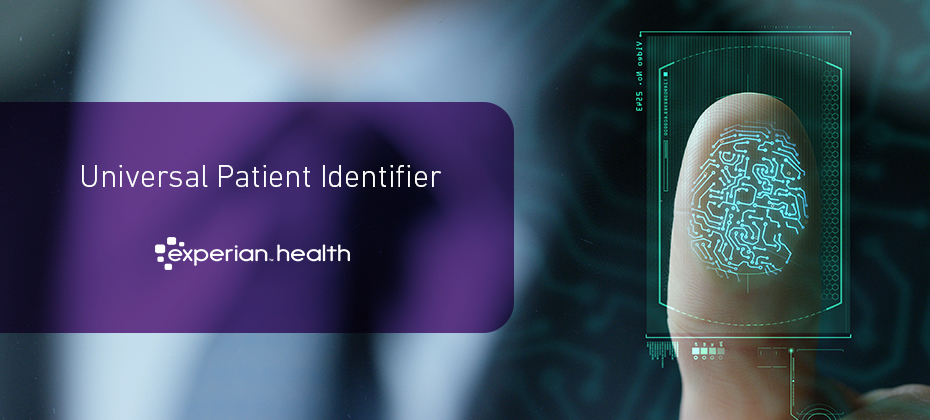
This article addresses what a unique patient identifier is, how it’s used in healthcare, and ways they can improve the patient experience.

Health plans have been fighting against inaccurate member data, incomplete member profiles and duplicate records for years. Without a watertight way to keep track of patient identities so health data is reliably linked and accessible across multiple services, payers can’t always be confident that the record in front of them matches the member they have in mind. The pandemic has brought this into sharp focus: positive COVID-19 test results aren’t always following members from service to service, and as the vaccination program rolls out, knowing who has had the disease and who has been vaccinated could be difficult to monitor. As health data expands exponentially and the need to share and connect member records becomes more urgent and complicated, the challenges facing health plans will only grow. Could a unique patient identifier (UPI) be the answer? 4 member matching challenges that health plans could solve with a UPI 1. The healthcare ecosystem lacks 21st Century Cures Act data coordination The lack of integrated systems to transfer member data securely contributes to safety issues, payment delays and potential audits and fines. Over a third of denied claims for health systems result from inaccurate patient information, costing them at least $6 billion per year. While this would seem not to impact the payer, the inability to properly link claims to members could lead to an inability to understand the risk represented by the members being covered. Or worse, an inability to anticipate and monitor trends in members health and provide proactive healthcare options. A unique patient identifier can connect the dots between different parts of the healthcare ecosystem so duplicate and incomplete member data can be detected and eliminated. With a more complete picture of who a member is, health plans can make decisions based on accurate information and exchange data safely and securely. There’s a far lower risk of acting without knowing about recent treatment or test results, or communicating using the wrong address (or even to the wrong member). 2. Healthcare providers have outgrown traditional matching tools With the volume and variability of health data to be matched, traditional matching tools are no longer fit for purpose. For example, an enterprise master patient index (EMPI), which links all versions of a patient’s record across several facilities, may seem reliable. However, by relying on a single source of demographic data, EMPIs likely replicate errors and outdated information, and may combine records for patients who share certain demographic information (for example, if two patients have similar names and the same date of birth). Instead, payers should consider a matching solution that combines member roster information with comprehensive third-party reference data. Member records are matched using referential and probabilistic matching, and connected using a UPI. This gives health plans a more complete picture of their members, built on reliable health, credit, and consumer data sources, and allows all parties to understand the person at the center of it all. 3. Discrepancies in member data make care coordination impossible Members may use different names or nicknames, their address may change, and they may even share a Social Security Number (SSN) with someone else. How can health plans help to coordinate care if they’re not sure they’re tracking the right member? A single electronic health record (EHR) can follow the member throughout their healthcare journey with a UPI, so health plans can be confident that the person on the phone or in the office matches the record on screen. They can monitor and respond to gaps in care, allowing them to better coordinate care for better patient health, improved member engagement and money-saving operational efficiencies. 4. Members present to multiple facilities, inhibiting care plan tracking How can health plans reliably track medication adherence, especially when members present to multiple locations? Is there really a gap in care, or did the member just attend a different facility? And if members go to different pharmacies, how can a pharmacist be sure the prescription is going to the right person? All of this can create risks to patient safety and increased costs for payers. A UPI can help. Experian Health has teamed up with the National Council for Prescription Drug Programs (NCPDP), which sets standards for pharmacy services to exchange electronic healthcare data. A framework has been built for a UPI-based patient matching solution that the entire US healthcare network can use. Not only will this improve patient safety, it’ll minimize staff time spent on reconciling incorrect records, thus boosting financial performance too. When it comes to mismatched records, prevention is better than cure. With a Universal Identity Manager, health plans can have confidence in the accuracy and security of the data they’re using and sharing, promote patient safety, and improve staff productivity. Contact us to learn more.

Experian Health products referenced in this blog post: Patient Engagement Solutions Patient Scheduling Precise ID Patient Payment Estimates Patient Payment Solutions To access more insights and trends, download the entire white paper: How has the pandemic affected consumer attitudes toward patient access? What kind of digital experience do consumers expect from their healthcare provider in 2021? Are patients and providers on the same page when it comes to self-service in the healthcare journey? Providers must answer these questions if they are to improve their digital front door, boost patient loyalty and withstand the financial impact of COVID-19. While we know that a satisfying patient access experience translates to a stronger revenue cycle, change can feel risky without knowing what consumers really want. Experian Health surveyed hundreds of healthcare consumers and providers to find out what each expects from patient access in 2021, and uncovered opportunities for providers to lay the groundwork for future financial success. Survey findings: 4 revenue-boosting opportunities for patient access in 2021 1. More control and convenience for consumers Nearly eight in ten consumer survey respondents want to be able to schedule their own appointments, at any time of day or night, from their home or mobile device. They can already order groceries and view their bank accounts this way – and they want the same level of control and convenience when managing the non-clinical aspects of their healthcare. Digital patient engagement solutions allow providers to offer consumers the flexibility and accessibility they crave. Patients can schedule appointments online, complete registration from home and pay bills from a mobile device. Convenience also delivers health benefits: no-shows are less likely, and patients find it easier to adhere to care plans. And while COVID-19 remains a concern, self-service options minimize face-to-face contact, keeping staff and patients safe. Automating patient access even contributes to better collection rates, for example, by reducing errors that can lead to denied claims. 2. But don’t deliver convenience at the expense of safety and security Patients want convenience, but they also want their data to be kept safe. More than half of consumers surveyed, particularly the younger age groups, say they worry about security when accessing their personal details online. Security can be challenging for providers: they need multi-layered solutions that can adapt to security threats that evolve with ever-increasing complexity, without creating cumbersome log-in processes for patients. But with the right technology, providers can safeguard patient data with confidence. Experian Health’s patient portal security tools use leading-edge identity proofing, risk-based authentication and knowledge-based questions to reliably verify patient identities. Patients can book appointments, register for care or view their health information. Calls to IT support are likely to drop too, saving staff and patients valuable time. 3. Contactless care requirements are driving long term, systemic change While many of these changes were already simmering in the background, the pandemic has turned up the heat and accelerated the need for contactless care. Will this be a long-term trend? Both patients and providers believe self-service technology is here to stay and seven in ten providers surveyed say they don’t expect patients to feel comfortable in waiting rooms until at least summer 2021. While face-to-face care will always be important, it seems likely that a digital front door will become the default to make the non-clinical portion of the healthcare journey easier and quicker for everyone. “As providers expand the use of patient portals, there is a huge opportunity to demonstrate the true value of virtual care – and transform healthcare for the long-term.” – Tom Cox, general manager, head of product, Experian Health 4. The financial conversation between consumers and providers must be based on trust, transparency and empathy When the final bill bears no resemblance to initial estimates, patients feel frustrated and misled. With deductibles and out-of-pocket expenses on the rise, patients are demanding simple and clear pricing information so they can plan accordingly. Providers that offer consumers transparency, understanding, control and convenience when managing their financial responsibilities are going to have the competitive edge. Providers can achieve this with clear, upfront and accurate pricing estimates to help patients understand their financial obligations before their visit. Next, support to check coverage and advice on tailored payment plans will provide patients with as many tools as possible as they plan to meet those obligations. Experian Health’s Patient Payment Solutions can check for patient coverage, identify a payment plan(s) that suits a patient’s individual situation, and then make it easy to pay via a mobile device. Future provider revenue hinges on investment in digital healthcare. A welcoming, convenient and secure digital front door translates to patient loyalty, which in turn can mitigate losses in challenging times. Wherever are in digital patient access journey, there’s an opportunity to improve the experience for patients and build a revenue cycle that not only survives the tumult of the pandemic, but also thrives in the years ahead.

for our upcoming webinar with Banner Health, where attendees will gain insights into the organization’s workflow and processes. It is estimated that 30-50% of denied claims occur on the front end during the patient access process, namely during registration, authorization and eligibility. Unfortunately, manual patient intake processes contribute to these denials, and ultimately, the bottom line, staff productivity and the patient experience take the hit. Banner Health chose to automate its patient access processes with eCare NEXT from Experian Health. The solution, which integrates directly with Banner Health’s acute and ambulatory electronic health records (EHRs), automates the organization’s preregistration workflow, including medical necessity and financial clearance. This improves registration accuracy, provides more accurate patient estimates and reduces the number of denials on the front end. Banner Health has benefited by incorporating a mix of Experian Health products that integrate directly and collaborate with other technologies and workflows already in place: Decrease in eligibility errors. With eCare NEXT, initial denials due to eligibility errors have been reduced by $30M in the first quarter alone since going live with Experian Health. Significant cost savings. With more accurate estimates, Banner Health has seen significant cost savings on the front end from more efficient coverage discovery. The system is consistently finding 30+% unique or new coverage in the patient access workflow. Improved staff engagement and satisfaction. Automation has greatly reduced manual inputs, enabling staff to focus more on the patient rather than systems and logins required for patient intake. Our partnership with Experian Health helps Banner Health’s revenue cycle team deliver on its mission of “getting it right, at the right time, every time.” — Becky Peters, Executive Director of Patient Access Services, Banner Health

It’s been almost an entire year since COVID-19 changed life as we know it. The good news? A vaccine has finally arrived and is currently making its way to distribution sites across the United States—a significant milestone as the nation has seen more than 16 million cases to date, and more that 300,000 deaths. Because of the current supply, the Centers for Disease Control are recommending healthcare personnel and residents of long-term care facilities receive the vaccine first. Supply is expected to increase in the weeks and months to come, however, and the goal is for everyone to have access to a vaccine by the second quarter of 2021. As healthcare organizations across the country prepare to meet the vaccine demand, it is expected the logistics and distribution management will add pressure to staff and services already under stress. The challenge: administer the vaccine as efficiently and safely as possible. Online patient scheduling has already been a game changer during the pandemic, but its potential as a traffic management tool to address the influx of vaccine appointment requests is even greater—and not just for patients. In the early stages of deployment, online self-scheduling can be a game changer for healthcare workers and other essential employees looking to schedule and receive the vaccine. Here are four ways providers can leverage online patient self-scheduling for the rollout of the COVID-19 vaccine: Designate day and time slots specifically for administering vaccines By incorporating providers’ scheduling rules into the scheduling process, there is the opportunity to designate specific day and time slots for administering the vaccine. It not only makes it easy for patients to schedule, but it additionally allows both patients and providers to further minimize the risk of unnecessary contact with others in the office. Create screening questionnaires during patient scheduling As more patients go on-site for the vaccine, they must be routed to the most appropriate care source and location. This will prevent unnecessary traffic and bottlenecks in the office, while ensuring the safety of individuals. As soon as a patient begins to book a vaccine appointment a few short questions about their symptoms and reason for booking can be presented. A screening questionnaire like this can triage people wanting to get a vaccine or get tested, and help identify potential COVID-19 positive individuals, and if that individual needs to quarantine prior to coming in for the vaccine. After screening, the system can direct patients through the correct channel of care. Screening questionnaires can also be used to determine if a patient is eligible for the vaccine given the current status of vaccine deployment. Older patients may be given priority whereas younger patients may be told to schedule at a later date. A system like this can also reduce pressure on call center staff and give providers control over the volume and timing of in-person appointments, thus helping to reduce patient and staff exposure to any contagion. Make it as easy as possible for patients to schedule both doses Most of the early COVID-19 vaccines will require shots to be effective, with the second dose being administered 21 to 28 days after the first. It’s critical that the second does is administered in a timely manner. There are a few ways to encourage patients to return. First, providers can help patients book their follow-up appointment in the office before leaving. Second, providers can leverage automated outreach as a method to contact and remind patients to book a follow-up. Experian Health’s Patient Outreach Solutions have been purpose built to meet this need, sending outreach campaigns to individuals enabling them to self-schedule needed care conveniently, right from a text or voice message. Automated outreach would allow providers to reach out to specific subsets of patients that may require or benefit from the vaccine early on, like older individuals or those with chronic conditions. With it, providers have the ability to reach out to hundreds, even thousands of patients without manual call center workload – something that will come in handy as now the majority of Americans plan to get vaccinated for the coronavirus. Improve the efficiency of drive-through vaccination programs For those providers considering drive-through vaccinations (similar to drive-through COVID testing), online scheduling makes a huge difference—not only for booking an appointment, but for preventing bottlenecks as patients arrive. Detailed information such as the patient’s vehicle model, color and license plate number can all be recorded ahead of time during the screening process, allowing providers to quickly identify patients as they arrive. Learn more about the benefits of digital scheduling and how Experian Health can help your organization navigate the rollout of the COVID-19 vaccine.

Scheduling an appointment shouldn’t be complicated. Yet too often, patients are left to figure out their next move alone, with just a single phone number to call. Frustrated and confused, patients may drop out of the scheduling process entirely or miss the appointments they’ve already booked. Missed appointments can lead to critical gaps in care, poor health outcomes and possible readmissions, and they are also unnecessarily costly for providers. But what if you could make scheduling easy? Minimizing the burden on patients could close more gaps in care, improve the patient experience and reduce call center workload at the same time. Automated, targeted outreach campaigns can help you do exactly this. 5 ways automated patient outreach can help close gaps in care 1. Quicker and easier for patients to book care An automated solution can send targeted text messages (SMS) or interactive voice calls (IVR) to patients to remind them to book an appointment. By providing a self-scheduling link in the message, patients can book their appointment immediately. Patients are often more likely to schedule when they’re given a reminder plus a booking link, compared to a reminder message alone. There’s less risk of appointments being forgotten, sealing any potential care gaps from the start. 2. More appointments booked Automation also means you can contact and schedule more patients than if your call center was contacting each person individually. One large Medicaid managed care plan saw a 140% increase in their scheduling rates since using Patient Schedule. They’re able to match patients to the right provider first time, protecting calendars from errant bookings and eliminating the dreaded three-way calls between member, provider and payer. 3. More patients showing up to appointments When automated patient outreach is paired with digital scheduling, patients are far more likely to show up to appointments. The Iowa Clinic found that when patients book online, they’re not only more likely to show up, but they feel more engaged and eager to follow their care plan. Their patient show rates are as high as 97% for appointments scheduled online. If those patients are also more engaged, that’s a good sign that care gaps can be minimized too. 4. Better coordination of transport services One obstacle to attending non-emergency appointments that is often overlooked is the lack of access to reliable transportation. With automated scheduling software, this can be easily fixed. Once a member has booked an appointment, data analytics can flag up a potential need for transportation, so the member can be sent an automated text reminder to book transport. And if they need to reschedule for some reason, the transportation booking will auto-update too. Patients (and staff) no longer need to wrangle two separate systems for booking appointments and transportation. 5. Better management of wait lists and reduced call times Another way to close gaps in care is to give patients the option to book an earlier appointment, if a slot becomes available. Seeing their doctor sooner can mean quicker treatment and reduce the chance of a patient disengaging with their care plan because of a long wait. With automated outreach, you can send an automatic message to offer an earlier appointment, and then cancel the old booking (and offer it to others) at the same time. This enables better wait list management and can reduce call time for staff by an average of 50%. Automated patient outreach is a win-win. It’s far more convenient for patients, and drives down costs for providers and payers. Learn more about how automated appointment reminders and digital patient scheduling can help your organization improve the patient experience and close costly gaps in care.
Many desktop publishing packages and web page editors now use Lorem Ipsum as their default model text, and a search for ‘lorem ipsum’ will uncover many web sites still in their infancy.
This is a pull quote
This is test
This is a heading
Many desktop publishing packages and web page editors now use Lorem Ipsum as their default model text, and a search for ‘lorem ipsum’ will uncover many web sites still in their infancy.
- Test 1
- Test 2
- Test 3

It was popularised in the 1960s with the release of Letraset sheets containing Lorem Ipsum passages, and more recently with desktop publishing software like Aldus PageMaker including versions of Lorem Ipsum.
My Company Experian
dsdsad
this is tex tpromo container
| this is table 1 | this is table 2 |
| this is table 3 | this is table 4 |
In this article…
It was popularised in the 1960s with the release of Letraset sheets containing Lorem Ipsum passages, and more recently with desktop publishing software like Aldus PageMaker including versions of Lorem Ipsum.
It was popularised in the 1960s with the release of Letraset sheets containing Lorem Ipsum passages, and more recently with desktop publishing software like Aldus PageMaker including versions of Lorem Ipsum.
heaidng 1
It was popularised in the 1960s with the release of Letraset sheets containing Lorem Ipsum passages, and more recently with desktop publishing software like Aldus PageMaker including versions of Lorem Ipsum.
It was popularised in the 1960s with the release of Letraset sheets containing Lorem Ipsum passages, and more recently with desktop publishing software like Aldus PageMaker including versions of Lorem Ipsum.
It was popularised in the 1960s with the release of Letraset sheets containing Lorem Ipsum passages, and more recently with desktop publishing software like Aldus PageMaker including versions of Lorem Ipsum.
It was popularised in the 1960s with the release of Letraset sheets containing Lorem Ipsum passages, and more recently with desktop publishing software like Aldus PageMaker including versions of Lorem Ipsum.It was popularised in the 1960s with the release of Letraset sheets containing Lorem Ipsum passages, and more recently with desktop publishing software like Aldus PageMaker including versions of Lorem Ipsum.
heading 2
It was popularised in the 1960s with the release of Letraset sheets containing Lorem Ipsum passages, and more recently with desktop publishing software like Aldus PageMaker including versions of Lorem Ipsum.
It was popularised in the 1960s with the release of Letraset sheets containing Lorem Ipsum passages, and more recently with desktop publishing software like Aldus PageMaker including versions of Lorem Ipsum.
It was popularised in the 1960s with the release of Letraset sheets containing Lorem Ipsum passages, and more recently with desktop publishing software like Aldus PageMaker including versions of Lorem Ipsum.
heaidng 3
It was popularised in the 1960s with the release of Letraset sheets containing Lorem Ipsum passages, and more recently with desktop publishing software like Aldus PageMaker including versions of Lorem Ipsum.
It was popularised in the 1960s with the release of Letraset sheets containing Lorem Ipsum passages, and more recently with desktop publishing software like Aldus PageMaker including versions of Lorem Ipsum.
It was popularised in the 1960s with the release of Letraset sheets containing Lorem Ipsum passages, and more recently with desktop publishing software like Aldus PageMaker including versions of Lorem Ipsum.
It was popularised in the 1960s with the release of Letraset sheets containing Lorem Ipsum passages, and more recently with desktop publishing software like Aldus PageMaker including versions of Lorem Ipsum.It was popularised in the 1960s with the release of Letraset sheets containing Lorem Ipsum passages, and more recently with desktop publishing software like Aldus PageMaker including versions of Lorem Ipsum.
heading 4
It was popularised in the 1960s with the release of Letraset sheets containing Lorem Ipsum passages, and more recently with desktop publishing software like Aldus PageMaker including versions of Lorem Ipsum.
It was popularised in the 1960s with the release of Letraset sheets containing Lorem Ipsum passages, and more recently with desktop publishing software like Aldus PageMaker including versions of Lorem Ipsum.
It was popularised in the 1960s with the release of Letraset sheets containing Lorem Ipsum passages, and more recently with desktop publishing software like Aldus PageMaker including versions of Lorem Ipsum.
this is columns block #1
this is column block #2