At A Glance
this is aag test, add somemore content to aag 1columns filter to block add new coldasdumn
dsadsadd
dqwdqd
dqwdqwdqwd
dqwdqwd
hello this is text promo content goes here!!!!
dqwdqwd
dqwdqdqwd
heading 2
heading 3
heading 4
heading 5
Many desktop publishing packages and web page editors now use Lorem Ipsum as their default model text, and a search for ‘lorem ipsum’ will uncover many web sites still in their infancy.

Many desktop publishing packages and web page editors now use Lorem Ipsum as their default model text, and a search for ‘lorem ipsum’ will uncover many web sites still in their infancy.

Many desktop publishing packages and web page editors now use Lorem Ipsum as their default model text, and a search for ‘lorem ipsum’ will uncover many web sites still in their infancy.
Managing Holiday Debt the Smart Way
Many desktop publishing packages and web page editors now use Lorem Ipsum as their default model text, and a search for ‘lorem ipsum’ will uncover many web sites still in their infancy.Many desktop publishing packages and web page editors now use Lorem Ipsum as their default model text, and a search for ‘lorem ipsum’ will uncover many web sites still in their infancy.Many desktop publishing packages and web page editors now use Lorem Ipsum as their default model text, and a search for ‘lorem ipsum’ will uncover many web sites still in their infancy.Many desktop publishing packages and web page editors now use Lorem Ipsum as their default model text, and a search for ‘lorem ipsum’ will uncover many web sites still in their infancy.
Many desktop publishing packages and web page editors now use Lorem Ipsum as their default model text, and a search for ‘lorem ipsum’ will uncover many web sites still in their infancy.Many desktop publishing packages and web page editors now use Lorem Ipsum as their default model text, and a search for ‘lorem ipsum’ will uncover many web sites still in their infancy.Many desktop publishing packages and web page editors now use Lorem Ipsum as their default model text, and a search for ‘lorem ipsum’ will uncover many web sites still in their infancy.Many desktop publishing packages and web page editors now use Lorem Ipsum as their default model text, and a search for ‘lorem ipsum’ will uncover many web sites still in their infancy.Many desktop publishing packages and web page editors now use Lorem Ipsum as their default model text, and a search for ‘lorem ipsum’ will uncover many web sites still in their infancy.

Many desktop publishing packages and web page editors now use Lorem Ipsum as their default model text
dasdsadThe Marketing Guy
The Marketing Guy speaks the truth
Many desktop publishing packages and web page editors now use Lorem Ipsum as their default model text, and a search for ‘lorem ipsum’ will uncover many web sites still in their infancy.Many desktop publishing packages and web page editors now use Lorem Ipsum as their default model text, and a search for ‘lorem ipsum’ will uncover many web sites still in their infancy.Many desktop publishing packages and web page editors now use Lorem Ipsum as their default model text, and a search for ‘lorem ipsum’ will uncover many web sites still in their infancy.

Guess That Credit Score
Many desktop publishing packages and web page editors now use Lorem Ipsum as their default model text, and a search for ‘lorem ipsum’ will uncover many web sites still in their infancy.Many desktop publishing packages and web page editors now use Lorem Ipsum as their default model text, and a search for ‘lorem ipsum’ will uncover many web sites still in their infancy.Many desktop publishing packages and web page editors now use Lorem Ipsum as their default model text, and a search for ‘lorem ipsum’ will uncover many web sites still in their infancy.
Check out the latest post

Four in ten Americans live with multiple chronic conditions. For these individuals, life is punctuated with physician appointments, visits to the pharmacy and referrals to different specialists. Their care should be coordinated with orchestral precision, but the reality is somewhat less harmonious. Snail-paced scheduling systems, poor communication and mismatched patient records can lead to a lack of proper support for patients, confusion about how the care plan is managed, and potentially dangerous (and costly) gaps in care. For health plans, quality markers are missed and incentive payments start to dwindle.

Few of us would buy a new car or TV without checking the price tag first. Why should our healthcare be any different? Yet this is exactly what many patients are forced to do when they need medical tests or treatment. Following the breadcrumbs on a provider’s website is a time-consuming and confusing way for patients to piece together a price estimate. Even with a rough idea of the cost of care, variations in health plan pricing often bump up the final bill. The lack of transparency is stressful for patients and costly for providers, who end up chasing slow payments and losing revenue to bad debt. But could things be about to change? Many providers have been proactive in offering transparent pricing, and thanks to recent regulatory changes, this could soon be an industry-wide requirement. The CMS Price Transparency Final Rule mandates that by 1 January 2021, hospitals should publish consumer-friendly pricing information on certain ‘shoppable’ services, to help patients understand and plan their bills ahead of time. The proposed Health PRICE Transparency Act would similarly compel providers to publish real cash prices alongside rates negotiated with insurers. As households, businesses and public bodies grapple with the economic impact of COVID-19, any additional clarity around pricing that could help make a dent in healthcare-related debt is to be welcomed. Liz Serie, Director of Product Management and Patient Experience at Experian Health, says that regardless of changes to the regulatory landscape, pricing transparency is here to stay: “It’s great for the patient because they have visibility, transparency and clarity about what they owe. They can prepare financially before their visit, so they can focus on what matters most – healing. Providers are excited about price transparency tools because they let patients pick and plan payment options, reducing the total cost to collect. And with more reliable billing data, it’s a win from a decision-making perspective too.” Transparency is becoming the norm in other aspects of healthcare consumer experience, and billing should be no different. 4 steps to fast and simple patient-friendly pricing 1. Remove the guesswork with accurate, upfront pricing estimates No one wants to play detective with their deductibles. Giving patients pricing information upfront puts them in control of their payments, improving their engagement and increasing the likelihood of faster collections – a top priority for providers today as they continue to feel the effects of COVID-19 on the bottom line. A Patient Estimates tool can generate accurate, easy-to-understand estimates based on known treatment costs, payer rates and real-time benefits data. Estimates and secure payment options can be sent straight to the patient’s mobile device, improving the patient financial experience with a single text message. 2. Give patients 24/7 control through their online portal With COVID-19 pushing even more of our lives online, a 24/7 patient portal is a must for providers that want to stay competitive. Yale New Haven Health (YNHH) used PatientSimple to give patients a mobile-friendly, self-service portal through which they can generate price estimates, choose payment plans, and monitor payment information. Sharlene Seidman, Executive Director Corporate Business Services at YNHH says patients have welcomed online access: “ROI is not just tangible dollars in additional revenue, it’s patient satisfaction and improving the financial experience.” 3. Minimize delayed payments with quicker insurance checks Millions of Americans have experienced sudden job losses or changes to their insurance status in the wake of the pandemic, causing confusion about their current coverage. Payment delays and denied claims are an inevitable side-effect. Providers can help by offering fast, automated insurance eligibility verification, so patients can confirm coverage at the point of service and take the next steps with confidence. 4. Move to mobile for a more convenient patient experience Imagine if your patients could have all the information they need about their healthcare account, right there in their pocket. Patient Payment Solutions offer real-time pricing estimates based on provider pricing, payer rates and benefit information, so patients can review their bill at a time and place that suits them. There’s also the option to offer secure and contactless payment methods, so they can settle their bill at the click of a button. Estimates suggest that the average family of four could save up to $11,000 a year if they had the option to choose care on the basis of more transparent pricing. Savings on this scale mean that demand for clear information about out-of-pocket expenses is going to soar, whatever happens with price transparency regulations. Learn how Experian Health can help your organization support patients and improve collections through more transparent pricing.
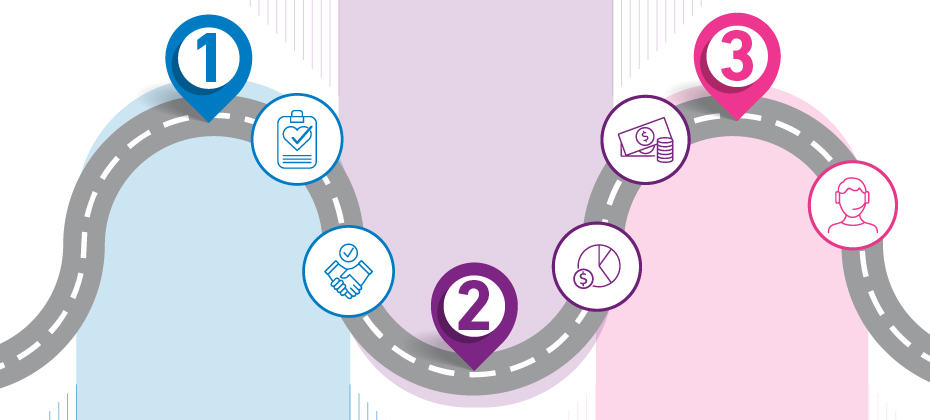
The regulatory requirements for price transparency are in full effect. The Centers for Medicare and Medicaid Services (CMS) is moving forward with the OPPS Price Transparency Final Rule (CMS-1717-F2), which states that hospitals must provide transparency that will help consumers understand medical costs and make informed decisions. At this point, it is recommended that hospitals begin to form a strategy for price transparency. The concept behind price transparency is simple: provide transparency that will help consumers understand medical costs and make informed decisions. Experian Heath’s commitment is simple: provide solutions that benefit the patient and the provider, that improve collections and patient satisfaction. Discover how Experian Health can help you succeed with price transparency.

Despite the majority of elective procedures being up and running again, patients are still keeping their distance. Nearly half of Americans say they or a family member have delayed care since the beginning of the pandemic, while visits to the emergency room and calls to 911 have dropped significantly. Patients are avoiding care, but it’s not for the reason you’d expect. Beyond obvious worries about catching and spreading the virus, a second concern is becoming apparent: patients are fearful of the potential cost of medical care. With so many furloughed, laid off or losing their insurance coverage, medical care has become unaffordable for millions of Americans. It’s especially tough for those who fall into the coverage gap, where their income is too high to grant access to Medicaid coverage, but too low to be caught by the ACA safety net. If patients continue to delay care, it’s only a matter of time before their symptoms worsen, leading to more complex and expensive treatment or even risking their lives. For the hospitals and health systems with revenue levels at a record low, encouraging patients to return for routine care is a matter for their own financial survival too. The answer lies in making sure patients feel safe and comfortable both when they come in for care, and when they look at their financial responsibilities. 5 ways to ease the return to routine care 1. Reassure patients about safety measures before and during their visit Patients are understandably anxious about what their visit is going to be like. Will they have their temperature taken? What should they do if they have symptoms of the virus? Will seating areas be spaced out and sanitized? Pre-visit communications and proactive information on arrival will help them feel comfortable and eliminate the shock factor of seeing more stringent infection control measures. 2. Minimize unnecessary contact by shifting patient intake online From online scheduling and pre-registration to telehealth and contactless payment, there are many ways to keep face-to-face interactions to a minimum. Not only will this help reduce the spread of the virus, it’ll make the whole patient experience more convenient for patients. Exploring a virtual and automated patient intake experience can also free up staff to work on other tasks, thus also protecting the organization’s bottom line through efficiency savings. 3. Encourage patients back to care with automated outreach campaigns With so much uncertainty at the moment, patients may be unsure if it’s even appropriate to come in for routine care. Use automated outreach to prompt them to book appointments and schedule follow up care. A digital scheduling platform can help you set up text-based outreach campaigns, to reassure patients that it’s safe (and essential!) to come in for any overdue care – without placing any undue burden on your call center. 4. Provide price transparency before and at the point of service With healthcare experts pointing to financial worries as a major barrier to care, anything providers can do to improve the patient financial experience is an advantage. Price transparency is the first step. When patients have clear and accessible payment estimates upfront, they can plan accordingly and/or seek financial assistance as quickly as possible, reducing the risk of non-payment. 5. Screen for charity care eligibility with faster automated checks Once those payment estimates have been generated, the next step is to confirm whether the patient is eligible for financial support, in the event that they’re unable to cover their bill. Checking eligibility for charity assistance is a time-suck for patient collections teams, but with access to the right datasets, it’s a perfect candidate for automation. These steps become even more urgent as providers face the prospect of a ‘twindemic’ – or a surge in COVID-19 cases colliding with flu season. By avoiding delays to care, patients can avoid the need for more serious and expensive treatment further down the line, when hospitals are likely to be under even greater pressures. Contact us to find out more about how our data-driven, automated patient intake solutions can help make your patients feel as safe and comfortable as possible, both physically and financially.

The rates for closing gaps in care are some of the most widely used, quantitative metrics to measure quality, allocate incentives, and control costs. Unfortunately, health plans face numerous obstacles closing gaps in care, from social determinants of health to inconsistent coordination of care, and don’t always have a care gap closure program in place. Thankfully, digital solutions like web-based scheduling and automated outreach can help health plans jump many of these hurdles while also helping to close gaps in care. Call center schedulingMany health plans are still grappling with the difficulty of three-way scheduling calls between themselves, members and providers. Calls are lengthy and cumbersome as agents dig through binders of provider schedules and scheduling rules to determine and book the right appointment for each member. Members are often put on hold, sometimes more than once, and are much more likely to drop out of the scheduling process entirely when faced with this experience. As a result, these members may face significant care delays, or in some cases miss their necessary follow-up care entirely. With web-based scheduling, member engagement call centers can eliminate three-way calls. Guided search helps to narrow down the right provider for each member and the scheduling platform allows for immediate, on-the-spot appointment selection. Health plans can more efficiently close gaps in care as members can quickly and easily schedule their appointments. This has proven to cut call times in half, and increase scheduling rates by 140%. To learn more, read this case study. Automated OutreachHealth plans typically have a list of individuals to follow up with on a regular (bi-weekly or monthly) basis to book whatever care service is needed to close the gap in care. Now, health plans have the ability to automate this outreach via interactive voice response (IVR) or text message (SMS) while simultaneously enabling members to schedule appointments on-the-spot, either through a link in the text or during the IVR call. The automation improves the member experience with convenient access and helps close more gaps in care – all without a single call center agent. The ultimate combination for closing gaps in careUsed alone, automated outreach and call center scheduling are both effective for closing gaps in care. When used together, health plans can fast track the path to closing gaps in care and further improve efficiencies. Members can first be reached via automated outreach, prompting the individual to schedule an appointment. This allows members the opportunity to self-schedule and essentially self-close their gap in care, without a single live agent phone call. From there, call center agents can pinpoint the members who didn’t schedule as part of the outreach campaign and then call them directly to book the necessary care. We know that despite the flexibility and convenience offered by digital solutions, like automated outreach, there are still individuals who prefer to schedule over the phone and have personal interaction when booking care. The combination of web-based scheduling and automated outreach enables omnichannel access for health plans while helping call center agents focus their attention on the members who need their help most. Contact us to learn more about how Experian Health can help health plans fast track the path to closing gaps in care.

The age of consumerism has been a catalyst in the shift towards patient-centered care, driving hospitals and health systems across the board to evaluate and improve their current methods of patient access. For one multi-specialty medical group, fast and easy access to care meant providing strategic tools for patients to use beyond the four walls of the organization and outside of the traditional hours of the practice. In order to provide a more flexible and convenient method to access care, CareMount Medical, the largest independent multi-specialty group in New York State, turned to Experian Health to enable online self-scheduling. With it in place, patients now have the ability to schedule an appointment online, across any specialty, any time of day or night. Providers’ scheduling protocols are automated within the solution to accurately match patients with the right provider and appointment based on care need. Those same protocols are also used to prevent overbooking, allowing providers to maintain close and comfortable control over their calendars. Improved call center efficiencies. Automated scheduling relieves call center staff of the associated administrative work, allowing more time for nurses and other credentialed staff to answer health questions and concerns over the phone. Increased patient acquisition and retention. In addition to attracting new patients, the solution has proven valuable for patient retention. Since implementation, the organization has seen on average 30 online appointment bookings per provider per month. Higher patient satisfaction. Patients are no longer required to call to schedule an appointment during office hours. This level of convenience gives patients more control over their day and has contributed to rising patient satisfaction scores for the organization as a whole. Continued Improvements. Real-time analytics and dashboards provide direct line-of-sight into scheduling activity, helping leaders at CareMount Medical to both identify areas for improvement and fine-tune the process to further improve online bookings. “Experian Health’s guided search and scheduling solution adds immediate benefits for our patients, supporting our commitment to provide our patients with cutting-edge technology in the convenience of their home.” — Scott D. Hayworth, MD, FACOG, President & CEO, CareMount Medical Learn more about CareMount Medical’s journey and how your organization can also improve patient access with patient scheduling from Experian Health.
Many desktop publishing packages and web page editors now use Lorem Ipsum as their default model text, and a search for ‘lorem ipsum’ will uncover many web sites still in their infancy.
This is a pull quote
This is test
This is a heading
Many desktop publishing packages and web page editors now use Lorem Ipsum as their default model text, and a search for ‘lorem ipsum’ will uncover many web sites still in their infancy.
- Test 1
- Test 2
- Test 3

It was popularised in the 1960s with the release of Letraset sheets containing Lorem Ipsum passages, and more recently with desktop publishing software like Aldus PageMaker including versions of Lorem Ipsum.
My Company Experian
dsdsad
this is tex tpromo container
| this is table 1 | this is table 2 |
| this is table 3 | this is table 4 |
In this article…
It was popularised in the 1960s with the release of Letraset sheets containing Lorem Ipsum passages, and more recently with desktop publishing software like Aldus PageMaker including versions of Lorem Ipsum.
It was popularised in the 1960s with the release of Letraset sheets containing Lorem Ipsum passages, and more recently with desktop publishing software like Aldus PageMaker including versions of Lorem Ipsum.
heaidng 1
It was popularised in the 1960s with the release of Letraset sheets containing Lorem Ipsum passages, and more recently with desktop publishing software like Aldus PageMaker including versions of Lorem Ipsum.
It was popularised in the 1960s with the release of Letraset sheets containing Lorem Ipsum passages, and more recently with desktop publishing software like Aldus PageMaker including versions of Lorem Ipsum.
It was popularised in the 1960s with the release of Letraset sheets containing Lorem Ipsum passages, and more recently with desktop publishing software like Aldus PageMaker including versions of Lorem Ipsum.
It was popularised in the 1960s with the release of Letraset sheets containing Lorem Ipsum passages, and more recently with desktop publishing software like Aldus PageMaker including versions of Lorem Ipsum.It was popularised in the 1960s with the release of Letraset sheets containing Lorem Ipsum passages, and more recently with desktop publishing software like Aldus PageMaker including versions of Lorem Ipsum.
heading 2
It was popularised in the 1960s with the release of Letraset sheets containing Lorem Ipsum passages, and more recently with desktop publishing software like Aldus PageMaker including versions of Lorem Ipsum.
It was popularised in the 1960s with the release of Letraset sheets containing Lorem Ipsum passages, and more recently with desktop publishing software like Aldus PageMaker including versions of Lorem Ipsum.
It was popularised in the 1960s with the release of Letraset sheets containing Lorem Ipsum passages, and more recently with desktop publishing software like Aldus PageMaker including versions of Lorem Ipsum.
heaidng 3
It was popularised in the 1960s with the release of Letraset sheets containing Lorem Ipsum passages, and more recently with desktop publishing software like Aldus PageMaker including versions of Lorem Ipsum.
It was popularised in the 1960s with the release of Letraset sheets containing Lorem Ipsum passages, and more recently with desktop publishing software like Aldus PageMaker including versions of Lorem Ipsum.
It was popularised in the 1960s with the release of Letraset sheets containing Lorem Ipsum passages, and more recently with desktop publishing software like Aldus PageMaker including versions of Lorem Ipsum.
It was popularised in the 1960s with the release of Letraset sheets containing Lorem Ipsum passages, and more recently with desktop publishing software like Aldus PageMaker including versions of Lorem Ipsum.It was popularised in the 1960s with the release of Letraset sheets containing Lorem Ipsum passages, and more recently with desktop publishing software like Aldus PageMaker including versions of Lorem Ipsum.
heading 4
It was popularised in the 1960s with the release of Letraset sheets containing Lorem Ipsum passages, and more recently with desktop publishing software like Aldus PageMaker including versions of Lorem Ipsum.
It was popularised in the 1960s with the release of Letraset sheets containing Lorem Ipsum passages, and more recently with desktop publishing software like Aldus PageMaker including versions of Lorem Ipsum.
It was popularised in the 1960s with the release of Letraset sheets containing Lorem Ipsum passages, and more recently with desktop publishing software like Aldus PageMaker including versions of Lorem Ipsum.
this is columns block #1
this is column block #2