Case study: Boost patient collections and scale patient scheduling with PatientDial

by Experian Health 7 min read July 6, 2022

Boost-patient-collections-and-scale-patient-scheduling-with-PatientDial

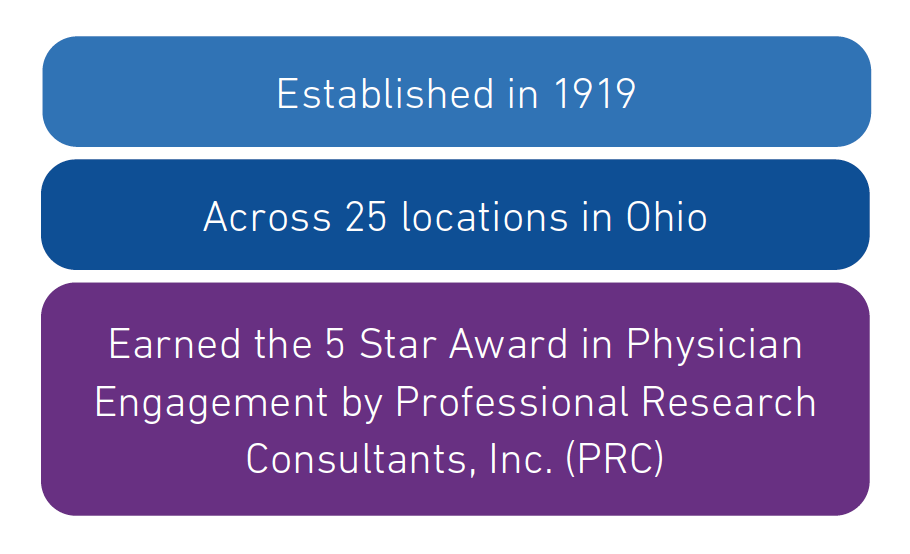
Dayton Children’s Hospital is a pediatric hospital in Ohio with over 300,000 annual patient visits. Ranked by U.S News & World Report as one of the top 50 pediatric facilities in the United States, the facility’s mission centers around providing “optimal health for every child.” 
Challenges

The Patient Accounts department, led by Richard Gonzales, wanted to reduce his team’s reliance on third-party collections agencies and avoid associated fees. This meant that his in-house team needed to further scale its operations and processes to reach their in-house collections goals.

The Pre-Service Operations department, managed by Jason Schenck, pursued efficiencies for resources within the centralized scheduling team, including the goal to quickly respond to referrals and turning those referrals into scheduled appointments within 24 hours.

Throughout the pandemic, both teams experienced staffing shortages and pandemic-related absences. Because their dialing methodologies were manual, these disruptions in personnel prohibited them from growing in-house collections and reaching the turnaround times Schenck’s team wanted to achieve for scheduling referrals.

As Dayton Children’s strived to achieve these ambitious goals, they decided to proactively provide a better patient experience through convenience, connection and an effective communication experience.

Resolution

Dayton Children’s launched Experian Health’s PatientDial solution in the Patient Accounts department to scale their in-house collections efforts, thereby reducing dependency on their outside collections agencies.

The solution was also adopted in the Pre-Service Operations department to automate dialing and conversation readiness so that the team could expedite the scheduling of referred patients.

The expertise of a dedicated Experian Health consultant provided unwavering support to the two departmental heads and also gave them full control over the operations to best match their expectations.

Streamlining patient payment collections with PatientDial 

The Patient Accounts department’s operations revolve around billing a claim, reducing bad debt, increasing patient collections and providing effective customer service. They devised a two-pronged approach when it came to contacting patients for payments. The outbound campaign focused on collections, whereas the inbound customer service team handled the large volume of incoming calls from customers and rerouted them to the correct department.

When it comes to collections, the Patient Accounts department found that making phone calls was the most effective medium to support their collections efforts. Billing is a complex process and taking the time to connect with patient guarantors to explain those bills paid off.

To refine the communication approach, patient accounts were segmented based on outstanding balance amounts and where they were on the statement cycle. Calls were then made to the accounts with the highest propensity to pay.

Waiting on hold not only wastes a patient’s time but also leads to a frustrating patient experience. Many even abandon calls, to call again later, which makes phone lines even busier. To provide a better patient experience, the department was also able to try out an innovative recall campaign, enabled by the queue callback feature. Patients were called back automatically the moment an agent became available, thereby reducing call hold time. By providing patients with this callback option, Dayton Children’s is empowered to accept more inbound calls per day along with having empathetic conversations with guarantors around payment plans to sustain its collections goals.

Patient scheduling and preregistration powered through automation

The Pre-Service Operations department leveraged PatientDial to improve outbound call efficiency and optimize existing staff resources to schedule appointments rather than leave voicemails. The productivity for scheduling a new patient visit from an outbound call was about 30%. With the centralized team supporting more than 40 specialty clinics, the team needed to improve the number of new patient visits scheduled daily, which meant opening resources to receive inbound calls. The mighty team of 10 was able to strategically use the autodialer feature to make new appointments, send appointment reminders and schedule referrals.

Time is of the essence in a healthcare setting, and swift access to pertinent patient information enabled the staff to start their work even before greeting the callers when an inbound call came. Powered by the agent pop feature, staff had immediate access to key patient identifiers such as name, date of birth and specialty clinic from referral. Additionally, the feature enabled the team to reinvest time in creating a positive patient experience through improved hold and talk times, both of which reduce the risk of call abandonment.

Results of incorporating PatientDial

With PatientDial, the Patient Accounts department has been able to successfully align revenue goals with employee productivity. Previously, the staff was able to make only 50–60 calls per day, out of which 70% went unanswered. By automating dialing, the staff is now able to make 600 calls per day, resulting in a corresponding uptick in collections. The recall campaign, used for following up with patient guarantors, was a new endeavor for the department and has reduced the staff’s burden of making 300 manual calls per day and has also reduced call abandonment rates.


The Pre-Service Operations department, has seen a 50% increase in patient appointments scheduled, powered by 600–800 automated calls made per day. The referral-to-scheduled appointment timeline has gone down from 4 days to under 1 day. Two hundred patients can now be reached via text daily and the speed to answer calls has been reduced from 60 seconds to 30 seconds.

Lastly, PatientDial has positively challenged the Pre-Service Operations department to rethink productivity and daily operational efficiency.


Dayton Children’s investment in dialing automation has streamlined their patient communications around scheduling and far exceeded initial goals. Because of the resulting high volumes of new patients scheduled and improved efficiency and effectiveness the team realized, there’s a strategic plan specific to central scheduling and to implement standard processes for managing new patient referrals across the organization.

What’s next for Dayton Children’s?

Empowered by their stellar results, both the Patient Accounts and Pre-Service Operations departments want to further explore how PatientDial could help other departments achieve greater productivity and further deliver a positive patient experience.

The Patient Accounts department wants to maintain its focus on productivity gains and employee experience through PatientDial, with the ultimate goal of bringing in more collections.

The Pre-Service Operations department plans to take on additional scheduling responsibilities across departments, creating time to reinvest in direct patient care and improving patient outcomes. Initial plans are for establishing patient scheduling and improving processes to identify and schedule follow-up visits.

Both the teams at Dayton Children’s recognize Experian Health’s expertise in revenue cycle solutions, which has made this a successful partnership.

Learn more about how PatientDial uses patient outreach and patient engagement processes and workflows to increase your bottom line.

Related Posts

Andy’s New WP Workflow Test Article Using Quick Edit

Key takeaways: Revenue cycle teams can use automation to reduce repetitive work and apply AI where data-driven prediction, matching or prioritization can improve a workflow. Experian Health’s 2025 State of Claims survey found that 41% of providers now face denial rates of 10% or higher, while 68% say submitting clean claims is more challenging than a year ago. Patient Access Curator™ (PAC) uses AI to support front-end data validation and insurance discovery, while AI Advantage™ helps teams predict denial risk and prioritize denial follow-up. Artificial intelligence (AI) and automation can support administrative work in healthcare. In the revenue cycle, teams depend on accurate information, timely decisions and efficient follow-up to keep claims moving. In revenue cycle management, AI and automation can help organizations reduce manual checks, find data gaps, predict denial risk and prioritize work queues. These tools are most useful when they support staff judgment, payer expertise and compliance oversight. They can handle repetitive, data-heavy tasks so staff can focus on exceptions and decisions that need human review. In 2023, McKinsey & Company reported that research suggests effectively deploying automation and analytics could eliminate $200 billion to $360 billion of spending in U.S. healthcare. For revenue cycle leaders, the practical question is where to apply those capabilities first. The case for applying AI and automation in healthcare Revenue cycle teams juggle many daily tasks. Staff collect and verify patient information, confirm eligibility, identify the right payer, submit clean claims, monitor status, work denials and manage collections. Small data gaps at the beginning of the process can create downstream rework and delays. Rework also consumes staff time, adding to these operational pressures. As costs rise and revenue cycles tighten, there is increasing pressure to do more with less. Experian Health’s 2025 State of Claims survey found that 54% of providers say claim errors are increasing and 90% of claim denials are reworked with at least some human review before resubmission. Providers are also managing broader financial and administrative pressures. The American Hospital Association has reported that prior authorization requirements, claim audits, denials and other payer policies add administrative burden and cost for hospitals and health systems. These requirements also consume staff time to appeal denials and manage payer processes. AI and automation are different but complementary. Automation follows defined rules to complete repeatable work. AI models can identify patterns in data, predict risk and help teams decide where to focus attention. When used together, they can support more consistent revenue cycle workflows. How AI and automation can support revenue cycle workflows Revenue cycle management automation and AI are most useful when tied to a specific workflow and a measurable operational problem. The goal is to help teams act earlier, reduce avoidable rework and focus staff time where judgment is needed most. For example, automation can complete rule-based eligibility checks. AI can help identify claims with a higher likelihood of denial. In insurance discovery workflows, AI can also help identify coverage that wasn’t captured at registration. When these tools fit into existing workflows, they can support more consistent decisions and reduce manual work. Three practical applications include: 1. Improving front-end data quality with Patient Access Curator Patient and coverage information collected early in the revenue cycle can affect downstream claim outcomes. Incomplete or outdated demographic details, eligibility responses, coordination of benefits or Medicare Beneficiary Identifier information can create problems that lead to claim delays or denials later in the cycle. Experian Health’s Patient Access Curator helps prevent claim denials by validating demographics, eligibility, insurance discovery, coordination of benefits and Medicare Beneficiary Identifier data in seconds. PAC’s AI and machine learning capabilities help improve match accuracy, coverage sequencing and data confidence by writing the validated data back into the host system and sequencing payers before the claim is created. This automates work that would otherwise require manual coverage checks. 2. Using insurance discovery to find coverage not captured at registration When active coverage isn’t identified during registration, claims may be delayed or submitted with incomplete insurance information. Insurance discovery looks for coverage that may not have been captured during registration. Patient Access Curator includes insurance discovery as part of its front-end validation workflow. It can help identify and correct missing or incorrect insurance information so claims can be submitted with more complete coverage data. 3. Using AI to prevent and prioritize denials Even with strong front-end processes, some claims still require additional attention. AI can help claims teams decide which claims to review before submission and which denials to work first after payer response. Experian Health’s AI Advantage supports two denial management use cases:1. AI Advantage – Predictive Denials uses a client’s historical claims data and Experian’s knowledge of payer rules to identify claims with a high likelihood of denial before submission so teams can take corrective action.2. AI Advantage – Denial Triage uses AI to segment denials and identify those with the highest potential for reimbursement. This approach can help teams prioritize with more confidence. Rather than treating every claim or denial the same way, teams can use predictive models to focus on the work that needs the most attention. Potential benefits of AI and automation in the revenue cycle A high-performing revenue cycle depends on timely, accurate and consistent work. AI and automation can help providers modernize that work without losing the expertise of the people who manage complex payer and patient situations every day. When applied to the right workflows, these tools can help organizations: Reduce manual data searches that take staff away from higher-value work Improve front-end data quality before claims are created Identify missing or incorrect coverage information earlier Spot claims that may be at higher risk of denial Prioritize denied claims by potential reimbursement Reduce rework caused by inaccurate or incomplete information Give staff more consistent information for follow-up decisions A focused AI strategy starts with the workflow problem, uses data that is relevant to that problem and keeps staff in control of judgment-based decisions. A more proactive approach to revenue cycle management Revenue cycle teams can move from reactive work toward a more proactive approach: catch errors earlier, validate coverage before claims are created and prioritize the claims and denials that need the most attention. Experian Health offers revenue cycle solutions that use AI and automation in targeted ways to support front-end data quality, reduce rework and manage denials. Patient Access Curator supports registration and coverage validation, while AI Advantage supports denial prediction and triage. Learn more about Experian Health’s Patient Access Curator and AI Advantage.

October 2, 2026 by Andy.Monte@experian.com
Experian Health ranked #1 in Best in KLAS for 2025

Experian Health is very pleased to announce that we've ranked #1 in the 2025 Best in KLAS: Software & Services report, for our Contract Manager and Contract Analysis product, for the third consecutive year. Contract Manager, when paired with Contract Analysis, empowers healthcare providers by ensuring payers comply with contract terms, identifying and recovering underpayments, and arming them with real claims data to negotiate contracts. This enables providers to negotiate more favorable terms and maintain financial stability.  Clarissa Riggins, Chief Product Officer at Experian Health, says, “In the ever-evolving healthcare landscape, our Contract Manager solution has once again been recognized as the #1 Revenue Cycle Management tool by KLAS for the third consecutive year. This prestigious ranking underscores the significant value our solution delivers to our clients by identifying underpayments and facilitating revenue recovery. We are honored to continue supporting our clients with innovative solutions that drive financial success and operational efficiency.”  Learn more about how Contract Manager and Contract Analysis can help your healthcare organization validate reimbursement accuracy, recover underpayments and boost revenue.   Learn more Contact us

February 5, 2025 by kelly.nguyen
How to increase patient engagement

Learn how providers can increase patient engagement, why it matters and key strategies that deliver improved end-to-end patient experiences.

January 30, 2025 by Experian Health

Spotlight test

Spotlight Description

This site is protected by reCAPTCHA and the Google Privacy Policy and Terms of Service apply.

Sticky Subscribe Title

Sticky Subscribe Description
Sticky Subscribe

Testing Spotlight Paragraph block

Testing the spotlight block header

Archive Testing

Categories