Healthcare fraud and the burden of medical ID theft

by Experian Health 6 min read February 14, 2024

Healthcare-fraud-and-the-burden-of-medical-ID-theft-blog

For Michael Smith, it all began with seemingly innocuous text messages from a PA University Hospital, indicating a wait time for an emergency room visit. A peculiar situation for someone who no longer resided in Philadelphia and hadn’t used the hospital system for years. Initially dismissing it as spam, Mike’s skepticism deepened when a hospital staffer named Ellen reached out to discuss diagnostic results from an ER visit, he never made.

The revelation was unsettling – someone had registered with Smith’s name, and the lack of ID verification raised eyebrows. While the recorded name and date of birth were accurate, the address associated with the account was outdated. A discrepancy that hinted at a more insidious problem.

Undeterred, Smith took matters into his own hands. Following an unsatisfactory conversation with the hospital’s billing department, he penned a letter to the privacy officer, expressing his concerns about potential fraud. In his words: “I think there’s something going on, that someone is using my information, and the visit and the charges appear to be fraudulent.”

Smith’s proactive approach sheds light on a crucial aspect of dealing with medical identity theft – swift and assertive action. As cyberattacks on healthcare institutions escalate, individuals must be vigilant in protecting their personal data.

Everyone shares the burden

Whether enrolled in employer-sponsored health insurance or securing coverage through HealthCare.gov, or the individual market, instances of healthcare fraud invariably translate into heightened financial burdens for consumers. Such malfeasance results in elevated premiums and increased out-of-pocket expenses, often accompanied by diminished benefits or coverage. In the realm of employers, both private and governmental entities, healthcare fraud escalates the costs associated with providing insurance benefits to employees, consequently raising the overall operational expenses. For a significant portion of the American population, the augmented financial strain stemming from fraudulent activities could be the decisive factor in realizing or forgoing health insurance.

Yet, the financial ramifications are merely one facet of the impact wrought by healthcare fraud. Beyond monetary losses, this malpractice carries a distinctly human toll. Individual victims of healthcare fraud are distressingly prevalent, individuals who fall prey to exploitation and unnecessary or unsafe medical procedures. Their medical records may be compromised, and legitimate insurance information can be illicitly utilized to submit falsified claims.

It is crucial not to be deceived into perceiving healthcare fraud as a victimless transgression, as its repercussions extend far beyond financial considerations, undeniably inflicting devastating effects.

Healthcare fraud, like any fraud, demands that false information be represented as truth. An all-too-common healthcare fraud scheme involves perpetrators who exploit patients by entering into their medical records’ false diagnoses of medical conditions they do not have, or of more severe conditions than they actually do have. This is done so that bogus insurance claims can be submitted for payment. Unless and until this discovery is made (and inevitably this occurs when circumstances are particularly challenging for a patient) these phony or inflated diagnoses become part of the patient’s documented medical history, at least in the health insurer’s records.

How does medical identity theft happen?

Medical identity theft involves someone using another patient’s name name or insurance information to receive healthcare or filing fraudulent claims, posing significant financial and health risks. It can result in bills for procedures the patient has never had, inaccurate medical records, and potentially life-threatening care. Common ways it occurs include database breaches, improper disposal of records, phishing scams, insider theft by healthcare professionals, and theft by family members.

Data breaches in healthcare have reached alarming levels, with the Office of Civil Rights reporting 725 notifications of breaches in 2023, where more than 133 million records were exposed or impermissibly disclosed. Social engineering poses a threat to individual Medicare beneficiaries, but healthcare providers also face risks from ransomware attacks, hacking, and employee errors. Hacking constitutes the dominant threat, accounting for 75% of reportable breaches.
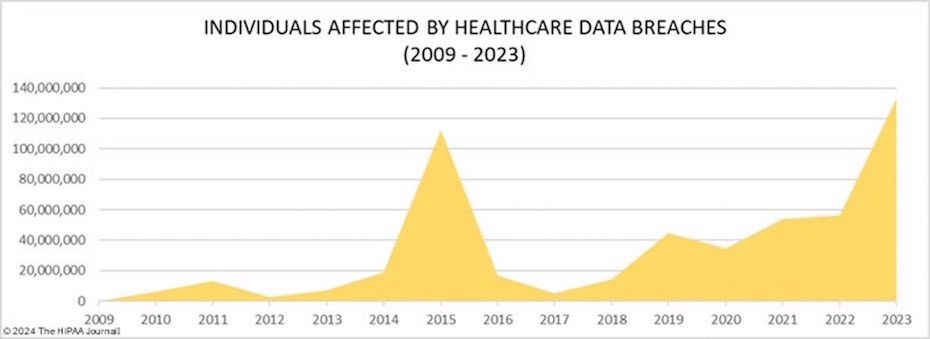
Regardless of how health data is exposed, be it through individual identity theft, hacking attacks, or unintended sharing, any disclosure of payment information increases the risk of healthcare fraud.

Protecting patients and improving their experience

To prevent medical fraud and ensure eligibility integrity, here are some steps healthcare organizations can take:

  1. Implement robust verification processes: Develop and enforce strict protocols to verify patient eligibility and review supporting documents. This includes verifying insurance coverage, confirming the patient’s identity, and validating their relationship to the covered individual (e.g., spouse, dependent).
  2. Stay updated with legal and regulatory requirements: Stay informed about the latest laws, regulations, and industry guidelines related to medical eligibility and fraud prevention. This could include understanding requirements for reporting changes in eligibility status and keeping up with best practices recommended by regulatory authorities.
  3. Train staff on fraud prevention: Provide comprehensive training to all staff members regarding medical fraud prevention, eligibility verification procedures, and red flags to look out for. Staff should be educated on relevant laws and regulations, as well as proper documentation practices.
  4. Conduct regular internal audits: Regularly review patient records, claims, and billing processes to identify any inconsistencies or irregularities. Internal audits can help detect potential fraud and ensure compliance with eligibility requirements.
  5. Utilize technology and automation: Implement healthcare management systems or software that incorporate automated eligibility verification processes. This can help streamline and improve accuracy in eligibility determinations, reducing the risk of fraudulent benefits being provided.
  6. Encourage patient engagement: Educate patients about their responsibilities in maintaining accurate eligibility information. Promptly notify patients about the importance of reporting changes in their circumstances (e.g., marital status, employment status) that may affect their eligibility for medical benefits.
  7. Report suspicious activity: Train staff to recognize and report any suspicious activity or potential fraud. Establish clear reporting channels within your practice and encourage a culture of transparency and accountability.
  8. Stay vigilant: Stay alert for emerging trends, schemes, and new types of medical fraud. Regularly review industry updates, attend relevant workshops or seminars, and participate in fraud prevention initiatives to stay informed about evolving threats and prevention strategies.

By implementing these measures, healthcare organizations can help safeguard their medical practices against medical fraud and preserve the integrity of eligibility determinations.

Finding the right partner

Healthcare fraud is a serious crime that affects everyone and should concern everyone—government officials and taxpayers, insurers and premium-payers, healthcare providers and patients—and it is a costly reality that can’t be overlooked. By taking steps to find the right partner along the way, providers are helping to protect the integrity of the nation’s healthcare system. Experian Health works across the healthcare journey to improve the patient experience, make providers more effective and efficient, and enhance and simplify the overall healthcare ecosystem.

Learn more or contact us to see how Experian Health’s patient identity solutionscan help healthcare organizations prevent medical ID theft.

Related Posts

Andy’s New WP Workflow Test Article Using Quick Edit

Key takeaways: Revenue cycle teams can use automation to reduce repetitive work and apply AI where data-driven prediction, matching or prioritization can improve a workflow. Experian Health’s 2025 State of Claims survey found that 41% of providers now face denial rates of 10% or higher, while 68% say submitting clean claims is more challenging than a year ago. Patient Access Curator™ (PAC) uses AI to support front-end data validation and insurance discovery, while AI Advantage™ helps teams predict denial risk and prioritize denial follow-up. Artificial intelligence (AI) and automation can support administrative work in healthcare. In the revenue cycle, teams depend on accurate information, timely decisions and efficient follow-up to keep claims moving. In revenue cycle management, AI and automation can help organizations reduce manual checks, find data gaps, predict denial risk and prioritize work queues. These tools are most useful when they support staff judgment, payer expertise and compliance oversight. They can handle repetitive, data-heavy tasks so staff can focus on exceptions and decisions that need human review. In 2023, McKinsey & Company reported that research suggests effectively deploying automation and analytics could eliminate $200 billion to $360 billion of spending in U.S. healthcare. For revenue cycle leaders, the practical question is where to apply those capabilities first. The case for applying AI and automation in healthcare Revenue cycle teams juggle many daily tasks. Staff collect and verify patient information, confirm eligibility, identify the right payer, submit clean claims, monitor status, work denials and manage collections. Small data gaps at the beginning of the process can create downstream rework and delays. Rework also consumes staff time, adding to these operational pressures. As costs rise and revenue cycles tighten, there is increasing pressure to do more with less. Experian Health’s 2025 State of Claims survey found that 54% of providers say claim errors are increasing and 90% of claim denials are reworked with at least some human review before resubmission. Providers are also managing broader financial and administrative pressures. The American Hospital Association has reported that prior authorization requirements, claim audits, denials and other payer policies add administrative burden and cost for hospitals and health systems. These requirements also consume staff time to appeal denials and manage payer processes. AI and automation are different but complementary. Automation follows defined rules to complete repeatable work. AI models can identify patterns in data, predict risk and help teams decide where to focus attention. When used together, they can support more consistent revenue cycle workflows. How AI and automation can support revenue cycle workflows Revenue cycle management automation and AI are most useful when tied to a specific workflow and a measurable operational problem. The goal is to help teams act earlier, reduce avoidable rework and focus staff time where judgment is needed most. For example, automation can complete rule-based eligibility checks. AI can help identify claims with a higher likelihood of denial. In insurance discovery workflows, AI can also help identify coverage that wasn’t captured at registration. When these tools fit into existing workflows, they can support more consistent decisions and reduce manual work. Three practical applications include: 1. Improving front-end data quality with Patient Access Curator Patient and coverage information collected early in the revenue cycle can affect downstream claim outcomes. Incomplete or outdated demographic details, eligibility responses, coordination of benefits or Medicare Beneficiary Identifier information can create problems that lead to claim delays or denials later in the cycle. Experian Health’s Patient Access Curator helps prevent claim denials by validating demographics, eligibility, insurance discovery, coordination of benefits and Medicare Beneficiary Identifier data in seconds. PAC’s AI and machine learning capabilities help improve match accuracy, coverage sequencing and data confidence by writing the validated data back into the host system and sequencing payers before the claim is created. This automates work that would otherwise require manual coverage checks. 2. Using insurance discovery to find coverage not captured at registration When active coverage isn’t identified during registration, claims may be delayed or submitted with incomplete insurance information. Insurance discovery looks for coverage that may not have been captured during registration. Patient Access Curator includes insurance discovery as part of its front-end validation workflow. It can help identify and correct missing or incorrect insurance information so claims can be submitted with more complete coverage data. 3. Using AI to prevent and prioritize denials Even with strong front-end processes, some claims still require additional attention. AI can help claims teams decide which claims to review before submission and which denials to work first after payer response. Experian Health’s AI Advantage supports two denial management use cases:1. AI Advantage – Predictive Denials uses a client’s historical claims data and Experian’s knowledge of payer rules to identify claims with a high likelihood of denial before submission so teams can take corrective action.2. AI Advantage – Denial Triage uses AI to segment denials and identify those with the highest potential for reimbursement. This approach can help teams prioritize with more confidence. Rather than treating every claim or denial the same way, teams can use predictive models to focus on the work that needs the most attention. Potential benefits of AI and automation in the revenue cycle A high-performing revenue cycle depends on timely, accurate and consistent work. AI and automation can help providers modernize that work without losing the expertise of the people who manage complex payer and patient situations every day. When applied to the right workflows, these tools can help organizations: Reduce manual data searches that take staff away from higher-value work Improve front-end data quality before claims are created Identify missing or incorrect coverage information earlier Spot claims that may be at higher risk of denial Prioritize denied claims by potential reimbursement Reduce rework caused by inaccurate or incomplete information Give staff more consistent information for follow-up decisions A focused AI strategy starts with the workflow problem, uses data that is relevant to that problem and keeps staff in control of judgment-based decisions. A more proactive approach to revenue cycle management Revenue cycle teams can move from reactive work toward a more proactive approach: catch errors earlier, validate coverage before claims are created and prioritize the claims and denials that need the most attention. Experian Health offers revenue cycle solutions that use AI and automation in targeted ways to support front-end data quality, reduce rework and manage denials. Patient Access Curator supports registration and coverage validation, while AI Advantage supports denial prediction and triage. Learn more about Experian Health’s Patient Access Curator and AI Advantage.

October 2, 2026 by Andy.Monte@experian.com
Experian Health ranked #1 in Best in KLAS for 2025

Experian Health is very pleased to announce that we've ranked #1 in the 2025 Best in KLAS: Software & Services report, for our Contract Manager and Contract Analysis product, for the third consecutive year. Contract Manager, when paired with Contract Analysis, empowers healthcare providers by ensuring payers comply with contract terms, identifying and recovering underpayments, and arming them with real claims data to negotiate contracts. This enables providers to negotiate more favorable terms and maintain financial stability.  Clarissa Riggins, Chief Product Officer at Experian Health, says, “In the ever-evolving healthcare landscape, our Contract Manager solution has once again been recognized as the #1 Revenue Cycle Management tool by KLAS for the third consecutive year. This prestigious ranking underscores the significant value our solution delivers to our clients by identifying underpayments and facilitating revenue recovery. We are honored to continue supporting our clients with innovative solutions that drive financial success and operational efficiency.”  Learn more about how Contract Manager and Contract Analysis can help your healthcare organization validate reimbursement accuracy, recover underpayments and boost revenue.   Learn more Contact us

February 5, 2025 by kelly.nguyen
How to increase patient engagement

Learn how providers can increase patient engagement, why it matters and key strategies that deliver improved end-to-end patient experiences.

January 30, 2025 by Experian Health

Spotlight test

Spotlight Description

This site is protected by reCAPTCHA and the Google Privacy Policy and Terms of Service apply.

Sticky Subscribe Title

Sticky Subscribe Description
Sticky Subscribe

Testing Spotlight Paragraph block

Testing the spotlight block header

Archive Testing

Categories