this is heading!

kjdaskldj
some company name herekdljsaldkjlska
Docker is an open-source project to easily create lightweight, portable, self-sufficient containers from any application. The same container that a developer builds and tests on a laptop can run at scale, in production, on VMs, bare metal, OpenStack clusters, public clouds and more.
Docker is an open-source project to easily create lightweight, portable, self-sufficient containers from any application. The same container that a developer builds and tests on a laptop can run at scale, in production, on VMs, bare metal, OpenStack clusters, public clouds and more.
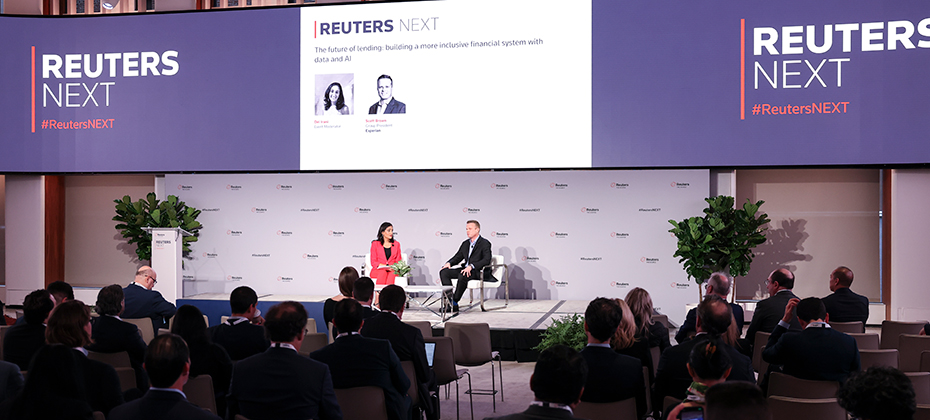

thisis a contet t for medai text block!
Paragraph Block- is simply dummy text of the printing and typesetting industry. Lorem Ipsum has been the industry’s standard dummy text ever since the 1500s, when an unknown printer took a galley of type and scrambled it to make a type specimen book. It has survived not only five centuries, but also the leap into electronic typesetting, remaining essentially unchanged. It was popularised in the 1960s with the release of Letraset sheets containing Lorem Ipsum passages, and more recently with desktop publishing software like Aldus PageMaker including versions of Lorem Ipsum.
Heading 2
Heading 3
Heading 4
Heading 5
- This is a list
- Item 1
- Item 2
- Sub list
- Sub list 2
- Sub list 3
- More list
- More list 2
- More list 3
- More more
- More more
This is the pull quote block Lorem Ipsumis simply dummy text of the printing and typesetting industry. Lorem Ipsum has been the industry’s standard dummy text ever since the 1500s,
ExperianThis is the citation

This is the pull quote block Lorem Ipsumis simply dummy text of the printing and typesetting industry. Lorem Ipsum has been the industry’s standard dummy text ever since the 1500s,
ExperianThis is the citation
| Table element | Table element | Table element |
| my table | my table | my table |
| Table element | Table element | Table element |
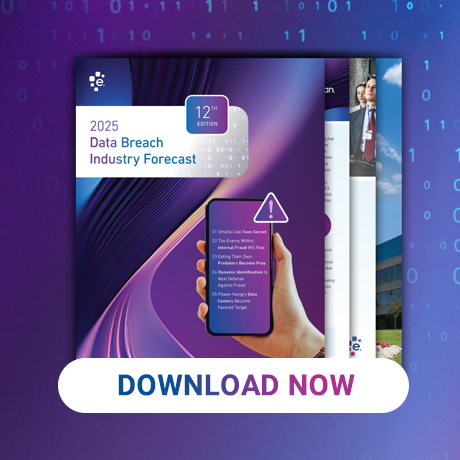
Media Text Block
of the printing and typesetting industry. Lorem Ipsum has been the industry’s standard dummy text ever since the 1500s, when an unknown printer took a galley of type and scrambled it to make a type specimen book. It has survived not only five centuries, but also the leap into electronic typesetting, remaining essentially unchanged. It was popularised in the 1960s with the release of Letraset sheets containing Lorem Ipsum passages, and more recently with desktop publishing software like Aldus PageMaker including versions of Lorem Ipsum
My Small H5 Title

My first column title
Many desktop publishing packages and web page editors now use Lorem Ipsum as their default model text, and a search for ‘lorem ipsum’ will uncover many web sites still in their infancy.

My second column title
Many desktop publishing packages and web page editors now use Lorem Ipsum as their default model text, and a search for ‘lorem ipsum’ will uncover many web sites still in their infancy.

The age of consumerism has been a catalyst in the shift towards patient-centered care, driving hospitals and health systems across the board to evaluate and improve their current methods of patient access. For one multi-specialty medical group, fast and easy access to care meant providing strategic tools for patients to use beyond the four walls of the organization and outside of the traditional hours of the practice. In order to provide a more flexible and convenient method to access care, CareMount Medical, the largest independent multi-specialty group in New York State, turned to Experian Health to enable online self-scheduling. With it in place, patients now have the ability to schedule an appointment online, across any specialty, any time of day or night. Providers’ scheduling protocols are automated within the solution to accurately match patients with the right provider and appointment based on care need. Those same protocols are also used to prevent overbooking, allowing providers to maintain close and comfortable control over their calendars. Improved call center efficiencies. Automated scheduling relieves call center staff of the associated administrative work, allowing more time for nurses and other credentialed staff to answer health questions and concerns over the phone. Increased patient acquisition and retention. In addition to attracting new patients, the solution has proven valuable for patient retention. Since implementation, the organization has seen on average 30 online appointment bookings per provider per month. Higher patient satisfaction. Patients are no longer required to call to schedule an appointment during office hours. This level of convenience gives patients more control over their day and has contributed to rising patient satisfaction scores for the organization as a whole. Continued Improvements. Real-time analytics and dashboards provide direct line-of-sight into scheduling activity, helping leaders at CareMount Medical to both identify areas for improvement and fine-tune the process to further improve online bookings. "Experian Health’s guided search and scheduling solution adds immediate benefits for our patients, supporting our commitment to provide our patients with cutting-edge technology in the convenience of their home." — Scott D. Hayworth, MD, FACOG, President & CEO, CareMount Medical Learn more about CareMount Medical's journey and how your organization can also improve patient access with patient scheduling from Experian Health.

Imagine if every time you wanted to sign up to buy groceries online, book a vacation, or apply for a job, you had to fill out a paper registration form. For 21st century consumers who are accustomed to sleek digital and self-service experiences in industries such as retail, travel and banking, such an antiquated and cumbersome process seems unthinkable. Unfortunately, when it comes to healthcare services, we don’t have to use our imagination. Too often, we’re still required to fill out time-consuming, repetitive and tedious forms before accessing services. For providers who want to stay competitive, the long waits and wasted time that arise from paper-based registration system do nothing to win consumer loyalty. And on top of the disappointing patient experience, manual intake processes often lead to delays and errors that can disrupt the billing cycle, costing time and money further down the line. In fact, up to half of denied claims occur because of issues around the point of registration, such as identification errors, sub-standard data analytics and inefficient workflows. And at a time when patients and staff are trying to minimize face-to-face contact due to COVID-19, manual registration seems like an unnecessary extra touch point. Is it time to say goodbye to paper-based paper registration? Reimagining the patient intake experience for the digital age During registration, patients can be asked to provide personal details, submit their medical history, and confirm payer information. They may also need to schedule appointments, organize billing, or sign up for care management programs. It’s often a patient’s first glimpse of how a provider is going to look after them, so making the registration experience as stress-free as possible is a great way to build customer loyalty from the start. As the competition for consumer business heats up, providers should look for ways to give patients the virtual and mobile-friendly experience they desire, with as little time as possible spent in waiting rooms filling in forms. By letting patients tick off their registration to-do list online or via a mobile device – before even coming into hospital – providers can improve patient satisfaction, while using automated workflows to drive down costly errors and increase revenue. Here are two examples of how healthcare providers have embraced self-service registration and automated pre-registration workflows to benefit both their consumers and bottom line: 1. Schneck Medical Center used automated pre-registration to double their productivity For the patient access team at Schneck Medical Center, getting the correct patient information in a timely manner during registration was a challenge. By introducing eCare NEXT®, they were able to automate pre-registration workflows so the majority of manual, repetitive patient tasks could be completed automatically, freeing up staff to focus on patients who needed specific attention before being cleared. With Registration QA added to the mix, they could track and correct errors and spot opportunities to improve performance in real-time, for a better patient experience and more efficient operations. Skylar Earley, Director of Patient Access and Communication, said that by using Experian Health’s patient intake solutions, “we were able to make some fairly minor workflow changes, but double our pre-registration productivity on a daily basis and then repurpose some labor to different areas in patient access.” 2. Martin Luther King Jr. Community Hospital (MLKCH) used automated registration to reduce claim denials Seeing that a large portion of claim denials were originating during patient registration, MLKCH introduced an automated registration workflow to eliminate unnecessary manual tasks and increase the accuracy of the data being collected. For Patient Access Manager Lori Westman, the results have been impressive: “We get fewer denials because we’re getting true verification data, and our patient volumes continue to increase. So the fact that we can take off at least two to three minutes on half of our registrations is speeding up the work for the team, and the turnaround time is much better for the patients.” By reducing paper-based tasks and introducing automated pre-registration options, these providers were able to make life easier for patients while slimming down their workflows. Is it time for your organization to do the same? Download our free eBook to find out more about how automated patient intake workflows could help you create a seamless, more efficient patient registration experience.

Due to COVID-19 and the subsequent delay of elective procedures, many healthcare providers today are struggling to ensure their patient populations are getting the care they need. While online scheduling and referral coordination solutions can no doubt help improve patient access, especially as those who cancelled or postponed appointments look to reschedule, it’s the use of automated outreach combined with the ability to schedule appointments in real-time that can take it one step further and help providers close gaps in care. Automated outreach via interactive voice response (IVR) and text messaging (SMS) is now effectively closing gaps in care and streamlining the entire scheduling process from start to finish. Healthcare organizations leveraging automated outreach are seeing numerous benefits. Among them: Extended Outreach Capabilities – An automated and technologically advanced outreach system has far greater capacity to reach patients, when compared to the bandwidth of traditional call centers. The system enables thousands of automated calls per day that don’t require an agent to personally facilitate. Increased Appointment Bookings – Reaching more patients means more successfully booked appointments, and in turn, fewer gaps in care. Our technology successfully automates the process all the way through the booking itself, scheduling far more appointments with much less effort. Higher Patient Satisfaction – Automated outreach ensures that patients are notified on-time about any necessary follow-up care, and then provides the opportunity to quickly and easily book appointments that fit their schedule. This convenience and simplicity fosters patient engagement and satisfaction. Using a targeted outreach list, an automated calling and texting system manages the bookings, coordination and follow-up, completely lifting the burden off of the organization and its call center. Additionally, this type of technology can track metrics (i.e. response rates, booking rates, opt-outs, etc.) in real-time, allowing health plans to easily identify areas for improvement and make the necessary changes to their processes. For these reasons – as well as the benefits outlined above – a growing list of both providers, payers and ACOs are choosing to employ automated outreach technology today. Learn more about automated outreach and how it fits into an omnichannel access strategy.
In this article…
typesetting, remaining essentially unchanged. It was popularised in the 1960s with the release of Letraset sheets containing Lorem Ipsum passages, and more recently with desktop publishing software like Aldus PageMaker including versions of Lorem Ipsum.