this is heading!

kjdaskldj
some company name herekdljsaldkjlska
Docker is an open-source project to easily create lightweight, portable, self-sufficient containers from any application. The same container that a developer builds and tests on a laptop can run at scale, in production, on VMs, bare metal, OpenStack clusters, public clouds and more.
Docker is an open-source project to easily create lightweight, portable, self-sufficient containers from any application. The same container that a developer builds and tests on a laptop can run at scale, in production, on VMs, bare metal, OpenStack clusters, public clouds and more.
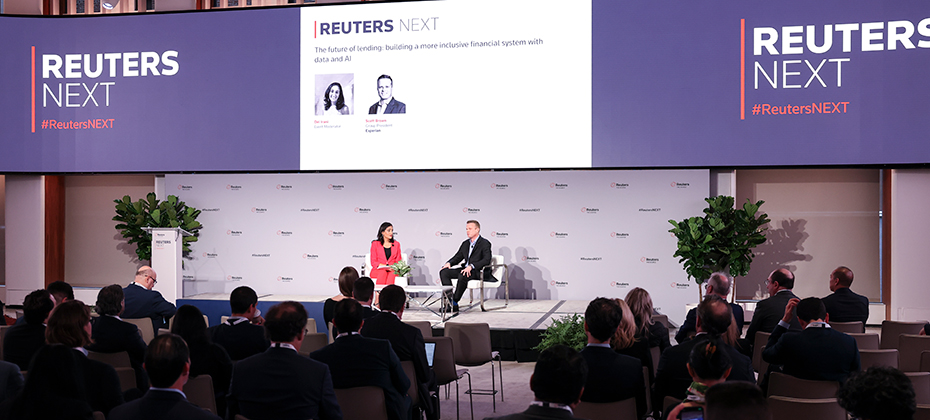

thisis a contet t for medai text block!
Paragraph Block- is simply dummy text of the printing and typesetting industry. Lorem Ipsum has been the industry’s standard dummy text ever since the 1500s, when an unknown printer took a galley of type and scrambled it to make a type specimen book. It has survived not only five centuries, but also the leap into electronic typesetting, remaining essentially unchanged. It was popularised in the 1960s with the release of Letraset sheets containing Lorem Ipsum passages, and more recently with desktop publishing software like Aldus PageMaker including versions of Lorem Ipsum.
Heading 2
Heading 3
Heading 4
Heading 5
- This is a list
- Item 1
- Item 2
- Sub list
- Sub list 2
- Sub list 3
- More list
- More list 2
- More list 3
- More more
- More more
This is the pull quote block Lorem Ipsumis simply dummy text of the printing and typesetting industry. Lorem Ipsum has been the industry’s standard dummy text ever since the 1500s,
ExperianThis is the citation

This is the pull quote block Lorem Ipsumis simply dummy text of the printing and typesetting industry. Lorem Ipsum has been the industry’s standard dummy text ever since the 1500s,
ExperianThis is the citation
| Table element | Table element | Table element |
| my table | my table | my table |
| Table element | Table element | Table element |
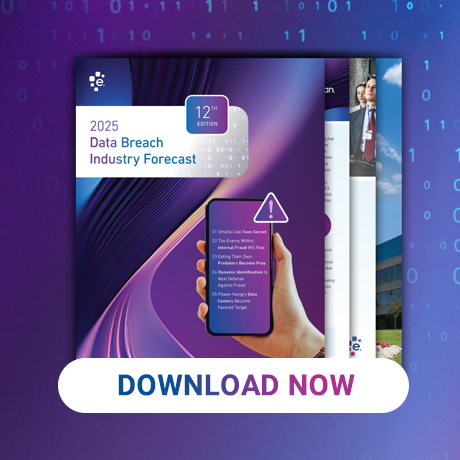
Media Text Block
of the printing and typesetting industry. Lorem Ipsum has been the industry’s standard dummy text ever since the 1500s, when an unknown printer took a galley of type and scrambled it to make a type specimen book. It has survived not only five centuries, but also the leap into electronic typesetting, remaining essentially unchanged. It was popularised in the 1960s with the release of Letraset sheets containing Lorem Ipsum passages, and more recently with desktop publishing software like Aldus PageMaker including versions of Lorem Ipsum
My Small H5 Title

My first column title
Many desktop publishing packages and web page editors now use Lorem Ipsum as their default model text, and a search for ‘lorem ipsum’ will uncover many web sites still in their infancy.

My second column title
Many desktop publishing packages and web page editors now use Lorem Ipsum as their default model text, and a search for ‘lorem ipsum’ will uncover many web sites still in their infancy.
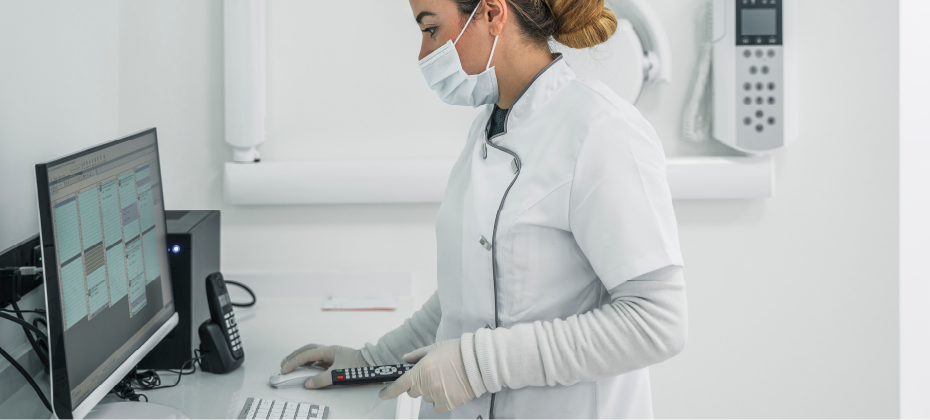
At the beginning of the year, the healthcare industry moved away from Medicare identifiers based on Social Security Numbers (SSNs), in favor of more secure Medicare Beneficiary Identifiers (MBIs). As with any large-scale change program, the shift was unlikely to be completely clear sailing. But with the coronavirus pandemic landing shortly after the 21-month transition period was due to conclude, the switchover has been rougher than expected. Impacted Care Care providers are discovering newly eligible Medicare beneficiaries who haven’t yet received their card, while existing beneficiaries have misplaced theirs. Without a valid MBI number, patients risk delayed access to care, while the admin process to sort it out can be stressful, especially for already-vulnerable senior populations. For providers, the extra work and delayed reimbursements are particularly unwelcome when COVID-19 is already putting pressure on services and squeezing revenue. Unprecedented intake conditions where staff and patients are trying to limit face-to-face contact makes it difficult to complete the usual coverage checks. As a result, providers are missing revenue opportunities they cannot afford, while incurring additional downstream costs when collections are delayed. Experian Health clients are optimizing Coverage Discovery to speed things up. Case study: how one healthcare provider is finding missing Medicare coverage faster For example, the southeast division of a national health care system, with 1700+ beds and $1.6B in revenue, needed better ways to find MBIs when Health Insurance Claim Numbers (HICNs) were phased out. Assisting Medicare patients with tracking down their MBIs was time-consuming and error-prone. They came to Experian Health to find a more efficient way to check Medicare coverage. Jason Considine, Experian Health’s Senior Vice President for Patient Collections and Engagement, says: “We knew we could help because we already had Medicare coverage history through our historical repository. As a test, we were given a control set of known Medicare patients without MBIs, and were charged with finding those patients’ MBIs and Medicare coverage.” Experian Health’s Coverage Discovery tool was used to batch-process the control set. This took less than a day, as the tool scans more than one million accounts daily, using historical and demographic data, synthesized with multiple proprietary data sources, to find unknown or forgotten coverage. In this case, the resulting data was collated via batch files, but could be integrated with other coverage and collections tools, such as eCareNext, which automates the more repetitive and hands-on pre-registration tasks. Coverage Discovery found 60% of the Medicare coverages with MBIs, plus additional coverages. This enabled the provider to file claims that would otherwise have been nearly impossible and very time consuming. The provider’s next steps will be to integrate Coverage Discovery with eCareNext, and roll it out to more of sites in the system. Could Coverage Discovery help your organization find missing MBIs? Capturing better insights into productivity, financial results, and staff workflows is always valuable. But in the current crisis, tool that maximize reimbursement and automating the tasks that take up staff time is essential. Through our historical data repository, Experian Health’s Coverage Discovery already contains many patient MBIs – and it’s continually updated. We can help you search for Medicare coverage and make sure your clients find their MBIs, easing pressure off your revenue cycle management teams during this extremely challenging time. Request a review of Coverage Discovery and improve your coverage and collections processes.

From airlines to cafés to car manufacturers, businesses across America are scrambling to respond to the challenge of COVID-19. In healthcare, services are being put on pause to protect staff and patients on the pandemic’s front line, leaving health systems to contend with gaps in reimbursements and exhausted cash flows. The problem lies in the sheer number of human touchpoints involved in the typical patient experience: scheduling, paperwork, waiting rooms, treatment, payment…all that in-person interaction just isn’t realistic in the current climate. Digital and mobile technology could be the answer. While digital communication platforms have been growing steadily over the last decade, they’re now a life raft for many providers as COVID-19 forces much of the patient journey online. Megan Zweig, director of research and marketing at Rock Health, says investments in virtual care have already exceeded $3 billion this year: "Without COVID, the story would have continued from last year as this was a healthy, growing space with a lot of momentum behind it. That momentum has turned into incredible urgency and demand for communication, testing, monitoring, care – all of those things done at a distance." This trajectory will likely continue beyond the immediate crisis, as providers prepare for a possible second wave later in the year and patients become accustomed to remote and mobile options. Providers that take advantage of these digital solutions now will be better positioned to optimize the patient journey in a post-COVID world. What could the digital patient journey look like beyond COVID-19? A digital healthcare experience can offer patients more convenience and flexibility while protecting revenue for providers, in the following ways: Scheduling appointments when it suits The first bump in the road for many patients is scheduling their appointment. With many in lockdown juggling home-schooling and home-working, it’s not always convenient to call during office hours. A patient scheduling platform lets the patient book their appointment whenever suits, using the channel they prefer. Before the pandemic, Benefis Health System found 50% of patients chose to book after hours, including for urgent care. We can expect this to increase as even more patients are nudged online. As the threat of COVID subsides, a massive influx of patients will also want to reschedule postponed visits. Automated patient scheduling will reduce the pressure on call centers and offer a more efficient consumer experience. Reducing registration gridlock with automation Patient access is often rife with avoidable stress – queues, unnecessary forms and manual data entry, resulting in costly errors and repeated work. Instead, providers can streamline the process by allowing pre-registration tasks to be completed online, and automating patient access with a mobile intake experience. Completing as many tasks as possible outside of the provider’s office will help minimize face-to-face contact, keeping everyone safe. Opening up access to telehealth There’s no getting around the fact that most care needs to be delivered in person. Telemedicine offers an effective way for patients to seek care from the safety of their own home. Video calls can be used for general consultations, remote monitoring of patients with respiratory conditions, and even supporting patients with chronic conditions to adhere to care plans. As the government allocates $20 million to support access to telemedicine in response to COVID-19, up to 54% of patient encounters are expected to take place remotely in the near future. Many of these patients will choose to stick with telemedicine, even when in-person options return. [Remember to check out our free COVID-19 Resource Center, where you can get free access to telehealth payer policy alerts to help avoid payment denials and delays.] Making contactless payment the easy option Contactless payment through apps such as Apple Pay and Venmo are gaining popularity as consumers try to avoid exchanging cash and cards. But can it be used in hospitals? In short, yes. Not only does Experian Health’s Patient Financial Advisor offer patients a way to make secure – and socially distanced – payments, it allows providers to give a breakdown of estimated costs using real-time information. Patients get updates on their mobile or through their patient portal. These digital alternatives not only offer a more convenient patient experience, they can also allow providers to collect payments faster and in full. Contact us to find out how digital health solutions can help your organization adapt to the new normal, and provide a better patient experience now and beyond COVID-19.

For many of the 36 million Americans who have registered for unemployment benefits during the coronavirus outbreak, losing their job means losing their health insurance. Options for the newly-unemployed are limited yet complicated: while the federal government has declined to reopen enrollment under the Affordable Care Act, several states are supporting those without coverage by opening emergency enrollment periods for state-based health exchanges. Those that can afford it may extend their existing employer plan through COBRA, while those that can’t may apply for Medicaid. But unfortunately, millions will be left without coverage. Now, with these changes happening in both large quantities and at rapid speed, the process for checking a patient’s coverage status is more complex, time-consuming and susceptible to errors than in normal circumstances. Further errors may appear as patients are forced to switch care teams, leading to disjointed care and incomplete, inaccurate or duplicate health records. It’s a huge administrative and financial burden for providers, who must keep pace with changes to the health insurance landscape or risk a surge in denied claims as a result of patient misidentification. How should they guard against patient identity errors and minimize revenue loss in the wake of COVID-19? How to prevent mismatched patient records and avoidable claims denials A 2018 survey found a third of denied healthcare claims were caused by patient identity errors, costing hospitals an average of $1.5 million. We may see this figure creep up following COVID-19, unless providers move quickly to implement robust identity proofing and patient matching processes. Providers looking to do this should consider prioritizing the following three areas: Eliminate errors during patient registration Up to half of denied claims occur earlier in the revenue cycle, which is also when most duplicate medical records are created. Improving identity proofing during patient scheduling and registration is a logical place to focus, to ensure records are accurate from the start. This should include proactively checking for active coverage as early as possible. Using a Coverage Discovery tool that automatically finds available coverage will help avoid bad debt write-offs and give patients peace of mind. Essentia Health’s Patient Access team were able to find 67% coverage pre-service, for patient accounts that were previously considered self-pay or uninsured. Automate identity matching throughout the revenue cycle When patient records are incomplete, duplicated or overlaid with part of someone else’s record, denied claims become an accepted cost – but they’re often avoidable. Instead of time-consuming and error-prone manual checks, providers should consider using automated identity management software to ensure patient records are accurate and complete. Data-driven matching technology supported by a Universal Patient Identifier allows a single view of each patient to be shared safely and securely across multiple healthcare services. There’s no need for tedious reconciliation work and providers can be confident they’re submitting clean claims each time. Improve identity management protocols for telehealth and mobile services More patients turning to telehealth services and patient portals to minimize face-to-face contact, putting pressure on providers to solve the patient matching problem. And with payers expanding coding for reimbursements for telehealth and remote services, there’s an added imperative to make sure patient information is accurate in order to minimize the risk of claims denials. Victoria Dames, Senior Product Director at Experian Health, says portal access has increased by roughly 40% since the start of the coronavirus outbreak, and explains that the rise in telehealth and mobile services means identity proofing must be a priority: “If you don’t already have identity proofing and automated solutions for patient matching in place, you’ll have duplicate records. We don’t want that – it’s important to have one view of the patient. But we need to move quickly. Automating for identity proofing eliminates the risk of human error and it’s faster too, which is crucial right now. We know many providers want to get their identity management and claims management systems optimized quickly, so we have a team set up to help.” Using the right technology to verify patient identities and analyze claims, avoidable denials resulting from missing or incorrect information can be caught sooner. Contact us to find out how we can help your organization manage patient identities to eliminate costly claims denials during and after COVID-19.
In this article…
typesetting, remaining essentially unchanged. It was popularised in the 1960s with the release of Letraset sheets containing Lorem Ipsum passages, and more recently with desktop publishing software like Aldus PageMaker including versions of Lorem Ipsum.