
this is heading!

kjdaskldj
some company name herekdljsaldkjlska
Docker is an open-source project to easily create lightweight, portable, self-sufficient containers from any application. The same container that a developer builds and tests on a laptop can run at scale, in production, on VMs, bare metal, OpenStack clusters, public clouds and more.
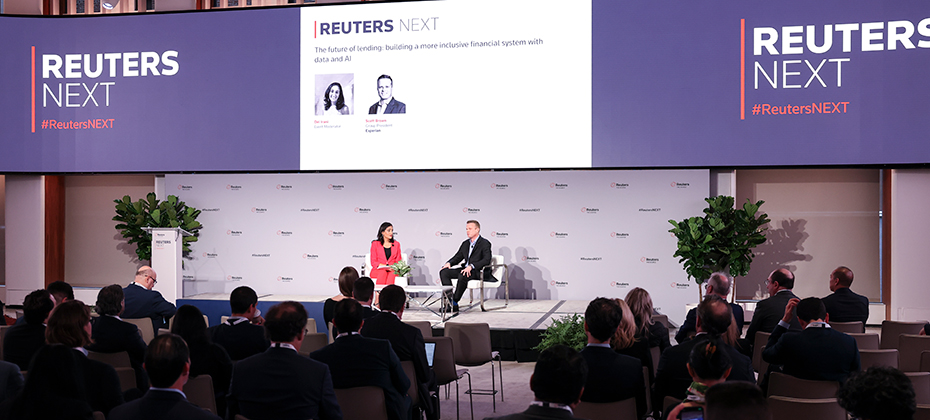


thisis a contet t for medai text block!
Paragraph Block- is simply dummy text of the printing and typesetting industry. Lorem Ipsum has been the industry’s standard dummy text ever since the 1500s, when an unknown printer took a galley of type and scrambled it to make a type specimen book. It has survived not only five centuries, but also the leap into electronic typesetting, remaining essentially unchanged. It was popularised in the 1960s with the release of Letraset sheets containing Lorem Ipsum passages, and more recently with desktop publishing software like Aldus PageMaker including versions of Lorem Ipsum.

Heading 2
Heading 3
Heading 4
Heading 5
- This is a list
- Item 1
- Item 2
- Sub list
- Sub list 2
- Sub list 3
- More list
- More list 2
- More list 3
- More more
- More more
This is the pull quote block Lorem Ipsumis simply dummy text of the printing and typesetting industry. Lorem Ipsum has been the industry’s standard dummy text ever since the 1500s,
ExperianThis is the citation

This is the pull quote block Lorem Ipsumis simply dummy text of the printing and typesetting industry. Lorem Ipsum has been the industry’s standard dummy text ever since the 1500s,
ExperianThis is the citation
| Table element | Table element | Table element |
| my table | my table | my table |
| Table element | Table element | Table element |
Media Text Block
of the printing and typesetting industry. Lorem Ipsum has been the industry’s standard dummy text ever since the 1500s, when an unknown printer took a galley of type and scrambled it to make a type specimen book. It has survived not only five centuries, but also the leap into electronic typesetting, remaining essentially unchanged. It was popularised in the 1960s with the release of Letraset sheets containing Lorem Ipsum passages, and more recently with desktop publishing software like Aldus PageMaker including versions of Lorem Ipsum
My Small H5 Title


Healthcare organizations have been forced to deal with billing challenges for so long that many might consider the struggle to simply be the price of doing business. Denied claims and contractual underpayments are regular occurrences in the payment cycle. And these issues can cause problems in the rest of the healthcare ecosystem when left unchecked. Fortunately, a robust claim scrubbing solution can reduce costs and speed up reimbursement. Healthcare billing costs can add up quickly. The estimated cost of billing- and insurance-related jobs at one large academic healthcare center ranged from $20 to $215 per patient visit, according to a study published in 2018. For years, the State of Franklin Healthcare Associates (SoFHA) was all too familiar with the challenges of the claims process. In 2010, the organization had to keep 12 full-time employees on its payroll devoted to the correction and resubmission of denied claims. When claims are denied, Crowe reports that it takes an average of 16.4 additional days for a hospital to receive payment. And those delayed payments are costly to healthcare organizations. Without the tools that enable a proactive approach, healthcare organizations' only option is to submit claims and then wait to correct the ones that are denied. SoFHA’s large network of 109 providers included a wide variety of specialties and services, from diagnostic imaging and internal medicine to OB/GYN and family practice. SoFHA needed a flexible presubmission claim scrubbing technology that would identify and correct errors before claims could be submitted. To overcome the obstacles in the claim submission process, SoFHA turned to Experian Health's Claim Scrubber. Claim Scrubber stood out to the group in two ways. The first was the price, as users pay a fixed monthly rate rather than pay for each transaction. The other highlight was the ability to build customized claim edits, which are available to all clients immediately when the tool is deployed. For Amanda Clear, SoFHA’s director of business services, that capability made all the difference. “With Claim Scrubber, I have the ability to go into the system and create my own edits,” Clear said. “Other systems either didn’t accommodate customized edits or required you to call, perhaps pay a fee, and go through a long process.” Plus, Claim Scrubber reduces demands on healthcare provider personnel because the tool comes with around 350 edits maintained by a dedicated content team. Payer-specific edits replace between 60 and 75 percent of an organization’s custom edits right away. Claim Scrubber ensures claims are correct and complete the first time they're submitted. Experian Health regularly updates its system with coding and payer changes. The tool adjusts for coding variances on claims submitted to Medicare, Medicaid, and private insurance companies. It reduces denials and drives down rebilling costs for healthcare organizations. With Claim Scrubber, SoFHA generated a clear return on investment, and the group was able to expedite accounts receivable by 13 percent. Perhaps even more telling was the reduction in full-time claim correction employees that accompanied the adoption of Claim Scrubber — a change that occurred in spite of a growing volume of claims. By auditing claims and spotting errors before submission, Claim Scrubber can ease the burden of claims denials and allow healthcare providers to instead focus on their job of providing the highest-quality patient care. — Learn more about how we can help you ensure all claims are complete and accurate before submission to the appropriate payer or clearinghouse.

The United States’ health system has become the most expensive in the developed world, and high administrative costs are a big factor. They account for more than 25 percent of spending on hospital care, making American healthcare administrative costs higher than any other country. Much of the problem comes from the complexities of payment. With public health programs, private insurers, and patients themselves all splitting the bill, it’s difficult for hospital administrators to determine who pays what in each situation. Especially during patient registration, they are bogged down by the time-consuming process of verifying patients’ eligibility for insurance and other programs. For these reasons, Martin Luther King, Jr. Community Hospital decided to focus on improving its patient registration process. The private nonprofit safety net hospital in South Los Angeles serves a high-need community and sees about 300 patients per day. Manually checking in all those people meant that MLKCH’s administrative team had an overwhelming workload. The hospital needed an integrated solution. Automation simplifies hospital patient registration The hospital’s staff was spending a significant amount of time checking different payer websites and making phone calls to determine each patient’s eligibility for insurance and various programs. Then, the benefits information had to be copied and pasted into the hospital’s non-integrated platform, which was another slow process that often resulted in inaccuracies. Quality assurance to find and correct those errors was a manual process, too, taking up more of the administrative team’s bandwidth. To free up resources and reduce errors, the hospital wanted to automate its verification processes, streamlining its registration, quality review, and more. MLKCH also needed its hospital patient registration software to work well with the Cerner system it already used. It decided to implement Experian Health’s eCare NEXT® platform. “We decided to use Experian Health’s software within Cerner versus a couple of the products we were looking at, at the same time, because it truly integrated within Cerner,” said Lori Westman, patient access manager at MLKCH. “When we presented this to our CFO, he liked the fact that it was integrated within Cerner; he didn't want us to have to go out to another third-party payer to pull information back. It's all about time and the time we can save on our registrations. That was the biggest selling point — the integration within Cerner and its seamless registrar on the back end. To the team, it's just another program they're working with in Cerner.” The software from Experian Health automates registration and financial clearance, among other patient access processes, which account for up to 80 percent of manual preregistration tasks. The system assesses patients quickly, replacing the information-gathering that staff has traditionally done. For MLKCH, which sees many returning patients, if a patient is already in the system at check-in, eCare NEXT pulls up his or her eligibility automatically when an administrator accesses the account. This saves several minutes, making it a notable patient registration process improvement. The system also eliminates a large portion of redundant tasks. When using the platform to check eligibility with one plan, eCare NEXT also searches for other applicable plans. For example, MLKCH treats a large Medicaid and managed care population, so checking a patient’s eligibility required visits to both the state’s and the health plan’s websites. But eCare NEXT will verify both automatically. Additionally, the fact that eCare NEXT integrated seamlessly with Cerner has improved the hospital’s patient registration process. Because the two platforms work together, patient data has become more accurate and the quality assurance process is less cumbersome. MLKCH was able to implement new QA standards after staff became familiar with the automation tool. The team also found that the enhanced data from eCare NEXT can shape user education and pinpoint areas for further improvements. And while there were some concerns that a new platform would take a long time to adopt, the rollout of the patient registration system was smoother than expected. The administrative team got a robust solution with exceptional support to ensure users have every resource they need. Ultimately, implementing an automation tool eliminated MLKCH’s most time-consuming registration tasks, allowing staff members to focus only on the tasks that needed their attention. This made their jobs easier and more efficient while also reducing training needs and improving compliance. The registration process became much faster. Automating preregistration tasks and eligibility verifications has also ensured MLKCH’s administrators have more accurate eligibility information. This integrates with Cerner to increase the quality of patient records. But the most important benefit of improving the patient registration process has been how it affects patients. These time savings get passed on to them in the form of quicker registration and less hassle proving eligibility. Using eCare NEXT has not only helped the hospital's administrators, but it has also allowed MLKCH to enhance patient service. Westman adds: “We get fewer denials because we're getting true verification data, and our patient volumes continue to increase. So the fact that we can take off two to three minutes, at least, on half of our registrations is speeding up the work for the team, and the turnaround time is much better for the patients.” Need to streamline your patient access department? Learn more or schedule a demo with us today.

Healthcare providers should be able to focus on what's important: their patients and the care they need. However, providers and their staff must spend much of their time on administrative tasks. A study by AMA Prior Authorization revealed that providers are spending two business days per week just completing prior authorizations. That doesn't even account for other administrative tasks. Meanwhile, providers rely on more payers and plans than ever before, which is often tied to their clinical performance, and patients are becoming increasingly more responsible for the cost of their care. This is leading to an increase in operating losses per physician of 17.5 percent of net revenue in 2017. Providers must prioritize their revenue cycle efficiency if they want to remain financially solvent in the ever-shifting healthcare field. To safeguard its revenue, Schneck Medical Center in Indiana, the only hospital serving four counties, wanted a way to optimize claims follow-up by identifying and targeting the claims needing attention as quickly as possible. This was especially important because an estimated 10 percent of the population lacks insurance and 13 percent lives in poverty in the primary county the medical center serves. Schneck's goals were to: Ensure denials did not exceed 3 percent of net patient revenue. Achieve the estimated total net preventable denials of $3.2 million or a 2 percent increase to operating margin. Reduce denials by confirming patient insurance eligibility, verifying medical necessity, and obtaining prior authorization when appropriate. Makenzie Smith, director of patient financial services at Schneck, said that industry pressures to reduce healthcare expenses and provide a better patient experience are what drove the healthcare organization to look at the revenue cycle technologies and processes it had in place. A better denials management system The denial management process can be cumbersome, especially for community hospitals like Schneck. It takes up too many resources and far too much time. Schneck was looking for better denial analysis reporting and automation software so it could more effectively manage denials and significantly increase collections. The organization's search led to Experian Health's automated approach to tracking the root causes of denials and identifying the trends in order to improve procedures. The software tool provided a comprehensive solution and allowed Schneck to optimize its claims workflow with remittance detail and analytics. It now helps the medical center identify denials, holds, suspends, and zero pays and uses electronic remittance advice and claim status transactions to identify appeals won or lost with payers. This allows Schneck to identify and target the claims that require immediate attention. The payoff With executive leadership buy-in and support, Schneck created a new, better process for claims denial management by: Reviewing preventable denials with customized queues in real time. Identifying directors with staff responsible for checking a patient's benefits and obtaining prior authorizations. Reviewing all denials over $500 in the revenue cycle department. Establishing a schedule for reviewing denials each month. Schneck's new streamlined process and real-time visibility into denials data has allowed staffers to work on denials more efficiently. The ability to link denials to a specific staff member in a specific department has further streamlined the process. The relationship between the front and back office has improved because both sides have achieved a better awareness of processes. With the right denial analysis and automation, healthcare organizations like Schneck can manage denials effectively and increase collections significantly.
In this article…
typesetting, remaining essentially unchanged. It was popularised in the 1960s with the release of Letraset sheets containing Lorem Ipsum passages, and more recently with desktop publishing software like Aldus PageMaker including versions of Lorem Ipsum.