Latest Posts
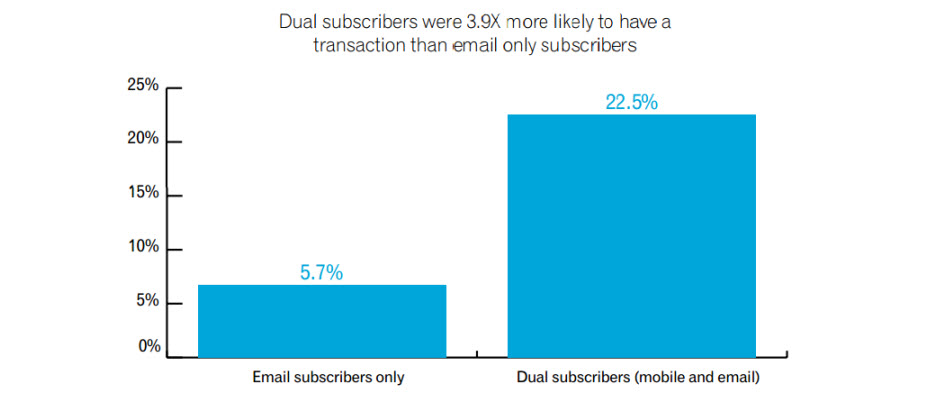
While mobile subscriber lists typically are much smaller than email lists, mobile subscribers tend to be loyal and highly engaged customers.

Since Henry Ford invented the assembly line and mass automotive production began, the primary objective of all manufacturers and dealers has been to move new vehicle inventory off the lot year after year. But nowadays finding the right automotive customer can be a challenging task. Where do they live? How old are they? How much do they make? By leveraging data to answer these questions, manufacturers can market to the appropriate audience and manage inventory accordingly. In fact, a recent Experian analysis of the automotive market found that the top 10 states accounted for nearly 60 percent of all new vehicle registrations during the second quarter of 2015, led by California at 12.6 percent. The remainder of the top 10 included Texas (9.9 percent), Florida (7.9 percent), New York 5.7 percent), Pennsylvania (4.4 percent) Ohio (3.9 percent), Illinois (3.8 percent), Michigan (3.7 percent), New Jersey (3.5 percent) and Georgia (2.8 percent). Diving a bit deeper, the analysis also showed that through May 2015, nearly 50 percent of all new vehicle buyers fell within the 40-69 age range. Furthermore, 17.9 percent were between the ages of 50-59. The analysis also found that individuals with incomes from $50,000-$100,000 were the most active new car shoppers during the same time period, equating to nearly 36 percent of the market. Other findings include: Los Angeles and New York were the two DMAs with the highest market share for new vehicle registrations at 6.8 percent and 6.7 percent, respectively Toyota (13.5 percent), Ford (11.6 percent) and Chevrolet (10.8 percent) were the top 3 brands with highest new vehicle market share among retail buyers through Q2 2015 Entry-level CUVs accounted for the highest percentage of new vehicle registrations at 14.6 percent, followed by the small economy car (11.0 percent) and full-sized pickup trucks (10.7 percent) Leveraging data and analytics gives manufacturers and dealers a competitive advantage by enabling them to better understand the entire automotive market, specifically new vehicle trends. With these actionable insights, automotive companies will be positioned to make more confident inventory decisions and target specific consumers. And by better understanding whom they are targeting, manufacturers and dealers will be able to check their primary objective off the list.

A recent Experian study found student loans have increased by 84% since the recession (from 2008 to 2014), surpassing credit card debt, home-equity loans and lines of credit, and automotive debt.
Driver of success: Mitigate auto lending risk A culture of learning is a key driver of success. Does your risk culture continue to adapt? There are many issues within auto lending that are unique to other financial services ecosystems: the direct versus indirect relationship, insights of the asset influencing the risk insights, new versus used vehicle transactions influencing risk and terms, and more. However, there is one universal standard common to all financial services cultures — change.. Change is constant, and an institution’s marketing and risk organizations need to be constantly learning to stay abreast of dealer, consumer, competitor and regulatory issues. No one has said it better than Jack Welch: “An organization’s ability to learn, and translate that learning into action rapidly, is the ultimate competitive advantage.” This statement was quickly followed by a command: “Change before you have to.” So the challenge for the portfolio manager is to ensure there are the system features, data sources, management reporting structures, data access features, analytic skills, broad management team skill sets, and employee feedback and incentive plans to drive the organization to a constant state of renewal. The challenge for many smaller and midsize lenders is to determine what systems and skills need to be in-house and what tasks are better left for a third party to handle. For consumer-level data, vehicle history and valuation data, and fraud alert flags, it seems reasonable to leverage solutions from established third parties: credit reporting agencies. After that, the solutions to the many other needs may be more specific to the lender legacy skill set and other support relationships: Are there strong in-house data-management and analytic skills? There is a significant difference between management information and data analysis driving policy and portfolio performance forecasts. Does the internal team have both? Is the current operating platform(s) feature-rich and able to be managed and enhanced by internal resources within tight time frames? Is the management team broadly experienced and constantly updating best-practice insights? Is the in-house team frequently engaged with the regulatory community to stay abreast of new mandates and initiatives? There is a solution. Experian® offers the data, software, solutions, management information, analytic solutions and consulting services to tie everything together for a lender-specific best configuration. We look forward to hearing from you to discuss how we can help.

According to a recent Experian Marketing Services study, 99% of companies believe achieving a single customer view is important to their business, but only 24% have a single customer view today.
Financing my first car was a bittersweet feeling. I was thrilled at the thought of purchasing a new vehicle, yet I was dreading haggling the price with the dealer. As a millennial, I feared the rising prices for new cars, and knew that I needed to find a way to make the vehicle more affordable. That said, I decided to look at used cars. Clearly, I’m not the only car shopper going through this experience. Many consumers are exploring new options to keep their monthly payments down, whether it’s extending the length of their loan, or turning to leases. Sometimes it’s both. According to Experian Automotive’s Q2 2015 State of the Automotive Finance Market report, the average loan amount for a new vehicle reached $28,524, while the average loan amount for a used vehicle hit $18,671, a second quarter high and an all-time high, respectively. Subsequently, the increasing loan amounts also caused the average monthly payment for new ($483) and used ($361) vehicles to increase. Interestingly, the $122 difference in average monthly payment was also a second quarter high, furthering the need to make car payments affordable. As such, consumers continued to take out leases. During the second quarter, leasing accounted for 26.9 percent of all new vehicle transactions, reaching an all-time high. While leasing continues to be a popular option among car shoppers to keep monthly payments down, we’re beginning to see these consumers take it a step further. Sure 36-month term leases are still the most popular, however the percentage of leases extending past the 36 months into the 37- to 48-month range has increased by 18 percent. Furthermore, the average lease payment dropped $13 from a year ago, reaching $394. Findings from the report also showed that consumers continued to lengthen their loan terms, especially for used vehicles. The percentage of used vehicles financed for 73- to 84-months increased by 14.8 percent from Q2 2014 to reach 16.1 percent – the highest percentage of record. New vehicles financed for the same term length climbed 19.7 percent from the previous year to reach 28.8 percent. If the trend continues, we can only expect vehicles to become more expensive and harder to keep within budget. That said there are ways to keep monthly payments within reason. Just as I did, consumers will need to explore the different options available and work with the financing tool that best meets their needs. If they can do that, it will just be the sweet feeling of purchasing a car.

As Big Data becomes the norm in the credit industry and others, the seemingly non-stop efforts to accumulate more and more data leads me to ask the question - when is Big Data too much data? The answer doesn’t lie in the quantity of data itself, but rather in the application of it – Big Data is too much data when you can’t use it to make better decisions. So what do I mean by a better decision? From any number of perspectives, the answer to that question will vary. From the viewpoint of a marketer, maybe that decision is about whether new data will result in better response rates through improved segmentation. From a lender perspective, that decision might be about whether a borrower will repay a loan or the right interest rate to charge the borrower. That is one the points of the hype around Big Data – it is helping companies and individuals in all sorts of situations make better decisions – but regardless of the application, it appears that the science of Big Data must not just be based on an assumption that more data will always lead to better decisions, but that more data can lead to better decisions – if it is also the “right data”. Then how does one know when another new data source is helping? It’s not obvious that additional data won’t help make a better decision. It takes an expert to understand not only the data employed, but ultimately the use of the data in the decision-making process. It takes expertise that is not found just anywhere. At Experian, one of our core capabilities is based on the ability to distinguish between data that is predictive and can help our clients make better decisions, and that which is noise and is not helpful to our clients. Our scores and models, whether they be used for prospecting new customers, measuring risk in offering new credit, or determining how to best collect on an outstanding receivable, are all designed to optimize the decision making process. Learn more about our big data capabilities

According to the latest State of the Automotive Finance Market report, consumers are continuing to extend loan terms as a way to keep payments low.
A recent Experian study on data insights found that 83% of chief information officers see data as a valuable asset that is not being fully exploited within their organization, resulting in the need for more organizations to appoint a dedicated chief data officer (CDO).
While auto delinquencies declined slightly year over year (3.01% for accounts 30 days past due or greater in Q2 2015 versus 3.03% a year earlier), it is interesting to note the variance in delinquency by lender channel.

Fraud management is an ongoing issue for businesses, especially when it comes to identifying likely fraudulent customers and delivering excellent customer service

Solving the regulatory compliance issue: In terms of best practice, it all really starts with the data, creating sound risk management strategies, and...

Increased volume of fraud attempts during back to school shopping season. Is your fraud strategy prepared to handle the increased volume?
According to the latest Experian-Oliver Wyman Market Intelligence Report, mortgage originations for Q2 2015 increased 56% over Q2 2014 — $547 billion versus $350 billion.

Protect consumers on summer vacation fraud. Evidence shows fraudster activity increases during the summer and identity theft becomes easier.