In this article…
We live in a data-driven world, and businesses need effective data collaboration strategies to remain successful. Before you determine your 2023 and 2024 data collaboration options, it’s essential to understand what data collaboration is. In short, it involves sharing and combining data from multiple sources to better understand a customer base and make informed marketing decisions.
Read on to learn more about our three-step plan to create new data collaboration strategies, how it’s evolving, and what we do to ensure our solutions help maintain your company’s data privacy.
How data collaboration is evolving from 2023 to 2024
Data collaboration strategies continually evolve thanks to changing industry dynamics and new technologies. As we move from 2023 to 2024, we’ll likely see collaboration extending outside businesses, meaning data can be shared with external partnerships in the form of a data ecosystem. A data ecosystem is a platform that combines numerous information points, including packages, algorithms, and cloud-computing services, to allow businesses to store, analyze, and use the data they’ve collected.
To ensure you’re ready for 2024 data collaboration, you’ll need to take a forward-thinking approach toward new data strategies.
How to create efficient data collaboration strategies
Here are our three steps for efficient collaboration to make the most of 2023 data collaboration and prepare for 2024.
Identify your collaboration goal
What are you hoping to gain from data collaboration? Do you understand the audience you’re trying to target and what you want regarding outcomes? To measure your success, you should set short- and long-term goals surrounding data collaboration in 2023 and 2024.
Maximize the value of your data
One of the most important reasons to gather data is to discover in-depth insights into your audience and the effectiveness of your marketing efforts. You’ll be able to identify hidden patterns and pinpoint trends you may not have noticed before. With this information, you can make more strategic marketing decisions to stay competitive in your industry.
Resolve digital identities
Collaborating on data with trusted partners can help you gain a more complete view of your customers by building comprehensive digital profiles. Resolving digital identities can provide greater insight into online and offline behavior of individual consumers, allowing you to better connect with your target audience and boost brand loyalty.
Find an alternative to third-party cookies
Digital privacy regulations are getting more strict, which is why it’s so important to find more secure alternatives to third-party cookies. By collaborating on data, you can gather essential insights without relying on cookies. This means you’ll still get the information you want while complying with privacy regulations.
Choose the right collaboration partner
Before you choose a data collaboration partner, it’s essential to ensure their privacy standards align with yours. How do they collect data and use it ethically and responsibly?
At Experian, we are dedicated to protecting consumers and delivering responsible and transparent data practices. We focus on five Global Data Principles — security, accuracy, fairness, transparency, and inclusion — to ensure we treat data carefully and respectfully while boosting economic growth and resilience in the marketing environment.
When you partner with us for data collaboration, you can trust that your data is protected in a system built for 2023 data collaboration needs — both known and unknown — while still evolving for 2024 and beyond.
Choose a secure environment for collaboration
Data collaboration security is vital to safeguard your business and consumers’ information. You can make sure your new data collaboration options are protected in several ways. We’ve outlined three options below.
Collaboration in clean rooms
Clean rooms are secure, private environments where data is shared and analyzed without exposing the underlying raw data. This ensures that sensitive information remains protected and insights are discovered securely. Experian has vetted clean room partners if this is an option you prefer while still getting industry-leading identity resolution.
Collaboration directly
Collaborating directly with your partner can be a good option if you have robust security measures. Encryption, access controls, and regular audits are essential to maintain data security in direct collaborations.
Collaboration with Experian
We excel at meeting our clients where they are and accommodating their technical capabilities and how they manage their data. We offer a secure and compliant environment for data collaboration. Our data collaboration solutions are designed to protect your data while enabling deeper insights. At Experian, we understand the importance of data privacy, and our platform reflects our commitment to safeguarding your information.
Enable deeper insights and activation with Experian’s data collaboration solution
Data collaboration is crucial in today’s business world, and Experian’s solutions are designed to help you bring together your 2023 and 2024 data collaboration strategies securely and efficiently. With Experian, you can unlock deeper insights, resolve digital identities, and confidently navigate the evolving data privacy landscape.
If you’re looking for the right partner to enhance data collaboration to drive growth and innovation in your business, you’ll find a secure environment and the right partner with Experian. Contact us today to get started.
Latest posts
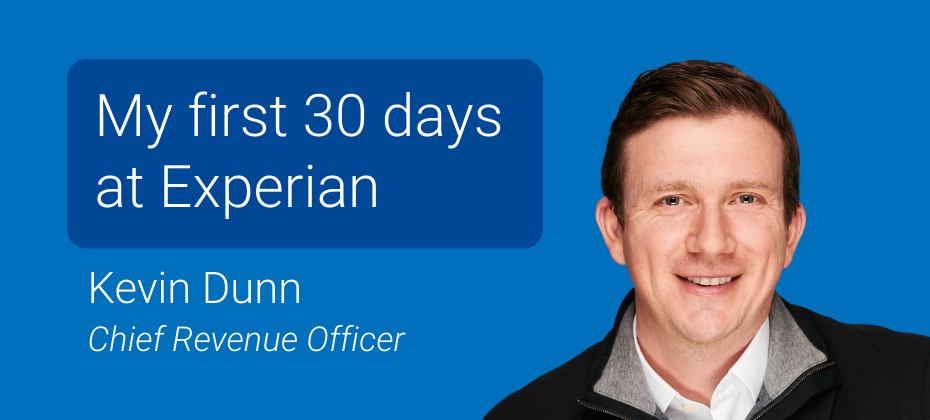
Kevin Dunn shares his thoughts after 30 days as Experian’s new Chief Revenue Officer.

Lorem ipsum dolor sit amet, consectetur adipiscing elit. Mauris rhoncus augue sit amet mi rutrum, et egestas neque hendrerit. Aenean quis lectus dui. Quisque vitae posuere lectus. Nulla varius tincidunt mauris ut pharetra. Pellentesque semper mauris risus, et varius ante pretium ut. Duis varius ante a augue sodales, in consequat augue vehicula. Suspendisse potenti. Donec massa leo, efficitur vel eros ac, facilisis luctus massa. Ut pharetra eros diam, in fringilla neque elementum et. Morbi velit mauris, blandit et congue eu, convallis non augue. Curabitur porta sodales tellus vel porta. Morbi vel felis non neque efficitur venenatis. Nullam lobortis blandit ex id mollis. Donec euismod iaculis rutrum. Heading Description Heading Description Heading Description Vestibulum sed quam elit. Quisque bibendum nulla quam, non gravida tellus venenatis id. Ut a tellus facilisis, elementum ipsum ut, sodales orci. Nullam justo leo, condimentum in volutpat eu, gravida vel est. Ut placerat nulla erat, vel finibus lorem gravida at. Vivamus quis est id diam rhoncus blandit. Cras dignissim auctor diam, lobortis consectetur felis. Nulla accumsan lorem et augue pulvinar fermentum. Quisque ac nisl suscipit, imperdiet mauris eget, dignissim augue. Quisque tempus condimentum rhoncus. Vivamus in blandit nisi. Suspendisse sed metus rhoncus, vehicula nulla laoreet, volutpat neque. Morbi viverra in lacus id gravida. Aliquam velit ex, blandit at metus a, efficitur rutrum tortor. Fusce facilisis, nulla eget dapibus sagittis, sapien justo rhoncus nisi, ut placerat velit orci at velit. Sed finibus turpis ligula, et fermentum ligula rhoncus sit amet. Our 2026 Digital trends and predicitions report is available nowand ereveals five trends that will define 2026. From curation becoming the standard in programmatic to AI moving from hype to implementation, each trend reflects a shift towards more connected, data-driven marketing. The interplay between them will define how marketers will lead in 2026. Download now
Why an identity framework matters more than any single identifier The challenge facing marketers today isn’t a single identifier on a deprecation timeline. It’s the increasing fragmentation of signals and identifiers across browsers, devices, apps, and platforms. This shift introduces complexity into how audiences are reached and measured, as signals behave differently in every environment, and it becomes more complex to piece together a complete view of the consumer. Each environment contributes to its own set of visibility gaps, making identity less predictable and more uneven. The result is a patchwork of inconsistent identity signals rather than a single, predictable decline. While you can’t control how platforms evolve, you can control how you respond to fragmentation. The future won’t be defined by the loss of any single identifier, but by your ability to unify, interpret, and activate the many signals that remain. Marketers who adopt a flexible, identity framework will be best positioned to create consistency in an otherwise fragmented landscape. At Experian, we believe flexibility starts with intelligence. For decades, we’ve used AI and machine learning to help marketers understand people’s behavior more clearly, respect their privacy, and deliver messages that drive business outcomes. Our technology brings identity, insight, and intelligence together, so even as the number of signals grows and becomes more varied across environments, marketers can reach the right people with relevance, respect, and simplicity. This intelligence acts as the connective tissue across fragmented ecosystems, ensuring marketers can recognize and reach audiences consistently wherever they appear. What forces are driving fragmentation in identity and signals? Changes to traditional IDs: Since Apple introduced ATT, access to IDFA has become inconsistent across apps and devices. Google’s evolving Android privacy roadmap adds another layer of variability, fragmenting mobile addressability. Safari and Firefox have long restricted third-party cookies, while Chrome continues to support them for now. This creates different signal availability across browsers, contributing to an uneven and increasingly fragmented identity landscape on the open web. Shifts in signals: IPv4 to IPv6 migration introduces mismatched identity structures that complicate continuity across environments. Platform-driven fragmentation: Closed ecosystems and uneven adoption of evolving RTB standards (like OpenRTB 2.6 updates designed to support new identifiers and consent signals) create differences in which identifiers and consent signals are shared in the bidstream. At the same time, the rise of alternative or “universal” IDs—often developed by individual platforms, publishers, or technology companies—means that multiple ID types can appear within the same auction, each with its own structure, rules, and level of support. These differences reduce interoperability across platforms and contribute to a more fragmented activation landscape. Each change creates an identity silo. Together, they form an ecosystem defined by fragmentation rather than absence. Without an identity framework, these environments operate as disconnected identity islands. A multi-ID world requires a unified identity framework Alternative IDs play an important role, but they also expand the number of signals marketers must reconcile. Without a consistent identity layer, more IDs often mean more complexity—not more clarity. Common alternative IDs in use today: UID2: The Trade Desk’s UID 2.0, an iteration of their original Unified ID 1.0, which was still reliant on third-party cookies, creates persistent IDs with user-provided email addresses and phone numbers. ID5: This independent identity provider builds an identity infrastructure that powers addressable advertising across channels. It can create an ID based on both deterministic and probabilistic data. Hadron ID: Hadron ID is a unique, interoperable identity system (including first-party, audience-based, contextual, deterministic, and probabilistic) developed by Audigent, now part of Experian, to drive revenue for publishers by making their audience data and inventory actionable for media buyers. Industry reports suggest roughly one-third to two-fifths of open-auction traffic carries alternative IDs, sometimes multiple per request. Among Experian clients, adoption of alternative IDs rose 50% year over year, with a 30% increase in IDs resolved to individuals via our Digital Graph. Identity isn’t disappearing; it’s multiplying. A modern identity framework resolves these identifiers into a single, privacy-safe consumer view.