At A Glance
Pharma marketers can support more informed health journeys when patient and HCP messaging is relevant, privacy-forward, and optimized against meaningful outcomes. In this Ask the Expert conversation, Experian and DeepIntent discuss how health marketers can coordinate education, CTV, activation workflows, and measurement without entering private clinical decisions.Privacy-forward pharma media supports more informed healthcare journeys
Effective pharma marketing depends on reaching patients, caregivers, and healthcare professionals (HCPs) with useful information in appropriate, privacy-forward ways. The goal is to make relevant education easier to find, support more informed conversations, and help brands understand how media contributes across the health journey.
In this Ask the Expert session, Natalie Mancuso, SVP, Data Partnerships at DeepIntent, joins Sheila Wirick, who leads the health team at Experian, to discuss how to craft patient and HCP campaigns, privacy-safe activation workflows, connected TV (CTV), and measurement approaches built for pharma.
Why should your media plan start with understanding the patient and provider
The patient-and-provider journey should inform your media plan, as treatment decisions in pharma are increasingly informed, personal, and patient-driven. With more health information available than ever, patients are playing a more active role in understanding their options and participating in treatment conversations. As other industries become more customer-centric, pharma media planning needs to become more patient-centric.

“We’ve got patients who are more informed, more involved in their treatment decisions than ever. The accessibility of data and information and the ways we can consume it with just AI alone is so vast that if we’re not arming people with the right information in real time, we’re missing the boat.”
DeepIntentNatalie Mancuso, SVP, Data Partnerships
This means media should be aligned to where a patient or provider is in the decision journey and what they need at that moment. Early on, media may play an educational role by building awareness of a condition, symptom, or treatment category. Later, it may help support more specific questions, treatment consideration, access, affordability, or adherence.
The patient-provider conversation remains the key boundary. That exchange should stay private and clinically led. Media can play a valuable role before and after those moments by offering information that helps patients and providers feel more informed.
How can brands connect patient and HCP messaging responsibly?
It’s critical for agencies and brands to deliver relevant messaging to inform each stakeholder’s needs throughout the treatment journey, especially ahead of key clinical milestones. To execute this, brands must exercise privacy-forward activation, keeping patient and HCP identity, activation, and measurement paths separate, while using a common workflow layer to support the same brand goal.
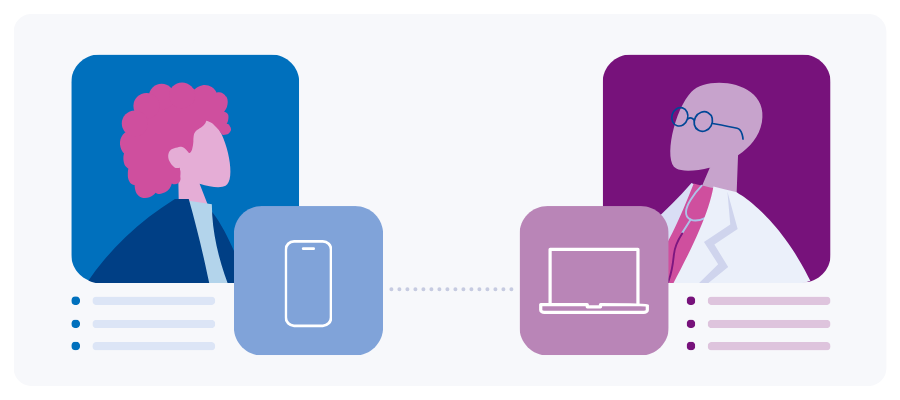
Experian helps pharma marketers do this by acting as an independent, privacy-forward identity, data, and workflow layer. We bring together high-fidelity matching, governed onboarding, and non-clinical consumer context, so patient and HCP engagement can be activated more accurately across channels and connected to reporting.
The distinction is not only where each audience is reached. HCPs may be engaged in both professional and personal environments, but their needs are different from patients’. For example, an HCP may receive messaging about co-pay savings for eligible patients, while a patient may receive information about patient support programs. These are different messages for different audiences, but they ladder up to the same goal: informing both parties in a privacy-forward, relevant way.
Hear from Natalie Mancuso in our 2026 State of advertising report
In our 2026 State of advertising report, Natalie shares why identity serves as the connective infrastructure that links planning, activation, and measurement across connected TV (CTV), programmatic, commerce media, and walled garden environments.
What does privacy-forward activation look like in pharma?
Pharma brands often start with fragmented patient and HCP signals. Privacy-forward activation turns those inputs into usable audiences by first confirming that the data can be used, then translating identity in controlled environments that protect personally identifiable information through tokenization or other methodologies.
For DTC, that means building and matching audiences without relying on inferred health conditions from browsing behavior. For HCPs, it means connecting professional identity to verified sources in a way that supports activation and measurement. In a category shaped by HIPAA, state privacy laws, internal review, and consumer sensitivity, building privacy in from sourcing through activation is what makes responsible health media possible.
How can CTV play a more useful role in pharma?
CTV can play a more useful role in healthcare when it’s connected to a larger, privacy-forward plan and not treated as just an awareness channel.
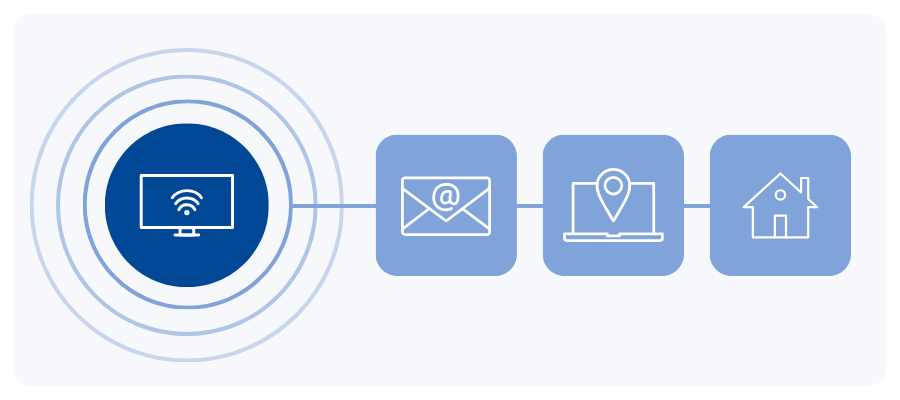
DeepIntent connects CTV and digital exposure data using identity signals, such as National Provider Identifiers (NPIs), hashed email addresses, IP addresses, device IDs, and household signals, where permitted and reviewed. That identity layer helps support sequencing and suppression across streaming, endemic, mobile, and digital settings.
In practice, CTV can introduce targeted education or broad brand awareness, and later touchpoints can provide sequential information in the right channels. Instead of repeating the same message, brands can make pivots based on engagement and context.
“For us, it starts with identity and not panels. When we’re resolving CTV and digital exposures to the same person, we’re leveraging signals so that every touchpoint across streaming, endemic, and mobile is recognized as the same individual, not model lookalikes.”
DeepIntentNatalie Mancuso, SVP, Data Partnerships
For pharma, campaign performance should not be measured by reach alone. A stronger approach looks at whether sequenced engagement contributes to meaningful downstream signals, including:
- Prescription activity
- Provider engagement
- Referral patterns
- Patient compliance
- Adherence signals, where measurement is permitted
Why should messaging and reporting change in pharma?
Pharma campaigns are journeys with changing information needs. Reporting should guide the campaign optimization.
“If I’m launching into a market with a new class of drug, I’m asking what education needs to be put into the market – from both an HCP and a consumer standpoint – to build awareness?”
DeepIntentNatalie Mancuso, SVP, Data Partnerships
Clicks and website visits still have a place, but they can’t tell the full pharma story. DeepIntent processes data in real time, giving brands an up-to-date read on how media connects to campaign engagement. Campaign signals can help teams optimize audience logic, creative, channel mix, or sequencing during a live campaign.

Heading Test for Media & Text Block
Content Test for Media &Text Block
Heading Test for Media & Text Block
Content Test for Media &Text Block
Heading Test for Media & Text Block
Content Test for Media &Text Block
Explore how privacy-safe pharma activation can make an impact
Experian brings marketing data and identity expertise for health marketing and DeepIntent adds pharma-specific activation experience. Together, we help brands connect patient and HCP strategies responsibly, with privacy built in from the start.
Watch the full video with our experts to hear Sheila Wirick and Natalie Mancuso discuss patient and HCP messaging, CTV, privacy-safe activation, and outcome measurement for pharma brands.
About our experts
Natalie Mancuso
SVP, Data Partnerships, DeepIntent
Natalie Mancuso is SVP, Data Partnerships at DeepIntent and a leader in health-focused AdTech and DSP strategy. With over 20 years of experience growing billion-dollar healthcare brands, she turns complex data into scalable, performance-driven solutions that keep marketers ahead of industry change.
Sheila Wirick
Director of Health Sales, Experian
Sheila Wirick is the Director of Health Sales at Experian with more than 20 years of experience in data and analytics. As Director of Health Sales at Experian Marketing Services, she collaborates with healthcare, pharmaceutical, and nonprofit organizations to apply data and insights that enhance customer retention, brand awareness, and acquisition. She is committed to helping organizations use data to deliver measurable results and meaningful impact.
FAQs
A pharma audience is activation-ready when patient or HCP inputs can be translated into usable audiences with the right accuracy, controls, interoperability, and destination readiness. For patient engagement, that may include privacy-safe cohort construction, caregiver logic, non-clinical enrichment and appropriate exclusion rules. For HCP engagement, it may include governed identity inputs such as NPI, specialty, practice location, professional address and other verified attributes where appropriate.
Pharma brands can sequence messages responsibly by giving each channel a clear role and using audience logic to maintain continuity. CTV and out-of-home can support awareness, social can reinforce the message, search can capture active research and point-of-care or rep-triggered channels can support decision moments. The workflow should preserve separation between patient and HCP identity strategies.
Pharma marketers should measure whether media connects to outcomes such as audience quality, prescription activity, qualified HCP engagement, verified delivery, referral patterns, therapy starts or adherence signals where permitted. These outcomes often depend on partner-enabled workflows, clean rooms, and aggregated outputs rather than direct end-to-end tracking.
Experian acts as an independent privacy-first identity, data, and workflow layer for pharma marketers. We help brands bring together identity, high-fidelity matching, governed onboarding, non-clinical consumer context, and partner interoperability so patient and HCP engagement can be activated more accurately across channels and connected more cleanly to partner-enabled measurement.
Latest posts

With the growth of digital marketing and the targeting capabilities associated with online outreach, many predicted that this would mark the end of direct mail advertising. But if Millennials have anything to say about it, that’s not going to happen anytime soon. Yes, believe it or not, Millennials are driving the resurgence of direct mail advertising, and many leading brands are now pivoting their omnichannel marketing plans to include direct mail. And with the USPS reporting more than 75.7 billion in marketing mail volume in 2019, this trend shows no sign of slowing down. Including direct mail in your plans may give your brand a better chance of reaching your audience. Why? 1. Millennials actually like getting mail.While most of us have decried “junk mail” as being environmentally unfriendly or just a pain to deal with, Millennials actually enjoy physical mail. Valassis recently cited research from USPS Customer & Market Insights stating that Millennials spend the most time sorting mail (about six minutes compared to the average, which is four minutes), plus they’re opening mail and reading it (at eight minutes versus the average of seven minutes). Valassis also conducted a study that showed that 68% of Millennials read print ads or inserts from retailers, and 64% prefer getting them through the mail. So, while digital outreach may be convenient, it hasn’t completely decimated the desire for that old-school, hands-on experience of opening and reading something that’s addressed to you. 2. Millennials respond to a multi-channel approach.Oftentimes, marketers think of omnichannel as being a combination of digital and TV, but when you add print into the mix, it can make an even bigger impact on Millennial audiences. Valassis found that 60% of consumers are more likely to make a purchase after seeing an ad when it’s presented across both offline and online channels, while 72% of Millennial parents say print ads encourage them to go online and make a purchase from that retailer. 3. Millennials think physical mail makes for a more personal approach.You’d think that e-mail would feel more personal, but with the influx of spam most people get, that’s just not the case. In fact, 67% of people see physical mail as being more personal than an e-mail, with seven out of 10 saying they prefer receiving actual mail over digital mail. And for marketers looking to make a one-to-one connection, this is music to their ears. With changing marketing plans, the mailbox has less competition than the inbox. Getting a catalog at their door with the perfect offer at the perfect time helps the marketer make the direct connection. 4. Direct mail lasts longer than digital mail.That may seem like an obvious statement, but there’s more to it than you think. When an e-mail arrives in someone’s inbox, it’s easy to ignore it, read the subject line and forget about it, or even just randomly delete it, if spam filters don’t take care of that on their own. But the average lifespan of a piece of direct mail is 17 days, which may account for how direct mail generates purchases five times larger than e-mail campaigns. It’s harder to ignore when it’s in your house and you have to physically handle it as opposed to just clicking a mouse to get rid of it. 5. Millennials trust direct mail.It’s true—research shows that 90% of Millennials think direct mail advertising is reliable. Plus, Millennials are 24% more likely to show mail to others, compared to 19% of non-Millennials… which means if they find a deal they like in the mail, they’re probably going to spread the word. Visit our Retail Marketing Solutions page to learn more about how we can help you find new customers and have more meaningful engagements with existing ones.

As the nation slowly works its way up to full speed, it’s undeniable that the landscape has changed dramatically for every brand—especially when it comes to marketing and advertising. Many are looking for new ways to better connect with customers to meet their needs and encourage their continued patronage and loyalty, while others are attempting to reach out to a whole new audience who may not have known about them pre-pandemic. But even as brands are eager to get back to normal—whatever the new normal is—much like consumers, they’re faced with an uncertain future that may be affected by new financial restraints. For marketers looking to make a big impact on their bottom line, now is the time to consider pivoting advertising efforts to advanced TV (Connected TV/OTT and addressable TV). While traditionally cost prohibitive for many brands, the pandemic has greatly changed the availability of TV advertising. TV advertising is now more affordable than ever, opening up opportunities to brands who may not have had the ability to include it in their previous marketing plans. Whether it was due to the cancellation of live events or the delay of basketball season, or just general skittishness that’s keeping other brands from spending money on TV advertising, their pivot is to your benefit. There’s no question that consumers’ attitudes toward brands will have changed during the pandemic, which means they might need to be reminded of your brand and what it has to offer. There may be some who are seeing your brand for the first time, or for the first time in a long time. The good news is, people are watching TV now more than ever before. According to Experian’s Consumer Sentiment Index, television consumption is up 41% from mid-May to mid-June. Cable TV viewership has seen a 22% increase over the same period of time, showing that consumers are still connected to traditional TV viewership. Another reason why now is a great time to make advanced TV part of your marketing plan. While many states are still rolling out their re-opening plans, many consumers are still working from home, and the job landscape is still firming up. That means your customers will still be passing the time at home as the landscape continues to shift and change, and their attention will likely be directed toward their TVs. Plus, with consumer spending starting to rebound, you can benefit from this directed attention in a new medium. And consumers aren’t just watching TV on their televisions. Smartphone use is up 41% over last month, as is desktop/laptop use at 38%, and tablet use at 21%. And, when they’re not watching their favorite show on their phones, computers or tablets, they’re visiting advertiser websites and using apps more heavily. This means that brands can supplement their TV advertising with an omnichannel approach to ensure their consumer can connect with them through any device they’re using. All of this may sound intimidating to brands who haven’t previously advertised on TV or executed an omnichannel campaign, but rest assured that the power of data can help make the experience fairly seamless. A data-driven marketing strategy can help brands better understand their audience, including demographics, lifestyle, behavior and attitudes—as well as their preferred engagement channels. This helps ensure that your message resonates and is seen on the devices and channels your audience frequents most. With Experian’s 50+ years of experience with consumer data, you can rely on us to help you execute a data-driven advanced TV campaign that targets the right audience with your message. And we collaborate with all TV operators and have connections with many industry media partners, so you can choose exactly where you want your outreach to go. Find out more about how Experian’s Advanced TV capabilities can help you have more meaningful interactions with people: https://www.experian.com/marketing-services/television-advertising.

Retailers have always known that building a loyal customer base is the key to success. But whether they’d successfully done so or were still working towards their customer loyalty goals in Q1 of 2020, the global pandemic changed everything. With shoppers shifting purchasing habits almost solely online, retailers with an established online presence were able to navigate stay-at-home orders and other business restrictions. As of June 9, 2020, according to Experian’s Consumer Sentiment Index, half of Americans (47%) are buying more online than they did in the past. So those who previously relied on their brick and mortar business may have had difficulty staying afloat. Undeniably, the landscape has shifted dramatically, and it’s about to do so again as stay-at-home orders are lifted and retailers are being given the green light to re-open, albeit with guidelines and restrictions they’ve never faced before. With so many different messages that need to be shared, and the need to stand out among thousands of other retailers working to grab the attention of the same audience, mobile location data is an important tool in a retail marketer’s arsenal. For example, so much of the in-store experience moved online at the start of the pandemic. As a result, a lot of consumers have gotten comfortable with that format and may be apprehensive about the in-store experience, especially with all the changes required for re-opening. Using mobile location data, retailers can identify audiences that are more likely to return to in-store visits, and tailor messaging to address their questions and concerns to encourage their patronage. They can effectively communicate information surrounding the rules for in-store shopping, including face masks, social distancing, how they plan to protect their clientele, and more. If, after sharing their re-opening information, retailers find customers aren’t coming to them but are instead visiting competitors, mobile location data can help them determine consumer patterns based on competitor shopping to gain a greater understanding of why they’re shopping elsewhere. Using this information, retailers can adjust their outreach to better speak to their target customer and their needs, and encourage their visit with more relevant messaging. And of course, there will still be some customers who feel more comfortable continuing with online shopping. Mobile location data can also assist brands in identifying those audiences so that they can adjust their communications strategies and messages accordingly. Meanwhile, many retailers have shifted from a buy online pick up in store (BOPIS) model to buy online pick up at curbside (BOPAC), both for convenience and safety. As restrictions lift, some will soon be shifting back to BOPIS. Mobile location data can help you determine if this is a more preferred method of shopping by analyzing consumer behavior. If customers aren’t ready for an in-store visit but still have needs that could be met by a particular retailer, that brand can create messaging that supports their desire to do their shopping online and pick up their purchase—whether they come inside or opt for curbside pickup. The more retailers know about their customer’s habits, behaviors and interests, the more they can address their needs and concerns with personalized messaging that can make an impact. Additionally, because so much of life moved online during the pandemic, consumer data may be even more fragmented than before, with their attention spread across multiple devices and channels. Using mobile location data—in combination with demographic and psychographic data—retailers can learn more about consumer behavior, including stores visited, shopping preference insights, hobbies, and more. While the retail industry is facing incredible challenges in the wake of unprecedented change, the right data can help them bridge the gap between where they were, and where they want to be—especially when it comes to nurturing consumer connections. And as retail marketers work on new messaging that shares their unique plans for re-opening and emerging post-pandemic, how that communication is delivered, and who it’s delivered to, could make all the difference in a successful re-opening plan. Contact us today to find out how more about Experian’s retail marketing solutions. And be sure to check out our other retail blog posts as well.