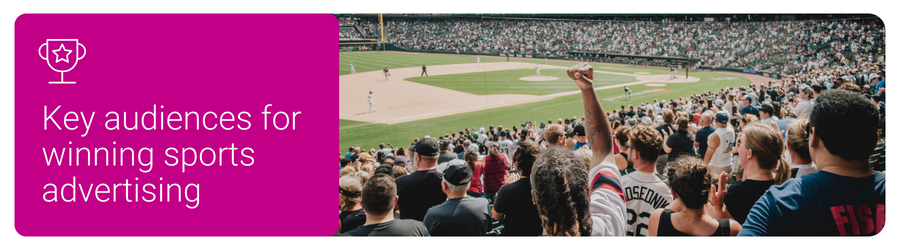
This summer’s games in Paris represent an extraordinary opportunity to connect with sports audiences on a global scale. As we anticipate this momentous event that happens once every four years, it’s clear that the passion and excitement surrounding sports are more vibrant than ever. With one billion viewers expected to tune in, now is the time to take advantage of the fervor of sports fans and tailor your strategies to resonate with this audience.
In this blog post, we’ll explore audience segments that can maximize the impact of sports and influencer marketing campaigns, drawing inspiration from the anticipation of this summer’s games.
What are the benefits of advertising in sports?
Before we explore these audience segments, first let’s review three benefits of advertising in sports.
Increase product awareness
Sports viewers are less likely to skip commercials, so you can increase product awareness by reaching more engaged consumers. Reach current customers during sports games to remind them of your products and inspire more purchases.
Build a strong connection with dedicated fans
Fans exhibit unwavering loyalty to their teams, staying dedicated whether their team wins or loses. This loyalty is highly beneficial for brands, as loyal fans are not only enthusiastic spenders but also form lasting, meaningful connections with the brand.
Improve audience targeting
Live sports are now available to watch on many streaming services like Peacock and Amazon, allowing marketers to better choose and target audience segments across connected TV (CTV) to deploy more personalized ads – something that is limited with traditional TV sports broadcasting.
When you work with Experian, you work with the #1 ranked data provider that gives you access to demographic and behavioral targeting that allows you to reach consumers based on who they are, where they live, and what they do.
To fully take advantage of the benefits of sports advertising, here are the audience segments we recommend targeting to drive engagement and conversion.
Sports fans

Harnessing the enthusiasm of sports fans can drive powerful engagement and brand loyalty. Align your campaigns with major sporting events, teams, or athletes to tap into the emotional connection fans have with their favorite sports or countries.
Here are 10 audience segments that you can activate to target sports fans:
- Likely to be a sports enthusiast: Lifestyle and Interests (Affinity) > Activities and Entertainment >
- MLB Enthusiasts
- NASCAR Enthusiast
- NBA Enthusiasts
- NFL Enthusiasts
- NHL Enthusiasts
- PGA Tour Enthusiasts
- Travels to see professional sports: Travel Intent > Activities > Professional Sports Event
- NEW! Pickleball enthusiast: Retail Shoppers: Purchase Based > Sporting Goods, Apparel > Pickleball Enthusiast
- NEW! Wilderness sports and camping enthusiasts: Retail Shoppers: Purchase Based > Outdoor Activities > Wilderness Sports and Camping Enthusiasts
Worldview
WorldView offers immediate access to essential demographic and consumer data using advanced satellite technology and machine learning. Marketers planning campaigns ahead of this summer’s games can use WorldView to understand their audience, optimize distribution, and identify untapped market areas across 90 countries. With WorldView, you can benchmark performance, visualize customer data, and create a consistent global audience strategy for digital activation. This comprehensive solution provides valuable insights for location planning, data enrichment, and targeted digital advertising, without relying on personal information, making it ideal for geo-targeted marketing approaches.
Sporting events and travel beyond this summer’s games
While this summer’s games are a major draw, there are still many sports fans who may prefer events that aren’t connected to the summer games during this time. You can pair our Travel Intent > Activities > Professional Sports Event audience with our Lifestyle and Interests (Affinity) > Sports and Recreation > Sports Enthusiast audience to target individuals who have expressed interest in attending sporting events or traveling for sports-related activities.
We can deliver our syndicated audience segments to 30+ activation platforms, which means we have a solution however you want to consume and use our data.
Sports spectators
Enhancing the experience of sports spectators can create memorable moments and lasting impressions. Target individuals interested in attending sporting events, promote ticket sales, VIP experiences, and exclusive merchandise to elevate their game-day experience and foster a sense of belonging within the sports community.
Here are 7 audience segments that you can activate to target sports spectators:
- Interested in sports: Lifestyle and Interests (Affinity) > Sports (FLA / Fair Lending Friendly)*
- Baseball (FLA / Fair Lending Friendly)
- Football (FLA / Fair Lending Friendly)
- Visits sports venues: Mobile Location Models > Visits >
- College Sport Venues
- NFL Stadium Visitors
- University Stadium College Football Visitor
- MLB Stadium Visitors
You can also develop targeted advertising campaigns promoting travel packages or hotel deals around Paris. Highlight proximity to this summer’s games, special experiences, or exclusive offers for travelers during this summer’s games season. By targeting specific travel preferences and behaviors, you can capture the attention of individuals planning trips around this summer’s games. When you work with Experian, you work with a single data provider that gives you access to audiences across multiple verticals and categories like travel and retail.
Sporting goods shoppers
You can use Experian audiences to reach consumers interested in sports and fitness ahead of the summer games. Targeting individuals in the market for sports equipment and apparel can help you reach those actively seeking sporting goods. By focusing on this segment, you can increase conversion rates and optimize ad spend by reaching an audience already inclined toward sports and fitness shopping.
Here are 6 audience segments that you can activate to target consumers who are spending on sports apparel:
- NEW! Wears athleisure: Retail Shoppers: Purchase Based > Sporting Goods, Apparel > Athleisure Sportswear Apparel
- Women’s activewear high spenders: Retail Shoppers: Purchase Based > Apparel > Women’s Activewear / Yoga: Online High Spenders
- Men’s activewear high spenders: Retail Shoppers: Purchase Based > Apparel > Men’s Apparel (Clothing): Men’s Activewear: High Spenders
- Athletic footwear high spenders: Retail Shoppers: Purchase Based > Apparel > Footwear (Shoes): Athletic Footwear: High Spenders
- Golf equipment frequent spenders: Retail Shoppers: Purchase Based > Sporting Goods, Apparel > Golf Equipment, Apparel, Entertainment Frequent Spenders
- Sporting goods shoppers: Mobile Location Models > Visits > Sporting Goods Shoppers
Athletes

For brands catering to athletes and sports enthusiasts, targeting active players is crucial. Offer products, training tips, and motivational content that inspire and empower them to excel in their chosen sports.
Here are 5 audience segments that you can activate to target athletes:
- Likely to play sports: Lifestyle and Interests (Affinity) > Sports and Recreation
- Plays Hockey
- Plays Soccer
- Plays Tennis
- Likely to play golf: Lifestyle and Interests (Affinity) > Activities and Entertainment > Play Golf
- NEW! E-motion riders: Retail Shoppers: Purchase Based > Outdoor Activities > EMotion Riders E-Scooters E-Bikes E-Skateboards
Influencer marketing campaigns
Collaborate with influential athletes or sports personalities to create sponsored content that resonates with sports fans. You can pair our Social media heavy user audience with our Likely to be a sports enthusiast and TrueTouch conversion channel audiences to reach those who are likely to be influenced by endorsements from celebrities or athletes.
Targeted advertising in sports with Experian audiences
By using Experian’s syndicated audiences in sports advertising, you can reach sporting goods shoppers, passionate sports fans, active players, and enthusiastic spectators. Our deep understanding of people in the offline and digital worlds provides you with a persistent linkage of personally identifiable information (PII) data and digital identifiers, ensuring you rich insights, accurate targeting across devices, improved addressability, and measurable advertising.
Just as athletes strive for excellence, with the right approach, your advertising in sports initiatives will stand out as champions in the arena of consumer engagement. Can’t find the audience you’re looking for or need a custom audience? Connect with our audience team for more information.
You can activate our syndicated audiences on-the-shelf of most major platforms. For a full list of Experian’s syndicated audiences and activation destinations, download our syndicated audiences guide.
Check out other seasonal audiences you can activate today.
Footnote
* “Fair Lending Friendly” indicates data fields that Experian has made available without use of certain demographic attributes that may increase the likelihood of discriminatory practices prohibited by the Fair Housing Act (“FHA”) and Equal Credit Opportunity Act (“ECOA”). These excluded attributes include, but may not be limited to, race, color, religion, national origin, sex, marital status, age, disability, handicap, family status, ancestry, sexual orientation, unfavorable military discharge, and gender. Experian’s provision of Fair Lending Friendly indicators does not constitute legal advice or otherwise assures your compliance with the FHA, ECOA, or any other applicable laws. Clients should seek legal advice with respect to your use of data in connection with lending decisions or application and compliance with applicable laws.
Latest posts

Cross-Screen Pioneer Explores the Power of Connected Cars as a Vehicle for Customer Engagement LAS VEGAS, NV — (October 26, 2016) –Kate O’Loughlin, GM of Media for Tapad, addressed the J.D. Power Automotive conference audience today in Las Vegas, NV. With more than 1,400 participants representing every facet of the automotive marketing profession, the conference has become the industry's leading marketing event. Bringing the unified, cross-screen perspective to the stage, O’Loughlin discussed the vital role of connected cars in the consumer engagement process. She is a founding member of Tapad which launched the world’s first cross-screen marketing technology in 2010. Tapad was acquired by the Telenor Group early in 2016. Key points from O’Loughlin’s J.D. Power 2016 address included: The marketers who deliver relevant and engaging content in a privacy-safe setting will be in the strongest position to navigate the proliferation of connected devices, including the connected points in cars. As automakers innovate the technology in cars, marketers need to be prepared for the size and diversity of data available for understanding consumers. It’s going to be increasingly difficult to wade through the data, so now is the time to build a solid framework for understanding the person behind the data. Marketers who evolve — and take a holistic approach — to their campaign measurements will achieve marked improvements in efficiency and an enhanced understanding of their core audiences. Actionable brand engagement metrics like Viewable Exposure Time (VET) will continue to overtake traditional advertising performance metrics. VET evaluates the optimal amount of time an ad is present on a screen to incite consumer action. In early testing by Tapad, campaigns that employ VET see conversion rate performance improvements from 13 to 60%. The consumer-centric technology solutions of the future need to be as scalable as they are affordable. Learn more about Tapads’ recommended Viewable Exposure Time metric contact us today! Contact us
NEW YORK, Sept. 28, 2016 /PRNewswire/ — Tapad, the leader in cross-device marketing technology, today announced a new metric for cross-device marketers, Viewable Exposure Time (VET). Viewable Exposure Time measures across screens and ad formats, identifying the optimal amount of time a consumer spends with an ad before they take action. The announcement coincides with Unify Tech '16, Tapad's third-annual cross-device summit during Advertising Week NY. Frequency caps are currently used to ensure that dollars aren't wasted on redundant ads. Viewable Exposure Time evolves the frequency capping approach to include accelerating a consumer's ad exposure rate up to the optimal time spent with the brand. VET is used in affinity, digital transaction and offline purchase models as a key indicator of marketing budget well-spent. Beta users of VET span every vertical, though interest is especially high from CPG, Automotive, Telecommunications and Retail. Viewable Exposure Time unifies and upgrades marketers' predictors of advertising success by leveraging cross-screen engagement across digital and television, with vendor-agnostic viewability scores for video, rich media and display. "Today's current measurement options, like click-through rate (CTR) and TV gross ratings points (GRP) tell an incomplete story," said Tapad GM of Media Kate O'Loughlin. "Tapad is focused on measuring what really matters to marketers – building an efficient connection with a customer. Innovation in metrics was long overdue." More than just a measurement tool, Tapad also provides clients with VET activation. Factoring in time spent with ads in viewable seconds and minutes, these analytics inform marketers about which audiences are underexposed, enabling them to adjust campaigns and deliver according to optimal viewable exposure time. This effectively increases conversion rates at the lowest cost. Contact us today

Strong Revenue Performance and Thriving Culture Contribute to Industry Recognition NEW YORK, Sept. 15, 2016 /PRNewswire/ — Tapad, the leader in cross-device marketing technology and now a part of Experian, was named a top company on Inc. Magazine’s list of the 5000 fastest-growing private companies in the U.S. In addition, Tapad won the TMCnet 2016 Tech Culture Award. The exclusive Inc. 5000 ranking highlights the fastest-growing privately-held* companies in America. These distinguished companies have achieved success in strategy, service and innovation. TMCnet recognizes talented tech professionals who are committed to building a culture that prioritizes employee growth, collaboration and engagement. Tapad continues to broaden their presence into new markets, having launched in APAC earlier this year, as well as continuing their European expansion. Tapad’s proprietary technology, The Device Graph™ is leveraged by more marketers and brands to understand digital engagement across devices. The company’s rapidly expanding client base includes numerous Fortune 500 company brands as well as all four major advertising holding companies in the U.S. “We have an exceptional team of innovative people who are all working very hard to achieve the kind of results these publications are recognizing,” said Tapad CEO and Founder, Are Traasdahl. “Given that, we have an even greater responsibility to our talent to create an environment that fosters innovation and nurtures open communication. Ultimately, this is how we will continue to reach our very ambitious goals of becoming the world’s leading unified marketing technology provider.” Tapad’s award-winning work culture is defined by its gold-standard benefits which include a six-month parental leave policy, unlimited vacation time, company-sponsored meals and office space designed to facilitate collaboration and open communication. Tapad’s highly talented team has also received multiple customer service awards in 2016. These awards include the iMedia ASPY awards for Best Customer Service and Best Mobile Partner as well as recognition from The Communicator Awards of Excellence in Interactive Media. *Prior to Tapad’s acquisition by Telenor in February 2016. Contact us today!