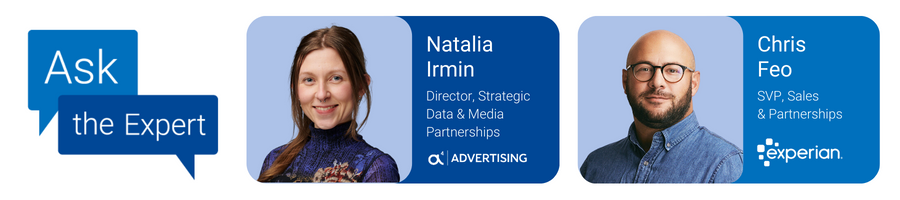
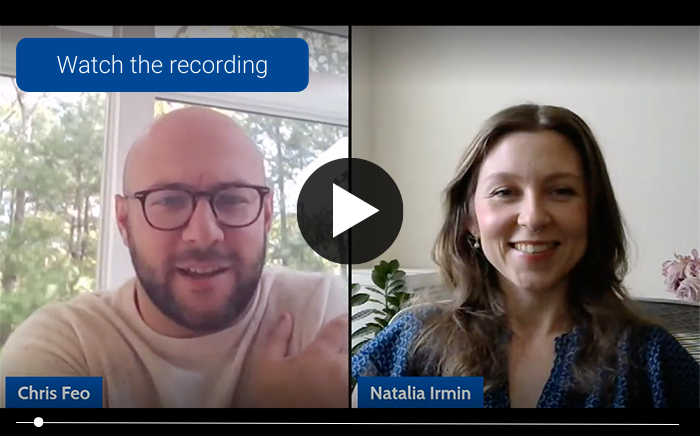
Our next segment in our Ask the Expert series dives into the importance of data enrichment and its benefits across connected TV (CTV) advertising. Ask the Expert features a series of conversations with product experts where we focus on topics that matter the most in AdTech. In our latest segment, Natalia Irmin, Director of Strategic Data & Media Partnerships at a4 Advertising, joins us to chat with Experian’s SVP of Sales & Partnerships, Chris Feo.
a4 is an advanced advertising and data company that offers audience-based, multiscreen advertising solutions for local and national advertising businesses.
In their conversation, Natalia and Chris review:
- The benefits of data enrichment
- First-party data enrichment across advertising
- Data enrichment in CTV advertising
- How Experian and a4 work together
What is data enrichment?
Data enrichment enhances first-party data sets using third-party data sources. This process involves merging first-party data from internal sources with data gathered from other internal sources or from external third-party sources.
Examples of data that can be part of the enrichment process include:
- Demographic information
- Contextual signals
- Behavioral patterns
- Interests
- Purchase-intent
The more you know about your customers, the better equipped you are to reach them where they are with the right message. By enriching your data, you can enhance your messaging, provide personalized offers, and establish a loyal customer base.
First-party data enrichment across advertising
Businesses are transitioning from cookie-based third-party targeting to first-party data enrichment solutions as a result of cookie deprecation. When data enrichment is paired with internal first-party data, you can generate a more holistic customer profile.
a4 has a rich set of first-party data, based on the subscriptions to their services. a4 uses first-party data enrichment across advertising in two ways:
- Measure performance using their viewership data
- Advise their customers on where they should focus their advertising efforts based on the customer’s viewing behavior
a4 supports the enrichment of their customers’ first-party data so they can get the most out of their insights.With Experian’s privacy-first approach, a4 can continue to rely on their first-party data while protecting personally identifiable information (PII).
Data enrichment in CTV advertising
CTV advertising refers to digital advertising that appears through a streaming service during a viewer’s video content, like a movie or TV show. CTV ad campaigns allow businesses to personalize their digital marketing messages while the viewer watches content on various platforms. CTV offers a highly measurable opportunity to increase brand awareness.
Benefits of data enrichment in CTV advertising
Data enrichment provides three key benefits that can enhance targeting, personalization, and campaign effectiveness in CTV advertising.
Understand your target audience
By using enriched data such as demographic information, viewing behavior, and interests, you can gain deeper insights into your target audience, refine your targeting strategies, and create highly personalized ad experiences. Data enrichment also enables better measurement and optimization of ad campaigns, maximizing ROI.
Integrate enriched data with other marketing channels
You can integrate enriched data into CTV with data from other marketing channels. This enables the creation of comprehensive and cohesive marketing strategies that provide consistent messaging and enhance cross-channel targeting.
Enhance the value of ad inventory
Data enrichment can also benefit content publishers and broadcasters by enhancing the value of ad inventory and providing more targeted and effective advertising opportunities.
Enabling your marketers to target specific audiences will result in improved campaign performance. Through data enrichment, you can increase return on your ad spend and boost the value of your publisher’s ad inventory. a4 and Experian can help your business attract additional demand with audience enrichment. a4 uses Experian’s vast offering of audiences and combines it with Experian’s Graph. This data can later be used to activate across a4’s parent company, Altice’s owned and operated properties, as well as beyond Altice’s own footprint via premium publisher partners.
How Experian and a4 work together
a4 and Experian have a long-standing partnership that enables a4 to enhance its data. Through our Consumer View and Consumer Sync products, a4 can add audience attributes to its subscriber and viewer data to precisely pinpoint the audience that its clients are targeting. Experian helps a4 in building a comprehensive customer profile, which helps expand the customer base for a4’s advertising clients.
We form partnerships, like we do with Experian, to enhance our data further, so that we can combine the power of the viewership and exposure data for those other attributes that clients might need.” – Natalia Irmin, Director, Data & Strategic Partnerships, a4 Advertising
Through Experian’s audience attributes and Graph, a4 can assist advertisers in targeting audiences beyond their usual reach, creating a better user experience. a4 can personalize experiences and promotions to prioritize customers with a higher likelihood of making a purchase. By tailoring messages and promotions to individual customer preferences, businesses can improve their advertising efforts and deliver them through their preferred channels.
Watch the full Q&A
Visit our Ask the Expert content hub to watch Natalia and Chris’s full conversation about data enrichment and its benefits across the advertising world. In the Q&A, Natalia and Chris also share their thoughts on the importance of first-party data enrichment, addressability, and measurability in CTV advertising.
About our experts

Natalia Irmin, Director, Strategic Data & Media Partnerships, a4 Advertising
Natalia Irmin is the Director of Strategic Data & Media Partnerships for a4 Advertising. With over 10 years of experience working with data in the Defense, Finance, and Advertising industries, Natalia currently leads the a4 Strategic Partnerships team in the development of advanced data and media products in support of the organization’s media planning, buying, and advanced analytics business. Natalia holds an MBA from the NYU Stern School of Business and a Bachelor of Arts from Tel Aviv University in Israel.

Chris Feo, SVP, Sales & Partnerships, Experian
As SVP of Sales & Partnerships, Chris has over a decade of experience across identity, data, and programmatic. Chris joined Experian during the Tapad acquisition in November 2020. He joined Tapad with less than 10 employees and has been part of the executive team through both the Telenor and Experian acquisitions. He’s an active advisor, board member, and investor within the AdTech ecosystem. Outside of work, he’s a die-hard golfer, frequent traveler, and husband to his wife, two dogs, and two goats!
Latest posts
Lorem ipsum dolor sit amet, consectetur adipiscing elit. Curabitur vel dolor quis elit vestibulum bibendum eu in mi. Maecenas bibendum tristique lacus, sit amet tincidunt tellus dictum et. Vestibulum ante ipsum primis in faucibus orci luctus et ultrices posuere cubilia curae; Maecenas vel diam lacinia magna efficitur congue. Aliquam tempus, lectus nec ultrices sagittis, purus ipsum imperdiet felis, ac gravida enim massa vel augue. Quisque non neque at augue volutpat sodales nec eget ipsum. In sed consectetur odio, ut tincidunt ipsum. Sed non pellentesque nulla, non iaculis mauris. Etiam faucibus sit amet mauris eu efficitur. Lorem ipsum dolor sit amet, consectetur adipiscing elit. Integer sed blandit metus, at finibus ligula. Ut non rhoncus lacus. Nulla mattis est quis cursus laoreet. Nullam porta odio eu tortor consequat vulputate. Suspendisse nec massa ac neque ultrices eleifend. Integer porta tristique tempus. Nulla aliquet, erat tincidunt imperdiet vehicula, urna tortor molestie nulla, ut porttitor erat erat ac nunc. Nulla facilisi. Etiam a tellus in lectus vulputate maximus vitae eu nisl. Fusce eget libero non ipsum pellentesque egestas. Lorem ipsum dolor sit amet, consectetur adipiscing elit. Nulla ut metus sapien. Maecenas aliquam libero et ipsum eleifend, et maximus felis sagittis. Donec id massa et massa molestie varius. Quisque dignissim placerat augue vel mollis. Mauris accumsan, mi vel elementum suscipit, eros elit malesuada justo, ut tempor mi nunc quis tortor. Nullam ut laoreet mi. Nam euismod lectus id dictum consectetur. Praesent quis lacinia ipsum. Donec lobortis massa in erat interdum, consectetur consectetur purus posuere. Nullam feugiat, erat non hendrerit rutrum, velit ante rhoncus nibh, ac laoreet felis ante ac mauris. Etiam ex erat, vulputate vel nulla non, placerat dictum tellus. Praesent orci lacus, dictum in vestibulum non, semper ut tortor. Nullam vitae ornare ipsum, a cursus quam. Vivamus vitae vulputate lorem, ac scelerisque lectus. Fusce at lacus non enim fringilla consequat. Sed laoreet mi eget vulputate auctor. Proin placerat tempor nunc vel mollis. Ut quis mi ut lorem ultrices hendrerit nec vehicula felis. Vestibulum tempus sapien vel porta aliquet. Phasellus quis auctor augue. Morbi nec tellus in massa venenatis ornare. Vivamus eleifend lacus lacus. Suspendisse ac commodo orci, vel fringilla turpis. Proin enim turpis, egestas quis nulla a, ultrices volutpat massa. Nam luctus sapien odio, ac blandit ante accumsan et. Nunc luctus ligula odio, ac faucibus urna rutrum vitae. Donec eu lorem gravida nisi pretium consectetur. Morbi vel mauris non odio iaculis aliquam sed nec leo. Vestibulum sed libero quis ante hendrerit porttitor eget eu orci. Morbi est arcu, maximus eu lobortis sit amet, suscipit et felis. Morbi sodales mattis pretium. Curabitur sodales porttitor eros vitae efficitur. Nam id turpis tristique, aliquam sapien ac, convallis mi. Sed risus sapien, dapibus euismod mauris vitae, fringilla vulputate augue. Morbi efficitur, ex vitae semper mattis, tellus sem luctus lorem, eget viverra metus nibh eu neque. In eu orci est.
YouTube Embed Yoast FAQ Block FAQ Question #1 FAQ Answer #1 FAQ Question #2 FAQ Answer #2 FAQ Question #3 FAQ Answer #3 CTA Embed Button Test InfoGram Embed

Lorem ipsum dolor sit amet, consectetur adipiscing elit. Aliquam vitae nibh eu massa cursus eleifend quis in quam. Nunc mollis aliquam eros sed laoreet. Suspendisse et elit ut metus elementum aliquet ut sit amet metus. Vestibulum ante ipsum primis in faucibus orci luctus et ultrices posuere cubilia curae; Pellentesque fringilla, nibh eget convallis scelerisque, nisl nisl vestibulum ipsum, sit amet placerat neque nunc eget nisi. Cras cursus, sapien non interdum mollis, nibh augue efficitur eros, eget congue tellus nulla id lectus. Nullam vestibulum vitae erat sit amet mollis. Sed gravida tortor nec nibh blandit ultrices. Pellentesque habitant morbi tristique senectus et netus et malesuada fames ac turpis egestas. Nam justo lectus, tempus a velit at, tempus malesuada est. Aenean dictum tellus id lorem venenatis, quis sodales nisl tempus. In quis libero id est rhoncus dictum. Praesent ipsum dui, mattis vel augue ut, lacinia ultricies ex. Suspendisse sit amet gravida purus. Vivamus tempus tellus augue, ac placerat arcu efficitur non. Nam auctor at nulla sed porta. Vivamus lobortis eu nunc a efficitur. Vestibulum condimentum ante nec nisi imperdiet vulputate. Duis varius metus ac est fermentum congue. Aenean tincidunt ut erat non pharetra. Nulla elit orci, semper sed porttitor ac, convallis vitae velit. Praesent egestas blandit ullamcorper. Praesent a porta lectus. Aliquam et pellentesque lectus. Integer placerat mauris risus, ut semper dui commodo at. Vivamus efficitur pharetra ligula id rhoncus. Pellentesque gravida purus vitae viverra luctus. Vestibulum ante ipsum primis in faucibus orci luctus et ultrices posuere cubilia curae; In vitae augue nec odio fermentum ultrices a sed libero. Nulla ullamcorper nulla id sagittis convallis. Pellentesque cursus metus et orci iaculis, non laoreet nisi aliquam. Proin porta velit risus, ac ultricies lectus tincidunt at. Pellentesque scelerisque ullamcorper euismod. Phasellus eget velit malesuada, faucibus enim a, ultrices ante. Morbi ut diam non metus interdum placerat gravida quis arcu. Integer ultricies molestie nulla sed convallis. Curabitur mi dui, aliquam vel nibh rutrum, convallis tempor lacus. Cras porttitor laoreet varius. Ut tincidunt massa congue mauris lobortis euismod. Pellentesque a odio ut est consequat tristique ut in mi. Nullam sed ultricies justo, eu varius eros. Nunc ipsum nulla, vehicula at sagittis a, ornare ut nisi. Aenean imperdiet felis at aliquet porta. Nunc sed leo ut justo efficitur aliquet. Sed et urna vel urna maximus laoreet. In facilisis porttitor nisi in sagittis. Fusce magna sapien, molestie ac maximus eu, tincidunt sit amet massa. Praesent non mauris metus. Aliquam dapibus sit amet tortor at scelerisque. Ut vel dolor at nisi rhoncus finibus auctor non velit. Integer pellentesque venenatis diam, nec eleifend ipsum pellentesque quis. Vivamus vitae mi nisl. Curabitur lectus orci, ornare et ipsum venenatis, sagittis blandit mauris. FAQs Lorem ipsum dolor sit amet, consectetur adipiscing elit. Aliquam vitae nibh eu massa cursus eleifend quis in quam. Nunc mollis aliquam eros sed laoreet. Suspendisse et elit ut metus elementum aliquet ut sit amet metus. Vestibulum ante ipsum primis in faucibus orci luctus et ultrices posuere cubilia curae; Pellentesque fringilla, nibh eget convallis scelerisque, nisl nisl vestibulum ipsum, sit amet placerat neque nunc eget nisi. Cras cursus, sapien non interdum mollis, nibh augue efficitur eros, eget congue tellus nulla id lectus. Nullam vestibulum vitae erat sit amet mollis. Sed gravida tortor nec nibh blandit ultrices. Pellentesque habitant morbi tristique senectus et netus et malesuada fames ac turpis egestas. Nam justo lectus, tempus a velit at, tempus malesuada est. Aenean dictum tellus id lorem venenatis, quis sodales nisl tempus. In quis libero id est rhoncus dictum. Praesent ipsum dui, mattis vel augue ut, lacinia ultricies ex. Suspendisse sit amet gravida purus. Vivamus tempus tellus augue, ac placerat arcu efficitur non. Nam auctor at nulla sed porta. Vivamus lobortis eu nunc a efficitur. Vestibulum condimentum ante nec nisi imperdiet vulputate. Duis varius metus ac est fermentum congue. Aenean tincidunt ut erat non pharetra. Nulla elit orci, semper sed porttitor ac, convallis vitae velit. Praesent egestas blandit ullamcorper. Praesent a porta lectus. Aliquam et pellentesque lectus. Integer placerat mauris risus, ut semper dui commodo at. Vivamus efficitur pharetra ligula id rhoncus. Pellentesque gravida purus vitae viverra luctus. Vestibulum ante ipsum primis in faucibus orci luctus et ultrices posuere cubilia curae; In vitae augue nec odio fermentum ultrices a sed libero. Nulla ullamcorper nulla id sagittis convallis.