Shoptalk 2024, the premier event for retail and e-commerce professionals, brought together industry leaders to discuss the latest trends and innovations shaping the future of retail. As the retail landscape continues to evolve, here are four key takeaways from Shoptalk 2024:
1. The continuing rise of retail media networks
The evolution of retail media is propelling us into a new era of advertising and first-party data monetization. Retailers are using their valuable first-party data to offer targeted advertising opportunities on both their owned and operated channels — from sponsored content to personalized ads — and through offsite programmatic ads. However, the full potential of retail media networks (RMNs) is hindered by challenges in understanding and targeting shoppers beyond retail data, reaching customers across channels and validating measurement.
To unlock the true value of RMNs, and turn these challenges into opportunities, companies should focus on four areas:
- Gain insights: Learn more about your customers and the customers your marketing partners care about.
- Create audiences: Use enriched data to build addressable audience segments for advertisers to target.
- Maximize reach: Expand your addressability and monetize your data on and off platform.
- Demonstrate success: Validate marketing impact by connecting ad exposures to outcomes.
“It was evident at Shoptalk 2024 that the rise of retail media is unstoppable. The conversations, collaborations, and insights shared at the event cemented the position of retail media networks as the driving force behind the future of commerce.”
Alison Hofelich, Sr. Account Executive, Big Box Retail & Grocery
2. Content-led commerce
Content is becoming increasingly pivotal in driving commerce, with retailers investing in shoppable video to stimulate conversations and foster customer engagement. While video may not always lead to immediate transactions, it can start dialogues, offering retailers a platform to enhance customer loyalty and influence future sales.
Retailers talked about their focus on connecting with Gen Z on a deeper level. PacSun highlighted initiatives like the launch of a gender-fluid line and continuous engagement with young consumers via social media for feedback. Additionally, PacSun talked about embracing “conscious capitalism” by co-creating with influencers and customers, recognizing the growing consumer preference for brands that make a positive impact.
By collaborating with influencers and using user-generated content, retailers can create authentic experiences that resonate with their customers.
3. Data privacy and trust
With data playing a central role in retail strategies, ensuring data privacy, and building trust with consumers are imperative. Retailers must prioritize transparency and security to safeguard customer information and nurture long-term relationships.
While the focus may currently be on capturing Gen Z market share, businesses need to anticipate shifts in consumer demographics and adapt their strategies accordingly. Using customer data in a privacy-compliant way enables retailers to implement effective personalization strategies that drive long-term engagement and loyalty.
“Retail media networks were at the center of Shoptalk 2024.In addition to retail media networks, the seamless integration of data to enhance customer personalization and the rising importance of targeting Gen Z were recurring themes.”
Kai Rood, Account Executive, Retail Apparel
4. The time to embrace AI is now
Technology continues to drive innovation in retail, with advancements in AI reshaping the shopping experience. From virtual try-ons to personalized product recommendations, retailers are using AI to engage consumers and enhance product discovery. Testing and learning are essential for AI implementation, as companies navigate the risks and rewards of technological innovation.
Navigate the future of retail with Experian
Shoptalk 2024 provided invaluable insights into the future of retail, highlighting the importance of retail media networks, content-led commerce, data privacy, and tech innovation. By embracing these trends and innovations, retailers can position themselves for success in an ever-evolving marketplace.
At Experian, our solutions are tailored to empower businesses in navigating this dynamic landscape.
Through our Consumer Sync solutions, we bridge the gap between online and in-store touchpoints, ensuring a unified strategy for reaching audiences across channels and evaluating campaign performance.
Our Consumer View solutions enable you to tap into 5,000 demographic and behavioral attributes to fill in any gaps on your customer. Go beyond category buyers by combining your first-party data and Experian’s top ranked data to build custom audiences that lead to higher ROI for your advertisers.
Connect with a member of our team today to get started.
Latest posts
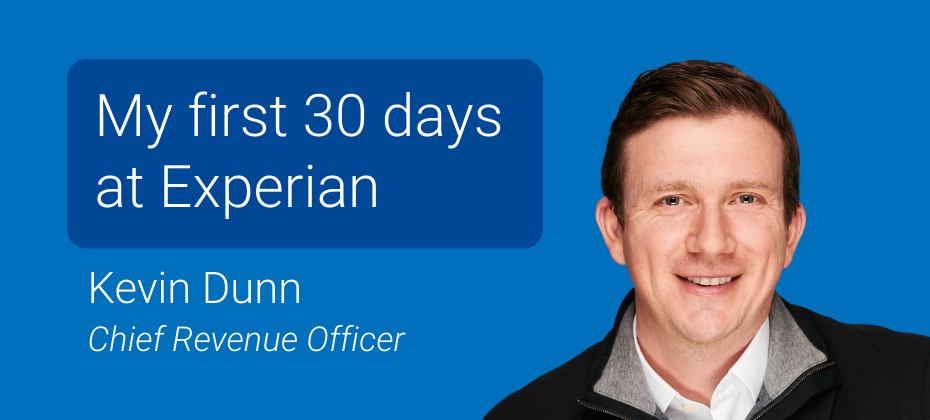
Kevin Dunn shares his thoughts after 30 days as Experian’s new Chief Revenue Officer.

Lorem ipsum dolor sit amet, consectetur adipiscing elit. Mauris rhoncus augue sit amet mi rutrum, et egestas neque hendrerit. Aenean quis lectus dui. Quisque vitae posuere lectus. Nulla varius tincidunt mauris ut pharetra. Pellentesque semper mauris risus, et varius ante pretium ut. Duis varius ante a augue sodales, in consequat augue vehicula. Suspendisse potenti. Donec massa leo, efficitur vel eros ac, facilisis luctus massa. Ut pharetra eros diam, in fringilla neque elementum et. Morbi velit mauris, blandit et congue eu, convallis non augue. Curabitur porta sodales tellus vel porta. Morbi vel felis non neque efficitur venenatis. Nullam lobortis blandit ex id mollis. Donec euismod iaculis rutrum. Heading Description Heading Description Heading Description Vestibulum sed quam elit. Quisque bibendum nulla quam, non gravida tellus venenatis id. Ut a tellus facilisis, elementum ipsum ut, sodales orci. Nullam justo leo, condimentum in volutpat eu, gravida vel est. Ut placerat nulla erat, vel finibus lorem gravida at. Vivamus quis est id diam rhoncus blandit. Cras dignissim auctor diam, lobortis consectetur felis. Nulla accumsan lorem et augue pulvinar fermentum. Quisque ac nisl suscipit, imperdiet mauris eget, dignissim augue. Quisque tempus condimentum rhoncus. Vivamus in blandit nisi. Suspendisse sed metus rhoncus, vehicula nulla laoreet, volutpat neque. Morbi viverra in lacus id gravida. Aliquam velit ex, blandit at metus a, efficitur rutrum tortor. Fusce facilisis, nulla eget dapibus sagittis, sapien justo rhoncus nisi, ut placerat velit orci at velit. Sed finibus turpis ligula, et fermentum ligula rhoncus sit amet. Our 2026 Digital trends and predicitions report is available nowand ereveals five trends that will define 2026. From curation becoming the standard in programmatic to AI moving from hype to implementation, each trend reflects a shift towards more connected, data-driven marketing. The interplay between them will define how marketers will lead in 2026. Download now
Why an identity framework matters more than any single identifier The challenge facing marketers today isn’t a single identifier on a deprecation timeline. It’s the increasing fragmentation of signals and identifiers across browsers, devices, apps, and platforms. This shift introduces complexity into how audiences are reached and measured, as signals behave differently in every environment, and it becomes more complex to piece together a complete view of the consumer. Each environment contributes to its own set of visibility gaps, making identity less predictable and more uneven. The result is a patchwork of inconsistent identity signals rather than a single, predictable decline. While you can’t control how platforms evolve, you can control how you respond to fragmentation. The future won’t be defined by the loss of any single identifier, but by your ability to unify, interpret, and activate the many signals that remain. Marketers who adopt a flexible, identity framework will be best positioned to create consistency in an otherwise fragmented landscape. At Experian, we believe flexibility starts with intelligence. For decades, we’ve used AI and machine learning to help marketers understand people’s behavior more clearly, respect their privacy, and deliver messages that drive business outcomes. Our technology brings identity, insight, and intelligence together, so even as the number of signals grows and becomes more varied across environments, marketers can reach the right people with relevance, respect, and simplicity. This intelligence acts as the connective tissue across fragmented ecosystems, ensuring marketers can recognize and reach audiences consistently wherever they appear. What forces are driving fragmentation in identity and signals? Changes to traditional IDs: Since Apple introduced ATT, access to IDFA has become inconsistent across apps and devices. Google’s evolving Android privacy roadmap adds another layer of variability, fragmenting mobile addressability. Safari and Firefox have long restricted third-party cookies, while Chrome continues to support them for now. This creates different signal availability across browsers, contributing to an uneven and increasingly fragmented identity landscape on the open web. Shifts in signals: IPv4 to IPv6 migration introduces mismatched identity structures that complicate continuity across environments. Platform-driven fragmentation: Closed ecosystems and uneven adoption of evolving RTB standards (like OpenRTB 2.6 updates designed to support new identifiers and consent signals) create differences in which identifiers and consent signals are shared in the bidstream. At the same time, the rise of alternative or “universal” IDs—often developed by individual platforms, publishers, or technology companies—means that multiple ID types can appear within the same auction, each with its own structure, rules, and level of support. These differences reduce interoperability across platforms and contribute to a more fragmented activation landscape. Each change creates an identity silo. Together, they form an ecosystem defined by fragmentation rather than absence. Without an identity framework, these environments operate as disconnected identity islands. A multi-ID world requires a unified identity framework Alternative IDs play an important role, but they also expand the number of signals marketers must reconcile. Without a consistent identity layer, more IDs often mean more complexity—not more clarity. Common alternative IDs in use today: UID2: The Trade Desk’s UID 2.0, an iteration of their original Unified ID 1.0, which was still reliant on third-party cookies, creates persistent IDs with user-provided email addresses and phone numbers. ID5: This independent identity provider builds an identity infrastructure that powers addressable advertising across channels. It can create an ID based on both deterministic and probabilistic data. Hadron ID: Hadron ID is a unique, interoperable identity system (including first-party, audience-based, contextual, deterministic, and probabilistic) developed by Audigent, now part of Experian, to drive revenue for publishers by making their audience data and inventory actionable for media buyers. Industry reports suggest roughly one-third to two-fifths of open-auction traffic carries alternative IDs, sometimes multiple per request. Among Experian clients, adoption of alternative IDs rose 50% year over year, with a 30% increase in IDs resolved to individuals via our Digital Graph. Identity isn’t disappearing; it’s multiplying. A modern identity framework resolves these identifiers into a single, privacy-safe consumer view.