Advertisers are always looking for ways to improve the targeting and effectiveness of their campaigns. One strategy that’s gaining popularity lately is using curated private marketplace (PMP) deals, allowing advertisers to buy premium ad inventory in a private auction environment. But how do data providers and PMPs work together to make PMP advertising more successful?
What is a private marketplace (PMP)?
Advertising PMPs, or private marketplace deals, are a type of programmatic advertising where advertisers and publishers negotiate and set up a direct deal between themselves to buy or sell advertising inventory in a private auction environment. In PMP deals, publishers can make their premium inventory available to a select group of advertisers, who can bid on it in a private auction using demand-side platforms (DSPs). These private auctions typically offer higher-quality inventory and a more targeted audience than open exchange auctions, which are accessible to all advertisers. However, traditional PMPs had their limitations, including often being limited to accessing inventory from a single publisher group.
Audigent takes PMP advertising to the next level with SmartPMPs
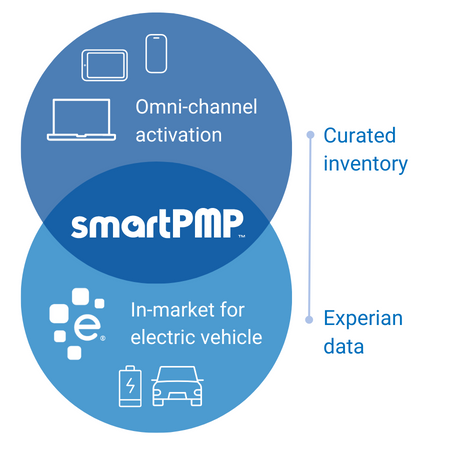
Audigent’s key differentiator is that instead of activating audience data from the DSP, which is the industry standard, they integrate directly with supply-side platforms (SSPs). By taking this route, audience data and inventory from hundreds or even thousands of publishers can now be packaged together into a single deal ID / SmartPMP. SmartPMPs empower media buyers with the ability to access and buy against unique, customizable data segments on premium curated publisher inventory in combinations that otherwise would not have been available.
Activating data via the supply-side also enables supply-side optimizations. This means that instead of simply being a data provider, Audigent plays an active role in the success of media buyers’ programmatic campaigns by optimizing toward performance goals in coordination with demand-side buyers. The result is the full alignment of demand- and supply-side technologies for the first time in programmatic.
SmartPMPs drive campaign performance
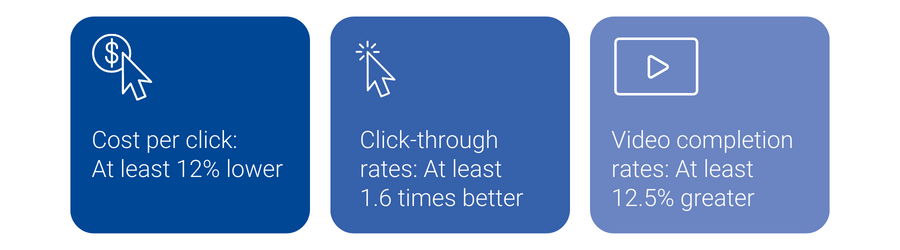
Audigent performance data compared to the programmatic open exchange:
How Experian and Audigent partner in PMP advertising
Experian and Audigent collaborate using Consumer View audience data. By supplying valuable insights into users’ interests, behaviors, and demographics, we help advertisers create more targeted and personalized ad campaigns with Audigent. This can lead to higher engagement rates, greater brand awareness, and increased conversions for Audigent and Experian clients.
By activating Experian data via Audigent SmartPMPs, advertisers unlock the ability to reach highly engaged users across premium, curated inventory sources on key channels like connected TV (CTV), display, video, and more.
Unlock the potential of programmatic advertising with us
Our strategic collaboration with Audigent is transforming the programmatic advertising space. Our partnership enables our customers to tailor their ads directly to their desired audience. This elevated personalization results in higher conversion rates and optimized campaigns for superior ROI performance.
Contact us for more information about our digital audience segments on the Audigent platform. To learn more about our partner Audigent, visit www.audigent.com.
Latest posts
Five steps to keep valuable email subscribers in response to Verizon’s email service deactivation.

Ensure you understand privacy compliance pitfalls with special attention on shopping cart abandonment emails.
Partnership combines customer connections and cross-device scale to deliver more strategic customer insights NEW YORK AND CHICAGO — March 16, 2017 — Signal, the global leader in customer identity, today announced a partnership with Tapad, now part of Experian and the leading provider of unified, cross-screen marketing technology solutions. This global integration extends device connectivity for Signal’s clients across North America, APAC and EMEA by leveraging Tapad’s proprietary Device GraphTM. With Signal’s Customer Identity Solution, brands benefit from more visibility of known customers, lower costs to reach those customers and decreased expenses and data loss that often results from using multiple vendors. Integrating with Tapad’s Device Graph, which connects billions of devices, enables Signal clients to build an even broader view of their known customers across multiple devices. This integration combines Signal’s customer identity scale with Tapad’s device scale to expand the reach of addressable media channels and enhance customer journey insights across touchpoints. Tapad and Signal were able to drive incremental device connections for more than 65 percent of customer profiles, linking an average of 6.8 browsers and devices per customer. With this combined data set, Signal clients can expand their authenticated view of a customer to all associated devices and realize more strategic insights into their high-value users. The partnership also allows Signal’s clients to integrate in real-time with Tapad’s media platform, Unify. This proprietary technology enables advertisers to make real-time activation and buying decisions with maximum scale, as well as automated reporting and measurement. “Continuously recognizing customers across devices instantly and in a privacy-safe way is essential for marketers to stay competitive,” said Marc Kiven, founder and CRO of Signal. “We are thrilled to enter this unique, global partnership with Tapad, enabling our clients to access their technology and more effectively reach customers in real-time and at scale.” “Being able to leverage a persistent view of customer connections across devices is a huge challenge for brands,” said Pierre Martensson, SVP and GM of Tapad’s global data division. “With Tapad, Signal is now able to connect with the billions of existing data points in our device graph to help clients better understand customer behavior and realize even stronger customer engagement.” Contact us today