In our Ask the Expert Series, we interview leaders from our partner organizations who are helping lead their brands to new heights in AdTech. Today’s interview is with Ben Smith, VP of Product, Data Products at Infillion.
Adapting to signal loss
What does the Experian–Infillion integration mean for advertisers looking to reach audiences as signals fade?

As cookies and mobile identifiers disappear, brands need a new way to find and reach their audiences. The Experian integration strengthens Infillion’s XGraph, a cookieless, interoperable identity graph that supports all major ID frameworks, unifying people and households across devices with privacy compliance, by providing a stronger identity foundation with household- and person-level data. This allows us to connect the dots deterministically and compliantly across devices and channels, including connected TV (CTV). The result is better match rates on your first-party data, more scalable reach in cookieless environments, and more effective frequency management across every screen.
Connecting audiences across channels
How does Experian’s Digital Graph strengthen Infillion’s ability to deliver addressable media across channels like CTV and mobile?
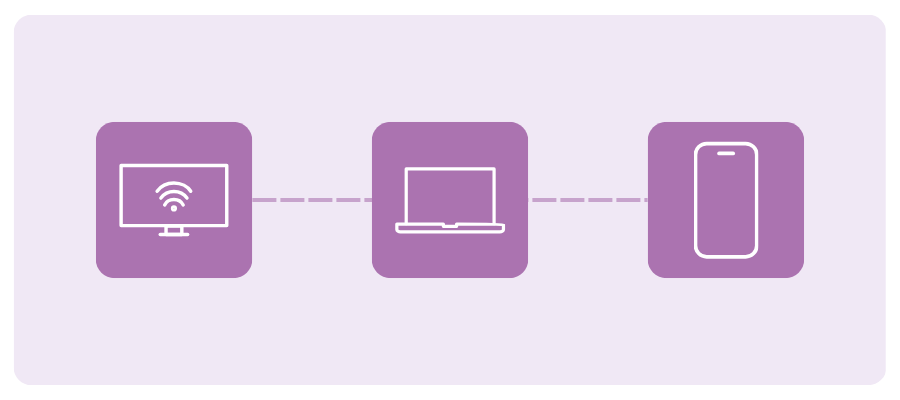
Experian strengthens the household spine of XGraph, which means we can accurately connect CTV impressions to the people and devices in that home – then extend those connections to mobile and web. This lets us plan, activate, and measure campaigns at the right level: household for CTV, and person or device for mobile and web. The outcome is smarter reach, less waste from over-frequency, and campaigns that truly work together across channels.
The value of earned attention
Infillion has long championed “guaranteed attention” in advertising. How does that philosophy translate into measurable outcomes for brands?

Our engagement formats, such as TrueX, are based on a simple principle: attention should be earned, not forced. Viewers choose to engage with the ad and complete an action, which means every impression represents real, voluntary attention rather than passive exposure. Because of that, we consistently see stronger completion rates, deeper engagement, and clearer downstream results – like lower acquisition costs, improved on-site behavior, and measurable brand lift.
To take that a step further, we measure attention through UpLift, our real-time brand lift tool. UpLift helps quantify how exposure to a campaign influences awareness, consideration, or purchase intent, providing a more complete picture of how earned attention translates into business impact.
Creative innovation and location insights
Beyond identity resolution, what are some of Infillion’s capabilities, like advanced creative formats or location-based insights, that set you apart in the market?

One key area is location intelligence, which combines privacy-safe geospatial insights with location-based targeting through our proprietary geofencing technology. This allows us to build custom, data-driven campaigns that connect media exposure to real-world outcomes – like store visits and dwell time – measured through Arrival, our in-house footfall attribution product.
We also build custom audiences using a mix of zero-party survey data, first-party location-based segments, and bespoke audience builds aligned to each advertiser’s specific strategy.
Then there’s creative innovation, which is a major differentiator for us. Our high-impact formats go beyond static display, such as interactive video units that let viewers explore products through hotspots or carousels, rich-media ads that feature polls, quizzes, dynamic distance, or gamified elements, and immersive experiences that encourage active participation rather than passive viewing. These creative formats not only capture attention but also generate deeper engagement and stronger performance for a variety of KPIs.
Future ready media strategies
How does Infillion’s ID-agnostic approach help brands future-proof their media strategies amid ongoing privacy and tech changes?
We don’t put all our eggs in one basket. XGraph securely unifies multiple durable identifiers alongside our proprietary TrueX supply to strengthen CTV household reach. This agnostic design allows us to adapt as platforms, regulations, and browsers evolve – so you can preserve reach and measurement capabilities without getting locked into a single ID or losing coverage when the next signal deprecates.
Raising the bar for media accountability
Looking ahead, how is Infillion evolving its platform to meet the next wave of challenges in audience engagement and media accountability?
From an engagement standpoint, we’re expanding our ability to support the full customer journey, offering ad experiences that move seamlessly from awareness to consideration to conversion. That includes smarter creative that adapts to context, intelligent targeting and retargeting informed by real data, and formats designed to drive measurable outcomes rather than just impressions.
When it comes to accountability, we’re ensuring that measurement is both flexible and credible. In addition to our proprietary tools, we partner with leading third-party measurement providers to validate results and give advertisers confidence that their investment is truly performing. Within our DSP, we emphasize full transparency and log-level data access, ensuring advertisers can see exactly what’s happening on every impression.
All of this builds toward the next era of agentic media buying – one enabled by our MCP suite and modular, component-based tools. This evolution brings greater accountability and next-generation audience engagement to an increasingly automated, intelligent media landscape. Our goal is to help brands connect more meaningfully with audiences while holding every impression – and every outcome – to a higher standard of transparency and effectiveness.
Driving impact across the funnel
What is a success story or use cases that demonstrate the impact of the Experian–Infillion integration?
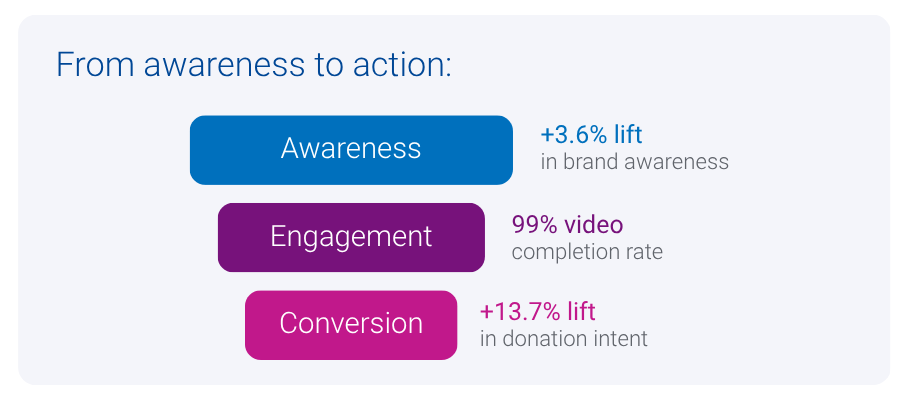
We recently partnered with a national veterans’ organization to raise awareness of its programs for injured or ill veterans and their families. Using the Experian integration, we combined persistent household- and person-level identifiers with cross-device activation to reach veteran and donor audiences more precisely across CTV, display, and rich media. The campaign achieved standout results – industry-leading engagement rates, a 99% video completion rate, and measurable lifts in both brand awareness (3.6 % increase) and donation consideration (13.7% lift). It’s a clear example of how stronger identity and smarter activation can drive meaningful outcomes across the full funnel.
Contact us
Identity resolution FAQs
Identity resolution ensures accurate connections between devices, households, and individuals. Experian’s Offline Identity Resolution and Digital Graph strengthen these connections for improved targeting and consistent measurement across CTV, mobile, and web.
Solutions like Experian’s Digital Graph enable brands to connect first-party data to household and person-level identifiers, ensuring scalable reach and compliant audience targeting legacy signals fade.
Focusing on earned attention (where audiences actively choose to engage) leads to stronger completion rates, improves on-site behavior, and drives measurable increases in brand awareness and consideration.
By linking CTV impressions to households and extending those connections to mobile and web, Experian’s identity solutions ensure campaigns work together seamlessly, reducing over-frequency and improving overall reach.
About our expert

Ben Smith
VP Product, Data Products, Infillion
Ben Smith leads Infillion’s Data Products organization, delivering identity, audience, and measurement solutions across the platform. Previously, he was CEO and co-founder of Fysical, a location intelligence startup acquired by Infillion in 2019.
About Infillion

Infillion is the first fully composable advertising platform, built to solve the challenges of complexity, fragmentation, and opacity in the digital media ecosystem. With MediaMath at its core, Infillion’s modular approach enables advertisers to seamlessly integrate or independently deploy key components—including demand, data, creative, and supply. This flexibility allows brands, agencies, commerce and retail media networks, and resellers to create tailored, high-performance solutions without the constraints of traditional, all-or-nothing legacy systems.
Latest posts

The beginning of any new year brings an influx of gym goers who are committed to working on resolutions. Whether the goal is to work out or be healthier, gyms around the nation see a spike in numbers in the first few months of the new year. Experian examined foot traffic patterns for five gyms nationwide from January to June of 2019 to determine if there were significant trends. Unsurprisingly, there was a spike in visits in January, which correlates with the rise of advertising in the fitness industry during that time. We are all familiar with the ads telling us about the amazing discounts available at our nearest gyms, as well as the constant reminder that it’s a new year so it’s time to reinvent yourself – “New Year, New Me!” Even though the spike in visits in the first couple of months is exciting for businesses, research suggests that these trends won’t continue throughout the year, which means a loss of revenue over the latter half of the year. A loss of revenue is never good, so as a marketer, how can you better understand your new clients and target them when they might be inclined to throw in the towel? Taking a second look at the graph above, you see a spike in visits in late March and early April, before a big drop off in May. We were curious to see what was causing this spike, so we took a deeper dive into the data, looking at both age and gender. What we found was that from January to early March, there was a steady decline in visits, whereas in late March to early April, there was about a 7% rise in visits across the board. What was more interesting than the spike in visits, was the significant drop after the first week of April. We saw a significant 13% drop in visits on average in both males and females of all ages. On the higher end of the spectrum were both males and females between the ages of 19-34 with a 14%-15% drop in visits. While we can speculate on why there was such a drop at this time – right after spring break, etc. – gathering more data about these individuals is essential to building an effective marketing plan to combat this degradation. As a marketing professional in the fitness industry, or someone looking to target a health-conscious demographic, you need to understand your audience – both their visit patterns, as well as their likes and dislikes. Using Experian’s data, you can take a deeper dive to understand your members eating habits. For instance, you can better understand if your clients like to visit health-conscious dining establishments or do they frequent QSR locations like McDonalds. It may seem like common sense, but a successful marketing campaign is rooted in relevant messaging and relevancy is rooted in the ability to understand the target audience. While the goal is to bring new members into your gym or health club in January, the challenge is to keep those new members coming throughout the year, and that’s where there is an opportunity for marketers to better connect with these customers. If you know that people under the age of 34 are at the biggest risk of halting their visits to your fitness location in the middle of April, then you can take the next steps to better understand that demographic so you can activate an effective marketing campaign tailored to their needs before you lose their memberships. The key is to understand who these fitness resolution members are and find a way to target them before their commitment waivers. What works for one location may differ from another, so you have to include other data points in to build a more holistic view of your target audience. At the end of the day, understanding your members is key. Partnering with Experian to take a deeper dive into your members likes and dislikes, as well as their visit patterns can allow fitness locations to have the data and the tools at hand to make the right marketing decisions and deliver an effective marketing campaign, ultimately reducing the membership attrition rate.

Over the past two decades, marketers were consumed with the Millennial generation. Those individuals born between 1980 and 1995 represented a new set of consumers to the market with very different attitudes, behaviors and purchase decision styles than had previously been seen. Marketers invested significant capital to learn about Millennials and transformed their marketing strategy to better reach and attract them. Those that did this successfully were able to grow their business and extend their footprint to a new group of consumers. Now, as we enter a new decade, another generation of individuals is entering into the market and represents the future customer for marketers. Understanding who these consumers are, how to best reach them, and how they make purchase decisions will help marketers reach this new audience and grow their business more effectively. 1. Who is Generation Z? While definitions have varied from different publications, Generation Z is generally defined as consumers born between mid-1990s through early 2010s. Here, we define generations as the following: According to Kasasa, this group represents about 74 million consumers, which is similar in size to other generations.[i] Information on Generation Z is limited since many are still considered minors. However, resources such as syndicated surveys have provided some thoughts about their general attitudes that can begin to provide insight. Key Takeaway: Get to know Generation Z. They are big, they are coming, and they will likely be the future consumer you will need to attract. 2. How is Generation Z Influenced by Technology? Very much so. Generation Z individuals received their first mobile phone at age 10.3 years and spend an average of 3 hours each day on their device.[ii] They have no real understanding of what life was like before the internet. They are active users of smart phones, apps, and social media, and frequently use technology before making decisions. The internet is very important to Generation Z – they meet people, share information about themselves, get their entertainment, relax, and enjoy going online in their free time. Generation Z respondents were more likely than other generations to agree with the following statements: “I like to keep my personal Internet pages updated with information about my life.”“The internet is a good way to meet new people.”“The internet is a main source of entertainment for me.”“Going online is one of my favorite things to do with my free time.” Additionally, the mobile internet, which includes accessing social media and apps through a hand-held device, is even more meaningful to the Generation Z consumer. Generation Z respondents list the following as what the Mobile Internet means to them: “Pure entertainment”“A good escape”“Relaxes me”“Puts me in a good mood”“Keeps me up-to-date with the latest styles and trends” One result of this is how much more connected Generation Z feels with each other, and with celebrities. They actively follow and interact with their friends or celebrities through YouTube, TikTok, Twitter, Instagram, Snapchat or other social media tools. As a result, they are much more influenced by celebrities than other generations. Key Takeaway: Generation Z will be a heavy user of technology and are influence by each other and celebrities. They will expect your products to be accessible through mobile devices. 3. What media channels are best for reaching Generation Z, and what are their decision-making characteristics? To improve marketing effectiveness, marketers must know how to reach their consumers. Two significant dimensions of reach are (1) the preferred channel the consumer uses to gain awareness about a product; and (2) the decision-making style the consumer employs. Using Experian’s TrueTouchSM, marketers can learn this and develop a marketing communication strategy for improved reach. Generation Z is much more engaged through digital media. More than 3 out 4 Generation Z respondents listed the following as their preferred engagement channel: Streaming TVDigital DisplayRadio (including streaming radio)Digital VideoMobile SMS More traditional channels such as email, direct mail and traditional newspaper were ranked very low, indicating that reaching Generation Z will require marketers to move away from more traditional media channels to influence these consumers. Decision-making styles were also different for Generation Z. The most frequent Experian TrueTouch Decision-Making Styles among Generation Z respondents were: Brand loyalty was the least frequent response among Generation Z. This indicates that Generation Z may not have an automatic affinity to a brand, and that marketers may have to demonstrate its value to influence these emerging consumers. Key Takeaway: Digital media will be a key for reaching Generation Z, and marketers will have to adapt away from traditional media to influence these consumers. While recreational and “In the Moment,” Generation Z does not have loyalty to specific brands, considers what goes into products, and researches different websites and online reviews before making a purchase. In summary, Generation Z is an emerging group of consumers that will challenge marketers to think beyond traditionally successful marketing tactics. These consumers were born into a digital age, and are heavily influenced by social media, whether it’s recommendations from friends, or celebrities that endorse a certain product. This influence requires marketers to communicate more digitally, and less from traditional media like direct mail, email and newspapers. Finally, marketers will need to be aware these consumers will make purchase decisions based on research from other websites and online reviews, look for new things particularly those made with natural ingredients, and are not necessarily loyal to established brands. Knowing this will help marketers develop strategies and make the necessary investments to reach this group more effectively. [i] “Boomers, Gen X, Gen Y, and Gen Z Explained,” Kasasa, July 29, 2019. https://www.kasasa.com/articles/generations/gen-x-gen-y-gen-z [ii] Ibid
Tapad's digital identity resolution offering enables Gimbal's platform to provide expanded insights for campaign optimization to U.S. brand and agency clients NEW YORK, Feb. 11, 2020 /PRNewswire/ — Tapad, part of Experian and a global leader in digital identity resolution, announced their partnership with Gimbal, a leader of location-powered marketing and advertising solutions. Gimbal now leverages Tapad's global, privacy-safe digital cross-device solution, The Tapad Graph, to further enhance its footfall attribution solution, Arrival. Arrival delivers dwell-based attribution for in-store foot traffic and by leveraging the Tapad Graph, Gimbal provides customers with a more holistic, attributable understanding of consumers across multiple devices, like desktop, smartphone, and tablet. With this, Gimbal's clients are enabled to make more informed media planning decisions for programmatic activations across the web, and mobile apps. "Today's consumers are utilizing their digital devices for research and comparison shopping before making a purchase. By leveraging The Tapad Graph, Gimbal's clients gain an even more complete view of the consumer decision journey across devices," said Chris Feo, SVP of Global Data Licensing and Strategic Partnerships at Tapad. "With the number of devices per individual rapidly increasing, understanding the customer decision journey is becoming more complex," said Kyle Wendling, SVP of Product at Gimbal. "We're excited to partner with Tapad to continue engaging consumers across multiple devices." To learn more about Tapad and our digital identity resolution products, visit our identity solutions page. About TapadTapad, Inc. is a global leader in digital identity resolution. The Tapad Graph, and its related solutions, provide a transparent, privacy-safe approach connecting brands to consumers through their devices globally. Tapad is recognized across the industry for its product innovation, workplace culture, and talent, and has earned numerous awards including One World Identity's 2019 Top 100 Influencers in Identity Award. Headquartered in New York, Tapad also has offices in Chicago, Denver, London, Oslo, Singapore, and Tokyo. About GimbalGimbal translates location data into intent, measurement, and insights to help organizations transform their businesses, maximize marketing relevance, and humanize messaging for consumers. Gimbal is headquartered in Los Angeles and provides advertising and marketing technologies to the world's leading brands and retailers interested in understanding the physical world. To learn more, visit https://gimbal.com. Contact us today!