
The holiday season is just around the corner, and retailers and marketers are gearing up for the busiest shopping period of the year. It’s crucial to understand how consumer behavior is evolving and what emerging trends to expect. Experian’s 2023 Holiday spending trends and insights report analyzes recent trends, consumer spending habits, and anticipates what’s to come in 2023 to help you deliver a top-notch shopping experience this holiday season.
In this blog post, we’ll cover three key insights from our report.
1. Consumers are shopping earlier
It’s no secret that December has always been the go-to month for consumers when it comes to holiday spending. However, holiday shopping now starts earlier, particularly with online sales.
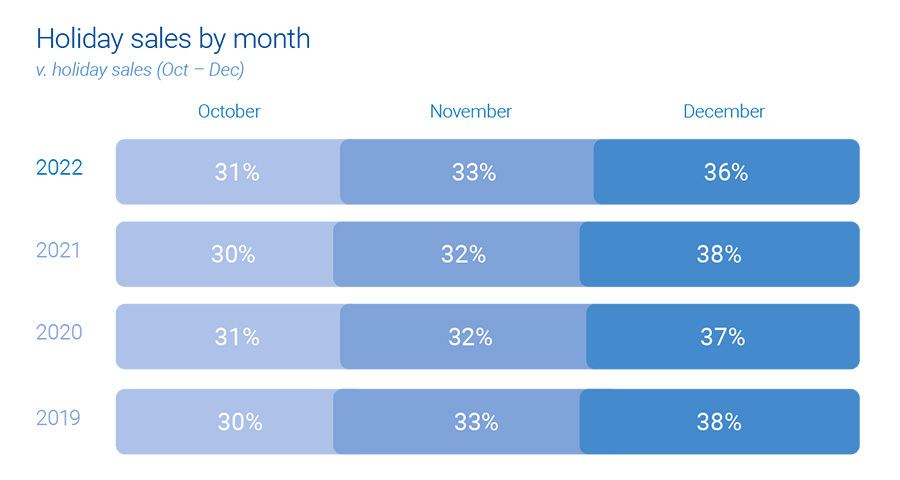
This can be attributed to a surge in promotions and deals, enticing shoppers to open their wallets ahead of time, giving a significant boost to holiday sales. Notably, Cyber Week sales have proven to be an influential factor, accounting for 8% of total consumer holiday spending.
Experian tip
Reach the right shoppers with your promotions with sell-side targeting. This powerful approach gives you control over where your ads are placed while ensuring maximum visibility through direct connections with publishers. Whether on mobile, web, or CTV, this seamless ad experience will engage your audience effectively.
2. Online sales are on the rise
The popularity of online holiday sales is continuously growing, surpassing in-store shopping. There has been a consistent 1% year-over-year increase in online sales, while in-store sales have seen a 1% decrease.
“It’s easier for consumers to comparison shop for large ticket items online that they might find at a mass retailer or office supply store. Consumers prefer to have larger, bulkier items shipped directly to their home for minimal cost. By shopping online, consumers can save time since they don’t need to wait in checkout lines.”
Anna Liparoto, Sr. Account Executive, Retail & CPG
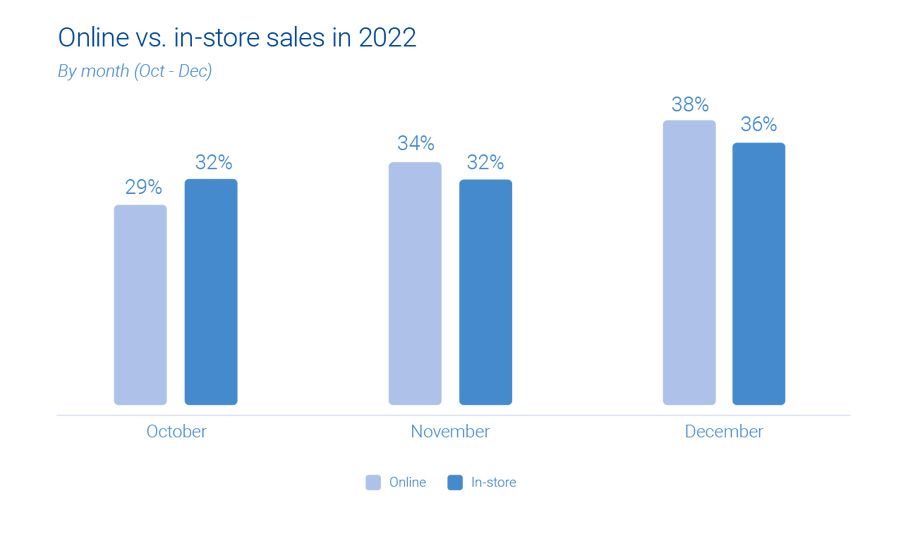
Although online sales currently make up only one-third of all holiday shopping, there is immense potential for further expansion. Mass retailers and office, electronics, and games industries particularly excel in online holiday sales. While in-store purchases remain the primary choice for holiday shoppers, consumer online and offline activities intersect before the final purchase.
Experian tip
Take advantage of the surge in online shopping by diversifying your marketing channels. An agnostic identity graph can bring together device and media data, capturing valuable user insights. By gaining a holistic view of your target audience, you’ll be able to optimize your ad spend and allocate resources effectively, ultimately boosting your return on investment.
“Omnichannel targeting during the upcoming holiday season will continue to prove to be the best way to reach scale and maximize ROI across all marketing channels.”
Joe LigÉ, Head of Enterprise Demand Partnerships
3. 2023 holiday spending will be on par with 2022
During the holiday season in 2022, consumer spending showed an anticipated increase, although the growth rate was slightly lower compared to previous years. October saw a surge in average consumer spending, indicating a swift response to early discounts and promotions offered by retailers.
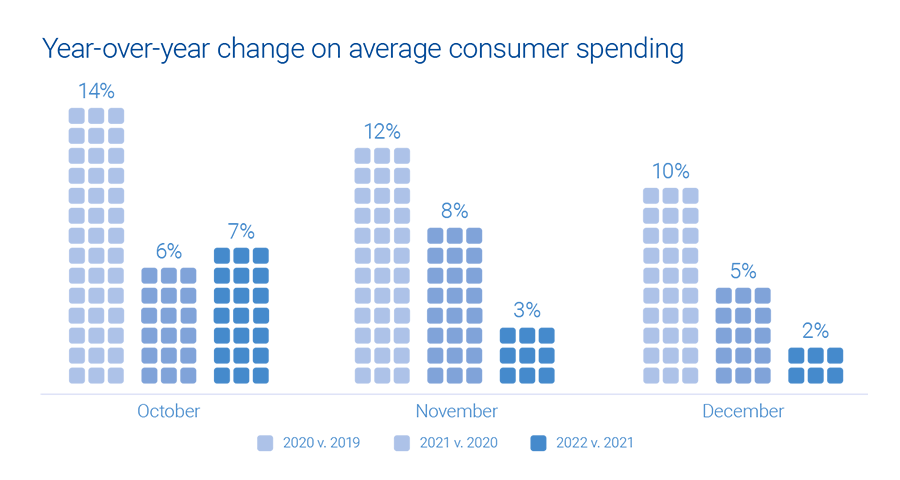
As the holiday season progressed, holiday spending gradually slowed down and reached a level similar to that of the previous year. Overall, there was a modest 2% growth. Looking into the future, if economic conditions remain stable in the second half of 2023, we can expect holiday spending to align with the figures from last year.
Experian tip
To truly maximize impact, consider data enrichment. By diving deeper into your target audience’s preferences and behaviors, you can better tailor your strategies and seamlessly integrate the enriched data across various channels. This allows you to unlock the true potential of your ad inventory, creating more meaningful connections with your audience.
Download our 2024 report
Get ready for the holiday shopping season with Experian’s 2024 Holiday spending trends and insights report. Inside you’ll find:
- Analysis of past trends and what they mean for 2024
- Exclusive predictions for the upcoming holiday season
- The top audiences to activate this holiday season
To access to all of our predictions for this year’s holiday shopping season, download our 2024 Holiday spending trends and insights report today.
Latest posts

Question #1 Lorem ipsum dolor sit amet, consectetur adipiscing elit. Nullam interdum odio in viverra mattis. Praesent at lectus vitae massa convallis vehicula. Vivamus et ex sed ex aliquet ultrices sed nec ante. Vestibulum a tincidunt massa. Vivamus tincidunt condimentum magna in tempor. Suspendisse dictum, elit at commodo dignissim, sem nisl luctus erat, nec consectetur leo mi sit amet nibh. Vestibulum at nisi ac libero aliquet volutpat congue ut mi. Morbi in congue eros, a faucibus nibh. Vivamus consequat a purus eu tempor. Morbi eu diam dui. Aliquam erat volutpat. Sed odio felis, sollicitudin consequat pellentesque ac, congue sed nisl. Maecenas sagittis mauris at ante ultricies elementum. Pellentesque vestibulum dolor ut tincidunt cursus. Question #2 Lorem ipsum dolor sit amet, consectetur adipiscing elit. Nullam interdum odio in viverra mattis. Praesent at lectus vitae massa convallis vehicula. Vivamus et ex sed ex aliquet ultrices sed nec ante. Vestibulum a tincidunt massa. Vivamus tincidunt condimentum magna in tempor. Suspendisse dictum, elit at commodo dignissim, sem nisl luctus erat, nec consectetur leo mi sit amet nibh. Vestibulum at nisi ac libero aliquet volutpat congue ut mi. Morbi in congue eros, a faucibus nibh. Vivamus consequat a purus eu tempor. Morbi eu diam dui. Aliquam erat volutpat. Sed odio felis, sollicitudin consequat pellentesque ac, congue sed nisl. Maecenas sagittis mauris at ante ultricies elementum. Pellentesque vestibulum dolor ut tincidunt cursus. Question #3 Lorem ipsum dolor sit amet, consectetur adipiscing elit. Nullam interdum odio in viverra mattis. Praesent at lectus vitae massa convallis vehicula. Vivamus et ex sed ex aliquet ultrices sed nec ante. Vestibulum a tincidunt massa. Vivamus tincidunt condimentum magna in tempor. Suspendisse dictum, elit at commodo dignissim, sem nisl luctus erat, nec consectetur leo mi sit amet nibh. Vestibulum at nisi ac libero aliquet volutpat congue ut mi. Morbi in congue eros, a faucibus nibh. Vivamus consequat a purus eu tempor. Morbi eu diam dui. Aliquam erat volutpat. Sed odio felis, sollicitudin consequat pellentesque ac, congue sed nisl. Maecenas sagittis mauris at ante ultricies elementum. Pellentesque vestibulum dolor ut tincidunt cursus.
H2 Heading Lorem ipsum dolor sit amet, consectetur adipiscing elit. Aenean quis ipsum et orci dictum accumsan eget nec purus. Sed varius finibus augue, sed egestas risus posuere et. Donec elit sem, finibus ut tellus a, maximus hendrerit diam. Suspendisse commodo metus nec nisi consectetur, interdum fringilla sem ultricies. Integer semper molestie viverra. Cras a pharetra nisi, ac vulputate lorem. Vestibulum vitae efficitur odio, vel pharetra sem. Duis vel arcu mauris. Donec nec elementum magna. Orci varius natoque penatibus et magnis dis parturient montes, nascetur ridiculus mus. Nulla vel consectetur risus. Donec quis feugiat ante. Morbi quis lacus ac augue bibendum hendrerit vitae vel purus. Orci varius natoque penatibus et magnis dis parturient montes, nascetur ridiculus mus. Orci varius natoque penatibus et magnis dis parturient montes, nascetur ridiculus mus. Orci varius natoque penatibus et magnis dis parturient montes, nascetur ridiculus mus. Lorem ipsum dolor sit amet, consectetur adipiscing elit. Aenean quis ipsum et orci dictum accumsan eget nec purus. Sed varius finibus augue, sed egestas risus posuere et. Donec elit sem, finibus ut tellus a, maximus hendrerit diam. Suspendisse commodo metus nec nisi consectetur, interdum fringilla sem ultricies. Integer semper molestie viverra. Cras a pharetra nisi, ac vulputate lorem. Vestibulum vitae efficitur odio, vel pharetra sem. Duis vel arcu mauris. Donec nec elementum magna. Orci varius natoque penatibus et magnis dis parturient montes, nascetur ridiculus mus. Nulla vel consectetur risus. Donec quis feugiat ante. Morbi quis lacus ac augue bibendum hendrerit vitae vel purus. Icon Heading #1 Lorem ipsum dolor sit amet, consectetur adipiscing elit. Aenean quis ipsum et orci dictum accumsan eget nec purus. Sed varius finibus augue, sed egestas risus posuere et. Donec elit sem, finibus ut tellus a, maximus hendrerit diam. Suspendisse commodo metus nec nisi consectetur, interdum fringilla sem ultricies. Icon Heading #2 Lorem ipsum dolor sit amet, consectetur adipiscing elit. Aenean quis ipsum et orci dictum accumsan eget nec purus. Sed varius finibus augue, sed egestas risus posuere et. Donec elit sem, finibus ut tellus a, maximus hendrerit diam. Suspendisse commodo metus nec nisi consectetur, interdum fringilla sem ultricies. Icon Heading #3 Lorem ipsum dolor sit amet, consectetur adipiscing elit. Aenean quis ipsum et orci dictum accumsan eget nec purus. Sed varius finibus augue, sed egestas risus posuere et. Donec elit sem, finibus ut tellus a, maximus hendrerit diam. Suspendisse commodo metus nec nisi consectetur, interdum fringilla sem ultricies. Lorem ipsum dolor sit amet, consectetur adipiscing elit. Aenean quis ipsum et orci dictum accumsan eget nec purus. Sed varius finibus augue, sed egestas risus posuere et. Donec elit sem, finibus ut tellus a, maximus hendrerit diam. Suspendisse commodo metus nec nisi consectetur, interdum fringilla sem ultricies. Integer semper molestie viverra. Cras a pharetra nisi, ac vulputate lorem. Vestibulum vitae efficitur odio, vel pharetra sem. Duis vel arcu mauris. Donec nec elementum magna. Orci varius natoque penatibus et magnis dis parturient montes, nascetur ridiculus mus. Nulla vel consectetur risus. Donec quis feugiat ante. Morbi quis lacus ac augue bibendum hendrerit vitae vel purus.
This is my test Test 2 "Lorem ipsum dolor sit amet, consectetur adipiscing elit, sed do eiusmod tempor incididunt ut labore et dolore magna aliqua. Ut enim ad minim veniam, quis nostrud exercitation ullamco laboris nisi ut aliquip ex ea commodo consequat. Duis aute irure dolor in reprehenderit in voluptate velit esse cillum dolore eu fugiat nulla pariatur. Excepteur sint occaecat cupidatat non proident, sunt in culpa qui officia deserunt mollit anim id est laborum.""Lorem ipsum dolor sit amet, consectetur adipiscing elit, sed do eiusmod tempor incididunt ut labore et dolore magna aliqua. Ut enim ad minim veniam, quis nostrud exercitation ullamco laboris nisi ut aliquip ex ea commodo consequat. Duis aute irure dolor in reprehenderit in voluptate velit esse cillum dolore eu fugiat nulla pariatur. Excepteur sint occaecat cupidatat non proident, sunt in culpa qui officia deserunt mollit anim id est laborum.""Lorem ipsum dolor sit amet, consectetur adipiscing elit, sed do eiusmod tempor incididunt ut labore et dolore magna aliqua. Ut enim ad minim veniam, quis nostrud exercitation ullamco laboris nisi ut aliquip ex ea commodo consequat. Duis aute irure dolor in reprehenderit in voluptate velit esse cillum dolore eu fugiat nulla pariatur. Excepteur sint occaecat cupidatat non proident, sunt in culpa qui officia deserunt mollit anim id est laborum." This is my 2nd test