
The digital advertising landscape is undergoing a significant transformation with the gradual deprecation of third-party cookies. This shift necessitates the adoption of new strategies for audience targeting and data management. In our next Ask the Expert segment, we explore this evolution, discussing new strategies for audience targeting and data management in a world without cookies.
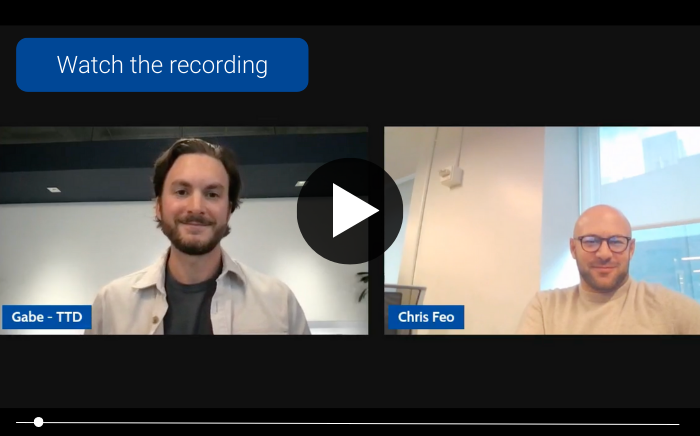
We’re joined by industry leaders, Gabe Richman, Senior Director of Data Partnerships at The Trade Desk, and Chris Feo, Experian’s SVP of Sales & Partnership who spotlight The Trade Desk’s innovative approach to navigating a cookieless future. Tune in to our Q&A below to learn more about these topics and learn how the collaborative efforts of Experian and The Trade Desk offer a glimpse into the future of advertising.
Cookieless IDs are the new face of identity in advertising
Traditional tracking and targeting techniques are being replaced by more advanced and privacy-conscious methods. Unified I.D. 2.0 (UID2), led by The Trade Desk, exemplifies this shift, offering a new identifier based on encrypted email addresses or phone numbers. This approach not only caters to the evolving privacy regulations but also places greater control in the hands of consumers. UID2’s design fundamentally differs from cookies since it is rooted in transparency and consumer consent.
UID2: A catalyst for industry-wide adoption
UID2’s journey reflects a rising industry-wide recognition of its value across the industry. The adoption of UID2 by major publishers, demand-side platforms, and advertisers indicates a shift toward more sustainable and consumer-friendly approaches to identity in advertising. This is particularly evident in areas like connected TV (CTV), where UID2 is rapidly becoming a currency and standard.
“The purpose of UID2 is not only to create a better ID for advertisers and publishers to achieve their objectives, but also to benefit the consumers. Unlike cookies, UID2 provides transparency and control to the consumers for the first time.”
gabe richman, sr. director, data partnerships, the trade desk
How Experian and The Trade Desk work together
The partnership between The Trade Desk and Experian goes beyond adapting to the absence of cookies. Our joint efforts highlight a commitment to developing solutions that cater to advertiser’s needs while respecting consumer privacy, a balancing act becoming increasingly crucial in today’s digital ecosystem. The Trade Desk’s emphasis on UID2 as a foundational element in the open web, campaign design, and activation is a testament to the potential of new identifiers in enhancing advertising efficacy. Similarly, our ability to utilize these identifiers to deliver detailed audience insights offers advertisers a powerful tool to remain effective in a post-cookie world.
Experian’s role in the adoption of UID2
Experian’s integration strategies have played a critical role in diversifying the applications of UID2. By partnering with The Trade Desk, we help broaden the reach and effectiveness of UID2 across various advertising channels. In terms of reach – by incorporating a prominent cookieless ID, we further amplify the reach of UID2. The increased adoption of this new ID allows the digital ecosystem the ability to interact using an alternative identifier, thereby broadening the potential audience. In terms of effectiveness – we help advertisers serve relevant ads to the right audiences, ensuring the relevance of the ads and control over their frequency.
Targeting with Geo-Indexed audiences
The Trade Desk works with Experian to ingest and host our syndicated audiences. This partnership gives The Trade Desk’s clients access to over 2,400 syndicated audiences that span across eight verticals. This includes access to our new Geo-Indexed audiences that allow brands to reach consumers and households based on geographic regions that over-index for a common set of attributes, ultimately offering brands a targeting solution that prioritizes both consumer privacy and accuracy.
What a future beyond cookies looks like
Looking ahead, the focus in advertising is not solely on replacing cookies but on a broader evolution of the industry. This includes continuing to apply machine learning technologies, like artificial intelligence (AI), to enhance ad personalization and effectiveness. The interplay between creative content, audience insights, and privacy-compliant targeting will become increasingly important as the industry evolves. As cookies become a thing of the past, the initiatives spearheaded by The Trade Desk and Experian will likely set the tone for the next era of digital advertising, and emerging solutions like UID2 are leading the way.
Watch the full Q&A
Visit our Ask the Expert content hub to watch Gabe and Chris’ full conversation about cookieless advertising. In their conversation, Gabe and Chris share more about UID2, consumer transparency, and the importance of consumer data for targeted advertising.
About our experts

Gabe Richman, Sr. Director, Data Partnerships, The Trade Desk
Gabe Richman is the Senior Director of Data Partnerships at The Trade Desk where he focuses on global identity strategy and platform partnerships as well as driving UID2 and EUID adoption across the broader ecosystem. Prior to joining The Trade Desk in 2021, Gabe held various roles in AdTech at HealthVerity, Wunderkind and LiveRamp. For the last decade Gabe has taken pride in helping advertisers and platforms alike demystify the complex identity landscape and embrace the change needed to preserve the open internet. Gabe is a graduate of the University of Maryland and resides in Los Angeles.

Chris Feo, SVP, Sales & Partnerships, Experian
As SVP of Sales & Partnerships, Chris has over a decade of experience across identity, data, and programmatic. Chris joined Experian during the Tapad acquisition in November 2020. He joined Tapad with less than 10 employees and has been part of the executive team through both the Telenor and Experian acquisitions. He’s an active advisor, board member, and investor within the AdTech ecosystem. Outside of work, he’s a die-hard golfer, frequent traveler, and husband to his wife, two dogs, and two goats!
Latest posts
Lorem ipsum dolor sit amet, consectetur adipiscing elit. Curabitur vel dolor quis elit vestibulum bibendum eu in mi. Maecenas bibendum tristique lacus, sit amet tincidunt tellus dictum et. Vestibulum ante ipsum primis in faucibus orci luctus et ultrices posuere cubilia curae; Maecenas vel diam lacinia magna efficitur congue. Aliquam tempus, lectus nec ultrices sagittis, purus ipsum imperdiet felis, ac gravida enim massa vel augue. Quisque non neque at augue volutpat sodales nec eget ipsum. In sed consectetur odio, ut tincidunt ipsum. Sed non pellentesque nulla, non iaculis mauris. Etiam faucibus sit amet mauris eu efficitur. Lorem ipsum dolor sit amet, consectetur adipiscing elit. Integer sed blandit metus, at finibus ligula. Ut non rhoncus lacus. Nulla mattis est quis cursus laoreet. Nullam porta odio eu tortor consequat vulputate. Suspendisse nec massa ac neque ultrices eleifend. Integer porta tristique tempus. Nulla aliquet, erat tincidunt imperdiet vehicula, urna tortor molestie nulla, ut porttitor erat erat ac nunc. Nulla facilisi. Etiam a tellus in lectus vulputate maximus vitae eu nisl. Fusce eget libero non ipsum pellentesque egestas. Lorem ipsum dolor sit amet, consectetur adipiscing elit. Nulla ut metus sapien. Maecenas aliquam libero et ipsum eleifend, et maximus felis sagittis. Donec id massa et massa molestie varius. Quisque dignissim placerat augue vel mollis. Mauris accumsan, mi vel elementum suscipit, eros elit malesuada justo, ut tempor mi nunc quis tortor. Nullam ut laoreet mi. Nam euismod lectus id dictum consectetur. Praesent quis lacinia ipsum. Donec lobortis massa in erat interdum, consectetur consectetur purus posuere. Nullam feugiat, erat non hendrerit rutrum, velit ante rhoncus nibh, ac laoreet felis ante ac mauris. Etiam ex erat, vulputate vel nulla non, placerat dictum tellus. Praesent orci lacus, dictum in vestibulum non, semper ut tortor. Nullam vitae ornare ipsum, a cursus quam. Vivamus vitae vulputate lorem, ac scelerisque lectus. Fusce at lacus non enim fringilla consequat. Sed laoreet mi eget vulputate auctor. Proin placerat tempor nunc vel mollis. Ut quis mi ut lorem ultrices hendrerit nec vehicula felis. Vestibulum tempus sapien vel porta aliquet. Phasellus quis auctor augue. Morbi nec tellus in massa venenatis ornare. Vivamus eleifend lacus lacus. Suspendisse ac commodo orci, vel fringilla turpis. Proin enim turpis, egestas quis nulla a, ultrices volutpat massa. Nam luctus sapien odio, ac blandit ante accumsan et. Nunc luctus ligula odio, ac faucibus urna rutrum vitae. Donec eu lorem gravida nisi pretium consectetur. Morbi vel mauris non odio iaculis aliquam sed nec leo. Vestibulum sed libero quis ante hendrerit porttitor eget eu orci. Morbi est arcu, maximus eu lobortis sit amet, suscipit et felis. Morbi sodales mattis pretium. Curabitur sodales porttitor eros vitae efficitur. Nam id turpis tristique, aliquam sapien ac, convallis mi. Sed risus sapien, dapibus euismod mauris vitae, fringilla vulputate augue. Morbi efficitur, ex vitae semper mattis, tellus sem luctus lorem, eget viverra metus nibh eu neque. In eu orci est.

YouTube Embed Yoast FAQ Block FAQ Question #1 FAQ Answer #1 FAQ Question #2 FAQ Answer #2 FAQ Question #3 FAQ Answer #3 CTA Embed Button Test InfoGram Embed

Lorem ipsum dolor sit amet, consectetur adipiscing elit. Aliquam vitae nibh eu massa cursus eleifend quis in quam. Nunc mollis aliquam eros sed laoreet. Suspendisse et elit ut metus elementum aliquet ut sit amet metus. Vestibulum ante ipsum primis in faucibus orci luctus et ultrices posuere cubilia curae; Pellentesque fringilla, nibh eget convallis scelerisque, nisl nisl vestibulum ipsum, sit amet placerat neque nunc eget nisi. Cras cursus, sapien non interdum mollis, nibh augue efficitur eros, eget congue tellus nulla id lectus. Nullam vestibulum vitae erat sit amet mollis. Sed gravida tortor nec nibh blandit ultrices. Pellentesque habitant morbi tristique senectus et netus et malesuada fames ac turpis egestas. Nam justo lectus, tempus a velit at, tempus malesuada est. Aenean dictum tellus id lorem venenatis, quis sodales nisl tempus. In quis libero id est rhoncus dictum. Praesent ipsum dui, mattis vel augue ut, lacinia ultricies ex. Suspendisse sit amet gravida purus. Vivamus tempus tellus augue, ac placerat arcu efficitur non. Nam auctor at nulla sed porta. Vivamus lobortis eu nunc a efficitur. Vestibulum condimentum ante nec nisi imperdiet vulputate. Duis varius metus ac est fermentum congue. Aenean tincidunt ut erat non pharetra. Nulla elit orci, semper sed porttitor ac, convallis vitae velit. Praesent egestas blandit ullamcorper. Praesent a porta lectus. Aliquam et pellentesque lectus. Integer placerat mauris risus, ut semper dui commodo at. Vivamus efficitur pharetra ligula id rhoncus. Pellentesque gravida purus vitae viverra luctus. Vestibulum ante ipsum primis in faucibus orci luctus et ultrices posuere cubilia curae; In vitae augue nec odio fermentum ultrices a sed libero. Nulla ullamcorper nulla id sagittis convallis. Pellentesque cursus metus et orci iaculis, non laoreet nisi aliquam. Proin porta velit risus, ac ultricies lectus tincidunt at. Pellentesque scelerisque ullamcorper euismod. Phasellus eget velit malesuada, faucibus enim a, ultrices ante. Morbi ut diam non metus interdum placerat gravida quis arcu. Integer ultricies molestie nulla sed convallis. Curabitur mi dui, aliquam vel nibh rutrum, convallis tempor lacus. Cras porttitor laoreet varius. Ut tincidunt massa congue mauris lobortis euismod. Pellentesque a odio ut est consequat tristique ut in mi. Nullam sed ultricies justo, eu varius eros. Nunc ipsum nulla, vehicula at sagittis a, ornare ut nisi. Aenean imperdiet felis at aliquet porta. Nunc sed leo ut justo efficitur aliquet. Sed et urna vel urna maximus laoreet. In facilisis porttitor nisi in sagittis. Fusce magna sapien, molestie ac maximus eu, tincidunt sit amet massa. Praesent non mauris metus. Aliquam dapibus sit amet tortor at scelerisque. Ut vel dolor at nisi rhoncus finibus auctor non velit. Integer pellentesque venenatis diam, nec eleifend ipsum pellentesque quis. Vivamus vitae mi nisl. Curabitur lectus orci, ornare et ipsum venenatis, sagittis blandit mauris. FAQs Lorem ipsum dolor sit amet, consectetur adipiscing elit. Aliquam vitae nibh eu massa cursus eleifend quis in quam. Nunc mollis aliquam eros sed laoreet. Suspendisse et elit ut metus elementum aliquet ut sit amet metus. Vestibulum ante ipsum primis in faucibus orci luctus et ultrices posuere cubilia curae; Pellentesque fringilla, nibh eget convallis scelerisque, nisl nisl vestibulum ipsum, sit amet placerat neque nunc eget nisi. Cras cursus, sapien non interdum mollis, nibh augue efficitur eros, eget congue tellus nulla id lectus. Nullam vestibulum vitae erat sit amet mollis. Sed gravida tortor nec nibh blandit ultrices. Pellentesque habitant morbi tristique senectus et netus et malesuada fames ac turpis egestas. Nam justo lectus, tempus a velit at, tempus malesuada est. Aenean dictum tellus id lorem venenatis, quis sodales nisl tempus. In quis libero id est rhoncus dictum. Praesent ipsum dui, mattis vel augue ut, lacinia ultricies ex. Suspendisse sit amet gravida purus. Vivamus tempus tellus augue, ac placerat arcu efficitur non. Nam auctor at nulla sed porta. Vivamus lobortis eu nunc a efficitur. Vestibulum condimentum ante nec nisi imperdiet vulputate. Duis varius metus ac est fermentum congue. Aenean tincidunt ut erat non pharetra. Nulla elit orci, semper sed porttitor ac, convallis vitae velit. Praesent egestas blandit ullamcorper. Praesent a porta lectus. Aliquam et pellentesque lectus. Integer placerat mauris risus, ut semper dui commodo at. Vivamus efficitur pharetra ligula id rhoncus. Pellentesque gravida purus vitae viverra luctus. Vestibulum ante ipsum primis in faucibus orci luctus et ultrices posuere cubilia curae; In vitae augue nec odio fermentum ultrices a sed libero. Nulla ullamcorper nulla id sagittis convallis.