There are many variations of passages of Lorem Ipsum available, but the majority have suffered alteration in some form, by injected humour, or randomised words which don’t look even slightly believable.

Paragraph block
Heading block
Pull Quote cloud news blog
There are many variations of passages of Lorem Ipsum available, but the majority have suffered alteration in some form, by injected humour, or randomised words which don’t look even slightly believable.
There are many variations of passages of Lorem Ipsum available, but the majority have suffered alteration in some form, by injected humour, or randomised words which don’t look even slightly believable.
- There are many variations of passages of Lorem Ipsum available,
- but the majority have suffered alteration in some form, by injected humour, or randomised words which don’t look even slightly believable.


Lorem Ipsum has been the industry’s standard dummy text ever since the 1500s, when an unknown printer took a galley of type and scrambled it to make a type specimen book. It has survived not only five centuries, but also the leap into electronic typesetting, remaining essentially unchanged. It was popularised in the 1960s with the release of Letraset sheets containing Lorem Ipsum passages, and more recently with desktop publishing software like Aldus PageMaker including versions of Lorem Ipsum.

Our latest State of the Automotive Finance Report: Q1 2023 showed the average new vehicle loan amount reached $40,851, and today’s average used vehicle loan amount is $26,420. While the growth of average loan amounts is slowing, and in some cases, decreasing from previous years, rising interest rates are pushing monthly payments higher for many consumers. This news comes at a time when many consumers are looking for ways to save money and are holding onto their vehicles longer. In fact, as of Q1 2023, the average length of ownership for new vehicles purchased as far back as 2010 is 4.19 years. At the same time, the cost of vehicle repairs has many consumers feeling financially stressed. Whether to eliminate the burden of rising costs of goods and services, or to plan for big ticket items like vehicle purchases or repairs, our research shows saving money is top of mind for many consumers. Two-thirds tell us they are actively looking for ways to trim expenses from their monthly budget. If you’re shopping for a new set of wheels, or trying to keep your old ones on the road longer, here are four steps you can take to save money: Use credit as a financial tool A good credit score could help you qualify for better interest rates and better terms for loans. Whether you’re looking to purchase a new vehicle or finance repairs, a positive credit history can be a powerful financial tool. Your credit score can also impact the rates you may pay for insurance. Work to keep your credit card balances low and make your payments on time. Using tools like Experian Boost[1] allows you to add your positive payments for telecom and utility bills as well as video streaming services – and now rent payments – to your Experian credit file to potentially increase your FICO®[2] Score instantly. Cut costs where you can We are committed to helping consumers save money in multiple ways and auto insurance is one area consumers may be overpaying. To combat this, we now offer an auto insurance shopping service that delivers tailored rates based on your current policy and vehicle directly from our mobile app. Consumers can potentially save on average more than $900 per year through our service, which is significant. Plan ahead to save on interest rates Interest rates are a key consideration if you’re shopping for a new or used vehicle. Our latest State of the Automotive Finance Market Report showed the average interest rate for a new vehicle is 6.58%. Oftentimes when shopping for a vehicle the main priority is securing a low monthly payment, but it’s also important to assess the total cost of the loan, particularly amid rising interest rates and vehicle prices. With this in mind, some new vehicle shoppers who were in search of lower interest rates opted for shorter loan terms in Q1 2023. Determine how much you can afford to spend each month and opt for shorter loan terms to save on interest. Don’t get a lemon With prices increasing, we know many people are opting for used vehicles. While this can help with costs, it’s important to know what you’re buying before you sign on the dotted line. Request a vehicle history report, like an Experian AutoCheck report, before committing to the purchase. These reports include how many previous owners the vehicle had, or if there were any reported accidents. This can help you avoid surprises down the road and give you a better idea of the value of the car. In addition to a vehicle history report, we recommend having the vehicle inspected by a licensed mechanic. We rely on our vehicles every day. By leveraging the right tools, and with proper planning, you may view them less as a financial burden and more as a means to enjoy the freedom of the open road. [1] [Results will vary. Not all payments are boost-eligible. Some users may not receive an improved score or approval odds. Not all lenders use Experian credit files, and not all lenders use scores impacted by Experian Boost. Learn more. [2] FICO is a registered trademark of Fair Isaac Corporation

Experian’s Work Promoting Financial Inclusion Recognised with an ‘Outstanding Company Contribution to the Industry’ Award
NewsWe are pleased to share that during last night’s annual Credit Awards, Experian scooped a special recognition award for our work supporting consumers, businesses, and the UK economy through the cost-of-living crisis. Part of this support focused on delivering financial education to marginalised groups – including younger people who were acutely feeling the pressure of rising costs and economic uncertainty. A great example of this was our work alongside the influential voices of Young Money blogger, Iona Bain, and celebrity footballer Bayo Akinfenwa, promoting credit education and helping young people take control of their financial health through a series of original videos on social media. The campaign reached over 1 million 18-25 year olds and guests at the ceremony were treated to a viewing of one of the campaign videos. In addition, Experian’s #EaseTheSqueeze campaign has been helping people manage their budgets, with tips and guidance about how they can take control of their finances. So far, we have managed to reach 8.5 million people in the UK. And, finally, our annual Credit Awareness Week campaign continues to help people develop a better understanding of credit, including how credit scoring works, dispelling common myths, and tackling issues such as credit refusal. We have also made huge strides developing an exciting pipeline of unique solutions in response to the cost of living crisis. For example, Experian’s Support Hub aims to help consumers with support needs to better connect with financial institutions and other services they need to access. By 2030, it is hoped the Support Hub will help more than 7 million disabled people. Judges from across the credit industry presided over the Credit Awards 2023, which was organised by Credit Strategy magazine and held at London’s Grosvenor House Hotel. The ‘Outstanding Company Contribution to the Industry’ award celebrates the continuous work from one company for betterment of the industry. Commenting on Experian’s win, Credit Strategy’s Group Editor Michal Lodej said: “Experian has worked tirelessly to improve the publics’ knowledge about their finances and have developed numerous tools for consumers to evaluate and improve their financial health. Their dedication to make a difference has provided much-need value for millions of people as well as the wider credit industry. For that reason, Experian were worthy winners of this year’s ‘Outstanding Company Contribution to the Industry’ award.” As the current economic environment adds extra pressure on households around the world, we recognise the significance of the role we can play to help ensure people can get through this period of financial pressure. It’s important that we continue to do all we can to keep pace, and we remain committed to equip people with the knowledge and tools to help them manage their finances effectively.
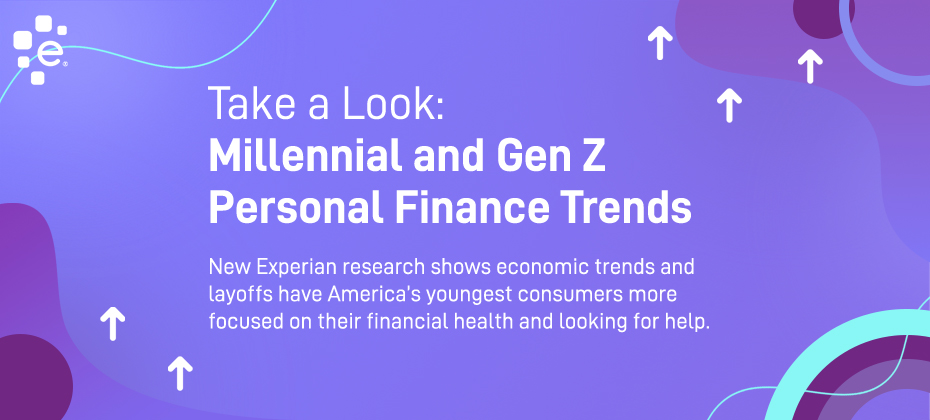
Understanding how credit works is key to protecting your financial health in any environment – and this is especially true today. What’s new: To see how America’s youngest consumers are faring, we recently deployed a national survey looking at: Gen Z and millennial’s understanding of credit and personal financeHow recent economic news is impacting their financial health What would make them feel more optimistic about their situation Why it matters: As we look ahead, millennials and Gen Z consumers will be the biggest drivers of spending and our economy. Ensuring they have access to trusted financial education and resources is key. Survey highlights include: Building a strong credit history is key to unlocking many things we want in life, yet many younger people do not understand its importance until they get older. The bottom line: Our research revealed many Gen Z and millennial consumers are simply unsure how to successfully build credit and are hungry for trusted resources of personal finance information. “We believe in financial power for all and ensuring America’s youngest consumers are empowered to be financially independent adults is key to achieving this,” said Christina Roman, consumer education advocate at Experian. “Personal finance and credit education are central to our mission. We are committed to being a trusted resource for consumers looking to improve their financial health during our current economic environment and beyond.” How Experian Can HelpThere are free and easy steps consumers can take to help improve their financial health with Experian, including: Getting a free copy of your Experian credit report and FICO[1] Score®[2] at www.experian.com or via Experian’s mobile app. Our app also has free personal finance and credit building tools Add positive telecom, utility, video streaming service and qualifying rent payments to your Experian credit report through Experian Boost[3] for an opportunity to improve your credit scores by visiting www.experian.com/boost. Young consumers without an established credit history can download Experian’s mobile app and enroll in a free Experian membership to establish, use and grow credit responsibly with Experian Go™ Joining Experian’s #CreditChat hosted by @Experian on Twitter with financial experts every Wednesday at 3 p.m. Eastern timeVisiting the Ask Experian blog for answers to common questions, advice and education about creditLearn how to build and protect your credit with Experian’s Credit Essentials for Everyone flipbook and find additional credit education resources at resources at http://www.experian.com/consumereducation. Find additional money-saving resources from Experian by visiting experian.com/savings Survey MethodologyExperian commissioned Atomik Research to conduct an online survey of 2,008 adults between the ages of 18-42 years old throughout the United States, with even distribution between Generation Z (N=1,005) and millennials (N=1,003) participants. The margin of error is +/- 2 percentage points with a confidence level of 95 percent. Fieldwork took place between March 31, 2023, and April 4, 2023. Atomik Research is an independent, creative market research agency. [1] FICO is a registered trademark of Fair Isaac Corporation [2] Credit score calculated based on FICO Score 8 model. Your lender or insurer may use a different FICO® Score than FICO® Score 8, or another type of credit score altogether. Learn more. [3] Results will vary. Not all payments are boost-eligible. Some users may not receive an improved score or approval odds. Not all lenders use Experian credit files, and not all lenders use scores impacted by Experian Boost. Learn more.
Related Posts

Read Moreio55 Button 2- Learn more Primary button Secondary button Related Posts
Patients use self-service tools to easily connect with providers online and manage administrative tasks 24/7. Common patient self-service tools include patient portals, online scheduling and mobile registration. Self-service solutions also include robust financial tools that help patients update insurance information, get accurate estimates, apply for charity care, set up payment plans, combine payments to multiple providers or set up a fundraising page. Lorem Ipsum comes from sections 1.10.32 and 1.10.33 of “de Finibus Bonorum et Malorum” (The Extremes of Good and Evil) by Cicero, written in 45 BC. This book is a treatise on the theory of ethics, very popular during the Renaissance. The first line of Lorem Ipsum, “Lorem ipsum dolor sit amet..”, comes from a line in section 1.10.32. Heading 2 Related Posts

Amid some of the financial challenges that underserved communities experience, members across the financial services community remain committed to championing initiatives and programs that drive greater financial inclusion. In fact, collaboration has led to the inclusion of non-debt related payment information on consumers’ credit profiles, as well as digital services that make it easier to manage money. These efforts have helped to broaden access to fair and affordable financial resources for more individuals. While significant progress has been made, there is still more work to do. However, some of the misconceptions and myths about the financial services community are hindering further advancement. Debunking these myths will accelerate progress by building trust between the financial services community and consumers. Person withdrawing money from ATM contactless Myth #1: “Financial institutions have no interest in underserved consumers or credit invisibles.” The truth is, banks and credit unions want to say “yes” to more prospective borrowers, including individuals and families from underserved communities. Beyond being the right thing to do, it’s an opportunity to potentially build lifelong relationships with a relatively untapped market. A show of good faith to communities who have largely been ignored by the financial system could lead to customer loyalty that may extend to their family and friends. That’s why participants across the financial ecosystem have been proponents of including expanded data sources—such as on-time telecom, utility and video streaming service payments—on to consumer credit reports, as well as exploring other Fair Credit Reporting Act (FCRA)-regulated data sources, including payment data on short-term small dollar loans and expanded public records data. Making this data more accessible to lenders provides a more comprehensive view of a consumer’s ability and willingness to repay outstanding debt—an actionable solution to extending credit to consumers without lenders taking on additional risk. Myth #2: “There is a lack of trustworthy financial education resources.” The financial services community and affiliated organizations recognize that empowering people with financial knowledge and skillset are critical to consumers’ financial success. In fact, banks and credit unions are partnering with nonprofits and non-governmental organizations to better understand the unique challenges and opportunities within specific communities and provide relevant tools and resources. For example, Experian’s B.A.L.L. for Life (Be A Legacy Leader) program, launched in partnership with the National Urban League, serves as a catalyst for engaging with Black communities and low-income youth through live events and digital financial education. Subject matter experts, professional athletes, celebrities, and other influencers share their experiences and expertise, covering topics such as banking, credit, financial management and investing. In addition, to help people improve their financial management, Experian partners with the National Foundation for Credit Counseling (NFCC). The NFCC connects consumers with certified financial counselors to help them address various pain points, including debt management, homeownership, student loans or small business cash flow issues. Myth #3: “Underserved communities have few opportunities to build credit and enter the mainstream financial system.” People from underserved communities, as well as younger consumers and recent immigrants are often excluded from the mainstream financial system because they lack an extensive credit history. Historically, it’s created a vicious cycle; in order to get credit, you have to have credit. Fortunately, there has been a sea change in innovative solutions to address the specific needs of these populations. These include new credit scoring models and microfinancing which provide financial services to individuals who may have been excluded from traditional banking systems. In addition, by incorporating expanded data sources, such as telecom, utility and residential rental payments onto credit reports, lenders have more visibility into consumers who may have been excluded by traditional credit scoring methods.These programs help individuals and families from underserved communities establish and build a credit history that could enable loans, or the ability to rent an apartment or open their dream business. An example is Experian Boost®, a free feature that allows Experian members to contribute their history of making utility, cellphone, insurance, residential rent and video streaming service payments directly into their Experian credit profile. By incorporating nontraditional credit data like paying utility bills on time, online banking transactions, rental payments and verified income data, more people can establish a credit profile that can potentially qualify them for a loan. More Inclusion, Fewer Myths It’s encouraging that community organizations and banks are beginning to see the economic and social benefits of aligning on financial literacy and inclusion. As more initiatives come online, underserved populations will be able to establish a better financial foundation. Then, we can declare the myths to be history.
In this article…
First Heading
Lorem Ipsumis simply dummy text of the printing and typesetting industry. Lorem Ipsum has been the industry’s standard dummy text ever since the 1500s, when an unknown printer took a galley of type and scrambled it to make a type specimen book. It has survived not only five centuries, but also the leap into electronic typesetting, remaining essentially unchanged.
It was popularised in the 1960s with the release of Letraset sheets containing Lorem Ipsum passages, and more recently with desktop publishing software like Aldus PageMaker including versions of Lorem Ipsum
- test1
- test1
Second Heading
It is a long established fact that a reader will be distracted by the readable content of a page when looking at its layout. The point of using Lorem Ipsum is that it has a more-or-less normal distribution of letters, as opposed to using ‘Content here, content here’, making it look like readable English.
Many desktop publishing packages and web page editors now use Lorem Ipsum as their default model text, and a search for ‘lorem ipsum’ will uncover many web sites still in their infancy. Various versions have evolved over the years, sometimes by accident,
How Experian can help with card fraud prevention and detection
Contrary to popular belief, Lorem Ipsum is not simply random text. It has roots in a piece of classical Latin literature from 45 BC, making it over 2000 years old. Richard McClintock, a Latin professor at Hampden-Sydney College in Virginia, looked up one of the more obscure Latin words, consectetur, from a Lorem Ipsum passage, and going through the cites of the word in classical literature, discovered the undoubtable source.
Lorem Ipsum comes from sections 1.10.32 and 1.10.33 of “de Finibus Bonorum et Malorum” (The Extremes of Good and Evil) by Cicero, written in 45 BC. This book is a treatise on the theory of ethics,
very popular during the Renaissance. The first line of Lorem Ipsum, “Lorem ipsum dolor sit amet..”, comes from a line in section 1.10.32.
Fourth Heading
Lorem Ipsum has been the industry’s standard dummy text ever since the 1500s, when an unknown printer took a galley of type and scrambled it to make a type specimen book. It has survived not only five centuries, but also the leap into electronic typesetting, remaining essentially unchanged. It was popularised in the 1960s with the release of Letraset sheets containing Lorem Ipsum passages, and more recently with desktop publishing software like Aldus PageMaker including versions of Lorem Ipsum.