
Greater transparency in buy now, pay later activity is key to helping consumers build their credit histories and supporting responsible lending.
Experian North AmericaScott Brown, Group President, Financial Services

Affirm plans to report all pay-over-time loan products issued from April 1, 2025, and beyond, including Pay-in-4. The move will help drive greater transparency into the buy now, pay later market while helping consumers build their credit histories over time.
Related Posts

Read Moreio55 Button 2- Learn more Primary button Secondary button Related Posts
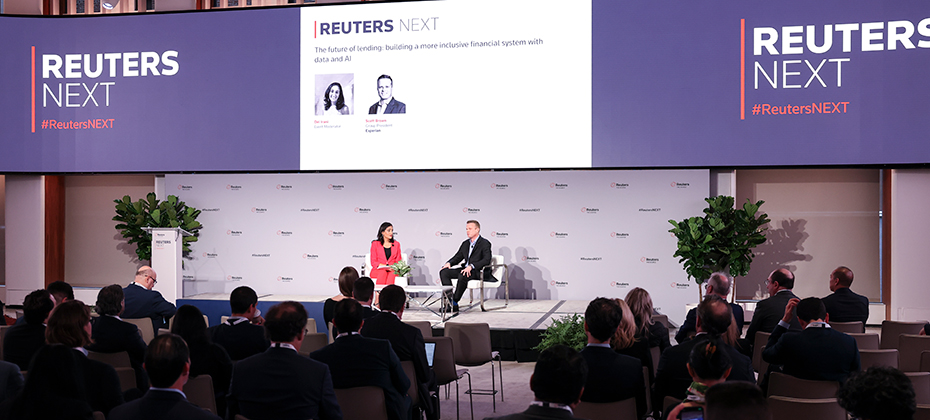
Insights from Reuters Next: Building a More Inclusive Financial System with Data and AI
Data & AnalyticsToday, we stand at the forefront of a digital revolution that is reshaping the financial services industry. And, against this backdrop, financial institutions are at vastly different levels of maturity; the world’s biggest banks are managing large-scale infrastructure migrations and making significant investments in AI while regional banks and credit unions are putting plans in place for modernization strategies, and fintechs are purpose-built and cloud native. To explore this more, I recently had the privilege of attending the annual Reuters NEXT live event in New York City. The event gathers globally recognized leaders across business, finance, technology, and government to tackle some of today’s most pressing issues. On the World Stage, I joined Del Irani, a talented anchor and broadcast journalist, to discuss the future of lending and the pivotal role of data and AI in building a more inclusive financial system. Improving financial access Our discussion highlighted the lack of access to traditional financial systems, and the impact it has on nearly 100 million people in North America alone. Globally, the problem affects over one billion people. These people, who are credit invisible, unscoreable, or have subprime credit scores, are unable to secure everyday financial products that many of us take for granted. What many don’t realize is, this is not a fringe subset of the population. Most of us, myself included, know someone who has faced the challenges of financial exclusion. Everyday Americans, including young people who are just starting out, new immigrants and people from diverse communities, often lack access to mainstream financial products. We discussed how traditional lending has a limited view of a consumer. Like looking through a keyhole, the lender’s understanding of the person in view is often incomplete and obstructed. However, with expanded data, technology, and advanced analytics, there is an opportunity to better understand the whole person, and as a result have a more inclusive financial system. At Experian, we have a unique ability to connect the power of traditional credit with alternative data, bringing a more holistic understanding of consumers and their behaviors. We are dedicated to leveraging our rich history in data and our expertise in technology to create the future of credit and ultimately bring financial power to everyone. The future of lending After spending two days with over 700 industry leaders from around the world, one thing is abundantly clear: much like the early days of the internet, today, we are at the cutting-edge of a technical revolution. Reflecting on my time at Reuters NEXT, I am particularly excited by the collective commitment to drive innovative, and smarter ways of working. We are only beginning to scratch the surface of how data and technology can transform financial services, and Experian is positioned to play a significant role. As we look to the future, I am excited about the ways we will create new opportunities for businesses and consumers alike.
The advertising ecosystem has seen significant transformation over the past few years, with increased privacy regulation, changes in available signals, and the rise of channels like connected TV and retail media. These changes are impacting the way that consumers interact with brands and how brands understand and continue to deliver relevant messages to consumers with precision. Experian has been helping marketers navigate these changes, and as a result, our marketing data and identity solutions underpin much of today’s advertising industry. We’re committed to empowering marketers and agencies to understand and reach their target audiences, across all channels. Today, we are excited to announce our acquisition of Audigent—a leading data and activation platform in the advertising industry. With Audigent’s combination of first-party publisher data, inventory and deep supply-side distribution relationships, publishers, big and small, can empower marketers to better understand their customers, expand the reach of their target audiences and activate those audiences across the most impactful inventory. I am excited to bring together Audigent’s supply-side network as a natural extension to our existing demand-side capabilities. Audigent’s ability to combine inventory with targeted audiences using first-party, third-party and contextual signals provides the best of all worlds, allowing marketers to deliver campaigns centered on consumer choices, preferences, and behaviors. The addition of Audigent further strengthens our strategy to be the premier independent provider of marketing data and identity, ultimately creating more relevant experiences for consumers. To learn more about Experian and Audigent, visit https://www.experian.com/marketing/ and https://audigent.com/.
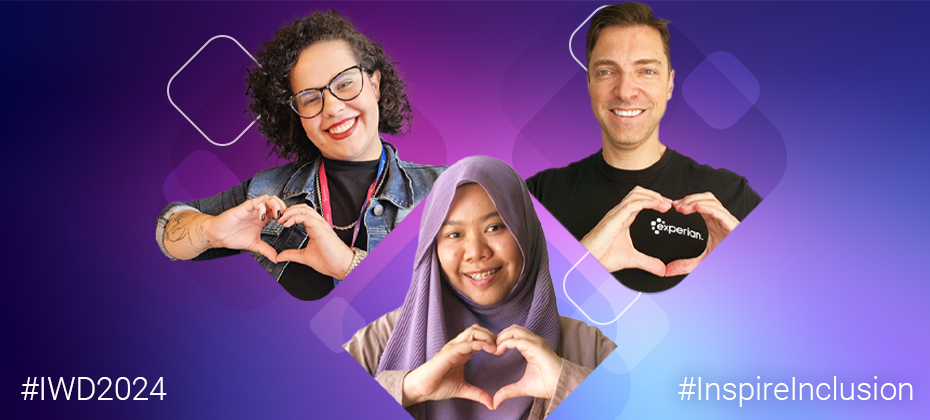
Experian Celebrates International Women’s Day by Inspiring Inclusion Every Day
Diversity & InclusionHappy International Women’s Day! Across the globe, we have celebrated this week with special events in-person and virtual, featuring best-selling authors, Experian leaders, and topics to further our team’s professional and personal growth. Volunteer events to brought us together and provided opportunities to give back to our communities. This year’s International Women’s Day theme, “Inspire Inclusion” could not be a better fit for Experian. “At Experian, we understand that promoting gender equality is not just a core principle; it’s a strategic pillar for nurturing our growth. We remain firmly committed to creating a diverse and inclusive workplace. The contributions of women are fundamental to our success, underscoring the importance of creating an environment where all individuals, regardless of gender, have equal opportunities to thrive,” says Jennifer Schulz, North America Chief Executive Officer and Global Ambassador of the Women in Experian employee resource group (ERG). Global and business unit ambassadors from our Women in Experian ERG share how to Inspire Inclusion every day. Helen Emmett — Chief Financial Officer for Global Financial ServicesI inspire inclusion by consciously ensuring that every talent, performance and recruitment review is undertaken with a diversity and inclusion lens. I won’t recruit any role without a diverse shortlist and with goals for each job level. Actively mentoring and sponsoring female talent is important, as is calling out teams where diversity is not at acceptable levels. Charlotte Gillan — Global Head of TaxOur diversity is a very visible value at Experian; inclusion is tougher to get right, particularly post-pandemic. If we just have a diverse team, we won’t win. To win, we need people to bring different thoughts and experiences to the table, call or meeting. If we are inclusive, we need to ensure people are listened to and heard. One focus area for me is to really listen and then ask what people think and why. Sometimes this can lead to new ideas, new processes and innovations Marcela Velasco — Spanish Latin America Vice President of Human ResourcesI generate spaces for continuous and open communication, recognize and celebrate individual differences. I create an environment where everyone feels valued, respected, and empowered. Inclusive leadership is not only a responsibility, it’s also an opportunity to create a more enriching and productive work environment. Maria Pou – North America Senior Director of Consumer Information Services Product OperationsI inspire inclusion by actively seeking differences in views and perspectives from a place of love and wanting to understand. I want everybody I come in contact with to feel valued and respected. Rodrigo Rodrigues — Vice President of Experian Information Technology ServicesInvest in science, technology engineering and mathematics (STEM) education for girls and underrepresented communities. To build a more inclusive future in technology, we must start by addressing the pipeline. Encouraging participation in STEM from an early age is crucial. I advocate for companies and organizations to support programs that expose girls and students from underrepresented communities to technology, offering scholarships, internships, and mentorship programs to help them pursue careers in tech. Maryam Damavandi — North America Senior Vice President and ControllerYou can develop an inclusion mindset by being open to differences in ideas, viewpoints and way of thinking and asking difficult questions when having authentic conversations with diverse individuals. Educate yourself with challenges that diverse individuals face. Being aware can go a long way but having a voice, especially when something isn’t right can make a difference. Sumeeta Maxwell — Chief Human resources Officer for Experian Global Technology and Software SolutionsSupport the women around you and speak up for them if needed. Remind colleagues in real time of the actions that aren’t inclusive like when they interrupt. Be clear on how you want to be treated. Seek feedback – and do something with it. The women who have your back will tell you the truth!

Recent technological advancements are ushering in a new era of innovation for businesses and consumers but can also help perpetuate fraud. Today we released our annual Future of Fraud Forecast, highlighting five fraud threats that businesses and consumers should be wary of this year, which include: Generative AI accelerates DIY fraud: The explosive popularity of generative AI has brought many benefits, but it’s also made fraud more accessible. Experian predicts fraudsters will use generative AI to accelerate “do-it-yourself” fraud with a wide range of deepfake content, such as emails, voice and video as well as code creation to set up scam websites and perpetuate online attacks. Fraudsters may also use generative AI to socially engineer “proof of life” schemes. Using stolen identities, fraudsters will leverage generative AI to create fake identities on social media. They can then interact online with these new profiles that look like a real consumer. This could dramatically increase the number of fraud attacks. To safeguard customers, companies will likely have to utilize multilayered fraud prevention solutions that “fight AI with AI.” Branches are cool again: Although there’s been a substantial migration to digital lending experiences, many consumers are heading in-person to bank branches to open new accounts or get financial advice. Consumers are doing this as they want to feel safer and think they’re avoiding online security risks by being in-person. When it comes to verifying identities at the branch, there can be human error or oversight that can happen in-person. According to an Experian report, 85% of consumers report physical biometrics as the most trusted and secure authentication method they’ve recently encountered, but the measure is only currently used by 32% of businesses to detect and protect against fraud. Experian forecasts that lenders will introduce more digital identity verification steps, such as physical biometrics, at branches for in-person account openings to protect legitimate customers and mitigate losses. Retailers hit with empty returns: With a rise in online shopping, fraudsters have found creative ways to scam some retailers and small businesses. The customer says they’re returning their purchased item but when the business receives the box, it’s empty. The customer then says they returned the product and it must have gotten lost in the mail. Experian predicts that more criminals will use this method to keep merchandise in 2024, leaving businesses with lost goods and revenue. Synthetic identity fraud will surge: During the pandemic, many fraudsters created synthetic identities but then quickly found easier methods to steal funds through various aid programs. Though they may have been dormant, these synthetic identities now have a few years of history. Experian predicts this will make it easier to elude detection — leading to fraudsters using those dormant accounts to “bust out” and steal funds over the next year. Businesses will need to collaborate more closely than ever with their fraud-prevention partners to review their current portfolios for synthetic identity accounts. Fraudsters expand into cause-related and investment deception: From fake GoFundMe campaigns, social media giveaways, investment opportunities and text fraud, fraudsters are employing new methods that strike an emotional response from consumers with cause-related asks or too-good-to-be-real offers to gain access to consumers’ vital, personal information. Experian predicts that these deceptive cause-related methods will surge in 2024 and beyond. To avoid becoming victims, consumers will have to be extremely cautious and confirm these opportunities, charities or texts are from the intended party before interacting with them. To mitigate fraud in 2024, businesses need to work with a trusted partner to implement a multilayered approach to identity verification and fraud prevention. Experian offers a full suite of automated tools that harness data and analytics to detect and prevent fraud. Learn more about Experian’s fraud prevention offerings here and register for our webinar for a deeper dive into these five fraud predictions and other emerging fraud trends.

We often say creating a better tomorrow isn’t just a slogan, it’s our goal. From our talent recruiting to our products and services, we want to play a positive role in your financial future. That desired impact extends to the work we do in the communities in which we live work and serve. That’s why our recent honor from the 2024 Anthem Awards is so exciting. Created in 2021 by The Webby Awards, The Anthem Awards honors the purpose and mission-driven work of people, companies and organizations worldwide. We are thrilled that our modern and more relatable approach to financial health has been honored with a Bronze Anthem Award for the video series, “HeartBroke,” produced in partnership with The Singleton Foundation. As part of our United for Financial Health initiative, the show brings together couples for frank and honest conversations about their finances and how relationships are tested with financial issues. Financial expert Misty Lynch coaches them through those issues to help them determine if they can work through it or end up HeartBroke(n). It’s no surprise that money matters can put enormous strain on relationships and our daily lives. That’s why we’re also working with The Singleton Foundation to help young adults master money basics in the show “Your World on Money.” Now in its second season, “Your World on Money” explores topics like insurance, how to negotiate your salary, credit invisibility and stock market basics. It’s exciting to be among the distinguished winners honored this year. But for Experian, helping you feel empowered when it comes to your credit and finances is the bigger reward.
In this article…