
This year is the first time we are observing International Day of Persons with Disabilities (IDPD), but Experian has been working to support those who identify as part of this community long before now. I share the story of my colleague, software engineer Andy Willard. While Andy has been with Experian for 25 years, he didn’t share his deteriorating eyesight condition with managers at first. “Truthfully, I didn’t ask for a lot. I had the position and I don’t want to rock the boat or put a spotlight on myself. But in 2000, I stopped driving and rode the bus to work a lot. That would take an hour and a half each way. I finally went to my manger and requested telecommuting days, and at the time no one was getting those,” Andy said. His managers immediately agreed and he works 100 percent remotely, long before the pandemic. Experian provided tools like larger monitors and accessibility software to assist with on-screen reading. He appreciates the technology and the time the company allows him for classes to learn about new ways to adjust to working with his visual impairment. But, there can still be some challenges, like when a company-wide software update doesn’t automatically reconnect his system with the screen reader or screen magnifying tools. We know we still have work to do. Being named a Best Place to Work for Disability Inclusion earlier this year let us know we’re on the right track; and we’re excited to continue developing our partnerships with Disability:IN and the National Disability Institute, for which our Chief Diversity, Equity and Inclusion Officer Wil Lewis is a board member of both. As the co-executive sponsor of the ASPIRE employee resource group, which focuses on mental health, caregiving and disabilities, we want our coworkers to know they are supported and we will do all we can to ensure they continue to grow and develop their careers, as Andy did. His first job at Experian was as an analyst, then moved on to software development and then into a software engineering role. I’m proud of the work we are doing at Experian. We’ve made great strides forward to support an inclusive work environment for everyone, and there’s more to be done. I encourage my coworkers to share their stories as Andy did so we know where we should focus our efforts and support our colleagues in making Experian an employer of choice for people who live with disabilities.

Last week, Experian’s Nottingham office hosted the National Data Strategy Forum as it kicked off its series of regional events showcasing the power of data. The day brought together a wide range of stakeholders, including National Numeracy, the National Literacy Trust and the University of Nottingham, alongside representatives from the Department of Culture, Media & Sport, to talk about the ways data can benefit Midlands business, societies and communities. From financial inclusion, digital literacy, and the role of data in protecting the most vulnerable in our society, to the ways data can create business opportunities for the future, and how we can work together to support grassroots innovation across the region, the discussion focused on how Government and industry can work together to accelerate regional success. This is an early and important step in helping realise the potential of data to create a better tomorrow for people in the Midlands and across the UK. We look forward to continuing to engage with the NDS Forum to bring that potential to life.

It’s hard to believe that Christmas is just around the corner. Many of us will be starting to think about (or if you’re very organised, have already finished) their Christmas shopping. Black Friday sales will kick-off this week’s online bonanza, as bargain hunters pursue the best deals online. However, while we are all busy getting into the spirit of things, it has never been more vital that we do what we can to protect ourselves from identity fraud. As the popularity of the Black Friday sales season has grown, we’ve also seen a marked increase in the volume of fraudulent activity, as criminals use stolen or illegally obtained personal details to apply for credit in someone else’s name. According to our latest analysis of National Hunter Fraud Prevention Service data, the fraud rate for credit card applications has increased by 43% in the last three months to 69 confirmed fraudulent applications per 10,000 applications. It’s expected the rate will rise even more in December, as criminals look to take advantage. It’s naturally worrying if you are a victim of ID fraud. The fraudster will likely have tried to obtain credit in your name – perhaps on multiple occasions – and you’ll be concerned about how and from where they got hold of your information in the first place. Fortunately, there’s a host of things you can do to protect yourself. Checking your credit report on a regular basis is one of the best ways to spot if fraudsters have used your personal information to attempt to access credit, and our dedicated teams can help guide you through the steps if the worst happens and your identity has been stolen. New services and solutions are also helping companies identify and prevent more fraud. In part, the rise in rates can be attributed to better detection, helping fraud teams focus their energy on fraudulent applications, rather than genuine ones. So, while you’re browsing for gifts this festive season, make sure you are mindful of those looking to spoil your Christmas spirit. Help is available and you can read more on how to guard yourself against identity fraud on our website.

Experian is a passionate believer in the role of data as a force for good in the world. Now more than ever, data has a role to play in helping people and businesses across the UK as they recover from the pandemic and look to the future. The National Data Strategy sets a direction for a dynamic and successful Britain, building on a foundation of data insight and analysis. We’re pleased to be able to host the NDS Forum’s Midlands launch today, and to work with organisations from across the region to support its future success. Working together, we can harness the opportunities ahead to deliver positive outcomes for people, businesses and the economy – both in the Midlands and across the wider United Kingdom. Minister for Media, Data and Digital Infrastructure, Julia Lopez, said: “Data is transforming our economy and society by powering better public services and creating new jobs. We want to unlock the power of data through our National Data Strategy and this event will see us work with local communities in the Midlands to see how we can use data to improve people’s lives and build back better from the pandemic.”

Over the past 18 months, we’ve monitored insights related to consumer and business economic outlooks, financial well-being, online behavior and more. One of the most significant insights was the accelerated shift toward e-commerce and digital financial services. In fact, there has been a 25% increase in digital transaction across the globe since the start of the pandemic including shopping, banking, and transacting online. Our latest 2021 Global Insights Report found that the increase in online activity held steady, even with the return of physical shopping and banking. The study also found that consumers are spending again. Nearly 10% of consumers are spending more and putting less away in retirement or emergency savings than from one year ago. However, even though customers are spending more, loyalty to online businesses is declining. We found that 61% of consumers say they are staying with the same online service provider they used prior to COVID-19. This a decrease of 8% from one year ago. The continued increase in online activity, coupled with heightened consumer expectations, dwindling customer loyalty, and increased competition, could lead to potential revenue loss or gain. Businesses must find solutions to improve digital engagement and customer acquisition. Fortunately, improving digital engagement and customer acquisition are companies’ top priorities as they maneuver the pandemic-accelerated boost in digital transactions. They are leveraging advanced technologies like digital credit risk decisioning, passive authentication, and artificial intelligence to improve the digital customer experience and grow their business. According to Experian’s report, 90 percent of companies are investing in business automation, 76 percent are improving or rebuilding their analytics models and 65% intend to increase fraud budgets. Adoption of AI has risen from 69% to 74% and machine learning from 68% to 73% in one year. We also found that 50% of companies are exploring the use of expanded data sources. To develop the study, Experian surveyed 3,000 consumers and 900 businesses across 10 countries around the world including Australia, Brazil, Germany, India, Italy, Japan, Singapore, Spain, United Kingdom and United States. This report is part of a longitudinal study and published series that started in June 2020 through October 2021 exploring the major shifts in consumer behavior and business strategy throughout COVID. Access all global research reports here. To learn about more findings, download the Global Insights Report and visit the Global Insights blog.

Growing up, my family rarely talked about money. So, in college, when I had the opportunity to get my first credit card, I also found myself in a little trouble when the first bill came. Most of us simply don’t learn about money matters until we find ourselves in these difficult situations. That’s one of the reasons why we’re excited to launch a creative and new program to teach young adults about the basics to building a financial legacy. “Protect The Bag” debuts today. It’s a six-part web series produced in partnership with Grammy-award winning artist, entrepreneur, author and community advocate, Lecrae. We first met Lecrae when he supported a United for Financial Health initiative in his hometown last year. “Protect The Bag” is a hip master class with finance and credit basics presented in an authentic way. Lecrae describes it as “edutainment” that includes scripted skits and interviews with everyday people. His friends Tyler Lockett, Coco Jones and WHATUPRG, among others, join him and share their financial health journeys as part of the shows as well. “Protect The Bag” is not just about credit. It’s about all aspects of personal finance. We’re proud of this innovative way to help consumers understand topics like saving, investing, budgeting and identity protection through someone they admire and trust. We hope you tune in every Tuesday, starting today, for the next six weeks. Episodes will appear on Lecrae’s YouTube channel starting at 7:00 p.m.EST/4 p.m.PST.

I am delighted to have announced our new partnership with Code First Girls, a non-profit organisation that teaches women to code for free, and helps increase the number of women – an under-represented group – working in tech. As a South African woman of Indian heritage, a single parent of two bi-racial girls aged 18 and 22, and a human resources executive with a passion for talent, leadership, and development, I work daily with my team to support Experian deliver on its brand promise of powering opportunities to create a better tomorrow for our people, consumers and businesses globally. So I am personally and professionally very proud of this development. Our partnership means four young women can study for a Code First Girls‘ Nanodegree, while working as paid interns in EMEA for the next nine months. These young talents come from diverse backgrounds, helping us diversify our workforce and bringing fresh thinking and new perspectives. They’ll benefit from our flexible ways of working, being based primarily from home. They’ll gain international experience as they are joining our Data Science and Innovation teams in South Africa and Italy. Moreover, they will help us drive our financial inclusion agenda by working on our United for Financial Health programme. This means we will have four young women working on financial inclusion solutions for women and four 18 to 25-year-olds working on financial inclusion solutions for the same demographic. This is a people-led innovation that contributes to the circular economy and adds purpose to our Company’s commitment to Diversity, Equity & Inclusion in its fullest sense, supporting our sustainable business goals. This isn’t philanthropy or theory. This partnership means our interns will work hard, learn and develop themselves as they prepare for a career in data and tech. It means we will also learn and evolve through this initiative. I’m curious: how do young, fresh talented people experience us? Will this partnership really enable four young women to start sustainable, fulfilling careers in tech, data, artificial intelligence, or software development? Will it help Experian attract and retain the best early tech talent in future? As with every innovative step we take, we’re unsure of the outcome, and that’s OK, as well as exciting. What is important is that we’ve started a new journey together, and I’m excited to see where it takes us. If you’d like to meet our EMEA interns and track their journey, follow us on Facebook, Instagram, LinkedIn and Twitter.

Over the last 19 months the pandemic has disproportionately impacted underserved and low-income communities and exacerbated the health and economic situations of millions of consumers, making it even harder to recover from financial hardships. We’ve made it our mission to change this, and we’re doing so by unlocking the power of data to facilitate access to fair and affordable credit and create new opportunities for people and businesses. We use our products, services, and time to make a real difference to the financial lives of people in many ways. This is at the heart of what we do as a company, and it’s one of the many reasons why it’s such a great honor to be named by Fortune to its global ranking of the top 50 companies making measurable progress addressing social problems. Experian Boost is one example of our commitment to improving financial inclusion, providing users access to credit as a result of improved credit scores. Two years ago, we created this first-of-its-kind service designed to help consumers instantly improve their credit score by giving them credit for on-time utility, telecom, and streaming service payments. Experian Boost in the USA and UK, combined with Serasa’s Score Turbo in Brazil, are empowering consumers to take more control of their financial well-being and promoting financial inclusion. United for Financial Health is another new financial recovery program we created to help consumers who don’t typically have access to credit. Through this initiative we teamed up with 11 NGOs to reach 35 million people in less than a year, smashing our first-year target of 15 million. The partnerships this year have focused on three primary consumer markets – the USA, the UK and Ireland and Brazil. That said, we recognize there is more work to be done. In our 2021 Sustainable Business Report, we made several commitments, including to reach 100 million people through our United for Financial Health campaign by 2024. We remain focused on using our business to make real, sustainable change. Being named on Fortune’s 2021 ‘Change the World’ list is also a testament to our truly inclusive culture at Experian, where everyone’s hard work and commitment is proving to deliver a positive impact to society. Through our investments in data and advanced analytics, we will continue to help lenders identify consumers who are excluded from the credit ecosystem, but who can fulfill their financial obligations and pay responsibly. We want to empower consumers to take control of their financial lives, and we will continue to take strides to do so, ensuring we do the right thing for those we serve.

The largest Hispanic civil rights and advocacy organization in the U.S., UnidosUS, held its LatinX IncluXion Summit this week and I had the pleasure of participating as a featured speaker. One of the conference’s themes this year was “Reimagining our Future” and that resonated with me quite a bit. As an immigrant who has had to reimagine my life and career many times over, I shared some advice on how we can reinvent ourselves, become empowered by those opportunities and give back to our communities. Experian’s support of UnidosUS is especially meaningful to me. As co-executive sponsor of Juntos, our Hispanic and Latino employee resource group, I’m proud to be part of our partnership launch that extends beyond the conference. As part of our United for Financial Health initiative, Experian is supporting the organization’s Financial Empowerment Network (FEN) which provides free, financial coaching for Latino families. I have always been passionate about financial inclusion because I believe it helps empower people to be independent and take care of their families. This is especially true for immigrant communities that already must deal with the challenges of acclimating to a new country, culture, language, and more. Since joining Experian, I have been involved in initiatives that look to expand access for disenfranchised consumers, and a huge portion of my volunteerism has been devoted to educating this community about the benefits of intentionally managing their budgets and what are the best ways to gain access and handle credit. It’s not just UnidosUS affiliates and members who will benefit from our cross-cultural work. Our new Spanish-language consumer education e-book, credit education articles in Spanish, and the new monthly #ChatDeCrédito launched during Hispanic Heritage Month are available to all consumers. Having credit education resources available in-language is just one of many ways we can help those who have faced barriers to accessing credit and financial tools. We look forward to our partnership with UnidosUS and continuing to empower the Hispanic-Latino community.

Black History Month launches in the UK today. Throughout the month, we’ll be holding a series of events to support Black British people to realise their personal financial and business aspirations. Look out for webinars on Credit Scores and Property Investing on 6th October and Credit Scores and Entrepreneurship on 13th October, with guest speakers including Kazeem Alli-Balogun, Sebastian Newby, Stephanie Taylor, Rachael Twumasi-Corson from Afrocenchix, Ismail Oshodi and Raphael Sofoluke. Register here. The last week of October also sees the launch of the first Experian Entrepreneur Challenge, a 5-day bootcamp helping Black micro-entrepreneurs define the roadmap towards business success. The week includes topics like how to spot opportunities for business expansion, and formalising business and funding growth, with special guests from Experian teams holding masterclass sessions on topics like market research, marketing and recruitment. At the end of the week, entrepreneurs will pitch for £3000 worth of funding to help grow their business. Participants will be uploading video diaries over the course of the week, which takes place from 27th October onwards – you’ll be able to check out their experiences on our YouTube channel here. Finally, the Experian team will be sharing personal experiences and career advice at two exciting events, Black Tech Fest and UK Black Business Week. We’re proud to be sponsors of both events. Watch out for more updates and ways to join in virtually nearer the time!
The historic civil rights organization, the National Urban League, kicked off its first-ever virtual national convention recently, and Craig Boundy, former Chief Executive Officer of Experian North America had the honor of joining them. National Urban League President and CEO Marc Morial and Craig announced our new partnership that will support financial inclusion and credit education. During the announcement, Marc mentioned one of the key findings of the Urban League’s 2021 State of Black America – The New Normal: close to 17 percent of Black households lacked basic financial services, compared with three percent of white households in 2017, the last year for which FDIC statistics are available. He characterized this as a “disastrous and disproportionate impact of the COVID pandemic on the economic stability of African American communities.” We believe working together will make a big difference in the lives of underserved consumers. As part of our United for Financial Health program, Experian is providing National Urban League members access to credit education tools and services like consumer credit reports and Experian Boost™, as well as resources for small businesses. As Craig mentioned in his remarks, “at the heart of this partnership is knowledge: when you understand financial services, you come to understand the financial system. You can take steps to create and improve a relationship with financial service providers. That can make a huge difference today, and for future generations.” This partnership is just the start of our relationship with the National Urban League, and we look forward to working together towards closing the wealth gap and empowering consumers to achieve their life’s goals.

With data technology and innovation as the backbone of our company and with our commitment to celebrating diversity, we are proud to share an incredible recognition: AnitaB.org has named Experian North America a Top Company for Women Technologists. Organizations on this list are committed to building workplaces where women technologists can thrive, and this honor is considered an industry benchmark for progress toward equity. Our culture of inclusion internally at Experian fuels our innovations to achieve financial inclusion externally. Being named a Leader by AnitaB.org for the second time affirms we’re moving in the right direction. September has been a big month for us: we also earned a place in Fortune’s Best Workplaces for Women and PEOPLE’s 100 Companies That Care 2021 lists for the first time. My colleague and fellow leader for our Women in Experian employee resource group Karen Tatten shares my sentiments: “It’s fantastic to see our efforts to hire, promote and retain top female talent recognized in the marketplace. It’s a tremendous honor and reminder to all women in Experian of why we chose Experian for our career journey.” At Experian North America, men and women are promoted equally. More than half of our new hires and close to half of all employees identify as women. Former Chief Executive Officer Craig Boundy was recently recognized as a Best CEO for Women by Comparably, an acknowledgement especially meaningful because the award relied solely on the input of employees. Even with these accolades, we strive for better. This year, we are committed to a specific goal for the company globally to help close the gender gap. By 2024, Experian pledges to increase the proportion of women in our executive committee and direct reports to 30%, our senior leaders to 40%, our mid-level leaders to 42%, and our total global workforce to 47%. We look forward to sharing our progress.
Related Posts

Experian’s groundbreaking generative AI-powered tool, Experian Assistant, has earned the prestigious 2025 BIG Innovation Award in the Products for Financial Services category. This recognition underscores Experian’s commitment to pushing the boundaries of innovation by helping businesses achieve success and enhancing consumer experiences. The BIG Innovation Awards, celebrated since 2011, honor organizations and solutions that redefine excellence through creativity and measurable impact. Experian Assistant was recognized for transforming how financial institutions approach data and analytics, enabling faster, smarter decision-making that enhances customer experiences and operational efficiency. Redefining Financial Services Integrated with the Experian Ascend Platform™, Experian Assistant functions as a 24/7 data expert, enabling financial institutions to optimize their credit and fraud models with ease. Using natural language processing (NLP), the virtual assistant guides users providing insights, recommendations and coding assistance. The impact is transformative: Experian Assistant cuts model-development timelines from months to just days— and even hours in some cases. By helping users analyze credit and fraud data, adjust model attributes and streamline workflows, it empowers organizations to innovate faster and make data-driven decisions with confidence. Powered by agentic AI technology, Experian Assistant reimagines how data scientists and analysts approach their work. It accelerates insights, fosters collaboration and empowers businesses to deliver exceptional customer experiences while reducing the time and resources needed to bring new initiatives to market. Driving Results Across Industries While tailored for financial services, Experian Assistant’s capabilities extend across industries. Businesses can leverage its tools for data exploration, model deployment, performance monitoring and faster time-to-market for new offerings. With Experian Assistant, users gain a powerful edge in scoring more consumers, optimizing processes and enhancing overall customer satisfaction. Recognized Excellence The 2025 BIG Innovation Awards spotlight trailblazers evaluated on creativity, impact and results by seasoned business leaders. This accolade solidifies Experian Assistant’s position as a game-changing solution in financial services and beyond.

We are thrilled that for the sixth consecutive year, Experian has earned a score of 100 on the Human Rights Campaign Foundation’s (HRCF) 2025 Corporate Equality Index (CEI). This recognition underscores our commitment to LGBTQ+ workplace equality. We are honored to join the ranks of 765 U.S. businesses that have been awarded the HRCF’s Equality 100 Award, celebrating our leadership in fostering an inclusive workplace. Experian’s dedication to supporting the LGBTQ+ community is reflected in several key initiatives: Name Change Process: We have a process for transgender and non-binary consumers to update their names on credit reports, ensuring their identities are accurately represented. LGBTQ+ Allyship 101 Training: This new training program is available to all Experian employees, promoting allyship and understanding within our workforce. Pride ERG Parenting Committee: Launched to support parents, grandparents and guardians of LGBTQ+ individuals, this committee provides valuable resources and community. Transgender Resource Guide: This guide supports employees who are transitioning at work, offering education and resources for colleagues and managers. Partnerships: We collaborate with organizations such as Out & Equal, GenderCool, The Trevor Project and Born This Way Foundation’s Channel Kindness to provide financial health, mental health and other resources to empower both our internal and external communities. At Experian, we are proud to be part of this movement towards greater equality and inclusion. We remain dedicated to fostering a workplace where every employee feels respected, valued and empowered to bring their authentic selves to work. Learn more about how we drive social impact in English, Portuguese and Spanish.
Achieving Top Workplace recognition for 12 consecutive years is no small feat, yet Experian North America has done just that. Named a Top Workplace by the Orange County Register once again, this milestone reflects not just policies or benefits but what truly makes Experian exceptional: our people. As Hiq Lee, Chief People Officer at Experian North America, notes, this honor is a testament to the remarkable contributions of our team. Experian’s employees shape an environment where innovation, inclusivity, and purpose thrive. More Than Work What sets Experian apart is our engagement with the world and community. Through initiatives like the Experian Volunteer Leadership Network and partnerships with organizations such as the Octane Foundation for Innovation and the Hispanic Chamber of Commerce of Orange County Education Foundation, our impact extends beyond the workplace. In 2024, we earned additional recognitions, including being named one of the World’s Best Workplaces™ by Fortune and Great Place to Work®. We were also recognized as one of the Best Workplaces for Parents, Millennials, and in Technology. The Secret to Success Our success lies in focusing on people. Experian is a place where careers are built, ideas are encouraged, and employees feel valued. Initiatives such as, Employee Resource Groups foster belonging, Mental Health First Aiders provide support, and technology hackathons inspire creativity. Innovation at the Core Innovation continues to drive our success. By leveraging technologies like artificial intelligence and machine learning, we are redefining decision-making and fraud prevention. This commitment to innovation empowers businesses and consumers worldwide, aligning with our mission to promote financial inclusivity. Looking Ahead For Experian, being a Top Workplace for more than a decade isn’t a finish line—it’s a springboard. With an ongoing commitment to our employees and communities, we continue to evolve, creating better experiences for our team, clients, and the world.
The rise of Generative AI (GenAI) is fueling a new wave of sophisticated fraud, transforming the financial services landscape. Experian’s 2024 Global Identity & Fraud Report highlights the challenges businesses face, and the strategies needed to protect consumers while maintaining seamless digital experiences. Based on insights from more than 1,000 business and fraud leaders, and 4,000 consumers worldwide, the report identifies three key forces shaping fraud prevention: GenAI-Powered Fraud: Fraudsters use AI to craft highly personalized attacks, exploiting vulnerabilities across the customer journey. Evolving Regulations: Stricter government requirements demand rapid adaptation of fraud prevention strategies. Customer Expectations: Consumers prioritize secure, efficient services. Many abandon brands after poor account-opening or transactional experiences. A Multi-Layered Defense The report emphasizes the need for a multi-layered approach to combat fraud effectively. Businesses are increasing investments in AI, machine learning, and data-sharing networks to detect and prevent fraud in real-time. “Fraud operates across borders and targets various points in the customer journey,” said Greg Wright, Experian’s Executive Vice President of Identity and Fraud. “Businesses must leverage advanced analytics and alternative data to stay ahead of these evolving threats.” Balancing Security and Experience Consumers value security, but demand convenience. Striking the right balance is critical, as many switch providers after experiencing delays or cumbersome processes. Businesses can succeed by: Using Advanced Analytics: Leveraging AI-driven insights to prevent fraud while maintaining smooth customer experiences. Orchestrating Fraud Prevention: Integrating tools to provide a 360-degree view of customers, ensuring fraud detection is seamless and comprehensive. The Path Forward The rise of GenAI fraud underscores the need for global collaboration and innovation. By adopting advanced technologies and prioritizing customer-centric solutions, businesses can protect consumers while fostering trust. Experian’s 2024 report offers actionable insights for navigating these challenges. Download the full report to learn how to outpace fraudsters while delivering secure, seamless experiences.
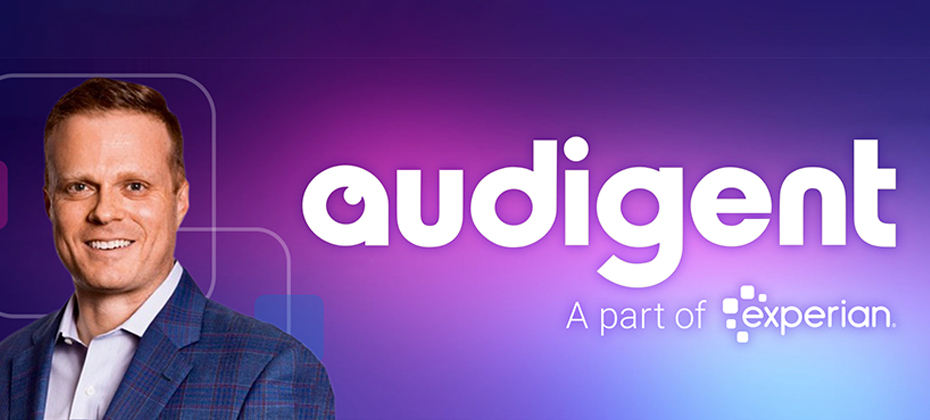
The advertising ecosystem has seen significant transformation over the past few years, with increased privacy regulation, changes in available signals, and the rise of channels like connected TV and retail media. These changes are impacting the way that consumers interact with brands and how brands understand and continue to deliver relevant messages to consumers with precision. Experian has been helping marketers navigate these changes, and as a result, our marketing data and identity solutions underpin much of today’s advertising industry. We’re committed to empowering marketers and agencies to understand and reach their target audiences, across all channels. Today, we are excited to announce our acquisition of Audigent—a leading data and activation platform in the advertising industry. With Audigent’s combination of first-party publisher data, inventory and deep supply-side distribution relationships, publishers, big and small, can empower marketers to better understand their customers, expand the reach of their target audiences and activate those audiences across the most impactful inventory. I am excited to bring together Audigent’s supply-side network as a natural extension to our existing demand-side capabilities. Audigent’s ability to combine inventory with targeted audiences using first-party, third-party and contextual signals provides the best of all worlds, allowing marketers to deliver campaigns centered on consumer choices, preferences, and behaviors. The addition of Audigent further strengthens our strategy to be the premier independent provider of marketing data and identity, ultimately creating more relevant experiences for consumers. To learn more about Experian and Audigent, visit https://www.experian.com/marketing/ and https://audigent.com/.

Modernizing the conversation around credit and financial literacy is a key commitment for Experian, especially for young adults. That’s why we partner with organizations like the Singleton Foundation to produce “Your World on Money,” to meet young people where they are, with engaging, easy-to-understand video shorts about credit, budgeting, and saving and more. We’re thrilled this commitment and creativity has earned both Gold and Bronze Anthem Awards, which recognize excellence in social good, celebrate the impactful work of organizations and initiatives that are driving positive change. Financial literacy is often not taught in schools, and the language around credit and personal finance can be intimidating. By normalizing these conversations, we hope to inspire confidence and action, helping young adults make informed financial decisions as they navigate life’s milestones. Our United for Financial Health partnership with the Singleton Foundation continues with our new series, the Finance Couch, where college students join our experts on a coach in the middle of a Los Angeles campus to answer their money questions. And our Anthem Award-winning series, HeartBroke, helps couples whose relationships are tested with financial issues to determine if they can work through it or end up HeartBroke(n).

Great Place to Work and Fortune have named Experian as one of the 25 World’s Best Workplaces™ 2024. This recognition highlights more than an award—it shows a commitment to our strong People First culture. Experian Chief People Officer Jacky Simmonds shares insights on how our people across the globe cultivate this culture, staying ahead of the curve through a unique blend of inclusivity, empathy, and a shared purpose. What does it mean to you, and to Experian, to be named among Fortune’s World’s Best Places to Work? At Experian, we have long aspired to be one of the best companies in the world to work for, and over the past few years, we have made this a priority. Our journey has been marked by a commitment to putting our people first and fostering the collaborative and inclusive culture that sets us apart. This recognition reflects the common values that we share across our many countries and cultures and the dedication of our colleagues across our business. We spend so much of our time at work, so I think it’s important that every interaction – from the interview process to joining and every daily interaction – is a positive one where people are welcoming, supportive and generally just really nice people to work with. Reaching this milestone gives all of us at Experian some recognition, but also it is inspiring as we continue to strive to attract top talent who share our values, share our purpose and make every day an enjoyable one. How does Experian create an environment where employees feel empowered to innovate and contribute ideas that drive real impact? To fulfill our mission of bringing Financial Power to All™, we need as many voices, experiences and backgrounds as possible, so we can represent our clients’ differing needs. This culture of inclusion drives our innovations. We have employee-led initiatives, such as internal Hackathons that bring together these diverse perspectives to develop products and services like Experian Boost, Experian Go, Experian Smart Money Digital Checking Account, Experian Support Hub, and Transforme-se so we can serve the communities in which we live and work. How has Experian adapted to changing employee expectations since the pandemic, and what steps has the company taken to support employee well-being and work-life balance? We know that our people really value the ability to have flexible work model, so they can work to fulfill their role in a way that works for them. For some this is fully remote, for others it is hybrid so a balance of remote and in office, and for others in office, where their role requires it fully. We know from the feedback that we get that our people appreciate that we trust them and they have flexibility to deal with varying commitments that we all have outside of work. We also know that since the pandemic there has been an increased focused on wellbeing. Sponsored by our Chief Financial Officer, we embarked upon an initiative to invest in how we support people who may need additional support. We are very proud of our Mental Health First Aiders programme, which has trained around 400 colleagues across the world representing 23 countries and 28 languages and helping their teammates access resources. These volunteers receive consistent, ongoing and updated training. What specific initiatives or programmes at Experian do you believe set the company apart in terms of supporting professional growth and career development? We have invested in a number of things that we believe really make the difference. The first is developing great leaders at every level. Today’s leaders have many more challenges, many different age groups, a balance of remote and in person working, together with teams based in many different locations. Great leaders build great teams, so we think it’s important to invest in their development. That’s we built a leadership development portal – The Leadership Exchange – that has a wide range of resources to support them, including development programmes tailored to their needs. We also want to ensure that everyone at every level can develop their skills and progress their careers. So we launched our annual Global Careers Week, Experian University, and built a world-class digital curriculum so everyone can access the form of development they need based on their role or aspirations. There really is something for everyone. This way, we help our teams stay ahead of trends and ensure our business is equipped with the skills needed for the future. Looking forward, what are key goals or priorities for further enhancing Experian’s culture and employee experience? We’re truly proud of this amazing recognition, but we always strive to get better and acknowledge there’s always more to be done. We see an opportunity to make things easier in the way we leverage advanced technologies like AI to further enhance employee experience. For example, more personalised learning pathways, improved tools for productivity and collaboration. We make sure we don’t lose the human touch, but we also want to make the most of these innovations so we stay relevant with our largely tech populations. Being named one of the world’s best workplaces reflects Experian’s unwavering commitment to be recognized for having a great culture where people can do their best work with people they enjoy working with. Learn more about what makes Experian a World’s Best Workplace in the People section of our Annual Report and the Experian Power of YOU Report 2024: Driving social impact and diversity, equity and inclusion, available in English, Portuguese and Spanish.

While the credit reporting industry is designed to help lenders and creditors minimize risk and assess consumers’ ability and willingness to repay outstanding debt, let’s be clear: the consumer is our main priority. Every lending decision and action is made with the consumers’ best interest in mind. Because consumers rely on credit and other loan products to purchase homes and cars, pay for college, afford goods and services, and even bridge the gap during emergencies, the credit reporting industry has been at the forefront of broadening access to fair and affordable financial resources. Risk-based pricing has made it possible for more consumers to access credit, particularly those with limited-to-no credit history or subprime credit profiles. Previously, lenders may have opted not to extend credit to consumers considered higher risk; but more and more, lenders are empowered to tailor borrowing terms based on a consumer’s credit history. In addition, because lenders don’t have to absorb unforeseen risk, lower borrowing costs can be maintained for all consumers. Experian has long advocated for expanded data sources, such as rent and utilities payments, to be incorporated onto consumer credit reports and considered in lending decisions. In 2019, we launched a product that empowers consumers to add positive payment history for utilities, telecoms and video streaming services—and eventually residential rent—directly into their Experian credit report. Our efforts coincide with legislation, such as S.2417 – the Credit Access and Inclusion Act, introduced by Senator Tim Scott (R-SC) in 2021, which encourages the reporting of consumer payment history, including rent, utilities, and telecom services, to the nationwide credit reporting agencies. This is key to broadening access to fair and affordable credit for underserved consumers. The industry needs to continue to explore other avenues that can help consumers improve their financial health, such as the role that buy now, pay later information can play in increasing financial inclusion. Empowering consumers to take control Beyond legislation or the use of expanded data, many non-profit and community based organizations are championing initiatives that drive greater financial inclusion. Organizations such as Inclusiv, Jump$tart Coalition for Personal Financial Literacy, HomeFree-USA, National Urban League and the Society for Financial Education & Personal Development, among others, are helping individuals and households from underserved communities navigate the mainstream financial system and take control of their financial lives. Experian and other financial institutions are partnering with non-profit organizations with deep roots in communities, allowing them to connect with community leaders and individuals on a more personal level. Every individual enters the credit ecosystem at a different stage so it’s important that banks and financial institutions listen to the specific challenges they’re experiencing. For example, individuals may be searching for credit monitoring and alerts, budgeting tools or ways to put more money back into their wallets, such as finding cost-efficient options for auto insurance. Providing individuals and households with the financial knowledge and access to tools better positions them to become financially independent. The credit reporting industry continues to provide more resources and transparency to help improve consumers’ financial health. All individuals deserve the opportunity to establish and build their credit so they are able to elevate and maintain their financial status.

Today at Money 20/20 in Las Vegas, Experian unveiled Experian Assistant, a groundbreaking toolset that transforms analytics and modeling for financial institutions. By leveraging Generative AI (GenAI), this revolutionary solution slashes model development turning months-long processes into days—or even hours. Positioned as a game-changer, Experian Assistant offers businesses the equivalent of a seasoned expert, guiding them through complex use cases with ease and redefining how financial organizations approach data-driven insights. Revolutionizing Modeling with Generative AI Experian Assistant marks a significant leap forward in how businesses handle the modeling lifecycle. Integrated into the Experian Ascend Technology Platform™, Experian Assistant is designed to streamline data analytics processes, enhance accuracy, and promote efficiency. This debut underscores Experian’s commitment to responsible AI innovation, ensuring that organizations benefit from advanced analytics without compromising on privacy or ethical standards. “Many financial institutions are looking to invest in new generative AI use cases, often focused on banker specific support,” said Craig Focardi, Principal Analyst at Celent. “Experian Assistant focuses on developer support to accelerate the development lifecycle by having a digital model building consultant available to users.” Empowering Data Scientists and Analysts With its powerful natural language processing (NLP) capabilities, Experian Assistant is reshaping how data scientists and analysts approach complex tasks. Traditionally, navigating large datasets and building models required extensive technical expertise. But now, Experian Assistant allows users to query data, write code, and build models in plain language—democratizing access to sophisticated analytics. The tool not only boosts productivity but also fosters collaboration and accessibility. This innovation will drive financial inclusion by broadening access to data-driven insights and responsible use of data across organizations. Developed in Collaboration with Leading Financial Institutions A standout feature of Experian Assistant is its development in close partnership with the world’s largest financial institutions. This collaboration ensures that the tool is finely tuned to real-world challenges, delivering deep insights into Experian’s data assets. By optimizing analytics processes, businesses can achieve proven cost savings, enhanced data visibility, and faster product deployment. Continental Finance Company, for example, reduced data-building time by a remarkable 75% after adopting Experian Assistant. This kind of impact highlights the tool’s ability to accelerate model development while maintaining strict data privacy standards—a vital consideration for financial institutions. Advanced Compliance and Transparency In today’s highly regulated environment, businesses must not only meet compliance standards but also provide transparency into their processes. Experian Assistant is designed with these needs in mind, offering advanced features that support regulatory reporting, identity management, risk assessments, and transaction monitoring. A Competitive Edge through GenAI With more than a decade of AI expertise, Experian is leading the charge in responsible AI development. At Money 20/20, Experian Assistant stood out as a testament to this leadership. The tool is positioned to offer financial institutions a competitive edge, improving risk assessment, enhancing customer experiences, and promoting financial inclusion. As the financial services industry continues to evolve, businesses that embrace GenAI solutions like Experian Assistant will be better positioned to succeed. This groundbreaking tool is not just an enhancement—it’s a fundamental shift in how analytics and modeling are conducted, offering the speed, accuracy, and transparency that today’s market demands.

People rely on credit cards, personal loans, mortgages and auto loans, among other financial products to buy homes, fund college educations, weather temporary income disruptions and finance billions of daily transactions for goods and services. Credit is the cornerstone of the pursuit of our financial ambitions. That’s why the credit reporting industry is deeply committed to broadening access to fair and affordable financial resources for all consumers, particularly for individuals and households from underserved communities. The commitment is underscored by the continual effort to evolve the credit reporting system and incorporate new data sets to provide lenders a more comprehensive view of consumers’ ability and capacity to repay outstanding debt. Although progress has been made to extend credit to more prospective borrowers across the risk spectrum, if we want to continue to broaden the scope, we need to encourage the consistent reporting of additional predictive data sources to help lenders assess consumers’ creditworthiness. A proven track record but there’s more work to do Over the past century, the credit reporting industry transitioned from an opaque system founded on relationships to one rooted in data. Lenders lean on past payment history on similar loans (i.e., auto loans, mortgages, credit cards, etc.) as a reliable predictor of a borrower’s future loan payment performance—it’s a way for them to mitigate risk and say “yes” to more borrowers. And it works. The comprehensive reporting of past loan performance, coupled with increasingly sophisticated statistical prediction models, as well as the adoption of risk-based pricing, accelerated the extension of credit to more consumers. Yet, according to research from Experian and Oliver Wyman, millions of Americans lack access to mainstream credit because they are credit invisible, unscorable or have a subprime credit score. It’s particularly challenging for younger individuals, newly arrived immigrants and historically underserved communities, such as racial and ethnic minorities. At times it can be a catch-22; in order to get credit, you have to have credit. More predictive data is key At Experian, we’ve long understood that expanding the universe of creditworthy borrowers requires more data. In addition to some of the more conventional tradelines, such as mortgages, auto loans and credit cards, we have to explore expanded data sources that are predictive of a prospective borrower’s credit risk. For instance, more consumers are using buy now, pay later (BNPL) products, and nearly every consumer makes recurring monthly payments for rent, utilities, cell phones and even video streaming services, yet oftentimes, these data points are not consistently reported to the credit reporting agencies nor considered during lending decisions. Collectively, the industry and regulators, need to do more to encourage the consistent reporting and inclusion of expanded data onto consumers’ credit reports. In fact, based on our research, we’ve found that some of the aforementioned expanded data sources can empower lenders to assess the credit risk of a significantly larger pool of consumers. These expanded data sources have been shown to be highly accurate predictors of future loan payment behavior. And, when expanded data is combined with advanced analytics, up to 96% of the population can be scored, including an estimated 65% of credit invisibles.1 Broadening access to fair and affordable credit for more consumers means leaning into combining conventional tradelines with expanded Fair Credit Report Act-regulated data sources. The more information lenders have available to them about prospective borrowers’ past payment performance the more empowered they are to minimize risk and more confidently extend credit. Pushing for more data is the best path forward.

In an era where financial transactions occur at the click of a button, the significance of accurately verifying and authenticating consumers’ identities cannot be overstated. From online purchases to mobile banking, ensuring secure and reliable digital connections and safeguarding consumers’ information are table stakes for any business operating in the digital ecosystem. Unfortunately, some advocacy groups are calling for stricter regulatory guidelines that may impede business’ ability to effectively and efficiently protect a consumer’s financial information and identity. We’re, of course, referring to the push to classify credit header data— identifying information, such as name, current and former addresses, phone number and Social Security number, found at the top of credit reports—as a consumer report under the Fair Credit Reporting Act (FCRA). Subjecting credit header information to the FCRA will unnecessarily limit its permitted use, and effectively make it more difficult—and potentially impossible—for banks and other businesses to use the information to authenticate and verify consumers’ identities. It’s an unintended consequence that will surely compromise the security of our digital identities. Foundational to fraud prevention Credit header data plays a pivotal role in helping businesses detect suspicious activity and stay ahead of increasingly sophisticated fraud schemes. With credit header information, banks and other financial institutions cross-reference loan applications against transactions from hundreds of thousands of contributors to spot anomalies and thwart fraudsters before they inflict harm. In fact, many of the industry’s most advanced fraud prevention tools and signals rely on credit header data to verify the legitimacy of any given transaction. Keep in mind, the transactions we’re referring to are transactions of consequence. For instance, opening a new bank account, applying for a loan or transferring money. This level of activity carries inherent risk, and without proper vigilance, could result in significant financial or reputational harm to consumers and businesses. But it’s not only lenders that leverage credit header data, the use cases for credit header data are broad. Government agencies and businesses in the public sector, law enforcement, and some pharmacies use the information to issue one-time passcodes for identification purposes, find missing persons, or verify consumers’ identities prior to prescriptions being filled. Credit header data is already regulated Some of the concern surrounding credit header data centers on consumer privacy, and rightfully so. Protecting consumers’ privacy should be central to the use of sensitive information; however, credit header data is already regulated by the Gramm-Leach-Bliley Act. In fact, for more than 25 years, the Gramm-Leach-Bliley Act specifically provides that the permissible use of credit header data includes fraud prevention, while also mandating consumer privacy and data protection. Subjecting credit header data to additional FCRA regulation, which does not clearly allow for fraud prevention, could make it impractical or impossible for many businesses to use it for that purpose. Not only is additional regulation unnecessary, but it potentially creates a contradictory web of regulations that increases the compliance burden and confusion for many businesses. This ultimately thwarts the purpose of GLBA by delaying fraud prevention efforts and potentially raising costs for consumers. Credit header data is far more than information included at the top of consumers’ credit reports, it is a linchpin that powers many of the most advanced fraud prevention and identify verification tools in the market. Before any further regulation is considered, we have to acknowledge the role that credit header data plays in keeping consumers’ information safe and how any changes may impact the safety and soundness of our digital economy.

Experian continues to affirm its leadership in financial technology, earning the 7th spot on the 2024 IDC FinTech Rankings. This is the third consecutive year that the company has ranked among the top 10 providers, reinforcing its position as a key player in the FinTech space. The IDC FinTech Rankings assess the top 100 financial technology providers based on revenues generated in 2023 from financial services and FinTech sectors. In addition to this notable achievement, Experian has been awarded the 2024 IDC Real Results Award for Bank Deposit Transformation. This award highlights Experian’s innovation in driving measurable and impactful changes within the financial services industry. The recognition is particularly focused on the company’s success in helping banks transform their deposit processes through advanced fraud prevention technologies. Experian’s Ascend Fraud Sandbox: A Game-Changer A key factor behind this award is Experian’s Ascend Fraud Sandbox, a groundbreaking tool that offers financial institutions a comprehensive platform for fraud detection and prevention. The Ascend Fraud Sandbox empowers organizations to analyze data, identify new fraud patterns, and quickly build, test, and deploy models. This technology enables banks to enhance their fraud detection capabilities, leading to higher approval rates for online deposit accounts and reduced fraud-related losses. The sandbox operates with over 10 billion identity and fraud events, which include applications, login activities, and transactions. It also continuously incorporates tens of millions of new events each day. This expansive dataset allows banks to stay ahead of increasingly sophisticated fraud attempts, especially those driven by artificial intelligence (AI). Experian’s success in Bank Deposit Transformation demonstrates the company’s ability to help financial institutions improve their processes while simultaneously enhancing fraud protection. By providing advanced fraud-prevention and identity-protection technologies, Experian enables its customers to optimize their operations, reduce risks, and achieve better financial outcomes. Recognition of Experian’s Innovation This dual recognition—ranking 7th in the IDC FinTech Rankings and winning the Real Results Award—further solidifies Experian’s standing as a leader in technology. These accolades underscore its capacity to offer data, technology, and scalable solutions that allow financial institutions to make informed business decisions at the necessary speed to remain competitive in an evolving market. Now in its 21st year, the IDC FinTech Rankings evaluate technology providers based on the revenue they generate from financial institutions, including banks, insurers, and capital markets firms. With both the FinTech Rankings and the Real Results Award in hand, Experian continues to deliver innovative solutions that help financial institutions navigate the complexities of modern finance with confidence.