Category: Innovation

At Experian, we are continually innovating and using technology to find solutions to global issues, modernize the financial services industry and increase financial access for all. Read about our latest innovation news below:

  • American Banker Names Experian a Top FinTech Company

    Experian was recently named one of 2016’s Top 100 Fintech Companies by American Banker, joining the ranks of companies such as Thomson Reuters and FIS. This announcement comes less than two months after being named among Forbes Magazine’s Top 100 “World’s Most Innovative Companies” for the third year in a row.

    Ranking near the top at #13, this American Banker listing is further evidence of our commitment to innovation and creating a better world through data. All of us at Experian take this commitment very seriously, and we’re proud that every day our data and analytics are helping people and businesses to achieve more.

    The American Banker and Forbes rankings also confirm that Experian is much more than a credit bureau. We believe data has the power to transform lives and societies for the better, and we’re making sense of it in powerful new ways that others can’t.

    One example of our innovative approach to solving big-picture problems around the world is our Experian DataLabs, staffed by teams of scientists with Ph.D.’s and applied research practitioners with expertise in advanced analytics and machine learning. This team helps businesses solve strategic marketing and risk-management problems through advanced data analysis. Using applied research and development we work to increase profitability, optimize data assets, control financial risk and ensure regulatory compliance for our clients. We’re also looking at data in new ways to help companies better identify fraud to protect themselves and the customers they serve.

    Experian’s innovative capabilities also help people get the financial services they need. We’re uncovering new, ground-breaking ways to build clearer pictures of people’s financial situations, and we’re helping people use these insights to take better control of their future.

    By collecting, combining and analyzing data, Experian is powering opportunities to help people plan for and build a better tomorrow. I’m confident that we’ll continue to take hold of these opportunities to unlock the true power of data in the years to come.

  • Ask the Right Questions to Gain Predictive Insight

    Emad Headshot CroppedThis feature article from DMN profiles Emad Georgy, Chief Technology Officer for Experian Marketing Services, as well as his team’s approach to data and predictive analytics. According to the article, “The other drive for Georgy’s commitment to data analytics has been interactions with clients … Data can help brands ‘uniquely understand customer behavior. At Experian, with all of our expertise, we can play a role in getting data to a position where it’s actionable.’”

    Click here to read the full article.

  • Forbes names Experian Among Top 100 “World’s Most Innovative Companies”


    Forbes 1Experian has been named to Forbes Magazine’s list of the “World’s Most Innovative Companies,” securing a spot in the Top 100 list for the third year in a row.

    We are proud to put innovation at the forefront of what we do – driving our activations and analytics to serve our customers and secure a better, more productive future.

    This recognition helps affirm our goal in innovating ways to embrace data to help transform the way businesses operate and how consumers can thrive in today’s society.  We are proud to foster a culture of such innovation, including some recent milestones.

    These include the introduction of CrossCore, the fraud and identity industry’s first open platform designed to catch fraud faster, and Experian Marketing Services’ Audience Engine, which is enhancing the customer experience and audience management platform that changes the way the advertising industry buys and measures media.

    Meanwhile our DataLabs continues to achieve recognition for their tremendous work tackling the thorniest problems and finding new ways to glean insights from data.

    The amount of data is expected to increase up to ten times the current amount by 2020, and Experian looks to innovation to bring answers to the problems such increases can pose. We’re finding new ways to help business across a multitude of industries integrate the latest in data technology into nearly every aspect of their operations. Data is powering everything we do.

    We’re leveraging data to allow lenders to make responsible decisions involving their customers, helping more consumers gain access to wealth-building tools like mortgages.

    At Experian, we believe that data will power the future in untold ways. We know that we’ve only scratched the surface of data’s potential. It’s an honor to achieve this recognition, and I am confident that Experian will continue to chart the course for the industry with solutions that power opportunities for more people and businesses through data.


  • Data Science Careers Enjoying Strong Growth


    data scientist

    The following article originally appeared in the Career Advancement Management Report, Volume 38:

    Companies are collecting mountains of digital information that they are using to create more effective marketing campaigns, improve manufacturing and order fulfillment departments, develop products, improve quality control and assurance, and otherwise better operate their businesses and serve their customers.

    This information ranges from in-house data and reports, to customer tweets and blog postings, to customer activity at Web sites. Data scientists assess the information, and then explain to company executives how it can be used to make better business decisions, reach more customers, or provide better services.

    The Wall Street Journal reports that “top data scientists can command multiple job offers with salaries well into the six figures and sometimes even seven figures.”

    Eric Haller is the Executive Vice President of ExperianDataLabs. Experian helps businesses manage credit risk, prevent fraud, target marketing offers, and automate decision making. It also helps people to check their credit report and credit score and protect against identity theft.

    In 2015, Experian was named by Forbes as one of the “World’s Most Innovative Companies.” Haller discussed the fast-growing career of data scientist with the editors of the CAM Report.

    Q. How did the career of data scientist develop?
    A. The role of the data scientist emerged as a result of the vast amount of data companies are acquiring. The problem: most of this data is jumbled, indistinct information. How, then, can a company use this for its own benefit? It was obvious there needed to be someone companies could rely on to take this data, build connections and correlations, and assemble insights useful for the growth of the company.The result: the rise of data scientists.

    Q.What makes the career of data scientist such a hot profession? What will aspiring data scientists find fun or interesting about this career?
    A. Individuals in this profession are innate explorers.They are always reinventing the wheel; coming up with new approaches to old challenges; finding solutions to vexing problems. And they do so by listening to hard data. Couple this with their analytical background and one can see what makes data scientists so attractive to the business world.

    Data scientists are the wizards making seemingly unattainable ideas and goals a possibility for companies—companies that need risk assessments; companies that strive to better optimize their marketing towards key consumers; companies that could use improvements to their digital consumer user experience.

    The realm of possibilities is seemingly endless for data science. Take for example these ongoing ventures. At the world-renowned Johns Hopkins Hospital in Baltimore physicians are perfecting cancer treatments using successful plans of past patients. In Kansas City researchers are maximizing the productivity of area lands by studying detailed soil data. And in Indiana the state government is analyzing population data to prioritize funding for the most effective programs, including those that reduce infant mortality rates. Across the nation examples like these abound.

    The common thread? Big data—or the accumulation of data too large and complex for processing by traditional database management tools. In each instance, data scientists are helping to solve some of our most vexing public, societal, and corporate problems.

    Every day, from every corner of the world, Experian is working to attract this talent and utilize them to help a host of companies, from financial institutions to healthcare organizations, make strategic decisions towards sustainable growth. No matter the project or task, data scientists are
    constantly examining problems and discovering solutions that are good for businesses, consumers, and society.

    Q.What are the key traits of successful data scientists?
    A. Perhaps the most important skill necessary to succeed as a data scientist is effective communication and advocacy for a position. Data science is a brainy, technical field. While scientists working in the field understand the complexity of the information they study, it is highly unlikely that their client does.

    Data scientists must therefore be able to think and communicate like business people—to bring the conversation down to a level anyone can understand. It is the only way they are able to successfully deliver and implement their findings.

    Q.What’s the best way to prepare for this career?
    A. Take a free online class
    – Free online courses from top universities or top subject-matter experts are available via sites such as Coursera, Udacity, and edX.

    Practice
    – You can download a public dataset from Kaggle,which hosts open data science competitions. (Competitors are given a data analysis problem to solve and there are cash prizes for winners.)

    Join a LinkedIn group
    – Join groups associated with data science on topics such as big data, analytics, machine learning, and data management.

    Get to know working data scientists
    – Use these groups and educational opportunities to look for opportunities to network with people working in data science, either in person or remotely if you aren’t in the same location.

    Q.What’s the future employment outlook for data scientists?
    A. The need for data scientists will only continue to grow in the future. A report came out a couple years ago that estimated by 2020 the amount of data globally will grow ten-fold from today. That’s a tremendous amount of data. Raw data. Untapped potential.  This alone puts the importance of data science as a profession into perspective. Data scientists are the pioneers
    going “where no man has gone before” for the good of our future.

  • 12 tips to prevent fraud for the Internet of Things

    12 tips to prevent fraud for the Internet of Things

    Iot4-shutterstock_329519927

    The benefits of the Internet of Things are only as strong as the weakest connected point.

    Having a plan in place to prevent fraud that businesses and consumers can use to manage risk and increase security when using Internet-enabled products, also known as the Internet of Things (IoT), is critical. Connected devices such as smartphones and tablets, and a tremendous number of consumer products — including cars, heart monitors and household appliances — are now connected to the Internet. Many of these connected products have weak security and controls, creating points of weakness in users’ critical private networks, systems, and data.

    Adam Fingersh, senior vice president and general manager of Experian’s fraud and identity business, shared several fraud prevention strategies that businesses and consumers can use to manage risk and increase security while using Internet-enabled products, also known as the Internet of Things (IoT).

    Please read all the security tips on our Insights blog and learn more about Experian’s Fraud and Identity business.

  • How Data is Defining Today’s Customer Journey

    Emad Georgy_72dpiOriginally published in MarTech Advisor.

    As technology increases, today’s consumer continues to demand and expect better service. According to recent Experian data, the biggest challenge for businesses over the next 24 months is increasing customer expectation. It has become more important than ever for marketers to be smarter, more personable, and more relevant than ever before. In order to not get beat by competition, brands need to deliver a personalized and seamless Omnichannel experience.

    Data will play a critical role in informing decisions and ensuring the customer experience is maximized. This requires you to move from push marketing to insight-driven response and prediction. Insight like time of day, past purchases, weather, location, devices and more make it possible to provide exceptional value through every interaction. But before we can begin focusing on activation, we need to make sure to step back to basic fundamental thinking and think about our customer journey.

    Identifying Your Customers

    We have always put customers front and center. The old way to identify customers used to involve past-looking exercises meant to inform future large-scale marketing decisions. We would focus on our best customers and pinpoint key moments in their brand experiences that may need improvement or redesign. In today’s world of customer-centricity, we have to move past the idea of a random sample customer journey. Instead, be ready to react to each unique touch point in a way that adds value and encourages further brand interactions.

    Today’s version of the customer journey map should cover each individual’s path of touch points, make contextual decisions at each subsequent interaction, and develop and automate the process at scale. With this approach, the unique path each customer has taken up until this moment can inform the next message or offer we deliver at a 1:1 level.  This is where predictive analytics come into play. According to TDWI Research, the top five reasons why companies want to use predictive analytics are to predict trends, understand customers, improve business performance, drive strategic decision-making, and predict behavior. In order to truly identify each individual customer, a mix of transactional and behavioral data need to be incorporated into the predictive modeling.

    Linking Your Profiles

    Ninety-nine percent of companies believe achieving a single customer view is important to their business, but only 24 percent believe they have achieved it today. According to Experian Marketing Services’ 2015 Digital Marketer Report, the biggest barrier for marketers to achieve cross-channel success is data linkage.

    For instance, say you have a customer who does all their research online during the week and then over the weekend shops in a brick and motor store to actually make purchases. If brands aren’t identifying the customer as one profile, they are most likely spending too much energy and time on trying to get the digital profile to transact online.

    There are two ways to establish user identity across devices. The deterministic method relies on personally identifiable information (PII) to make devise matches when a person uses the same email address to log into an app and a website, thereby creating cross-device linkage. Probabilistic cross-device matching is achieved by algorithmically analyzing thousands of different anonymous data points including device type, operating system, location data associated with bid requests, time of day and a host of others to create statistical matches between devices. For example, if a phone, a tablet and a laptop connect to the same networks or Wi-Fi hotspots in the same places every weekday, it’s safe to surmise that all three devices belong to a specific commuter. And while deterministic matching seems like the better more exact solution, users don’t always stay logged in or use the same email address everywhere. That is why it is important to use a combination of these techniques and other supplemental data to ensure you have an accurate single-customer profile.

    Automating The Process

    Once we have achieved a clear vision of each customer, we can automate the whole process. The ability to deliver the right message to the right person at the right stage in his or her buying process has increased the speed to conversion. However, it is not as simple as set it and forget it. You need to constantly be adding great content and paying really close attention to what people are responding to. In addition, there is no substitution for a human component. Automation works most effectively when the right team is involved in processing and make sure that customers’ needs are actually being met.

    The customer journey is and has always been at the backbone of business success. Being able to identify what motivates a customer gives us the insight needed to make smart marketing and business decisions. Today’s technology gives us an easier and quicker means to that data, but it is how we use and manage that data to provide a memorable customer experience that really sets us apart. Marketers need to make sure that every touch is smarter, more personable, and relevant in order to excel and advance.

    Emad Georgy is the Senior VP of product development and product management at Experian Marketing Services.  Follow Emad at @EmadGeorgy, and Experian Marketing Services at @ExperianMkt, on Twitter.

  • Experian Expands Data and Innovation Lab to State-Of-The-Art Facility in San Diego

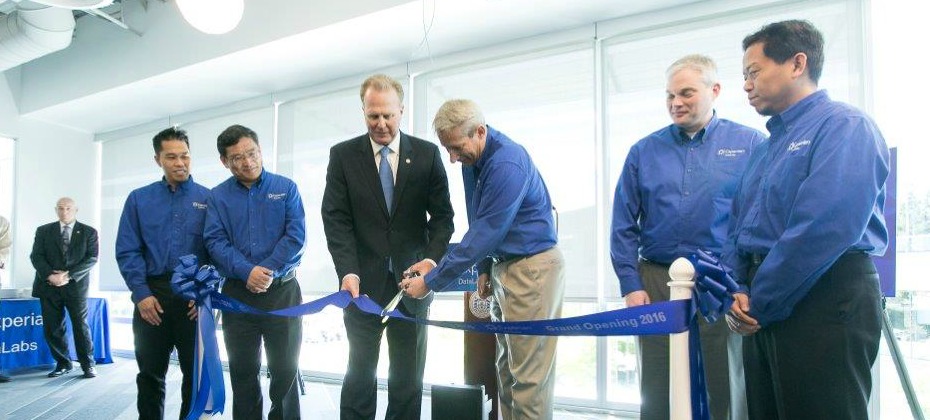
    DataLabEricExperian has expanded its growing North America DataLabs in San Diego to further innovation and enable leading data scientists to help clients and businesses solve strategic marketing and risk management problems through advanced data analysis processes, research and development. This new state-of-the-art facility will be equipped with beacons, biometrics and emerging technologies to keep Experian on the forefront of innovation.

    “We are proud that Experian has selected San Diego as home for its new innovation lab facility. This commitment from an information services giant like Experian is further validation that companies are expanding, growing and helping us to create more jobs in San Diego,” said San Diego Mayor Kevin L. Faulconer. “San Diego is indeed a world-class city of innovation, and our highly skilled scientific and technology talent is clearly helping to make San Diego a destination for new businesses, jobs and opportunities.”

    Experian DataLabs is staffed by teams of Ph.D. scientists and applied research practitioners with expertise in advanced analytics and modeling, as well as other statistical methods. The labs provide access to Experian resources such as broad and secure consumer and commercial credit data and demographics, which can guide Experian clients in determining their approaches.

    Projects often tackle high-dimensionality problems where computer science, applied mathematics and business acumen intersect to create solutions that can be   implemented cost effectively.

    The first innovation lab was launched five years ago to provide clients with innovative techniques and applications to capture the value hidden within their data assets. The labs allow data scientists to conduct breakthrough data experimentation to present a larger picture and deliver greater competitive advantages.

    “We want to provide our team with an environment that will further inspire them, spark their powerful creativity and drive innovation for Experian and our clients,” said Eric Haller, executive vice president, Experian Global DataLabs. “I’m so very proud of the team and to be part of a truly innovative and entrepreneurial company like Experian that had the foresight five years ago to allow us to create these labs. The future is bright for us and our clients, and I can’t wait to see the good things with data that will come out of this new facility.”

    Experian DataLabs operates globally with labs in San Diego, Calif.; London, England; and São Paulo, Brazil.

    Click here to view video coverage from yesterday’s ribbon cutting ceremony featuring San Diego Mayor Kevin Faulconer and Executive Vice President of Experian DataLabs, Eric Haller.

  • Data Science: The 21st Century’s ‘Plastics’

    pablo (5)

    TMCnet’s premium technology blog, TechZone360 featured a byline article by Eric Haller, Executive Vice President of Experian DataLabs about the growing demand for data scientists.  According to Haller, because data science is in its infancy, there’s tremendous room for innovation. Experian’s DataLabs works to assemble individuals from a host of backgrounds with a variety of experiences and encourages them to push the envelope of what’s possible. They look at problems and find solutions that are good for businesses, consumers and society. 

    Read the full article here.

  • Nontraditional Data Opens New Doors For Small Businesses

    Small Business
    By Eric Haller and Hiq Lee

    The American economy rises and falls on the successes of the small business community. As a major contributor to job growth, as well as innovation, small businesses have laid the foundation toward our country’s economic success. But as important as small businesses are to financial progress of our economy, some business owners have experienced their own growth challenges along the way.

    Perhaps the most significant challenge has been the inability to access financial capital. In the years since the economic downturn, conventional lending sources, such as banks and credit unions, have tightened their lending criteria.

    Many small businesses, especially those with a limited credit history, have had difficulty demonstrating their creditworthiness and are deemed as high risk. Without access to financial capital, small businesses are not able to order new inventory, hire new employees, react to emergencies or expand their businesses.

    But what if financial institutions did not just leverage traditional credit information to determine a business’s ability to repay a loan, but also took nontraditional data sources into consideration? For instance, what if banks and credit unions leveraged data on daily sales, accounting information, Web traffic, business valuation or even social media data?

    The benefits of this scenario could be endless. Not only will many small businesses have a better opportunity to qualify for business loans, but a whole new segment of the small business owner population will be able to obtain financing, namely the new business start-up. With the incorporation of nontraditional data, the small business owner that has one or fewer business accounts has the chance to qualify for a business loan with an affordable rate.

    In fact, there are a number of online marketplace lenders, or nonbank lenders, that have already begun taking this nontraditional approach. These companies leverage a wealth of data points, such as social media or Web traffic, to help fill the void that a business with limited credit history might have. By combining both traditional and nontraditional data sets, these lenders are able to help small businesses access financial resources, while expanding their own portfolios.

    For example, consider a beauty salon that has been opened for less than a year, but constantly has customers filling up its chairs and enjoys sufficient cash flow. If we look at its credit history, there may be two small tradelines with positive payment behavior. However, despite the positive performance, its business credit score is relatively low. Under normal circumstances, the salon would have trouble securing a business loan.

    But, if its social media presence were taken into consideration, the salon could be viewed as the burgeoning business that it is. Combine the hundreds of positive reviews and social media references with its strong cash flow; it could signal that the salon is a growing business with potentially low risk of defaulting on an approved loan.

    Clearly, without the benefit of this added information, this small business would not be able to access the financial resources to expand. The insights that can be uncovered by utilizing nontraditional data sources can open new doors for small businesses. Additionally, given the opportunity, small businesses can take our economy to new heights, which is good for local communities, our country and society as a whole.

    ***
    Eric Haller is the executive vice president of Experian’s DataLabs and Hiq is the president of Experian’s Business Information Services.