
Black History Month launches in the UK today. Throughout the month, we’ll be holding a series of events to support Black British people to realise their personal financial and business aspirations. Look out for webinars on Credit Scores and Property Investing on 6th October and Credit Scores and Entrepreneurship on 13th October, with guest speakers including Kazeem Alli-Balogun, Sebastian Newby, Stephanie Taylor, Rachael Twumasi-Corson from Afrocenchix, Ismail Oshodi and Raphael Sofoluke. Register here. The last week of October also sees the launch of the first Experian Entrepreneur Challenge, a 5-day bootcamp helping Black micro-entrepreneurs define the roadmap towards business success. The week includes topics like how to spot opportunities for business expansion, and formalising business and funding growth, with special guests from Experian teams holding masterclass sessions on topics like market research, marketing and recruitment. At the end of the week, entrepreneurs will pitch for £3000 worth of funding to help grow their business. Participants will be uploading video diaries over the course of the week, which takes place from 27th October onwards – you’ll be able to check out their experiences on our YouTube channel here. Finally, the Experian team will be sharing personal experiences and career advice at two exciting events, Black Tech Fest and UK Black Business Week. We’re proud to be sponsors of both events. Watch out for more updates and ways to join in virtually nearer the time!
The historic civil rights organization, the National Urban League, kicked off its first-ever virtual national convention recently, and Craig Boundy, former Chief Executive Officer of Experian North America had the honor of joining them. National Urban League President and CEO Marc Morial and Craig announced our new partnership that will support financial inclusion and credit education. During the announcement, Marc mentioned one of the key findings of the Urban League’s 2021 State of Black America – The New Normal: close to 17 percent of Black households lacked basic financial services, compared with three percent of white households in 2017, the last year for which FDIC statistics are available. He characterized this as a “disastrous and disproportionate impact of the COVID pandemic on the economic stability of African American communities.” We believe working together will make a big difference in the lives of underserved consumers. As part of our United for Financial Health program, Experian is providing National Urban League members access to credit education tools and services like consumer credit reports and Experian Boost™, as well as resources for small businesses. As Craig mentioned in his remarks, “at the heart of this partnership is knowledge: when you understand financial services, you come to understand the financial system. You can take steps to create and improve a relationship with financial service providers. That can make a huge difference today, and for future generations.” This partnership is just the start of our relationship with the National Urban League, and we look forward to working together towards closing the wealth gap and empowering consumers to achieve their life’s goals.

With data technology and innovation as the backbone of our company and with our commitment to celebrating diversity, we are proud to share an incredible recognition: AnitaB.org has named Experian North America a Top Company for Women Technologists. Organizations on this list are committed to building workplaces where women technologists can thrive, and this honor is considered an industry benchmark for progress toward equity. Our culture of inclusion internally at Experian fuels our innovations to achieve financial inclusion externally. Being named a Leader by AnitaB.org for the second time affirms we’re moving in the right direction. September has been a big month for us: we also earned a place in Fortune’s Best Workplaces for Women and PEOPLE’s 100 Companies That Care 2021 lists for the first time. My colleague and fellow leader for our Women in Experian employee resource group Karen Tatten shares my sentiments: “It’s fantastic to see our efforts to hire, promote and retain top female talent recognized in the marketplace. It’s a tremendous honor and reminder to all women in Experian of why we chose Experian for our career journey.” At Experian North America, men and women are promoted equally. More than half of our new hires and close to half of all employees identify as women. Former Chief Executive Officer Craig Boundy was recently recognized as a Best CEO for Women by Comparably, an acknowledgement especially meaningful because the award relied solely on the input of employees. Even with these accolades, we strive for better. This year, we are committed to a specific goal for the company globally to help close the gender gap. By 2024, Experian pledges to increase the proportion of women in our executive committee and direct reports to 30%, our senior leaders to 40%, our mid-level leaders to 42%, and our total global workforce to 47%. We look forward to sharing our progress.

At Experian, we are continually innovating and using technology to modernize the financial services industry and satisfy the real-time data demands of consumers and businesses. Therefore, we are thrilled to rank #11 on the 2021 IDC FinTech Ranking. This is an impressive jump from #45 last year. Experian has a rich history of helping financial institutions with a wide range of challenges, including opening-up credit to underserved communities, adapting to changing consumer expectations and behaviors, addressing the growing threat from fraud, and becoming a more agile technology provider in an ever-changing market. We help thousands of businesses lend responsibly, provide services quickly and seamlessly and protect against fraud, and have continued to do so even during the testing times of the last year and a half. The robust data assets of Experian, combined with best-in-class modeling, decisioning and technology are powering new and innovative solutions. Experian continues to heavily invest in new technology and infrastructure to deliver the freshest insights, at the right time, to make the right decision. Our technology helps transform the way businesses operate and consumers thrive today. We believe every consumer deserves access to fair and affordable credit and are committed to helping our clients better serve and provide greater financial opportunities for everyone. The 18th annual fintech ranking represents the leading hardware, software, and service providers to the financial services industry from around the world. Vendors are ranked based on 2020 calendar year revenues and the percentage of revenues exclusively attributed to financial institutions, including banks, capital markets firms and insurers. View the list in its entirety here. The ranking also refers to Experian as a “Rising Star."
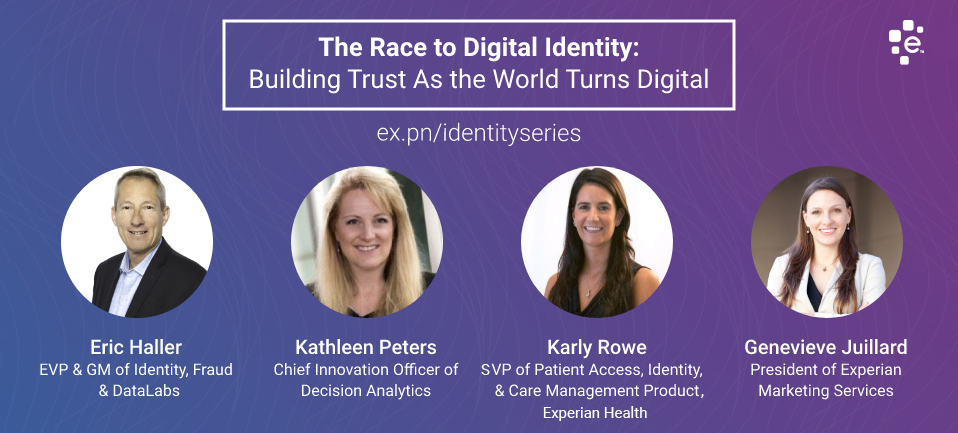
The way we identify ourselves is ever-changing. The growth of the digital world has played a huge role in this. Identity used to be based on basic information: phone numbers, driver’s license information, information in a telephone book, etc. Now, as our world is moving more towards online preferences due to the COVID-19 pandemic, and people are identified by cookies, website preferences, usernames, and other identifying factors on their devices. As identity races towards a more digital perspective, we must be wary of how we can use this information to provide better customer experiences and how it can easily be stolen and taken advantage of. Experian held a special series as part of our DataTalk podcast that focused on the importance of identity and how Experian is utilizing identity throughout of different businesses. The series also looked at how Experian is constantly innovating to ensure our technology and data are being used to create the greatest benefits for our clients and their customers. Every week, Experian’s Director of Social Media Mike Delgado and Experian’s Social Media Specialist Destiny White are joined by data science leaders around the world for the #DataTalk podcast. Why authentication is important The challenge companies are facing is how to digitally identify individuals while maintaining a positive customer experience. They need to rely on new technologies including data, biometric, identity graphs and AI. Eric Haller, Experian’s EVP & GM of Identity, Fraud & DataLabs, speaks on these technologies as a guest on an episode of DataTalk. Businesses need to be able to separate real consumers from the bad guys and authenticate that they are who they say they are. Technology allows business to add secure measures that proves someone’s identity without causing too much friction. For instance, looking at information such as timing and mouse movement in an IP address will help quickly differentiate between a bot and a human. These methods are extremely important in protecting users in their e-commerce journey, something many individuals are utilizing more than ever since the COVID-19 pandemic. Being able to authenticate who someone is helps detect suspicious activity and differentiate between a fraud and a genuine identity, eventually protecting consumers from stolen information and the destroying of credit as well as the ability to take out loans. Using a layered approach to verify identities Kathleen Peters, Experian’s Chief Innovation Officer of Decision Analytics in North America, discusses in her episode of DataTalk how Experian helps protect consumers and businesses from fraud. She explains that identity is dynamic and the information that makes us who we are is always changing. In the past, people were identified by PII (Personally Identifiable Information). Now, we rely on information such as usernames and passwords, cookies, websites visited, and online preferences to create one’s identity. Due to this shift, Peters highlights the importance for businesses to build trust with customers. Because fraudsters have more access to credentials, businesses need to put the right advanced analytics and technology in place to validate and protect identities. Fraudsters are motivated and organized, therefore businesses need to use technology to stay one step ahead. The best thing businesses can do is to implement a layered approach so that they can have the right tools for the right time and apply the right level of authentication. Since our digital-first world is here to stay, businesses must ensure that they have the right tools in place to be agile in how they continually adapt and interact with consumers who are open to more practical means of security. How identity plays a role in healthcare Once trust is established and technologies that assist in authentication are utilized, many industries could benefit such as the healthcare industry. This industry has been under attack during the COVID-19 pandemic and it is important more than ever to avoid making identification mistakes. Karly Rowe, SVP of Patient Access, Identity, and Care Management Product at Experian Health, explains as a guest on DataTalk that data and technologies from Experian have been used to identify patients more accurate than ever, schedule appointments easily and even assist in contact tracing of COVID-19. This is done by using powerful data to fill in information on patients in order to authenticate them as well as find and contact them regarding any exposure to this virus. What marketers and advertisers can do with data and identity On top of contributing to the healthcare industry, Experian has also been using data and technology in the marketing industry. Data, analytics, tools and software are being provided to marketers and advertisers to deliver relevant messages to customers across their most preferred digital channels. Genevieve Julliard, President of Experian Marketing Services, explains in her DataTalk episode how identity is becoming more important than ever with the elimination of third-party cookies. Experian is embracing diversification of new identifiers across the information ecosystem to combine offline and online identity and data assets. With this approach, Experian is able to assist marketers by providing them with a clearer view of their customers across the buying journey and seamlessly deliver relevant content across all digital devices. No matter where the digital world takes us and what it means for identity, Experian is always embracing technology in order to keep up with the needs of its consumers. We use data and the most advanced technologies to confirm individuals, which makes us a leader in identity verification.

Every day at Experian, we are investing in new technologies, talented employees and innovation to help all of our clients maximize every opportunity we have to offer. We are honored the work performed under Eric Haller in our DataLabs received the San Diego Top Tech Awards of 2021. The awards honor technology executives who truly stand out by innovating. In 2010, Experian DataLabs was established to develop and drive creation of innovative products generated from breakthrough experimentation leveraging artificial intelligence, machine learning, advanced analytics and data assets from a variety of sources across Experian’s businesses in 37 countries. Eric originally pitched the idea of DataLabs and received funding for 8 people to begin the first lab in San Diego. Since then, Experian DataLabs has expanded its labs to London, Sao Paulo and Singapore. New products developed in the labs cover mobile, payments, consumer & commercial credit, fraud, targeted marketing & healthcare. During the last year and a half, Eric and his team continue to develop offerings and create new technologies to support the community. In May 2020, in conjunction with the company’s healthcare business, Experian DataLabs developed a free interactive heat map of geographic populations at-risk of being most susceptible to developing severe cases of COVID-19. The Experian COVID-19 Outlook and Response Evaluator (CORE) tool is guiding healthcare organizations and government agencies with planning for the “new normal” and COVID-19 recovery. In addition, Experian DataLabs develop other important initiatives such as the Covid Radar in Brazil to help people, small businesses and governments. Produced in collaboration with 50 organizations, including the United Nations, Amazon, SAP and the University of Sao Paulo, COVID Radar helps the coalition track where supplies are needed most. The coalition delivered tools, equipment, PPE and other supplies to Brazil’s most vulnerable zones. The second part of the initiative focused on aggregating and analyzing the data to create forecasting models that allowed researchers to track various key indicators that has helped dictate what officials should do with lockdowns and provide data around ICU beds and assess what the demand is. As part of Experian’s culture of innovation, Eric inspires his team to innovate due to his inclusive nature, openness, and willingness to listen to new ideas. The AI and revolutionary technology that Experian DataLabs is utilizing is enabling the company to continuously fuel new projects in its pipeline and turn ideas like the COVID Radar and the CORE heat map into a reality faster than ever before.

Read Moreio55 Button 2- Learn more Primary button Secondary button Related Posts
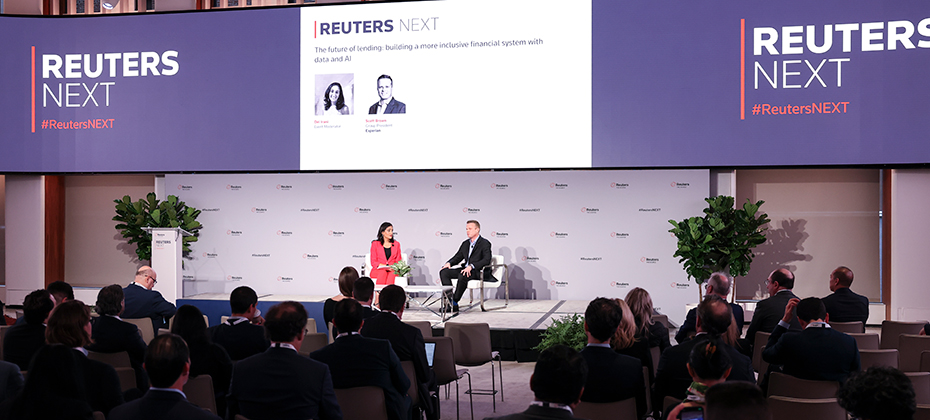
Today, we stand at the forefront of a digital revolution that is reshaping the financial services industry. And, against this backdrop, financial institutions are at vastly different levels of maturity; the world’s biggest banks are managing large-scale infrastructure migrations and making significant investments in AI while regional banks and credit unions are putting plans in place for modernization strategies, and fintechs are purpose-built and cloud native. To explore this more, I recently had the privilege of attending the annual Reuters NEXT live event in New York City. The event gathers globally recognized leaders across business, finance, technology, and government to tackle some of today’s most pressing issues. On the World Stage, I joined Del Irani, a talented anchor and broadcast journalist, to discuss the future of lending and the pivotal role of data and AI in building a more inclusive financial system. Improving financial access Our discussion highlighted the lack of access to traditional financial systems, and the impact it has on nearly 100 million people in North America alone. Globally, the problem affects over one billion people. These people, who are credit invisible, unscoreable, or have subprime credit scores, are unable to secure everyday financial products that many of us take for granted. What many don’t realize is, this is not a fringe subset of the population. Most of us, myself included, know someone who has faced the challenges of financial exclusion. Everyday Americans, including young people who are just starting out, new immigrants and people from diverse communities, often lack access to mainstream financial products. We discussed how traditional lending has a limited view of a consumer. Like looking through a keyhole, the lender’s understanding of the person in view is often incomplete and obstructed. However, with expanded data, technology, and advanced analytics, there is an opportunity to better understand the whole person, and as a result have a more inclusive financial system. At Experian, we have a unique ability to connect the power of traditional credit with alternative data, bringing a more holistic understanding of consumers and their behaviors. We are dedicated to leveraging our rich history in data and our expertise in technology to create the future of credit and ultimately bring financial power to everyone. The future of lending After spending two days with over 700 industry leaders from around the world, one thing is abundantly clear: much like the early days of the internet, today, we are at the cutting-edge of a technical revolution. Reflecting on my time at Reuters NEXT, I am particularly excited by the collective commitment to drive innovative, and smarter ways of working. We are only beginning to scratch the surface of how data and technology can transform financial services, and Experian is positioned to play a significant role. As we look to the future, I am excited about the ways we will create new opportunities for businesses and consumers alike.
The advertising ecosystem has seen significant transformation over the past few years, with increased privacy regulation, changes in available signals, and the rise of channels like connected TV and retail media. These changes are impacting the way that consumers interact with brands and how brands understand and continue to deliver relevant messages to consumers with precision. Experian has been helping marketers navigate these changes, and as a result, our marketing data and identity solutions underpin much of today’s advertising industry. We’re committed to empowering marketers and agencies to understand and reach their target audiences, across all channels. Today, we are excited to announce our acquisition of Audigent—a leading data and activation platform in the advertising industry. With Audigent’s combination of first-party publisher data, inventory and deep supply-side distribution relationships, publishers, big and small, can empower marketers to better understand their customers, expand the reach of their target audiences and activate those audiences across the most impactful inventory. I am excited to bring together Audigent’s supply-side network as a natural extension to our existing demand-side capabilities. Audigent’s ability to combine inventory with targeted audiences using first-party, third-party and contextual signals provides the best of all worlds, allowing marketers to deliver campaigns centered on consumer choices, preferences, and behaviors. The addition of Audigent further strengthens our strategy to be the premier independent provider of marketing data and identity, ultimately creating more relevant experiences for consumers. To learn more about Experian and Audigent, visit https://www.experian.com/marketing/ and https://audigent.com/.