
There’s no question the COVID-19 pandemic is contributing to a unique 2020 holiday season, but there are consistent truths that remain when it comes to the holidays and personal finance. While the season is known for being merry and bright, sadly, financial challenges and stress are equally common for many this time of year. According to our latest holiday spending survey, 60% of consumers feel stressed about their finances during the holiday season and half feel the extra expense of the holidays makes them hard to enjoy. More than half (52%) say COVID-19 has caused credit or financial barriers which are preventing them from doing their shopping the way they had planned. At the same time, 62% agree holiday shopping puts a strain on their finances. In an effort to alleviate some of the financial stress some may be facing, I wanted to share three ways you can protect your financial health this holiday season and prepare for a financially healthy new year: Start with a budget and a plan. It’s easy to lose track of spending and take on unexpected debt during the holidays, which is why creating a budget is an important first step to protect your financial health. Experian research shows the average American plans to spend $775 on holiday gifts this season, but your holiday budget will depend on your unique financial situation. Outline how much you can realistically afford to spend and try to factor in expenses that are sometimes overlooked, which can be a challenge. In fact, our research found four out of five consumers often run into unexpected expenses they hadn’t planned for, including buying unexpected gifts (25%), gift wrapping supplies (25%) and mailing costs for sending gifts (21%). Once you’ve outlined your budget, creating a plan for who you need to shop for and where you’re going to shop can be a helpful next step. Our survey showed 62% of consumers plan to shop more online this year due to COVID-19. If you’re planning to do more shopping from the comfort of your home this year too, tracking online sales and promotions can help you save money, and factoring in shipping costs can help keep your holiday budget on track. Setting a budget and sticking to it, and having a shopping plan to avoid impulse buying will help keep you from falling victim to the pressure of overspending around the holidays. Use credit as a financial tool. Over half of shoppers say they will use credit cards and not cash when holiday shopping. This is an 8% increase from 2019. While using credit wisely is important all year, this is especially true around the holidays. The key is strategic use of credit – whether using a card that provides low interest, rewards points, or cash back – to improve the shopping experience and stretch your dollars. Over a quarter of people say they plan to open a new credit card for the holiday season, which is a 5% increase year-over-year. The top reasons for wanting to open a new card include seeking a promotional no annual percentage rate (APR) credit card, wanting to get a retail store discount, and maximizing spending by getting a card with cashback rewards. If you’re considering applying for a new credit card, improving your credit score can help you take advantage of the best credit offers this holiday season. Experian Boost allows you to get credit for paying your telecommunications, cell phone, utility bills, and streaming services payments on time. More than 4.9 million consumers have connected to the service since March of 2019 and about 61% of those who use Experian Boost see their scores improve. When you’re ready to explore credit card options, Experian’s free Credit Match program can help you find personalized credit card offers based on your unique credit history. Remember, credit is a financial tool, debt is a financial problem. Debt you can’t repay will certainly bring down one’s holiday spirit. If you don’t have a plan for paying off your credit card, using credit may not be a good idea. Protect your identity. The holidays may be the riskiest time of the year when it comes to identity theft and credit fraud. Identity thieves of all sorts are aware that consumers spend significantly more during the holiday season. While many of us are hunting or scrolling for the perfect gifts for friends and family, fraudsters are hard at work too. The number of consumers surveyed who have been identity theft victims during past holiday shopping seasons jumped to 24% from 12% in 2019. The holidays are always a ripe time for cybercriminals with the increased online traffic and this is especially true against the backdrop of COVID-19. To protect yourself from identity theft while shopping online, avoid using public WiFi networks, create strong passwords for your online accounts, and only shop on secure websites you are familiar with. If you are shopping at a store, be sure to cover your credit card information when you enter it, or your personal information if you are applying at the point of sale. Shoulder surfers can use their phones to take a quick photo or video to steal your identity. Also avoid leaving your purse or wallet, or any documents in your car. Identity thieves stalk parking lots looking for opportunity that is just a broken window away. Credit cards offer more protection for both online and in-person purchases than your debit card or cash, so consider using credit for your purchases. If fraud occurs, the money is not gone from your checking account and you can file a claim with your card issuer. Pay the balance in full right away to avoid interest charges. Checking your credit report often can help you spot fraudulent activity. You can get a free credit report from all three bureaus at AnnualCreditReport.com through April 2021. Identity theft monitoring is an easy way to monitor your financial accounts and credit report to identify possible fraud such as a credit card account opened in your name. While the holidays may look a little different this year when it comes to protecting your financial health the same rules still apply. For more information about how to protect your credit history in 2020 and beyond, visit www.askexperian.com or join our weekly CreditChat every Wednesday on Twitter at noon PST/3 p.m. EST.

At Experian, our mission is to increase financial inclusion by empowering consumers. Through our corporate responsibility work, we have always been committed to using our resources to help more people improve their financial health through non-profit partnerships, data analytics, products and services, volunteering and educational programmes. Now, we have an opportunity to reach even more people in hugely underserved communities. Experian has launched the global United for Financial Health project to empower vulnerable people to improve their financial health through education and action. Through the United for Financial Health programme, Experian is partnering with non-profit organizations across the globe to deliver tools and resources to help those affected the most, and certainly, COVID-19 has amplified the need. We have already launched our first three partnerships in the U.S: Operation HOPE – an organisation whose aim is to uplift disenfranchised youth and adults from poverty to thriving in a credit ecosystem. One of the goals of the partnership is to help ethnic minority groups who are struggling to raise and sustain a 700-credit score or higher. By helping people raise their credit scores we can shift their mindset from one of “survival” to “thriving” and make a real difference in their lives. For some, a higher score may mean the ability to purchase a new car, have a credit card, own a home, or simply save money for their family. Black Girl Ventures – a non-profit that advocates for Black and Brown women entrepreneurs and their small businesses. Our partnership will provide financial resources to help scale its BGV Style Pitch Competition and Amplify BGV Programs and we are a proud sponsor of BGV’s new weekly podcast, “From Hustling to Handling, How to Stay in Business.” Together, we will curate entrepreneurial education content to assist a broader audience with knowledge and best practices related to financial literacy and wealth management. NAACP Empowerment Programs – part of the largest and most pre-eminent civil rights organization in the U.S. Our partnership creates The Home Preservation Grant, which will provide grants to African American homeowners at risk of losing their homes because of COVID-19-related hardship. In the UK, we are delighted to launch a new partnership with the charity National Numeracy. Numeracy is the strongest predictor of a person’s financial literacy and is therefore crucial to their financial health. However, poor numeracy is widespread, and disproportionately affects low-income communities where people are most at risk of marginalization from the COVID-19 pandemic. Thankfully, confidence and competence with numbers is within everyone’s grasp, with the right support. Working together, we can inspire and support over 60,000 people to take positive steps towards building their confidence and competence with numbers, helping many of those most affected by this crisis take their next step towards improved financial health. We have already made good progress in a relatively short space of time and will continue to invest our energy into building further partnerships to reach more people in need of support. This is just the beginning of our journey, but we are confident that we can make a huge difference to millions of people in communities across the globe.

I still remember buying my first home in Southern California in my mid 20’s. After going through countless open houses and unfamiliar living rooms, I found a home that met my needs. I decided to take the plunge, put an offer in, and hope for the best. It was a roller coaster of emotions – excitement, fear, joy, and pride. Owning a home is considered a mark of financial achievement. It not only builds generational wealth but also contributes to the generational vibrancy of communities. For many, the COVID-19 pandemic has pushed that dream further out of reach or threatened to take it away. That’s why we are thrilled to announce the launch of the Home Preservation Grant. We are partnering with the NAACP Empowerment Programs for this pilot program, which will provide up to $10,000 in grants to select African American homeowners at risk of losing their homes because of COVID-19-related hardship. The Home Preservation Grant is part of our United for Financial Health program here at Experian, which aims to empower and protect vulnerable consumers to improve their financial health through education and action. For this pilot, we are targeting homeowners in the Atlanta, Ga. area and we plan to expand the program to other cities across America in the future. The application process is open now and ends on December 8. Grant recipients will be announced on December 14, providing what we hope will be some much needed relief in time for the holidays.

2020 has been a year that has significantly impacted us all and the shockwaves are likely to challenge us for some time to come. One of the big disappointments for the data and tech industry is the postponement or cancellation of a number of major events – including the likes of Women in Data, which Experian was a proud Gold sponsor in 2019. Although we are not able to celebrate the Women in Data flagship event in person this year, we are thrilled to be an official partner of the very first WiD Week. This is a fantastic opportunity that will allow us to virtually gather together, support each other, and learn while in a safe online environment, driven by content that the Women in Data community needs right now. We are particularly excited to be hosting a session on Tuesday 24 November, which will focus on our support of Girls in Data. In this session, Experian’s Emily Capewell and Louise Maynard-Atem will be providing some thoughts on their involvement with the recent data challenge we hosted during the last lockdown. The data challenge was designed to help inspire young girls and boys to pursue a career in STEM. Louise will also be speaking on Thursday about her experience of 2020 and how we can action change as we head into 2021. This will be one of six short stories to mark Women in Data’s sixth birthday. We are extremely excited to be involved with WiD Week and while it will be slightly different this year, we hope our involvement can help empower and encourage more women into the data industry, supporting the next generation of data scientists who can help shape the future. You can find out more about WiD Week here.

For the past several years, Experian has been on a journey to help drive financial inclusion for millions of people around the world. This has required significant focus on how we operate, who we partner with, and the products and solutions we offer. Four years ago, when we decided to partner with and invest in Finicity, a leading financial data aggregator based in Salt Lake City, we did so on our strong belief in consumer-permissioned data and our shared vision with their leadership team. At the time, we knew Finicity’s commitment to empower consumers and drive the digital revolution fit perfectly with our priorities. Over the years, this has proven to be true time and time again as we’ve leveraged Finicity’s technology capabilities to create enormous opportunity for our clients and improve financial access for consumers. One example is our partnership on Experian Boost. With the support of Finicity’s infrastructure, more than 4.9 million consumers have connected to Experian Boost to contribute their on-time payments for their telecommunications, utility, streaming service and cell phones directly to their Experian credit reports. Through Experian Boost, and access to real-time consumer-permissioned data, we are increasing financial inclusion by helping lenders identify more consumers who can pay responsibly. In an equally powerful testament to the power of consumer-permissioned data, our partnership with Finicity is helping streamline the homebuying experience for consumers and lenders. As a distribution partner of Finicity’s Verification Solutions, we are delivering Verification of Assets (VOA), Verification of Income (VOI) and Verification of Income and Employment (VOIE) to the mortgage market. This innovative digitization of data and analytics is streamlining experiences for borrowers and is a critically important step in modernizing the mortgage process. Additionally, we have clients successfully utilizing Finicity’s Verification Solutions in automotive underwriting, personal lending, tenant screening and other sectors. Earlier this week, Mastercard closed its acquisition of Finicity. This move, along with the overall trajectory of market demand, is testament to the fact that we clearly invested in the right capability, the right team and the right vision at the right time. But our journey together isn’t over, it has just been reinforced and will continue with Finicity even under new ownership. Our commitment to working with Finicity does not change with this news, it is only enhanced. Our drive to accelerate digital lending, empower consumers and drive more consumer-permissioned data solutions is higher than ever. We will continue to partner with Finicity, now part of the Mastercard family, as a central component of our strategy. We look forward to a continued strong relationship with this new, combined entity as we continue to bring innovative solutions for consumers and businesses to the table.

Tens of millions of workers in the U.S. found themselves unemployed earlier this year, as the COVID-19 pandemic caused job loss rates not seen since the Great Depression. While average Americans were reaching out to their state agencies seeking assistance, fraudsters saw unprecedented opportunity. It may be difficult to imagine why someone would take advantage of a system striving to help those in need, but cybercriminals often thrive in times of crisis. At Experian, we took notice as we began to hear from states about a significant uptick in fraudsters wrongfully claiming benefits. When it comes to innovation, we strive to be agile and nimble so we can adapt to the changing needs of consumers and businesses. As a result of COVID-19, one of those emerging needs is to join the fight against unemployment insurance fraud. That’s why Experian has partnered with the Unemployment Insurance (UI) Integrity Center to help mitigate unemployment insurance fraud. Together, we will provide state agencies with a centralized platform to verify identities that are applying for unemployment insurance. The new partnership will combine Experian’s Precise ID® solution, which integrates identity analytics with advanced fraud risk models to distinguish various types of fraud, with the UI Center’s Identity Verification (IDV) capability. In short, when state agencies submit claims, the IDV solution will return ID theft scoring and associated cause codes, enabling them to assess whether a claim may be fraudulent. This can be easily implemented by any state UI agency through the Center’s Integrity Data Hub. While mitigating fraud is top of mind, security is a top priority as well. The platform was designed and built using the latest National Institute of Standards and Technology IT security standards to ensure the security of sensitive data. With the number of unemployment claims remaining high, it’s clear that state agencies must maximize their time and resources. Fortunately, the solution powered by Experian’s Precise ID will be available to state agencies at no cost through UI Integrity Center, operated by the National Association of State Workforce Agencies (NASWA) in partnership with and funded by the U.S. Department of Labor. This is one of many steps we’re taking at Experian to combat fraud, and we will continue to innovate and adapt on the road to recovery ahead of us. As we move forward together, Experian is committed to leveraging innovation and technology to protect consumers and help businesses meet the challenges of 2020 and beyond.

Read Moreio55 Button 2- Learn more Primary button Secondary button Related Posts
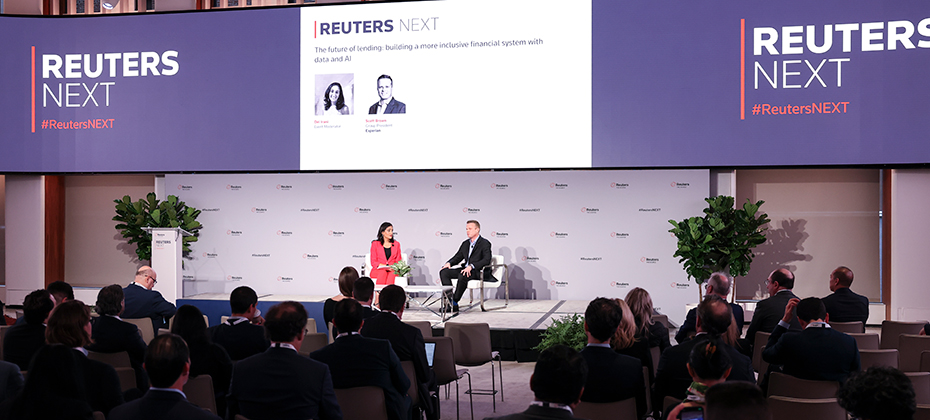
Today, we stand at the forefront of a digital revolution that is reshaping the financial services industry. And, against this backdrop, financial institutions are at vastly different levels of maturity; the world’s biggest banks are managing large-scale infrastructure migrations and making significant investments in AI while regional banks and credit unions are putting plans in place for modernization strategies, and fintechs are purpose-built and cloud native. To explore this more, I recently had the privilege of attending the annual Reuters NEXT live event in New York City. The event gathers globally recognized leaders across business, finance, technology, and government to tackle some of today’s most pressing issues. On the World Stage, I joined Del Irani, a talented anchor and broadcast journalist, to discuss the future of lending and the pivotal role of data and AI in building a more inclusive financial system. Improving financial access Our discussion highlighted the lack of access to traditional financial systems, and the impact it has on nearly 100 million people in North America alone. Globally, the problem affects over one billion people. These people, who are credit invisible, unscoreable, or have subprime credit scores, are unable to secure everyday financial products that many of us take for granted. What many don’t realize is, this is not a fringe subset of the population. Most of us, myself included, know someone who has faced the challenges of financial exclusion. Everyday Americans, including young people who are just starting out, new immigrants and people from diverse communities, often lack access to mainstream financial products. We discussed how traditional lending has a limited view of a consumer. Like looking through a keyhole, the lender’s understanding of the person in view is often incomplete and obstructed. However, with expanded data, technology, and advanced analytics, there is an opportunity to better understand the whole person, and as a result have a more inclusive financial system. At Experian, we have a unique ability to connect the power of traditional credit with alternative data, bringing a more holistic understanding of consumers and their behaviors. We are dedicated to leveraging our rich history in data and our expertise in technology to create the future of credit and ultimately bring financial power to everyone. The future of lending After spending two days with over 700 industry leaders from around the world, one thing is abundantly clear: much like the early days of the internet, today, we are at the cutting-edge of a technical revolution. Reflecting on my time at Reuters NEXT, I am particularly excited by the collective commitment to drive innovative, and smarter ways of working. We are only beginning to scratch the surface of how data and technology can transform financial services, and Experian is positioned to play a significant role. As we look to the future, I am excited about the ways we will create new opportunities for businesses and consumers alike.
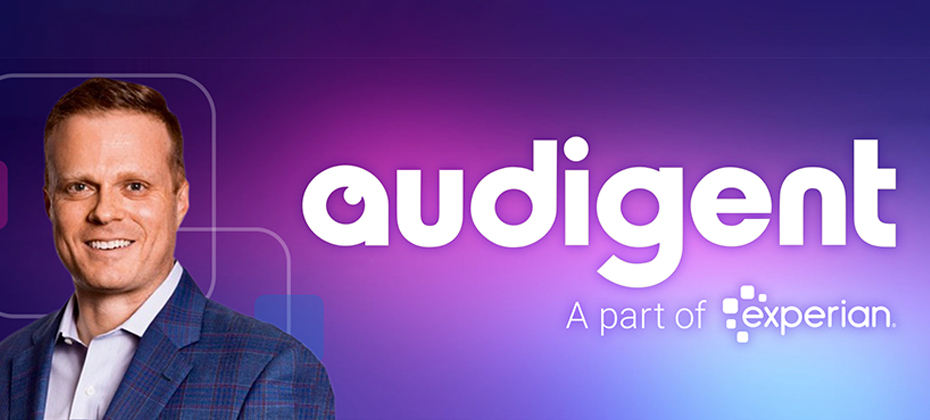
The advertising ecosystem has seen significant transformation over the past few years, with increased privacy regulation, changes in available signals, and the rise of channels like connected TV and retail media. These changes are impacting the way that consumers interact with brands and how brands understand and continue to deliver relevant messages to consumers with precision. Experian has been helping marketers navigate these changes, and as a result, our marketing data and identity solutions underpin much of today’s advertising industry. We’re committed to empowering marketers and agencies to understand and reach their target audiences, across all channels. Today, we are excited to announce our acquisition of Audigent—a leading data and activation platform in the advertising industry. With Audigent’s combination of first-party publisher data, inventory and deep supply-side distribution relationships, publishers, big and small, can empower marketers to better understand their customers, expand the reach of their target audiences and activate those audiences across the most impactful inventory. I am excited to bring together Audigent’s supply-side network as a natural extension to our existing demand-side capabilities. Audigent’s ability to combine inventory with targeted audiences using first-party, third-party and contextual signals provides the best of all worlds, allowing marketers to deliver campaigns centered on consumer choices, preferences, and behaviors. The addition of Audigent further strengthens our strategy to be the premier independent provider of marketing data and identity, ultimately creating more relevant experiences for consumers. To learn more about Experian and Audigent, visit https://www.experian.com/marketing/ and https://audigent.com/.