
If you’re anything like me, you’re likely spending much more time online these days. From online shopping to grocery and food delivery and thumbing through our social media feeds – the COVID-19 pandemic has many of us spending more time in our homes and “plugged in” than ever before. The COVID-19 pandemic has also contributed to an increase in fraud activity. According to the FTC from January to early October 2020, consumers have reported losing a total of more than $156 million to COVID-19-related fraud. At Experian, we are committed to protecting consumer financial health during the pandemic and beyond. Educating consumers about how to protect their personal information online is key to supporting this effort. As we prepare to enter the holiday season in our virtual world and in honor of National Cybersecurity Awareness Month, I’d like to share a few ways you can protect your financial health online: Shop Safely Online As I mentioned, the amount of shopping you do online has likely increased significantly since the start of the COVID-19 pandemic. This is a trend that’s expected to continue. In fact, according to a recent report from Experian, as many as half of consumers globally expect their spending online to increase in the next 12 months. Practicing safe online shopping habits is always important. This is especially true now. While you may not be spending as much time in airports or your local coffee shops, it is a good practice to avoiding using your financial information to make purchases online if you are on a public WiFi network. Without a password protected network, you have a higher risk of fraudsters gaining access to your banking information which could significantly damage your financial health. Using a virtual private network or a VPN can be an added layer of protection when you are entering your financial information online. Using a credit card to make your online purchases is also a useful way to protect yourself against losses tied to fraudulent charges. According to the federal Fair Credit Billing Act if your credit card — the physical card — is stolen and used to make fraudulent purchases, your issuer can hold you responsible for up to $50 in fraudulent charges. However, if you report the card stolen before any fraudulent charges are made, you have no liability. If your card number is stolen but you’re still in possession of the card, you’re not responsible for any fraudulent charges. Avoid Falling for Phishing Emails Phishing is an attempt to obtain sensitive information for criminal and fraudulent purposes through email. Against the backdrop of the pandemic, there have been increased reports of phishing attempts around COVID-19 testing, vaccines, treatments and cures. Keep in mind that generally if something sounds too good to be true, it likely is. To prevent damage to your identity or your financial health avoid opening any suspected phishing emails and never click on included links. While phishing emails are getting more sophisticated, there are a few clues that can help you identify one in your inbox. If you receive a suspicious looking email, look at the sender name or email address. Phishing emails tend to have suspicious email addresses that are often different than the name of the sender (it could be anything from a slight misspelling of the senders name to an email address that is completely different). It’s also common for phishing emails to use urgent language and include unusual attachments or links. While reputable organizations may sometimes ask for personal information over email, pay close attention to the details of the email before sharing any of your information. It may be a better idea to call the requesting organization and find out if there is a more secure way to do whatever it is they may be requesting. Always think twice before clicking any links. When in doubt, type the organization’s name into an internet search and visit the site directly. Protect Your Passwords This is a basic point, but one that is commonly overlooked. Using complex passwords can be your first line of defense against potential cyber threats. I know it can be challenging but avoid using the same password for multiple online accounts. When you’re creating unique passwords, it’s best to include a minimum of eight characters with a variety of letters, numbers and symbols. Keeping track of your passwords for your online bank accounts, email, social media, shopping apps and online medical portals can be a lot to manage. A password manager subscription can be a convenient and secure way to manage your passwords. They are affordable and more secure than writing down all your passwords or using the same password for multiple accounts. Avoid Over Sharing on Social Media Oversharing on social can lead to unwanted implications. For example, fraudsters and criminals can learn a lot about you from the data included in the photos you share online, including where you are and when you are there. Avoid photos of items that can be used to determine more information about you such as your license plate or the front of your home. Keep in mind, that while it may be tempting to share photos of your family vacations on your social networks, this may also tell unwanted visitors that you are not home. Use tools to Combat Fraudsters Checking your credit report regularly can help you stay informed about potentially fraudulent activity. In an effort to encourage consumers to monitor and understand the information in their credit reports, Experian joined forces with the other U.S. credit reporting agencies, to offer free weekly credit reports to all Americans through April 2021 via www.annualcredreport.com. Credit monitoring services can help you spot potential fraud early. Experian offers free and paid services that provide daily credit monitoring alerts for things like new inquiries and accounts opened in your name, changes to your personal information and suspicious activity detected on your Experian credit report. You can find more National Cybersecurity Awareness Month resources to protect yourself online here.

As the nation’s leading Credit Bureau, we have two primary goals. On one hand, we want to provide lenders the data necessary to assess the risk that a loan applicant represents. On the other hand, we want to help consumers build credit and improve access to credit. This bifurcated set of objectives is the inspiration behind our annual State of Credit report. Each year, this report provides a view into how consumers are managing credit, including their debt levels, on-time payments and utilizations rates. Now in its 11th year, our latest report shows promising signs in terms of how consumers are managing their debts against the backdrop of the COVID-19 pandemic. While there is no question the global pandemic has created many financial challenges for consumers, this report shows something I’ve always believed: many American consumers are resilient, they make smart decisions in light of a difficult environment and they adjust their financial habits. Specific evidence for that assertion can be found as we compare 2019, the year prior to the pandemic and 2020, the year marked by the impacts of the pandemic. Year-over-year, consumers lowered their credit card balances, decreased their utilization rates and reduced delinquency rates on the recurring monthly payments they need to make to service their debt. These factors attributed to an average credit score of 688 — a six-point increase from the same period in 2019. You can view additional findings from this year’s report here. The Value Credit Data in America When determining whether to extend an offer of credit to a consumer, lenders can gain excellent insight into a consumer’s risk profile from the information included in a consumer’s credit profile. It details a consumer’s financial track record and delivers a historical view of how a consumer is managing and repaying debt over time. This information helps lenders determine who can fulfill their financial obligations and ensures consumers continue to have access to credit. Recently, there are reports of using alternative means to assess consumer creditworthiness such as cash-flow data. While Experian is a recognized leader and advocate for the use of alternative data, the use of cash flow data alone can be risky. For example, consumer’s savings have also increased since the start of the pandemic. If a consumer is responsibly and regularly investing in some form of savings, this would narrow their cash flow, which may be misleading and constrain financial access. Looking at a consumer’s credit utilization rate, payment histories and credit balances through traditional credit data remains the primary means to effectively assess lending risk for most American consumers. When necessary, layering traditional credit data with alternative credit data can provide lenders with a more detailed view of a borrower’s stability, ability and willingness to repay. For example, innovations like Experian Boost empower consumers to contribute on time payment histories for additional monthly recurring financial obligations, such as their cable, utilities, mobile phone or Netflix service, directly to their Experian credit report. These payment histories can demonstrate to lenders how reliably consumers are servicing these payments. Incorporating this information has been proven to increase the predictiveness of a consumer’s credit reputation and can complement the data derived from their lending history. Of course, not every American consumer is in a position to adjust their financial habits and make the commensurate smart decisions. Some have had the rug pulled out from underneath them. The CARES Act stimulus was effective in increasing the number of consumers who could maintain their financial health, but still some need more help as we embark on the road to economic recovery from the COVID-19 pandemic. At Experian, we feel that educating consumers about the information included in their credit report and ways they can improve their credit histories will be another factor in getting the economy as a whole humming again and helping those most in need. We pride ourselves to be “The Consumers’ Bureau” and, as such, education will continue to be a primary focus for us. In an effort to encourage consumers to regularly monitor and understand the information in their credit reports, Experian joined forces with the other U.S. credit reporting agencies to offer free weekly credit reports to all Americans through April 2021 via www.annualcreditreport.com. Experian also offers consumers free access to their credit report and ongoing credit monitoring at Experian.com. For additional ways to maintain a healthy credit profile, I encourage you to: Join Experian’s #creditchat hosted by @Experian on Twitter with financial experts every Wednesday at 3 p.m. Eastern time. Visit the Ask Experian blog for answers to common questions, advice and education about credit. Add positive telecom and utility payments to your Experian credit report for an opportunity to improve your credit scores by visiting experian.com/boost[1] For additional resources, visit https://www.experian.com/consumereducation or experian.com/coronavirus. [1] Results may vary. See Experian.com for details

There are many responsibilities I carry as CEO of Experian North America. All of them critical in terms of client relationships, product offerings, innovation, culture, our people and our purpose. A part of my work that I'm extremely passionate about is how we make a difference to consumers and their financial health. As leading data and technology company – and the world’s largest credit bureau – we have the opportunity to work with organizations and individuals every day to help them achieve their financial goals. And while that is good for business, it is also good for society and consumers. That is why I am pleased to join the HOPE Global Forum and John Hope Bryant to announce our new partnership. Operation HOPE is a national nonprofit with goals that align with our own at Experian: to uplift disenfranchised youth and adults from poverty to thriving in a credit ecosystem. We are committed to helping vulnerable communities with our data, analytics, products and services and working with Operation HOPE will help us further that mission. One way we have already been doing that is through products like Experian Boost, designed to drive financial inclusion and help people get fair and affordable access to credit. I have seen firsthand how these actions can change people’s lives. Let me tell you about an Experian Boost customer named Lawrence. Last spring, in March of 2019, his credit score was 640. He was already enrolled in our credit monitoring services, but was not proactive in trying to improve his credit score. Then, he tried Experian Boost. He was able to show positive payment history for utilities, cable, and his cell phone bills. Instantly, his score jumped 30 points. Following the advice of our credit education resources, he paid down his credit cards, which propelled his score even higher. He now has a credit score of 770. What does this mean for Lawrence and his family? Previously, they owned one car and paid 18% interest on that loan. Now, the family has two cars, and they pay 5% and 8.2% on two car loans. This represents incredible savings the family can now use for other needs, and increased access to financial services that can help them achieve other goals. This is what we mean when we talk about empowering consumers so they can have financial freedom. For some, this means the ability to purchase a car, have a credit card, own a home, or simply just save money. The financial health journey can start at any time and have a lifetime impact. I am really excited about this partnership. Together we have the potential to make a tangible difference in financial inclusion in the United States, combining Operation HOPE’s education and counseling programs with our credit education knowledge, capability and services like Experian Boost.

At Experian, we are committed to educating consumers about how to manage their credit histories and protect their financial health. At the same time, we know the COVID-19 pandemic has created a difficult economic reality for millions of Americans. In response, many people have questions about how to protect themselves financially, including their credit histories and scores. To address these questions, we partnered with pro football legend and American Ninja Warrior host Akbar Gbajabiamila to educate consumers across the country about steps they can take to protect their financial health and their credit standing. Gbajabiamila, author of “Everyone Can be a Ninja,” is passionate about helping people develop a financial game plan and he understands having a good credit history is a key component of good financial health. These interviews provided a platform for Gbajabiamila to share the four-point financial fitness game plan consumers can use protect and improve their financial health during the pandemic, including: Contacting your lenders as soon as possible if you think you may miss a payment. Many lenders provide emergency support, which can help protect your credit standing. Getting credit for paying cable, satellite, internet, Netflix and utility bills on time with Experian Boost Exploring balance transfer options or other introductory credit offers through Experian Credit Match Checking your credit report regularly. It’s free once a week at AnnualCreditReport.com. Tune in to Gbajabiamila’s interview with NBC Washington and hear his message to consumers in the videos below. For more credit education resources and tools: Join Experian’s #CreditChat hosted by @Experian on Twitter with financial experts every Wednesday at 3 p.m. Eastern time Visit the Ask Experian blog for answers to common questions, advice and education about credit For additional resources visit www.experian.com/coronavirus

In 2013, I came out to my brother. Sitting down at dinner, knowing whole-heartedly that he would fully accept me and nothing with our relationship would change, I was still scared. Each year on October 11, National Coming Out Day, I reflect on that first coming out experience and what I truly feared. Even though I knew I was safe, I also knew that coming out to him was just the start of coming out every single day for the rest of my life. It was the start of facing discrimination and judgment both in day-to-day life and professionally. It wasn’t a decision I made lightly. Coincidently, my brother came out to me at that very same dinner which certainly took some weight and anxiety off my shoulders. We came out to our family, together later that week and we were welcomed with love, acceptance, and support. The unconditional support I received is not normal, but my anxiety around the process was. I am grateful and quite lucky that my initial coming out process to my family was, for lack of a better term, easy. Like many others I don’t experience that same ease everywhere I go. I have been asked to leave restaurants, turned away from stores, spat on multiple times, and even asked to leave mass during service. I am regularly questioned when entering or leaving a women’s public restroom. Michele Bodda, our executive co-sponsor of Experian’s Pride employee resource group, said it perfectly in her message two years ago, “The difficulty some of our LGBT+ colleagues face making daily decisions about where they can be fully present aren’t merely insecurities. They are the realities of being LGBT+.” Let that sink in. Coming out is not a one and done experience, it is something we do over and over throughout our lives. That reality impacts people in different ways, and it’s why acknowledging National Coming Out Day means so much to me – why it means so much to many others. I feel particularly fortunate to work for a company that celebrates and recognizes our uniqueness. I know many people at Experian, like myself, who feel empowered and supported to bring their whole self to work and that reality is assuring, professionally and personally. I have been told I am brave for bringing forth my full authentic self each day. During a time of such global anxiety, uncertainty, and open expressions of intolerance and hatred, being a voice of empowerment, representation, and visibility for folks who do not feel comfortable being out is more important than ever. I’m willing to be a voice so others know they are not alone. Be brave with me. And if you’re not ready, I understand. I’m here for you when you are.

In a world that was already becoming increasingly digital, COVID-19 expedited timelines and turned forecasted projects into immediate needs nearly overnight. I’ve seen this play out in my role at Experian as well as across the financial services industry. Experian was recognized as an innovative company prior to the pandemic and the current environment has only accelerated our ability to innovate. As we surpassed the six month mark adjusting to our new normal, I was invited to join Bloomberg’s Future of Finance: Leveraging Digital Transformation for a Virtual World roundtable discussion with Senior Analyst of Bloomberg Intelligence Julia Chariell and leaders from IBM, Ally Financial, Deutsche Bank and others, to share how we are rising to meet the needs of consumers and lenders during the COVID-19 pandemic. You can find a recap of our conversation here and view the full video discussion here. We know each American is facing unique COVID-19-related circumstances, so there is not a one-size-fits-all solution. This notion has carried us as we are rising to meet the needs of our clients and consumers during the pandemic. We must allow individuals who can still meet their financial obligations to have access to credit and ensure lenders can identify them. Maintaining and improving financial access for these consumers will play an important role in our road to economic recovery. To continue to lend responsibly, the financial services industry must carefully examine all aspects of consumer financial capability in near real-time – consumer control and consumer-permissioned data play a key role in achieving this. By leveraging accurate data, I believe we have a chance to lessen the impact of the current U.S. economic crisis, extend credit responsibly, and support the hardest-hit consumers as we adjust to a new world post COVID-19.

Read Moreio55 Button 2- Learn more Primary button Secondary button Related Posts
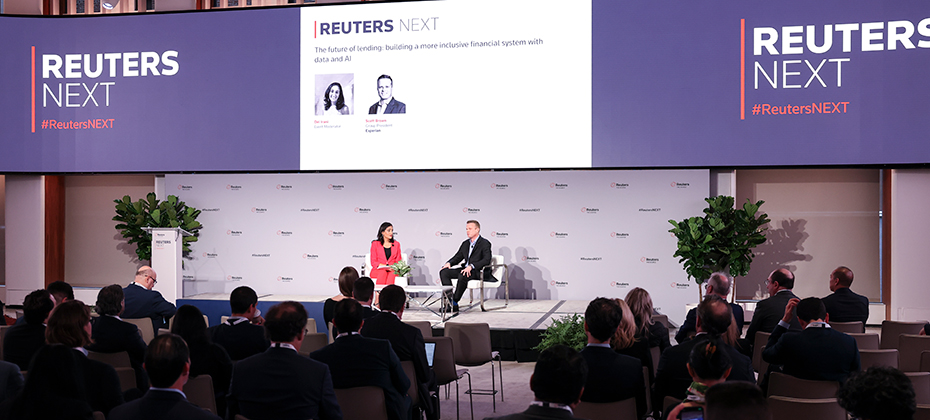
Today, we stand at the forefront of a digital revolution that is reshaping the financial services industry. And, against this backdrop, financial institutions are at vastly different levels of maturity; the world’s biggest banks are managing large-scale infrastructure migrations and making significant investments in AI while regional banks and credit unions are putting plans in place for modernization strategies, and fintechs are purpose-built and cloud native. To explore this more, I recently had the privilege of attending the annual Reuters NEXT live event in New York City. The event gathers globally recognized leaders across business, finance, technology, and government to tackle some of today’s most pressing issues. On the World Stage, I joined Del Irani, a talented anchor and broadcast journalist, to discuss the future of lending and the pivotal role of data and AI in building a more inclusive financial system. Improving financial access Our discussion highlighted the lack of access to traditional financial systems, and the impact it has on nearly 100 million people in North America alone. Globally, the problem affects over one billion people. These people, who are credit invisible, unscoreable, or have subprime credit scores, are unable to secure everyday financial products that many of us take for granted. What many don’t realize is, this is not a fringe subset of the population. Most of us, myself included, know someone who has faced the challenges of financial exclusion. Everyday Americans, including young people who are just starting out, new immigrants and people from diverse communities, often lack access to mainstream financial products. We discussed how traditional lending has a limited view of a consumer. Like looking through a keyhole, the lender’s understanding of the person in view is often incomplete and obstructed. However, with expanded data, technology, and advanced analytics, there is an opportunity to better understand the whole person, and as a result have a more inclusive financial system. At Experian, we have a unique ability to connect the power of traditional credit with alternative data, bringing a more holistic understanding of consumers and their behaviors. We are dedicated to leveraging our rich history in data and our expertise in technology to create the future of credit and ultimately bring financial power to everyone. The future of lending After spending two days with over 700 industry leaders from around the world, one thing is abundantly clear: much like the early days of the internet, today, we are at the cutting-edge of a technical revolution. Reflecting on my time at Reuters NEXT, I am particularly excited by the collective commitment to drive innovative, and smarter ways of working. We are only beginning to scratch the surface of how data and technology can transform financial services, and Experian is positioned to play a significant role. As we look to the future, I am excited about the ways we will create new opportunities for businesses and consumers alike.
The advertising ecosystem has seen significant transformation over the past few years, with increased privacy regulation, changes in available signals, and the rise of channels like connected TV and retail media. These changes are impacting the way that consumers interact with brands and how brands understand and continue to deliver relevant messages to consumers with precision. Experian has been helping marketers navigate these changes, and as a result, our marketing data and identity solutions underpin much of today’s advertising industry. We’re committed to empowering marketers and agencies to understand and reach their target audiences, across all channels. Today, we are excited to announce our acquisition of Audigent—a leading data and activation platform in the advertising industry. With Audigent’s combination of first-party publisher data, inventory and deep supply-side distribution relationships, publishers, big and small, can empower marketers to better understand their customers, expand the reach of their target audiences and activate those audiences across the most impactful inventory. I am excited to bring together Audigent’s supply-side network as a natural extension to our existing demand-side capabilities. Audigent’s ability to combine inventory with targeted audiences using first-party, third-party and contextual signals provides the best of all worlds, allowing marketers to deliver campaigns centered on consumer choices, preferences, and behaviors. The addition of Audigent further strengthens our strategy to be the premier independent provider of marketing data and identity, ultimately creating more relevant experiences for consumers. To learn more about Experian and Audigent, visit https://www.experian.com/marketing/ and https://audigent.com/.