sdfsad sddfs sdfsdf sdsf sd sfsdfsdf s
asdf sa dsdfdsf ds dsf sdfsdf sdfsd sdf
In this article…

A few years back, a friend approached me at church, devastated because his identity had been stolen. His tampered identity made it difficult for him to access credit, and his small business was suffering as a result. I’ve been working at Experian for 9 years, and I’m regularly asked by folks how to effectively build credit and keep identities secure, but this case had me stumped. I ended up directing him to a colleague of mine who helped facilitate his recovery, but I wanted to do more. I started asking around the office how I could help not only friends and family, but anyone in the community who is concerned about their credit. That’s when I joined Experian’s Ambassadors Program. As an Ambassador, I now regularly volunteer my time to share financial literacy presentations on credit and identify theft prevention with people in my community, from students to church groups. One presentation I gave recently really changed my perspective on the power of credit. My son asked me to present at his company, Capital Group, in the Financial District of Los Angeles. Walking into the presentation, I assumed that their work in finance would make them credit experts. I assumed I would be presenting to a small group of people who felt confident about their credit and would ask very few questions. I couldn’t have been more wrong. The group was two times larger than any audience I’d presented to before, and they were incredibly engaged. Many inquired about simple credit concepts: “What should I be aware of regarding my credit report? How can I make my credit better?” It dawned on me that just because someone’s in finance or business doesn’t automatically mean they understand the ins and outs of credit – they work just like you and I do, and it’s not their #1 job to worry about their credit. I realized that everyone could benefit from the information we were providing. During that presentation, I broke the concept of credit down into manageable chunks, explaining things like the consequences of late mortgage payments, how to prevent identity fraud and a person’s credit utilization rate. I drew on the mistakes I made as a young man and the hindsight I now have as a grandfather to 19 children. I wanted to equip them with the tools they needed to adjust to all of life’s events – from divorce to sending a kid off to college – and help them make financial changes that will positively benefit them and their families. One presentation at a time, I want to continue ensuring that families can confidently pursue their dreams and achieve financial milestones.

A core theme of the European Union’s General Data Protection Regulation (EU GDPR), which is to keep consumer interests front of mind at all times, mirrors sound fundamental advice for all companies. Customer centric business practices are especially essential in the data-driven age, driving innovation and opportunity. The transparent, secure and effective use of data has transformative potential for consumers and businesses. But consumers must feel comfortable and in control of its opportunities, and there is a clear role for our industry to play in addressing their understandable concerns around privacy and security. In particular, there is a need for more openness about how data is collected and used for the benefit of consumers. In business, we are all aware of the advantages that data-driven technology can bring. Yet the way data is harnessed for good hasn’t, to date, been central part of the prevailing ‘data narrative’. At Experian, we process over 1,151 billion records a year, with a global segmentation of more than 2.3 billion consumers in more than 30 countries, and demographic data on over 700 million individuals and 270 million households combined. It’s a responsibility we take very seriously. We have always aspired to set new benchmarks for best practice in our operating standards and our approach to data stewardship. As a trusted data custodian for millions of consumers, we aim to unlock the power of data to create opportunities for individuals, businesses and society. The world is becoming more connected every day, and if businesses are serious about keeping up with the change, a truly holistic approach to managing all this data is required. One which protects our customers and our products from risks, such as an ever-increasing array of cyber threats, while ensuring the customer journey is as relevant and fluid as it needs to be. To help businesses to start thinking about how they can survive and thrive in the new regulatory environment, we’ve created a new whitepaper, ‘Defining the Data Powered Future’. It sets out some key steps that business should consider working through, our three ‘I’s – “Investigate”, “Improve” and “Integrate”. Businesses need to start to thinking about their implementation requirements now, if they haven’t already. And we hope this paper will offer some food for thought. It’s not good enough to feel ‘fairly confident’ that the data held is being used in the interests of the customer. It’s a requirement that new levels of scrutiny are applied here, and the customer’s perspective is the be-all and end-all guide to whether you are getting it right. With the advent of GDPR, this type of joined-up thinking will need to become the new normal, as the “datafication” of our world continues. I would encourage businesses of all shapes and sizes to take the opportunity that this moment brings. Now is the time to create a truly consumer-centric approach to data governance and strategy, and to secure your customer’s place at the heart of your data powered future.
![This Year’s Most Sought-After Data Roles [White Paper] #DataScience #CDO #BigData](https://stg1.experian.com/blogs/news/wp-content/uploads/2017/07/hands.png)
Organizations everywhere are looking to do more with their data assets, as well as better leverage open data and third party data sources for additional consumer insight. The good news is that there is no shortage of information available. The bad news is that wrangling and making sense of all that information can be very challenging. That is why we see 61 percent of U.S. companies stating inaccurate data is undermining their ability to provide an excellent customer experience. However, there is a new breed of data professionals trying to change all that. New talent is coming into organizations looking to unlock the power of data to transform business operations and better serve clients. Businesses everywhere are eager to bring on these data professionals; to the point it is creating a frenzy around data staffing. If you are looking to hire new data professionals, you are certainly not alone. According to a new Experian Data Quality report, Investing in Digital Transformation: This Year’s Most Sought-After Data Roles, businesses are hiring a mix of business- and regulation-focused data positions. Below is a chart showing the top roles being hired according to U.S. respondents and also c-level executives specifically: There are a few key roles I want to highlight. First, data analysts. They are the most sought-after data role by U.S. organizations, mainly because they are so versatile. They are individuals placed across departments to analyze data in such a way that it can be used for business intelligence. 57% percent of businesses spend a majority of their time analyzing data, and this role is key to ensuring they’re getting the right results. The most important role for c-level executives is the chief data officer (CDO). The CDO has seen a lot of hype in the past few years and at this point we are seeing more general adoption of the role. This individual is responsible for developing and implementing an information strategy, which includes disciplines like data security, governance, quality, and management. They also will oversee a team of data professionals who bridge the gap between the business and IT. We have more research on this role in particular coming out next month, but they will often shape cross-functional data organizations and how well businesses can achieve the data insight they desire. In general, with all of these roles, talent shortages are a problem. Relative to demand, very few experienced individuals exist on the market. This means organizations need to come up with creative ways to attract and maintain this talent to keep up with the changing business landscape. For more information on these and other data roles, download a copy of our new report: Investing in digital transformation: This year’s most sought-after data roles. Download the complete "The Year's Most Sought-After Data Roles" report.

The real-time economy is all around us. With the swipe of a finger, we can order a car, find a babysitter or make a mortgage payment.

Believe it or not, my personal journey as a woman in data science started with physics. I was always very curious by nature and tried to understand what happens around me. I studied for both a master’s in physics in Spain and a Ph.D. in astrophysics in the Netherlands before making my shift from academia to industry (first in a Big Four consultancy and later in Experian). Gradually, I realized that I liked the academic side of working with data and applying the scientific method to solving problems, but I wanted to do something faster-paced that had more tangible impact. So, before finishing my Ph.D., I joined a data boot camp to further develop my skills, and after defending my thesis I transitioned to data science. Now I’m a full-fledged data scientist at Experian DataLabs. The world is at a very interesting time in terms of technology and innovation, and STEM fields are only going to continue growing. As a data scientist myself, I may be biased, but I think the future of this field is particularly interesting. I can see data being applied in such a variety of ways – from self-driving cars to early medical diagnoses and beyond. In fact, I don’t see the momentum slowing down any time soon, which means that data scientists will continue to be in high demand. I want to do something about the disproportionate amount of men to women in science, showing girls that STEM is for them, too. There’s no quick-fix solution, but I think it’s essential to start educating girls when they’re young about STEM – both at home and in school. Young girls should be encouraged to be curious, to try and fail! For me, data science isn’t about getting it right the first time; it’s about the path of discovery and innovation along the way. The sooner and the longer that girls are encouraged to explore and play with less-conventional toys, like computer games, construction toys or logic puzzles, the likelier they may be to choose careers based on what they personally enjoy doing and not what society expects them to do. Gender stereotypes can be really constraining, especially for children. So, what can a diverse workforce offer that a narrow one can’t? The answer is easy: different approaches, different views and different solutions. With more women in fields like data science, everyone benefits. No one should have to automatically rule themselves out of a career path based on gender.

Knowledge is the key to unlocking financial success. Experian is committed to increasing consumer understanding of financial concepts.

Read Moreio55 Button 2- Learn more Primary button Secondary button Related Posts

Today, we stand at the forefront of a digital revolution that is reshaping the financial services industry. And, against this backdrop, financial institutions are at vastly different levels of maturity; the world’s biggest banks are managing large-scale infrastructure migrations and making significant investments in AI while regional banks and credit unions are putting plans in place for modernization strategies, and fintechs are purpose-built and cloud native. To explore this more, I recently had the privilege of attending the annual Reuters NEXT live event in New York City. The event gathers globally recognized leaders across business, finance, technology, and government to tackle some of today’s most pressing issues. On the World Stage, I joined Del Irani, a talented anchor and broadcast journalist, to discuss the future of lending and the pivotal role of data and AI in building a more inclusive financial system. Improving financial access Our discussion highlighted the lack of access to traditional financial systems, and the impact it has on nearly 100 million people in North America alone. Globally, the problem affects over one billion people. These people, who are credit invisible, unscoreable, or have subprime credit scores, are unable to secure everyday financial products that many of us take for granted. What many don’t realize is, this is not a fringe subset of the population. Most of us, myself included, know someone who has faced the challenges of financial exclusion. Everyday Americans, including young people who are just starting out, new immigrants and people from diverse communities, often lack access to mainstream financial products. We discussed how traditional lending has a limited view of a consumer. Like looking through a keyhole, the lender’s understanding of the person in view is often incomplete and obstructed. However, with expanded data, technology, and advanced analytics, there is an opportunity to better understand the whole person, and as a result have a more inclusive financial system. At Experian, we have a unique ability to connect the power of traditional credit with alternative data, bringing a more holistic understanding of consumers and their behaviors. We are dedicated to leveraging our rich history in data and our expertise in technology to create the future of credit and ultimately bring financial power to everyone. The future of lending After spending two days with over 700 industry leaders from around the world, one thing is abundantly clear: much like the early days of the internet, today, we are at the cutting-edge of a technical revolution. Reflecting on my time at Reuters NEXT, I am particularly excited by the collective commitment to drive innovative, and smarter ways of working. We are only beginning to scratch the surface of how data and technology can transform financial services, and Experian is positioned to play a significant role. As we look to the future, I am excited about the ways we will create new opportunities for businesses and consumers alike.
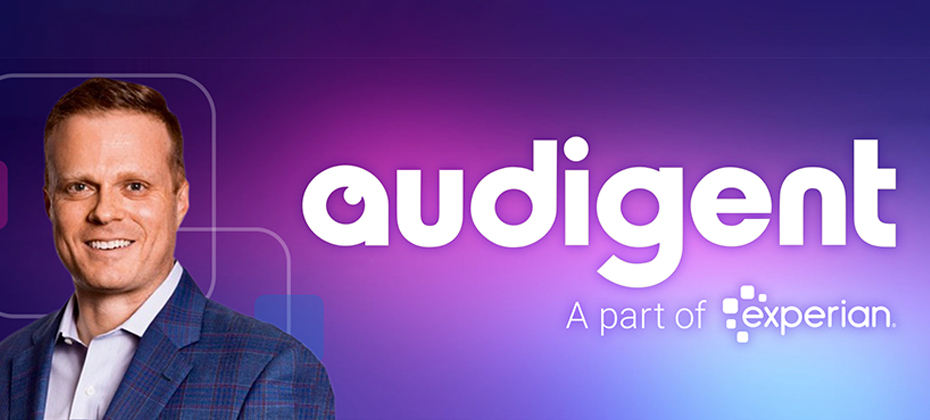
The advertising ecosystem has seen significant transformation over the past few years, with increased privacy regulation, changes in available signals, and the rise of channels like connected TV and retail media. These changes are impacting the way that consumers interact with brands and how brands understand and continue to deliver relevant messages to consumers with precision. Experian has been helping marketers navigate these changes, and as a result, our marketing data and identity solutions underpin much of today’s advertising industry. We’re committed to empowering marketers and agencies to understand and reach their target audiences, across all channels. Today, we are excited to announce our acquisition of Audigent—a leading data and activation platform in the advertising industry. With Audigent’s combination of first-party publisher data, inventory and deep supply-side distribution relationships, publishers, big and small, can empower marketers to better understand their customers, expand the reach of their target audiences and activate those audiences across the most impactful inventory. I am excited to bring together Audigent’s supply-side network as a natural extension to our existing demand-side capabilities. Audigent’s ability to combine inventory with targeted audiences using first-party, third-party and contextual signals provides the best of all worlds, allowing marketers to deliver campaigns centered on consumer choices, preferences, and behaviors. The addition of Audigent further strengthens our strategy to be the premier independent provider of marketing data and identity, ultimately creating more relevant experiences for consumers. To learn more about Experian and Audigent, visit https://www.experian.com/marketing/ and https://audigent.com/.

test