sdfsad sddfs sdfsdf sdsf sd sfsdfsdf s
asdf sa dsdfdsf ds dsf sdfsdf sdfsd sdf
In this article…

Financial health matters. That’s why we’re joining the Center for Financial Services Innovation and the nation’s leading banks, financial services providers and nonprofits in supporting #FinHealthMatters Day on June 27, 2017.

We’re at a critical point in our nation’s history. We need to make a stand and address the root causes of financial instability in this country. I believe the lack of financial education and access to cheaper financial products are two of the key contributors impacting people’s financial health today.

As Serasa Experian’s Corporate Sustainability Manager in Brazil, I’m dedicated to my job promoting diversity and inclusion efforts at work. But it also happens to be my passion. I believe that companies have a responsibility to reflect the diversity found in society, giving everyone equal opportunity to excel regardless of color, gender or disability. And yet, while a lot of companies over the years have made great strides toward hiring a diverse array of people, sometimes the harder — yet more impactful — work is making sure that diverse group of employees can continue to develop professionally after they’re hired. To this end, Serasa Experian’s Business Network for Social Inclusion (Rede Empresarial de Inclusão Social) launched a program called the Top Talent Project, which encourages and accelerates professional development once someone with physical disabilities is hired. I don’t want to simply hire people with disabilities; I want to ensure they can be productive and grow in their roles. While people with disabilities can bring great experience and skill to their positions, they may need some help integrating into teams. That’s why we work closely with each new hire, their managers and their mentors to guide them on a daily basis. If someone is hearing-impaired, for example, they may know only sign language and not Portuguese, making it difficult for them to communicate with their team. Through the Top Talent Project, we train new hires to communicate at work with their Portuguese-speaking coworkers. And then we give sign language training to their team members! We work hard to create a working environment that ensures success for everyone. In 2016, Serasa Experian received the United Nations Good Practices for Workers with Disabilities Award for our inclusion work in Brazil. That same month, I also was honored to receive the Empregueafro Award from the City Council of São Paulo for promoting ethnic diversity. All these accolades make me so proud because they’re a reflection of the way we at Experian take care of our people. Ten years ago, I changed careers so I could focus more on making the world a better place. Serasa Experian has given me the opportunity to do just that.

In Italy, some people believe that a credit report is just a list of bad people who haven’t paid what they owe. In addition to a poor understanding of how credit works, some Italians also have large amounts of debt, especially among millennials. Young people don’t always think about how their current financial situation can affect their future. Fewer millennials are taking out loans for houses and cars, and more and more take out small loans to pay for their gym memberships or mobile phones. Unemployment rates are high in Italy, and without a job to pay the fees, young families and students’ debt keep piling up. I’ve worked with Experian for 16 years, but my current role as the marketing and communications manager in Italy is the first time I’ve worked directly for consumers, trying to understand their needs and how we can address them. As a Italian, I’ve seen firsthand the lack of good financial education out there – even in the government – and my team and I wanted to find a solution that would help people understand their credit and financial situation to prepare them for the future. My team partnered with Movimento Difesa del Cittadino (MDC) – an organization that promotes the protection of consumers in Italy – to create and launch a new tool in January 2017 called RataTua; or in English, "Your Installment." RataTua is a self-assessment smartphone application that enables consumers to assess their overall finances and their capacity to sustain additional loans. After assessing a consumer’s credit history, the app displays a red, yellow or green indicator of financial risk, and provides helpful tips and financial definitions to help people better understand their financial situation. Our goals with this tool are to educate consumers on how to best prepare themselves for major financial decisions and explain how they can improve their credit scores. At Experian, we have amazing quantities of both positive and negative data, and we’re trying to shift the perspective that credit bureaus are not the equivalent to Santa’s naughty list. In addition to the app, we printed 20 thousand copies of a Consumer Advice Guide that walks consumers through their lending journey – from their decision to apply for a loan to how to avoid falling into too much debt. We’ve distributed these brochures throughout 60 Movimento del Cittadino offices in Italy. In the end, we want to give young Italians more choices and opportunities for their futures, so they can achieve their goals. By helping millennials think through how their financial choices have implications for the future, we can prepare them for unforeseen expenses down the road.

For any company to remain competitive in today’s rapidly changing marketplace, innovation must play an integral role in its business model. Industry’s greatest innovators are successful not only because they deliver superior products in the present, but also – and perhaps more importantly – because they continuously solidify their place in the future through a culture of discovery that encourages modernization and disruption. The amount of data is expected to increase up to ten times the current amount by 2020, and Experian looks to innovation to bring answers to the problems such increases can pose. We’re finding new ways to help business across a multitude of industries integrate the latest in data technology into nearly every aspect of their operations. Data is powering everything we do. A great example of our commitment to continuous improvement through innovation is Experian’s DataLabs operation, which Greg Satell profiles in his new book Mapping Innovation: A Playbook for Navigating a Disruptive Age. At Experian, we saw opportunity to innovate and adapt, and proposed the creation of a separate division with the sole purpose of pursuing disruptive opportunities where there was no existing market to measure – we called it DataLabs. As Satell notes, Experian DataLabs was designed to work with our customers to map out their problems, identify new opportunities, build solutions around those opportunities and develop new capabilities for the company. With an increasingly competitive market, Experian is committed to being inventive and agile. Embracing and sustaining this innovation has worked. In the United States alone, DataLabs has launched eight products, and has another twelve in development. We continue to work with our customers to address new problems and remain agile so we can develop new capabilities. These insights have real world application that can help tens of thousands of Americans. As an example, small businesses – the classification of businesses that create nearly two-thirds of net new jobs in the United States – notoriously struggle to obtain loans to grow because of a perceived lack of data on their credit worthiness. Without access to credit, these businesses aren't able to grow further, preventing them from hiring more people. DataLabs' latest experiment concerned whether social media sites can help businesses obtain credit. By looking at social media sites we were able to help small businesses with credit verification. DataLabs also works to help companies more efficiently use resources to target the right consumer. As an example, Experian's DataLabs scientists analyzed billions of credit and debit card transactions to understand how population segments spent money and then used that information to build predictive behavior profiles. With this information in hand, credit card companies were able to market credit cards to specific population segments and make rewards programs more attractive to consumers in the process. Perhaps more importantly, though, DataLabs ensures that Experian has a place in tomorrow’s economy by keeping Experian relevant in an ever-evolving marketplace. To quote Satell, “every enterprise is a unique combination of business model, strategy and culture.” Experian is the manifestation of a culture of discovery that enables us to grow and evolve while remaining at the forefront of innovation. Experian’s innovations continue to be recognized and we are proud to be included in Greg Satell’s insightful book. To read the complete profile of Experian, including more information on its formation, work to-date and plans to continue disrupting the future, check out Mapping Innovation: A Playbook for Navigating a Disruptive Age here.

"If you’re taking an emergency call (999 in the U.K.), it’s easy to spell a name wrong. And sometimes people reporting a crime won’t give you their name at all. So, after 13 years, we’d collected thousands of duplicate or incorrect records. That might seem trivial, but linking data with the right person can be crucial to a case. You might speak to a vulnerable person and miss that they’re a repeat victim of crime. The bottom line is that, to keep people safe, we needed better data. I asked Jon (at Experian) if he could help. He certainly could. I applied for Home Office funding for the project and, after three nerve-wracking months, we actually won it. Then it was, ‘Alright, how’s this going to work?’. Experian set up a system for us called Pandora. It took our data, cleansed it using Experian data – filling in gaps, adding data streams so that, using our own matching criteria, we managed to merge thousands of records. The result was data that’s as clean and accurate as we could possibly get it. We call it our Golden Nominal database — and the difference is phenomenal. Now, incoming calls prompt one or two records instead of hundreds, giving us a clear view of the caller. If someone’s calling about domestic violence, we’ll see whether they’re a repeat victim, and get them help fast. And frontline officers can run instant checks on a suspect from a phone, seeing how big a risk they pose and whether to call for support. We’ve got a way to go, but we’re already creating a thousand fewer records a week. And it’s all down to Experian’s work behind the scenes. It’s delivering exactly what we wanted."

Read Moreio55 Button 2- Learn more Primary button Secondary button Related Posts

Today, we stand at the forefront of a digital revolution that is reshaping the financial services industry. And, against this backdrop, financial institutions are at vastly different levels of maturity; the world’s biggest banks are managing large-scale infrastructure migrations and making significant investments in AI while regional banks and credit unions are putting plans in place for modernization strategies, and fintechs are purpose-built and cloud native. To explore this more, I recently had the privilege of attending the annual Reuters NEXT live event in New York City. The event gathers globally recognized leaders across business, finance, technology, and government to tackle some of today’s most pressing issues. On the World Stage, I joined Del Irani, a talented anchor and broadcast journalist, to discuss the future of lending and the pivotal role of data and AI in building a more inclusive financial system. Improving financial access Our discussion highlighted the lack of access to traditional financial systems, and the impact it has on nearly 100 million people in North America alone. Globally, the problem affects over one billion people. These people, who are credit invisible, unscoreable, or have subprime credit scores, are unable to secure everyday financial products that many of us take for granted. What many don’t realize is, this is not a fringe subset of the population. Most of us, myself included, know someone who has faced the challenges of financial exclusion. Everyday Americans, including young people who are just starting out, new immigrants and people from diverse communities, often lack access to mainstream financial products. We discussed how traditional lending has a limited view of a consumer. Like looking through a keyhole, the lender’s understanding of the person in view is often incomplete and obstructed. However, with expanded data, technology, and advanced analytics, there is an opportunity to better understand the whole person, and as a result have a more inclusive financial system. At Experian, we have a unique ability to connect the power of traditional credit with alternative data, bringing a more holistic understanding of consumers and their behaviors. We are dedicated to leveraging our rich history in data and our expertise in technology to create the future of credit and ultimately bring financial power to everyone. The future of lending After spending two days with over 700 industry leaders from around the world, one thing is abundantly clear: much like the early days of the internet, today, we are at the cutting-edge of a technical revolution. Reflecting on my time at Reuters NEXT, I am particularly excited by the collective commitment to drive innovative, and smarter ways of working. We are only beginning to scratch the surface of how data and technology can transform financial services, and Experian is positioned to play a significant role. As we look to the future, I am excited about the ways we will create new opportunities for businesses and consumers alike.
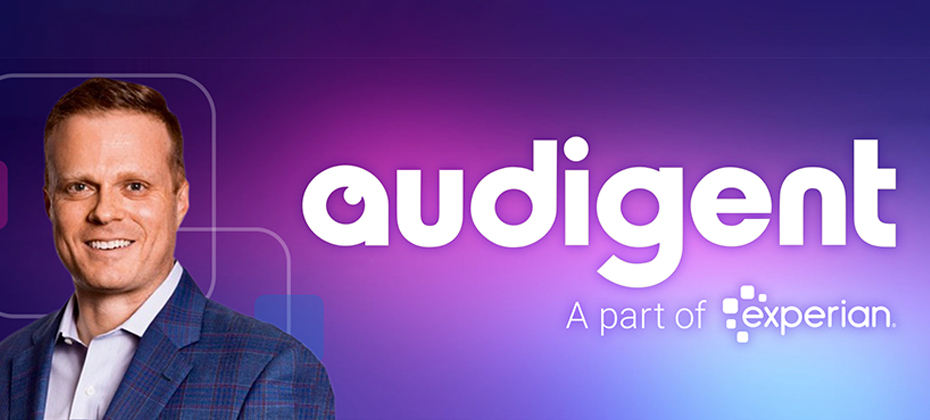
The advertising ecosystem has seen significant transformation over the past few years, with increased privacy regulation, changes in available signals, and the rise of channels like connected TV and retail media. These changes are impacting the way that consumers interact with brands and how brands understand and continue to deliver relevant messages to consumers with precision. Experian has been helping marketers navigate these changes, and as a result, our marketing data and identity solutions underpin much of today’s advertising industry. We’re committed to empowering marketers and agencies to understand and reach their target audiences, across all channels. Today, we are excited to announce our acquisition of Audigent—a leading data and activation platform in the advertising industry. With Audigent’s combination of first-party publisher data, inventory and deep supply-side distribution relationships, publishers, big and small, can empower marketers to better understand their customers, expand the reach of their target audiences and activate those audiences across the most impactful inventory. I am excited to bring together Audigent’s supply-side network as a natural extension to our existing demand-side capabilities. Audigent’s ability to combine inventory with targeted audiences using first-party, third-party and contextual signals provides the best of all worlds, allowing marketers to deliver campaigns centered on consumer choices, preferences, and behaviors. The addition of Audigent further strengthens our strategy to be the premier independent provider of marketing data and identity, ultimately creating more relevant experiences for consumers. To learn more about Experian and Audigent, visit https://www.experian.com/marketing/ and https://audigent.com/.

test