Industries

You’ve Got Mail! Probably a lot of it. Birthday cards from Mom, a graduation announcement from your third cousin’s kid whose name you can’t remember and a postcard from your dentist reminding you you’re overdue for a cleaning. Adding to your pile, are the nearly 850 pieces of unsolicited mail Americans receive annually, according to Reader’s Digest. Many of these are pre-approval offers or invitations to apply for credit cards or personal loans. While many of these offers are getting to the right mailbox, they’re hitting a changing consumer at the wrong time. The digital revolution, along with the proliferation and availability of technology, has empowered consumers. They now not only have access to an abundance of choices but also a litany of new tools and channels, which results in them making faster, sometimes subconscious, decisions. Three Months Too Late The need to consistently stay in front of customers and prospects with the right message at the right time has caused a shortening of campaign cycles across industries. However, for some financial institutions, the customer acquisition process can take up to 120 days! While this timeframe is extreme, customer prospecting can still take around 45-60 days for most financial institutions and includes: Bureau processing: Regularly takes 10-15 days depending on the number of data sources and each time they are requested from a bureau. Data aggregation: Typically takes anywhere from 20-30 days. Targeting and selection: Generally, takes two to five days. Processing and campaign deployment: Usually takes anywhere from three days, if the firm handles it internally, or up to 10 days if an outside company handles the mailing. A Better Way That means for many firms, the data their customer acquisition campaigns are based off is at least 60 days old. Often, they are now dealing with a completely different consumer. With new card originations up 20% year-over-year in 2019 alone, it’s likely they’ve moved on, perhaps to one of your competitors. It’s time financial institutions make the move to a more modern form of prospecting and targeting that leverages the power of cloud technology, machine learning and artificial intelligence to accelerate and improve the marketing process. Financial marketing systems of the future will allow for advanced segmentation and targeting, dynamic campaign design and immediate deployment all based on the freshest data (no more than 24-48 hours old). These systems will allow firms to do ongoing analytics and modeling so their campaign testing and learning results can immediately influence next cycle decisions. Your customers are changing, isn’t it time the way you market to them changes as well?

Millions of consumers lack credit history and/or have difficulty obtaining credit from mainstream financial institutions. To ease access to credit for “invisible” and below prime consumers, financial institutions have sought ways to both extend and improve the methods by which they evaluate borrowers’ risk. This initiative to effectively score more consumers has involved the use of alternative credit data.1 Alternative credit data is FCRA-compliant data that is typically not included in a traditional credit report and is used to deliver a more complete view into a consumer’s creditworthiness. “Alternative credit data helps us paint a fuller picture of a consumer so they can get better access to the financial services they need and deserve,” said Alpa Lally, Vice President of Data Business at Experian. Experian recently sponsored the FinovateSpring conference in San Francisco, where Alpa had a chance to sit down with Jacob Gaffney, Editor-in-Chief of the HousingWire News Podcast, to discuss ways consumers can improve their credit scores. As an immigrant, Alpa spoke personally about the impact of having a limited credit history and how alternative credit data can help drive greater access to credit for consumers and profitable growth for lenders through more informed lending decisions. Highlights include: How alternative and traditional credit data differ Types of alternative credit data being used by lenders How “credit-invisibles” can best leverage alternative credit data Alternative credit data product solutions, including Experian BoostTM Listen now 1When we refer to “Alternative Credit Data,” this refers to the use of alternative data and its appropriate use in consumer credit lending decisions, as regulated by the Fair Credit Reporting Act. Hence, the term “Expanded FCRA Data” may also apply in this instance and both can be used interchangeably.

To create a socially credible environment, China has developed a mobile app to alerts users when they are within a 500-meter radius of someone in debt.

The shift from banking to digital is apparent. Here are a few ways that financial services can adjust to changing consumer behavior. Read more!

Even with the Fed’s gradual 2018 rate hikes, consumers are shopping. Usage of credit cards is on the rise in 2018 and only expected to grow.

Experian recently interviewed Philip Bohi, Vice President for Compliance Education of AFSA, to learn more about his perspective on alternative data.

Rather than reinventing the wheel, companies can leverage existing services to build more complex solutions and launch faster with APIs.

Financial services lenders and businesses are increasingly seeking to leverage enhanced digital marketing channels, but how does regulatory play into the mix?

CFSI’s Thea Garon talks about a free, open-source tool from the organization to help financial institutions drive consumer financial health.
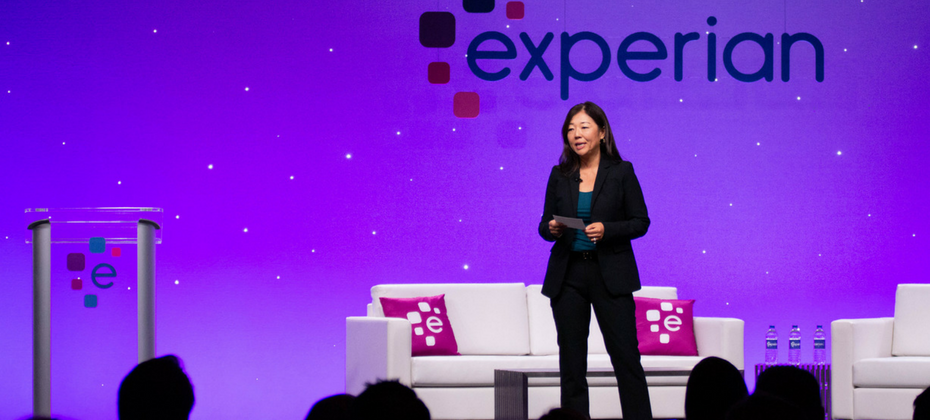
The second full day of Experian Vision 2018 featured Capt. Mark Kelly and former congresswomen Gabby Giffords, a series of diverse breakout sessions and concluded with Super Bowl-winning quarterback Aaron Rodgers.
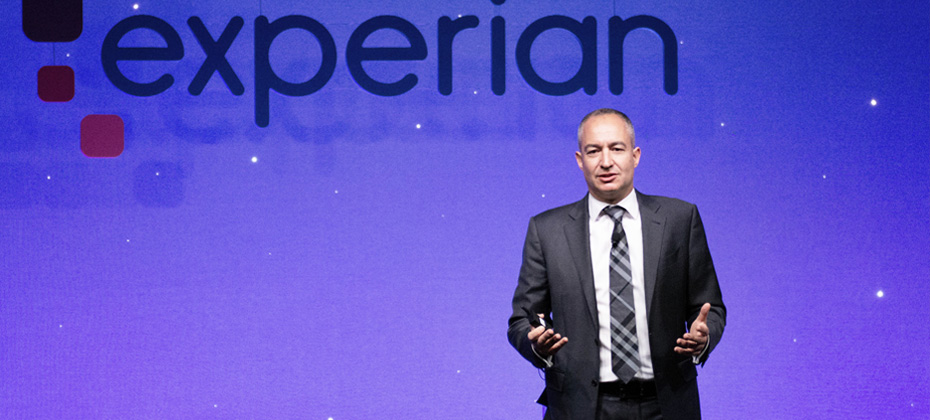
The first full day of Vision 2018 featured in-depth talks on alternative credit data, enhanced credit marketing, faster decisioning, fraud and identity protections and the latest in tech innovation.

In an all-new report, Experian dives into “The State of Alternative Credit Data,” providing in-depth coverage on how alternative credit data is defined, consumer personas, and how this data complements traditional credit data files.

Experian’s annual Vision Conference kicks off to a sold-out crowd in Scottsdale, Ariz., bringing together some of the industry’s top thought leaders in financial services, tech, data science and information security.

Recent research shows Hispanics—especially Millennials who are entering their home-buying years—are particularly eager for homeownership.

In a new study, Clarity analyzed the trends and financial behavior of subprime loan users. Discover the latest insights and shifts.