Data & Analytics

These days, the call for financial inclusion is being answered by a disruptive force of new financial products and services. Read more!

Last month my blog discussed how Building the Perfect Audience is Like Building the Perfect Burger! It was National Hamburger Month, so it seemed apropos! We offered marketers insight into building better audiences to help run more strategic marketing campaigns. This month, I am keeping with the monthly ‘holiday’ theme. June 20th was National American Eagle Day and being so close to our 4th of July holiday, I thought this was a perfect tie-in this month! You are probably wondering how I am going to tie in National American Eagle Day with another marketing strategy, but I promise you, I can! It’s all about having strategic insight into your customers and using an “eagle eye” to learn what you can about them to obtain better results from your marketing efforts. An eagle's-eye approach to finding and reaching the right consumers Here are a few fun facts about the great American Bald Eagle. Bald Eagles were placed at the center of the Great Seal of the United States in 1782! “Bald” in Bald Eagle refers to an old English word that means “white-headed.” We’ve all heard people talk about having an “eagle eye.” It’s true—this comes from the eagle’s astonishing eyesight. Eagles can see clearly and about eight times as far as humans can, allowing them to spot and focus on a rabbit or other prey at a distance of about two miles. Can you imagine? They can also look ahead and to the side simultaneously with a 340-degree visual field! Imagine if you had an eagle-eye, 340-degree view of your customers or prospects before running a marketing campaign. Well, you can. Experian data insights offers an eagle-eye approach to finding and reaching the right consumers at the right time in the buying journey to help you eliminate marketing waste and deliver a more significant return on your marketing spend. Understanding your customers is key With Experian’s Insights solution, as part of our comprehensive Experian Marketing Engine, we offer OEM marketers, agencies, and larger dealer groups access to multiple Insight categories to learn more about your customers. Understanding your current customers or the segment of prospects you would like to target allows for a more strategic approach to marketing campaigns. Our brand, model, registration, title, finance, market analysis, lifestyle, and household insights can help you take a 360-degree view of your customer (that's right, 360 degrees, 20 degrees more than an eagles eye!) There’s a lot of discuss here, so we’ve put together a complimentary resource, Understand Your Customer Before Choosing Your Audience that explains all the ways you can use Insights to learn more about your customers. What is the Experian Marketing Engine? Insights is part of the Experian Marketing Engine marketing solution that helps automotive marketers, manufacturers, advertisers, agencies, and platforms identify the right audience, uncover the most appropriate communication channels, develop messages that resonate, and measure the effectiveness of marketing activities.

Learn how you can use credit attributes to identify qualified prospects, set initial limits, manage credit lines and limit credit losses. Read more!

Today’s OEM marketers, agencies and large dealer groups are under tremendous pressure to connect with consumers across multiple marketing channels. Finding a wide variety of relevant audiences is critical to campaign success. Because May is National Hamburger Month (yep, it’s a real thing), I will compare building the perfect burger to building the ideal automotive audience. Here we go. First, imagine your favorite burger joint (or gourmet burger eatery). You start by opening the menu and likely seeing some of the house “standards.” These are the traditional favorites available “off the menu” with little fuss. Burger with American cheese, Burger with lettuce, onion and tomato. Easy peasy. These types of offerings are similar to what we call our Syndicated audiences. Experian has more than 600 syndicated audiences that are readily available and on the shelf of most trusted platforms. More Choices and Options After that, things get interesting with lots of options to make your burger exactly how you want it. Do you want beef, veggie, portobello mushroom or maybe even bison as your “burger” choice? Cheese? Sure, but what kind? American, cheddar, swiss, blue, pepper jack? And what about toppings? Fried onion strings, raw, cooked? Mushrooms? Jalapenos? Ketchup, mustard, hot sauce, chipotle? Don’t even get me started about your bun choices! You see where I am going with this. With Experian’s Audiences, we have four more levels after our Syndicated Audiences that can help you create the targeted audiences you need based on your specific strategy. From Syndicated to Premium to Custom: Build the Perfect Audience For example, do you need to target in-market customers for a new or used vehicle? Equity positioning? End of term? Alternate fuels? A specific make and/or model? Do you need to target consumers by a particular price range? We can also build custom audiences based on your first-party data coupled with our data resources to help with vehicle launches, services campaigns and any unique audience need you have. We don’t expect you to understand all of this in a short blog, so we’ve written a complimentary resource, Automotive Audience Choices are Key to Ever-Changing Strategies, explaining each of the five categories of audiences. Download it to learn how to build the perfect burger—I mean audience. By the way, as a Midwestern girl, my favorite burger is a traditional cheeseburger with all the fixins—so bring on the sharp cheddar, lettuce, tomatoes, pickles and fried onions. What’s yours? Feel free to email me about burgers or audiences! Audiences is part of the Experian Marketing Engine marketing solution that helps automotive marketers, manufacturers, advertisers, agencies, and platforms identify the right audience, uncover the most appropriate communication channels, develop messages that resonate, and measure the effectiveness of marketing activities.

As card issuers go head-to-head in the battle to reach and connect with new consumers, they must implement more inclusive lending strategies.

Many financial institutions have made inclusion a strategic priority to expand their reach and help more U.S. consumers access affordable financial services. To drive deeper understanding, Experian commissioned Forrester to do new research to identify key focal points for firms and how they are moving the needle. The study found that more than two-thirds of institutions had a strategy created and implemented while one-quarter reported they are already up and running with their inclusion plans.1 Tapping into the underserved The research examines the importance of engaging new audiences such as those that are new to credit, lower-income, thin file, unbanked and underbanked as well as small businesses. To tap into these areas, the study outlines the need to develop new products and services, adopt willingness to change policies and processes, and use more data to drive better decisions and reach.2 Expanded data for improved risk decisioning The research underlines the use of alternative data and emerging technologies to expand reach to new audiences and assist many who have been underserved. In fact, sixty-two percent of financial institutions surveyed reported they currently use or are planning to use expanded data to improve risk profiling and credit decisions, with focus on: Banking data Cash flow data Employment verification data Asset, investments, and wealth management data Alternative financial services data Telcom and utility data3 Join us to learn more at our free webinar “Reaching New Heights Together with Financial Inclusion” where detailed research and related tools will be shared featuring Forrester’s principal analyst on Tuesday, May 24 from 10 – 11 a.m. PT. Register here for more information. Find more financial inclusion resources at www.experian.com/inclusionforward. Register for webinar Visit us 1 Based on Forrester research 2 Ibid. 3 Ibid.

Cryptocurrency scams are on the rise as digital currencies gain popularity. The decentralized nature of these currencies makes them equally attractive to both legitimate consumers and fraudsters. Businesses may find themselves in a difficult position as they seek to prevent cryptocurrency-related fraud and help protect consumers. What are cryptocurrency scams? Cryptocurrencies are virtual currencies often based on and secured by blockchain technology. However, this does not always translate into security for the individual consumer. Many individuals fall victim to either cryptocurrency investment scams or cryptocurrency theft. Cryptocurrencies are not yet well-regulated or backed by a sovereign entity, leaving consumers open to threats when purchasing funds. The deregulated nature of the currencies makes it easy for scammers to build what appear to be legitimate cryptocurrency projects before disappearing, similar to pump-and-dump stock schemes. Additionally, scammers will perpetrate romance or other relationship-based scams and convince the victim to send them funds in cryptocurrency form. Cryptocurrency theft follows a few traditional fraud patterns: The fraudster may use phishing or social engineering to steal credentials. A crime ring might leverage malware or keystroke loggers to do the same thing. A scammer might present a “reward” to an unsuspecting consumer and require access to their wallet in order to “gift” the reward. Scammers consistently find new ways to trick unsuspecting consumers, including a recent scam relying on QR codes to steal funds converted to cryptocurrency via an ATM. Other common scams utilize imposter websites, fake mobile apps, bad tweets, or scamming emails to steal information and funds. The impact of scams on consumers According to the FTC, investment cryptocurrency scam reports have skyrocketed, with nearly 7,000 people reporting losses totaling more than $80 million from October 2020 to March 2021, with a media loss of $1,900. In 2020 the Better Business Bureau Scam Tracker Risk Report ranked cryptocurrency scams as the seventh riskiest. In 2021, they jumped to the second riskiest scam. In Michigan alone 31 cryptocurrency scams were reported from January 2020 to March 2022, with reported loses from $350 all the way to $41,000. The impact of scams on businesses While the true impact of cryptocurrency scams on businesses is hard to measure, it’s easy to identify several areas for concern. First is the opportunity for the theft of personally identifiable information (PII) during a fraudulent cryptocurrency transaction. Once fraudsters have stolen funds, they may also funnel them through a legitimate business and turn them into a regulated form of currency for easy of use. Businesses with legitimate cryptocurrency interactions may also suffer from spoofed apps or websites, causing reputational damage when consumers are taken in by a scam. Preventing the fallout from scams As companies debate accepting cryptocurrency as a form of payment, it’s important to consider that funds may be stolen or accessed by a malicious party. One way to protect your organization is to have a strong device identification strategy that can help ensure the entity accessing an account and the funds within is the true owner. By layering in this protection with other fraud defenses, businesses can be better prepared as consumer payment preferences shift. Additionally, financial institutions and other organizations should keep consumers informed about how to protect their own data and signs of scams. To learn more about how Experian is helping businesses develop and maintain effective fraud and identity solutions, visit us or request a call. And keep an eye out for additional in-depth explorations of our Future of Fraud Forecast. Request a call Future of Fraud Forecast

With used vehicle sales up 13% from 2020 to 2021, and auction volumes at historic lows, obtaining vehicles directly from consumers offers an opportunity for dealers to maintain a profitable sales pipeline. The key for dealers is to understand how their sales stack up against other local dealers — and more specifically, what types of vehicles those competitive dealers are selling. Dealers should take advantage of market visibility Experian’s marketing solution, the Automotive Intelligence Engine (AIE), offers dealers market visibility of pre-owned sales trends and recommends marketing strategies to help acquire used vehicle inventory. AIE provides specific strategies to help dealers acquire the most desired units and reach/resonate with consumers who are most likely to bring those units in on trade. Dealers can view: Who owns desirable vehicles the dealer would like to purchase Strategies to acquire and sell used units Sales trends such as segment, class, model, make and model Financing trends such as credit score, term, and lender Audience makeup: demographic and psychographic characteristics, who owns what type of vehicle, and where they live. By understanding the used owner, dealers can use messaging that resonates to help upsell them into a newer vehicle they desire—helping dealers stay competitive in today’s market. Dealers should also look at lending trends Exploring the world of used vehicle sales should also extend into lending trends. Since used vehicles are not included in OEM lending incentives, understanding trends helps dealers make more informed decisions. Used vehicles can qualify for special OEM sponsored CPO financing. With AIE, dealers have visibility into the amount financeable percentages, APR trends, terms, and tiers for lenders within their market. This benefits dealers to know which lenders are covering more significant percentages like 140% of NADA and what lenders are covering lower credit tiers. Knowing options on the lending side of the transaction empowers dealers to expand their financing options to work with lenders who facilitate lower credit scores or cover higher percentages. Learn how Experian’s Automotive Intelligence Engine can help you make more informed decisions about used car inventory acquisition. You may also be interested in reading more about audience segmentation and AIE in our blog, Data-Driven Audience Segmentation Empowers More Effective Omnichannel Marketing. 1US Used Car Market Finishes Strong in 2021: What's Up for 2022? | Nasdaq

When extending firm offers of credit, lenders have relied on direct mail to reach their intended audiences. But what if there are more ways to deliver a credit offer?

What goals should you set to make financial inclusion a reality? How can success be quantified? This checklist can help you become more inclusive.
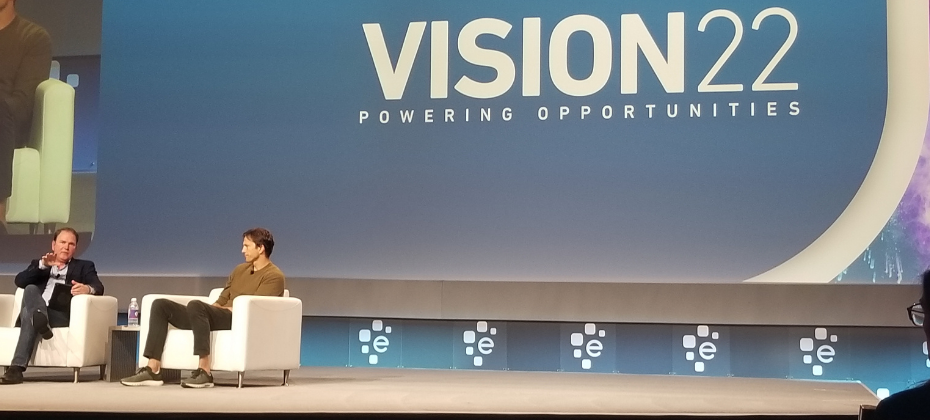
“I saw an opportunity to create change instead of asking for it.” Day 2 was charged up with new technology; new ideas; and new, clearer visions of where we can drive change across our industries. Jeff Softley, President, Direct to Consumer, Experian Consumer Services, illustrated how the consumer is at the center of Experian’s business with countless statistics and how our consumer advocacy drives our focus, growth and mission. Wil Lewis, Global Chief of Diversity, Equity and Inclusion; Hiq Lee, President of Business Information Services; and Alex Lintner, Group President, Consumer Information Services, engaged in a panel discussion centered on reimagining inclusion. Keynote: Allyson Felix Allyson Felix, five-time Olympian and most decorated Track & Field athlete, kicked off the day with an inspiring keynote touching on her athletic career, taking challenges head-on and using our platforms to make an impact. Felix, who is racing in the first race of her final season this weekend, is a tireless advocate, life-long learner, who seeks to empower others. “We can all start where we are,” she said. “Small things turn into big things.” Day 2 session highlights From the breakout sessions, the theme of disruption was evident. We dove into how prescreen and prequalification have evolved, a demand that many must adapt to deliver in the post-pandemic world. Financial inclusion was a topic covered across the board, as were the strategies to be enacted to bolster these financial inclusion drivers. One such area addressed was how the rapidly growing buy now, pay later industry advances financial access and inclusion efforts. And speaking of evolution, retention must evolve as well — we heard how retention, recapture and risk strategies are transforming, particularly in the mortgage servicing space. Rapid Model Development and Deployment - Feedback from businesses reflects organizations’ desires for flexible deployment options, flexible integration with existing tech stacks, open source technology and the ability to incorporate multiple data providers. Today’s solutions address that feedback as well as solve for the most rampant market challenges in new, innovative ways. Strategy optimization with Artificial Intelligence and Machine Learning - Over 50% of financial institutions surveyed are using AI/ML in at least one department. Challenges include data management, operation, evolving the analytics program. ML/AI starts with proper data management. For optimization, templatizing ML frameworks is a necessity. ID Verification, Authentication and Fraud - There were $56B in identity fraud losses in 2020, $13B of which were traditional identity fraud losses and $43B related to identity fraud scams. Leveraging strategies is necessary to maintain the critical balance required for identity verification and fraud – mitigating losses and risk exposure, drive optimal customer experience, maintain regulatory compliance. Maximizing Customer Value - The monthly data refresh is a thing of the past. When reimagining account review for risk and marketing purposes, remaining agile is key with increased data freshness for operational efficiency. Keynote: Ashton Kutcher The energy, insights and ideas have been reverberating throughout the venue for the past 48 hours, which set the stage for Ashton Kutcher’s closing keynote. The Chicago Bears fan talked about his career, how hard work wasn’t an option when he was growing up and how part of his assessment process for potential investments – determining whether they create efficiencies in the market – he sometimes thinks of a long-standing, personal benchmark – the air nailer. He talked about his philanthropy efforts, the mission behind his company Thorn, and the ability for people to impact change and achieve "a sense of agency" over the outcome of the future. “That’s the human spirit. That’s the spark that exists – that people understand that you can sit in despair, or you can do something,” he said. It has been an amazing two days – we can’t wait for Vision 2023!
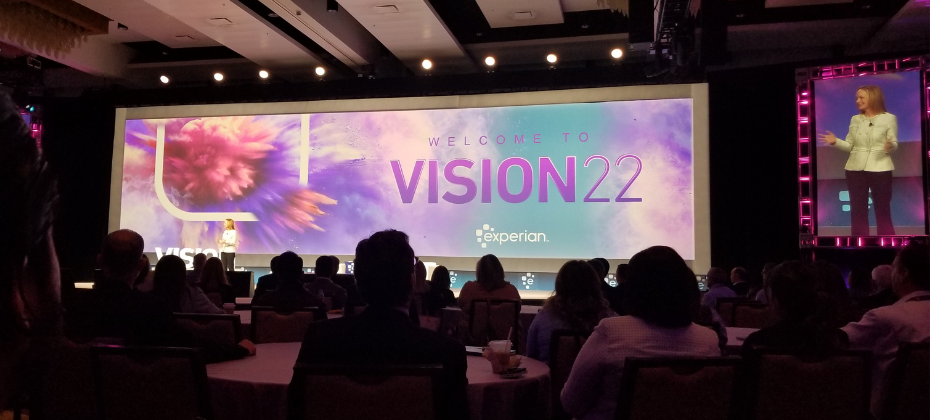
“Disruption has caused enormous amounts of innovation,” said Jennifer Schulz, CEO of Experian, North America. “We must continue to be the disruptors in our industry which takes effort, data, technology, bright minds and vision for what the future will be.” Schulz kicked off the 39th Vision conference with a future-focused keynote delivered to a crowd of more than 400 attendees. Alex Lintner, Group President, Experian Consumer Information Services, talked about the next phase of great, highlighting the digital transformation that has taken place in the generations of the past and the disruption and innovation happening today and in the future. Keynote speaker: Dr. Mohamed A. El-Erian Dr. Mohamed A. El-Erian, renowned economist and author, President of Queens’ College, Cambridge, Chief Economic Advisor at Allianz, Chair of President Obama’s Global Development Council and Former CEO and Co-Chief Investment Officer of PIMCO, spoke about the Fed, inflation, negative interest rates and the labor market, as well as the importance of inclusion. El-Erian, who said he reads the Financial Times religiously, acknowledged that we will make mistakes on the journey as we work to be even more inclusive. To navigate what’s ahead, he said we will need resilience, optionality and agility. “It’s important to connect with information, acknowledge the insecurity, in a language people understand, in order to connect,” he said. Session highlights – day 1 The conference hall was buzzing with conversations, discussions and thought leadership. Buy Now Pay Later A large audience was in attendance for a session that introduced Experian’s Buy Now Pay Later Bureau™ and explored how it’s the first and only solution of its kind — serving consumers, BNPL providers, financial institutions and regulators. Identity Identity is constantly evolving, and while biometrics and authentication may have become ubiquitous, there is much activity around the concepts of eIDs, identity wallets and identity networks. Experian is making identities personal and helping businesses to recognize, manage and connect customer identities in new ways using data, analytics and technology. Marketing In today’s hypercompetitive world, businesses need to engage the freshest data and increase velocity when it comes to time to market. An average of 120 days won’t cut it. Ascend Marketing speeds time to market and helps achieve higher ROI. Regulatory Landscape With so much happening at Capitol Hill, a panel of experts from DC discussed a number of topics and proposals (and their impacts), including the defense for risk-based pricing, the impact of suppressing negative data, and trending topics like Buy Now Pay Later and data portability. All the while, the tech showcase had a constant flow of attendees with demos ranging from data and decisioning to financial inclusion and technology. This is just the beginning. And as Schulz said, “There’s more to do.” More insights from Vision to come. Follow @ExperianVision to see more of the action.

Rewards are among the most appealing features of any credit card. While upfront benefits, like sign-up bonuses and cashback, are most influential in card acquisition, ancillary benefits, like fraud and identity protection, can amplify a card’s overall value.1 Credit card fraud ranked as the second most common form of identity theft in 2021,2 and is expected to become even more frequent as consumers continue to bank and shop online.3 42% of consumers are concerned for the safety of their banking and shopping transactions. With digital identity theft and fraud on the rise, it’s no surprise that safety measures are “very” or “extremely” important to consumers when deciding between different credit cards.4 In response, many card issuers have started to market their security and protection-related benefits more frequently to better capitalize on their cards’ value to consumers. The ways they’ve highlighted these benefits include: A fraud protection campaign From spotlighting their fraud protection benefits in card welcome kits to providing privacy tips on social media, credit card issuers have crafted compelling campaigns to demonstrate their commitment to protecting their customers from fraud and identity theft. In turn, issuers can differentiate their cards from the competition and improve response rates. Reminders about their fraud prevention efforts Issuers have also sent out ongoing reminders outlining the protections their credit cards offer, such as credit monitoring services 5 that notify cardholders of suspicious activity on their credit report. By consistently promoting their efforts to keep their customers’ accounts and data safe, issuers can earn their cardholders’ trust, build loyalty and drive card usage. While benefits like cashback and travel points can help with card acquisition, fraud and identity protection benefits can help drive long-term customer relationships, especially now that card fraud is becoming a growing concern.6 To learn more about how businesses have worked to meet the consumer demand for secure interactions, check out our 2021 Global Identity and Fraud Report. Learn more 1Jonathan O'Connor. "Most Consumers Aren't Aware of Their Credit Cards' Ancillary Benefits. How Does This Impact Card Acquisition and Usage?" TSYS, January 2019 2FTC. "Consumer Sentinel Network" Data Book, 2021 3April Berthene. "Coronavirus pandemic adds $219 billion to US ecommerce sales in 2020-2021" Digital Commerce 360, March 2022 4"Consumers Consider as Many as Six Factors When Choosing Credit Card" PYMTS.com, December 2021 5David McMillin. "Identity theft is a major problem, but these 5 credit card protection programs can help keep you safe" Business Insider, June 2021 6"New FICO Survey Finds Overconfidence Could Put US Consumers at Risk From Scams" Business Wire, February 2022

Vehicle History and Automotive Intelligence Engine marketing capabilities.

Experian’s in-person Vision conference returns next Monday, April 11 in Los Angeles, Calif. The event is known for premier thought leadership, net-new insights and the latest and greatest in technology, innovation and data science. This year’s agenda promises to have intentional discussions around tomorrow’s trending topics including financial inclusion, buy now pay later, open banking, the future of fraud, alternative data strategies, and much more. A few spotlight sessions include: Top trends including the future application of the cloud and emerging technologies, emerging regulatory legislation and the broader implications and opportunities of DeFi. A deep dive into strategies around the targeting/marketing revolution and how to deliver in the post-COVID-19 market environments and bolster financial inclusion decisions. An introduction to Experian’s Buy Now Pay Later BureauTM, the industry’s first and only solution designed to address the needs of consumers, BNPL providers, financial institutions and regulators alike. A roundup of sessions addressing innovation in action spanning from real-time verifications, to data-driven automation, and unified platforms from data to deployment to decisioning. Several sessions highlighting future-looking strategies and solutions that leverage alternative data that can increase conversion rates while concurrently reducing risk. Multiple sessions centered on the rapidly changing identity environment and combatting emerging fraud threats. The event will also include a Tech Showcase, where attendees can get a taste of tomorrow today with more than 20 demos and the latest innovations at their fingertips. And, as always, the event features marquee keynote speakers sure to inspire. This year’s featured speakers are Dr. Mohamed A. El-Erian, President of Queens’ College, Cambridge, Chief Economic Advisor at Allianz, and Former CEO and Co-Chief Investment Officer of PIMCO; Allyson Felix, Olympic Gold Medalist, co-founder of Saysh, a footwear and lifestyle brand for women, and Right to Play and Play Works ambassador; and the closing keynote will feature actor, investor, entrepreneur and philanthropist, Ashton Kutcher. Stay tuned for additional highlights and insights on our social media platforms throughout the course of the conference. Follow Experian Insights on Twitter and LinkedIn.