Latest Posts

Interesting things we learned about data quality in 2016. Our data quality report found some concerning statistics about companies and their data quality.

Fraud/cybersecurity are two of the biggest risks challenging organizations and economy. Fraud industry has $500B billion in estimated losses annually

Experian’s latest Market Trends and Loyalty report shows that for the first time in history, cars with four-cylinder engines have outpaced any other light-duty vehicle type on the road. That’s because the auto industry has been hard at work the past two decades improving both power and fuel efficiency of its engines. Auto manufacturers have been given aggressive fuel efficiency targets (54.5 mpg by 2025), but still need to meet consumer demand for performance. The net result is today’s average four-cylinder engine (188.1 hp) actually has more horsepower than the average V8 from 20 years ago (188 hp). It has helped four-cylinder engines become the most prominent engine type on the road, according to Experian Automotive Vehicles in Operation (VIO) database. Of the vehicles on the road, 37.7 percent are being powered by a four-cylinder engine, compared to 37.6 percent of six-cylinder engines. The top five vehicles at both the VIO and registration levels shows that all but one have four-cylinder engines. Top segments Total VIO Q3 vehicle registrations 1. Full-size pickup 1. Entry-level CUV 2. Standard midrange car 2. Full-size pickup 3. Small economy car 3. Small economy car 4. Lower midrange car 4. Standard midrange car 5. Entry-level CUV 5. Lower midrange car The four-cylinder VIO market share growth will continue in the future. In 2016, for example, four-cylinder engines accounted for 54.2 percent of all engines in new vehicles sold. It is the fifth consecutive year that four-cylinder engines had more than 50 percent market share. Market share for six-cylinder engines has dropped from 32.5 percent in 2012 to 29.7 percent in 2016, while eight-cylinder engines have dropped from 16.1 percent to 12.1 percent.

As 2016 comes to a close, many in the financial services industry are trying to assess the impact the Trump administration and Republican controlled Congress will have on regulatory issues. Answers to these questions may be clearer after President-elect Trump is inaugurated on Jan. 20. However, those in the federal regulatory environment are already exploring oversight and regulation of the FinTech and marketplace lending sector. Warning on alternative credit risk models Inquiries by federal and state policymakers over the past year have centered on how FinTech and marketplace lenders are assessing credit risk. In particular, regulators have asked about how credit models different from traditional credit scoring models and what, if any, new attributes or data are being incorporated into credit risk models for consumers and small businesses. On Dec. 2, Federal Reserve Governor Lael Brainard signaled that policymakers continue to be interested in this area during a wide-ranging speech on the potential opportunities and risks associated with FinTech. In particular, Brainard warned that “While nontraditional data may have the potential to help evaluate consumers who lack credit histories, some data may raise consumer protection concerns” and that nontraditional data “… may not necessarily have a broadly agreed upon or empirically established nexus with creditworthiness and may be correlated with characteristics protected by fair lending laws.” Brainard also suggested that there are transparency concerns with alternative scoring models, saying that “alternative credit scoring methods present new challenges that could raise questions of fairness and transparency” given that consumers may not always understand what data is used utilized and how it impacts a consumer’s ability to access credit at an affordable price. Look for regulators and Congress to continue to focus on the fairness and accuracy of new credit risk models and the data underpinning those models in debates surrounding FinTech and Marketplace lending in 2017. A national charter for FinTech? Earlier this month, the Office of the Comptroller of the Currency (OCC) announced that it was considering the creation of a national charter for FinTech lenders. There has long been speculation that the OCC would offer a national charter for FinTech. Analysts have suggested that the creation of a charter could help increase regulatory oversight of the growing market and also provide additional regulatory certainty for the emerging FinTech industry. The OCC’s proposal would create a special purpose national bank charter for FinTech businesses that are engaged in at least one of three core banking activities: receiving deposits; paying checks; or lending money. The OCC will be developing a formal agency policy for evaluating special purpose bank charters for Fintech companies that will designate the specific criteria that companies applying for a charter will have to meet for approval. OCC has suggested that this will likely focus on safety and soundness; financial inclusion; consumer protection; and community reinvestment. The OCC is collecting comments on the proposed policy through Jan. 15, 2017.

At Experian, we’re proud to be the backbone of financial progress. We’re making sense of data and information in powerful new ways.

Will 2017 finally be the year that lenders embrace digital credit marketing? Here are three reasons they should, if they haven't taken the plunge.
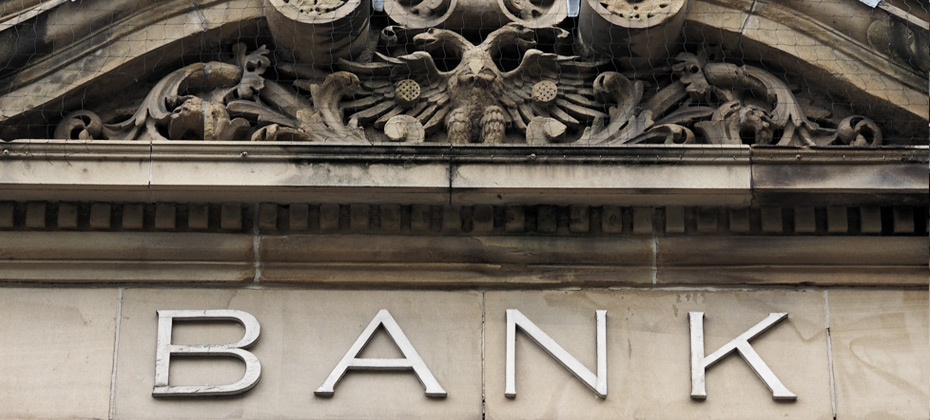
Regardless of personal political affiliation or opinion, the presidential election is over, and the focus has shifted from debate to the impact the new administration will have on the regulatory landscape for banks. While many questions remain regarding the policy direction of a Trump administration, one thing is near certain: change is on the horizon. While on the campaign trail, Trump took aim at banking regulation: “Dodd-Frank has made it impossible for bankers to function. It makes it very hard for bankers to loan money…for people with businesses to create jobs. And that has to stop.” And in his first post-election interview, Trump outlined named financial industry deregulation to allow “banks to lend again” as a priority. Before Election Day, Experian surveyed members of the financial community about their thoughts on regulatory affairs. An overwhelming majority—85 percent—believed the election outcome would impact the current environment. Most surveyed are also feeling the weight of financial regulations established by the Obama administration in the wake of the severe financial crisis of 2008. Five out of six respondents feel current regulations have placed an undue burden on financial institutions. Three-quarters believe the regulations reduce the availability of credit. And less than half believe the regulations are positive for consumers. According to our survey, complying with Dodd-Frank and other regulations has a financial impact for most, with 76 percent realizing a significant increase in spend since 2008. Personnel and technology spend top the list, with an increase of 78 percent and 76 percent, respectively. Top regulations that require the most resources to ensure compliance: the Dodd-Frank Act (70 percent), Fair Lending Act (55), Bank Secrecy Act/Anti-Money Laundering (47) and Fair Credit Reporting Act (42). Specifically, the Dodd Frank and TILA-RESPA Integrated Disclosure were the two most frequently mentioned regulations requiring additional investment, followed by the Military Lending Act and Bank Secrecy Act/Anti-Money Laundering. What lies ahead? It’s difficult to determine how the Trump administration will tackle banking regulations and policy, but change is in the air.

VantageScore found consumers rendered “unscoreable” by commonly used credit scoring models are nearly identical financial/credit behavior to scoreables

Technology sharing can unlock a more effective strategy in fighting fraud. Experian’s multi-layered and risk-based approach to fraud management is discussed

The holidays can be a stressful time of year for consumers, and also an important time for lenders to anticipate the aftermath of big credit card spend.

It's the holiday season - you've been breached. Fraudsters and other criminals can make one of the busiest shopping times of the year, a miserable one.
This quarter’s State of the Automotive Finance Market report provides a stark reality check for anyone making doomsday predictions about a subprime bubble in the auto industry. While delinquent payments are slightly on the rise, data from the report show that the auto lending industry has responded by reining in loans to subprime consumers. Results found that newly originated loans to prime borrowers jumped two percent to encompass nearly 60 percent of auto loans financed in Q3 2016. Moreover, loans extended to consumers in the subprime tier fell 4.5 percent from the previous year, and loans to deep-subprime consumers dropped 2.8 percent to the lowest level on record since 2008. When considering delinquent payments, there’s no extreme cause for concern either as overall 30-day delinquencies remained flat from the previous quarter, and overall 60-day delinquencies showed a slight uptick to 0.74 percent in Q3 2016 (0.67 percent in Q3 2015). The move in Q3 to more prime and super prime customers pushed the average loan scores higher for the first time in four years. For new vehicle loans, the average credit score climbed two points to 712 in Q3 2016, marking the first time average credit scores for new vehicle loans rose since hitting a record high of 723 in Q2 2012. For used-vehicle loans, the average credit score jumped five points from 650 in Q3 2015 to 655 in Q 2016. More notable news in the auto loan market – there was a slight increase in interest rates. Interest rates for the average new vehicle loan went from 4.63 percent in Q3 2015 to 4.69 percent in Q3 2016. This increase played a key role in driving more market share to the credit unions. Credit unions grew their share of the total automotive loan market from 17.6 percent in Q3 2015 to 19.6 percent in Q3 2016. For new vehicle loans specifically, credit unions grew their share by 22 percent, going from 9.9 percent in Q3 2015 to 12 percent in Q3 2016. Other key findings from the Q3 2016 report: Total open automotive loan balances reached a record high of $1.055 billion. Used vehicle loan amounts reached a record high of $19,227, up by $361. The average new vehicle loan amount jumped to $30,022 from $28,936. Share of new vehicle leasing jumped to 29.49 percent from 26.93 percent. The average monthly payment for a new vehicle loan was $495, up from $482. The average new vehicle lease payment was $405, up from $398. The average monthly payment for a used vehicle loan was $362, up from $360. The average loan term for a new vehicle was 68 months. To see the full report results, or to download the webinar and presentation, visit https://www.experian.com/automotive/auto-data.html

let’s look at the increasingly popular smart voice/AI assistant. Here are some insights on how consumers are using Amazon ECHO

Which part of the country has bragging rights when it comes to sporting the best consumer credit scores? Drum roll please … Honors go to the Midwest. In fact, eight of the 10 cities with the highest consumer credit scores heralded from Minnesota and Wisconsin. Mankato, Minn., earned the highest ranking with an average credit score of 708 and Greenwood, Miss., placed last with an average credit score of 622. Even better news is that the nation’s average credit score is up four points; 669 to 673 from last year and is only six points away from the 2007 average of 679, which is a promising sign as the economy continues to rebound. Experian’s annual study ranks American cities by credit score and reveals which cities are the best and worst at managing their credit, along with a glimpse at how the nation and each generation is faring. “All credit indicators suggest consumers are not as ‘credit stressed’ — credit card balances and average debt are up while utilization rates remained consistent at 30 percent,” said Michele Raneri, vice president of analytics and new business development at Experian. As for the generational victors, the Silents have an average 730, Boomers come in with 700, Gen X with 655 and Gen Y with 634. We’re also starting to see Gen Z emerge for the first time in the credit ranks with an average score of 631. Couple this news with other favorable economic indicators and it appears the country is humming along in a positive direction. The stock market reached record highs post-election. Bankcard originations and balances continue to grow, dominated by the prime borrower. And the housing market is healthy with boomerang borrowers re-emerging. An estimated 2.5 million Americans will see a foreclosure fall of their credit report between June 2016 and June 2017, creating a new pool of potential buyers with improved credit profiles. More than 12 percent who foreclosed back in the Great Recession have already boomeranged to become homeowners again, while 29 percent who experienced a short sale during that same time have also recently taken on a mortgage. “We are seeing the positive effects of economic recovery with the rise in income and low unemployment reflected in how Americans are managing their credit,” said Raneri. Which means all is good in the world of credit. Of course there is always room for improvement, but this year’s 7th annual state of credit reveals there is much to be thankful for in 2016.

Experian Data Breach Resolution releases its fourth annual Data Breach Industry Forecast report with five key predictions on the 2017 data breach landscape