
Agencies, platforms, and marketers stand at the crossroads of transformation, as privacy regulations tighten, technology accelerates, and consumer behaviors evolve. Yet these challenges also present extraordinary opportunities.
Our 2025 Digital trends and predictions report highlights five trends that will shape 2025 and digs into:
- What’s changing in the market
- How to keep learning about your customers
- How to reach your customers in different places
- How to measure what’s really working along the way
In this blog post, we’ll give you a sneak peek of three of these trends — from cracking the code of signal loss to tapping into the buzz around connected TV (CTV) and stepping up your omnichannel game. Think of it as a taste test before the main course. Ready for the full menu? Download our report to get the lowdown on all five trends.
1. Signal loss: A rich appetizer of alternate ingredients
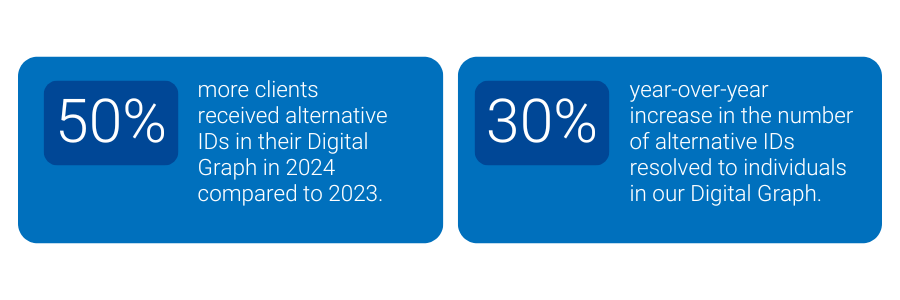
As traditional cookies crumble, marketers need fresh ingredients to keep the flavor coming. Already, about 40% of browser traffic doesn’t support third-party cookies, and marketers are spicing things up with first-party data, alternative identifiers like Unified I.D. 2.0 (UID2) and ID5, and contextual targeting strategies. In fact, 50% more of our clients received alternative IDs (UID2, ID5, Hadron ID) in their Digital Graph in 2024 compared to 2023. The number of alternative IDs resolved to individuals in our Digital Graph increased by 30% year-over-year – as everyone looks beyond the cookie jar.
There is no secret sauce to replace cookies. Instead, expect a multi-ID recipe that brings together different identifiers, unified by an identity graph. This approach turns a fragmented pantry of data into a cohesive meal, giving you a complete view of your customer on every plate.
2. The rising power of CTV: A hearty entrée of opportunities
CTV is quickly becoming the main dish on the streaming menu, as viewers load up on their favorite shows. While CTV is slated to make up 20% of daily U.S. media consumption by 2026, advertisers are still holding back on pouring in the ad spend. To unlock its full flavor, marketers need to whip up solutions like frequency capping and unified audience activation.
Although CTV will account for 20% of daily U.S. media consumption by 2026, it’s projected to command only 8.1% of ad spend. Frequency capping and unified audience activation solutions will be key to unlocking CTV’s full potential.
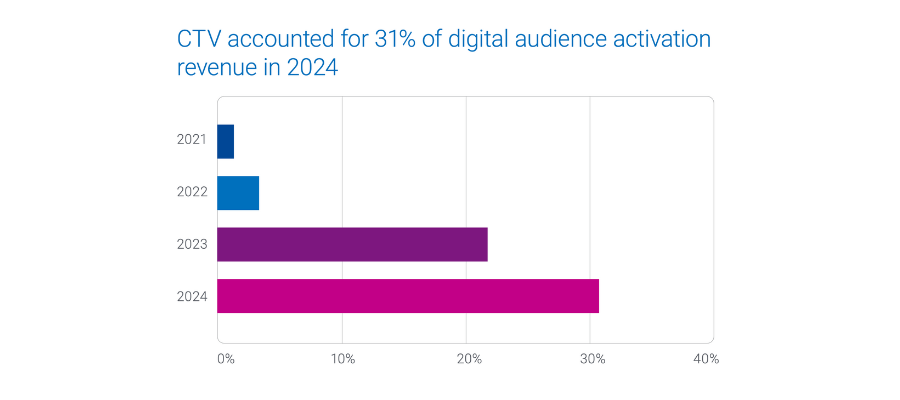
By 2025, nearly half of CTV “diners” will choose free ad-supported streaming TV (FAST). Marketers need strategies to prevent ad overexposure. With 50% of U.S. consumers avoiding products due to ad overload, and 30% of marketers willing to increase their CTV spend if frequency capping improves, unified identity solutions help ensure every impression is served just right.
3. Omnichannel: A flavorful fusion plate
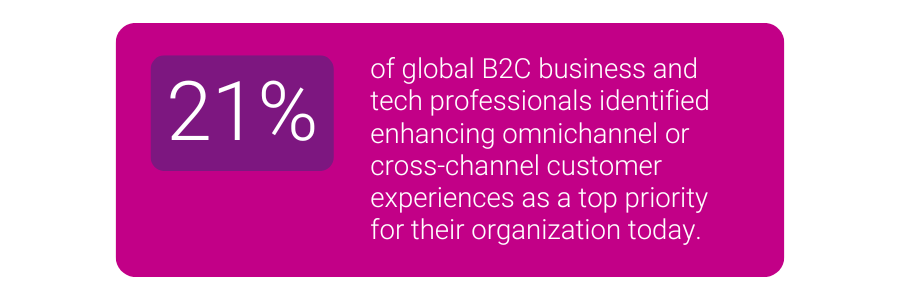
No one likes a one-flavor meal. Marketers are moving beyond single-channel “side dishes” to omnichannel “fusion feasts” that blend direct mail, digital, CTV, and retail media networks (RMNs) into a truly cohesive culinary experience. Even though only 21% of global B2C professionals currently put omnichannel at the top of their shopping list, the growing demand for seamless, audience-first campaigns is heating up.
In 2025, having an audience-first approach will be like having a perfect pairing for every course. Unified identity solutions act as your master sommelier, ensuring that each channel complements the next, and every customer enjoys a well-rounded, memorable journey.
Vertical trends: A dessert sampler from four unique kitchens
Different markets have their own signature flavors.
- In Auto, crossover utility vehicles (CUVs) claim 51% of new vehicle registrations, and consumers in the 35-54 age group and families are the primary buyers. Automotive marketers should prioritize CUV advertising with a strong focus on family-oriented and income-appropriate messaging
- In Financial Services, marketers need to anticipate shifts in consumer behavior tied to economic conditions, such as increasing demand for deposit products when interest rates are high. For insurance, aligning campaigns with life events, like new home purchases or marriage, can maximize engagement.
- In Healthcare, advertisers are prioritizing personalized, regulation-compliant campaigns that address social determinants of health (SDOH).
- In Retail, advertisers are increasingly activating on both CTV and social platforms, with many managing their own in-house campaigns. While larger brands often rely on media agencies, a shift toward in-house media buying is emerging among some bigger players, offering more control over audience targeting and performance metrics.
Our report covers each vertical’s unique menu, helping you select the right “ingredients” for your customers. With the top Experian Audiences on hand, you can create feasts that delight, nourish, and convert.
Hungry for more? Download our full menu
The three “samples” you’ve just tasted are just the starters. Our 2025 Digital trends and predictions report serves up five insights, complete with strategies, data, and tools to help you adapt, scale, and thrive in 2025.
Ready for the full menu? Download our report now and discover all five trends that will shape your marketing “cookbook” in 2025. Bon appétit!
Latest posts
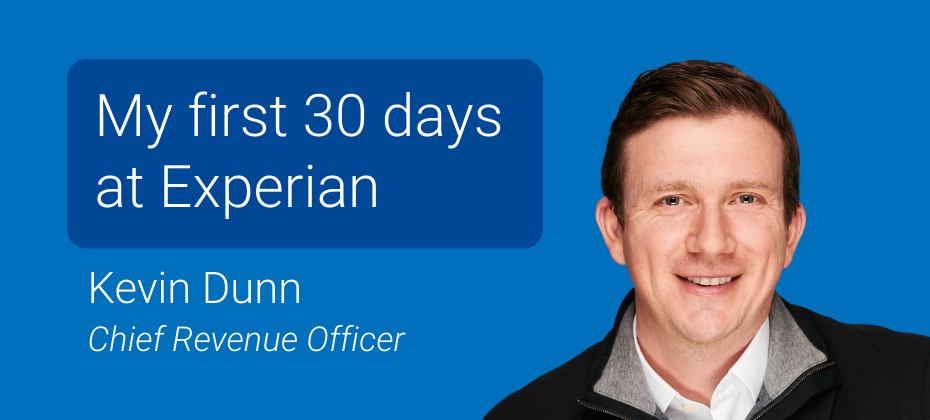
Kevin Dunn shares his thoughts after 30 days as Experian’s new Chief Revenue Officer.

Lorem ipsum dolor sit amet, consectetur adipiscing elit. Mauris rhoncus augue sit amet mi rutrum, et egestas neque hendrerit. Aenean quis lectus dui. Quisque vitae posuere lectus. Nulla varius tincidunt mauris ut pharetra. Pellentesque semper mauris risus, et varius ante pretium ut. Duis varius ante a augue sodales, in consequat augue vehicula. Suspendisse potenti. Donec massa leo, efficitur vel eros ac, facilisis luctus massa. Ut pharetra eros diam, in fringilla neque elementum et. Morbi velit mauris, blandit et congue eu, convallis non augue. Curabitur porta sodales tellus vel porta. Morbi vel felis non neque efficitur venenatis. Nullam lobortis blandit ex id mollis. Donec euismod iaculis rutrum. Heading Description Heading Description Heading Description Vestibulum sed quam elit. Quisque bibendum nulla quam, non gravida tellus venenatis id. Ut a tellus facilisis, elementum ipsum ut, sodales orci. Nullam justo leo, condimentum in volutpat eu, gravida vel est. Ut placerat nulla erat, vel finibus lorem gravida at. Vivamus quis est id diam rhoncus blandit. Cras dignissim auctor diam, lobortis consectetur felis. Nulla accumsan lorem et augue pulvinar fermentum. Quisque ac nisl suscipit, imperdiet mauris eget, dignissim augue. Quisque tempus condimentum rhoncus. Vivamus in blandit nisi. Suspendisse sed metus rhoncus, vehicula nulla laoreet, volutpat neque. Morbi viverra in lacus id gravida. Aliquam velit ex, blandit at metus a, efficitur rutrum tortor. Fusce facilisis, nulla eget dapibus sagittis, sapien justo rhoncus nisi, ut placerat velit orci at velit. Sed finibus turpis ligula, et fermentum ligula rhoncus sit amet. Our 2026 Digital trends and predicitions report is available nowand ereveals five trends that will define 2026. From curation becoming the standard in programmatic to AI moving from hype to implementation, each trend reflects a shift towards more connected, data-driven marketing. The interplay between them will define how marketers will lead in 2026. Download now
Why an identity framework matters more than any single identifier The challenge facing marketers today isn’t a single identifier on a deprecation timeline. It’s the increasing fragmentation of signals and identifiers across browsers, devices, apps, and platforms. This shift introduces complexity into how audiences are reached and measured, as signals behave differently in every environment, and it becomes more complex to piece together a complete view of the consumer. Each environment contributes to its own set of visibility gaps, making identity less predictable and more uneven. The result is a patchwork of inconsistent identity signals rather than a single, predictable decline. While you can’t control how platforms evolve, you can control how you respond to fragmentation. The future won’t be defined by the loss of any single identifier, but by your ability to unify, interpret, and activate the many signals that remain. Marketers who adopt a flexible, identity framework will be best positioned to create consistency in an otherwise fragmented landscape. At Experian, we believe flexibility starts with intelligence. For decades, we’ve used AI and machine learning to help marketers understand people’s behavior more clearly, respect their privacy, and deliver messages that drive business outcomes. Our technology brings identity, insight, and intelligence together, so even as the number of signals grows and becomes more varied across environments, marketers can reach the right people with relevance, respect, and simplicity. This intelligence acts as the connective tissue across fragmented ecosystems, ensuring marketers can recognize and reach audiences consistently wherever they appear. What forces are driving fragmentation in identity and signals? Changes to traditional IDs: Since Apple introduced ATT, access to IDFA has become inconsistent across apps and devices. Google’s evolving Android privacy roadmap adds another layer of variability, fragmenting mobile addressability. Safari and Firefox have long restricted third-party cookies, while Chrome continues to support them for now. This creates different signal availability across browsers, contributing to an uneven and increasingly fragmented identity landscape on the open web. Shifts in signals: IPv4 to IPv6 migration introduces mismatched identity structures that complicate continuity across environments. Platform-driven fragmentation: Closed ecosystems and uneven adoption of evolving RTB standards (like OpenRTB 2.6 updates designed to support new identifiers and consent signals) create differences in which identifiers and consent signals are shared in the bidstream. At the same time, the rise of alternative or “universal” IDs—often developed by individual platforms, publishers, or technology companies—means that multiple ID types can appear within the same auction, each with its own structure, rules, and level of support. These differences reduce interoperability across platforms and contribute to a more fragmented activation landscape. Each change creates an identity silo. Together, they form an ecosystem defined by fragmentation rather than absence. Without an identity framework, these environments operate as disconnected identity islands. A multi-ID world requires a unified identity framework Alternative IDs play an important role, but they also expand the number of signals marketers must reconcile. Without a consistent identity layer, more IDs often mean more complexity—not more clarity. Common alternative IDs in use today: UID2: The Trade Desk’s UID 2.0, an iteration of their original Unified ID 1.0, which was still reliant on third-party cookies, creates persistent IDs with user-provided email addresses and phone numbers. ID5: This independent identity provider builds an identity infrastructure that powers addressable advertising across channels. It can create an ID based on both deterministic and probabilistic data. Hadron ID: Hadron ID is a unique, interoperable identity system (including first-party, audience-based, contextual, deterministic, and probabilistic) developed by Audigent, now part of Experian, to drive revenue for publishers by making their audience data and inventory actionable for media buyers. Industry reports suggest roughly one-third to two-fifths of open-auction traffic carries alternative IDs, sometimes multiple per request. Among Experian clients, adoption of alternative IDs rose 50% year over year, with a 30% increase in IDs resolved to individuals via our Digital Graph. Identity isn’t disappearing; it’s multiplying. A modern identity framework resolves these identifiers into a single, privacy-safe consumer view.