
Originally appeared on Adweek
The advertising industry is experiencing a significant shift resulting from Oracle’s market exit. Over the years, Oracle’s advertising tools—built through key acquisitions like Crosswise, BlueKai, Datalogix, and Grapeshot—have become essential for many marketers, data providers, and platforms. With Oracle’s departure, stakeholders are left searching for reliable alternatives to maintain their data-driven strategies.
While this transition may seem daunting, it presents a unique opportunity to reassess audience and identity solutions. With the growing importance of adaptability and interoperability, now is the perfect time for advertisers, agencies, publishers, and platforms to adopt future-focused strategies.
Oracle’s legacy: A combination of acquisitions
Oracle’s advertising business wasn’t a unified solution but a collection of acquired technologies. Crosswise provided a cross-device identity graph; BlueKai offered a robust data management platform (DMP); Datalogix specialized in offline purchase data; and Grapeshot was known for its contextual targeting. Together, these tools powered a comprehensive offering for advertisers, data providers, and platforms.
Yet, much of Oracle’s advertising success stemmed from the external data it used. For example, many of Oracle’s automotive audiences relied heavily on third-party data, largely powered by Experian data. This means that while Oracle may no longer be an option, many of the services marketers depended on through Oracle are still available from Experian, ensuring continuity.
What this means for advertisers and agencies
For advertisers and agencies, Oracle’s exit means losing access to its syndicated audiences. Fortunately, this doesn’t have to cause a major disruption. As one of Oracle’s primary data providers, we’ve mapped Oracle’s audiences to our own, ensuring marketers can easily maintain their targeting strategies without losing performance or efficiency.
With access to over 2,400 syndicated audiences across key verticals such as demographics, automotive, retail purchases, or financial data, advertisers can continue their campaigns with confidence and precision.
What sets us apart? Powered by data ranked #1 in accuracy by Truthset, our audiences are built on reliable, offline, deterministic data — like name, address, phone number, and email. This means advertisers can be confident that they are reaching the right audiences across all channels. With our audiences available across 30+ ad platforms, including programmatic, TV, and social media, advertisers and agencies have easy access to keep their campaigns running.
For advertisers that ran audience targeting using Grapeshot’s Contextual Platform, our new Contextually-Indexed Audiences are a replacement built for the evolving digital media landscape. By combining the precision of audience targeting with the flexibility of contextual targeting, marketers get a privacy-safe, yet scalable way to target audiences that is not reliant on cookies or other user identifiers. Marketers can activate these audiences through leading demand-side platforms (DSPs) or through Audigent private marketplaces (PMPs).
A new opportunity for data providers
Oracle’s marketplace has long been a crucial distribution channel for third-party data providers, particularly through BlueKai. With its closure, providers have an opportunity to explore new onboarding services and marketplaces that offer similar or even better reach and effectiveness.
New alternative onboarding solutions are emerging, particularly in areas like TV and digital, ensuring that the loss of Oracle’s services does not leave a significant gap. These solutions are being built to overcome the challenges typically present with data onboarding — complicated integration processes, limited ID matching capabilities, and opaque pricing structures. One such solution is Experian’s new Third-Party Onboarding.
What sets us apart? With our digital and offline identity capabilities embedded within this solution, data providers receive superior programmatic and connected TV (CTV) reach and addressability compared to the competition. The first data providers – Adentro, Kontext, L2, and Webbula – are already using this solution to increase the adoption of their audiences and maximize their revenue.
Additionally, new marketplaces are emerging that aim to fill the void left by Oracle, offering distribution to key destinations and providing data providers with continued access to advertisers who require high-quality, third-party data.
Platforms shift to new audience solutions
Platforms that relied on Oracle for third-party data and audience onboarding are now facing challenges in maintaining their ability to target specific audiences. This could affect their inventory’s attractiveness to buyers. However, we offer a seamless solution for platforms looking to replace Oracle’s capabilities.
As one of Oracle’s primary data providers, we’ve already mapped Oracle’s audiences to our catalog of over 2,400 syndicated audiences. Platforms can continue providing precise audience targeting and ensure advertisers receive the performance that they demand.
Additionally, Third-Party Onboarding builds upon the investment and infrastructure used to distribute our own audience segments, providing platforms with audiences from leading third-party data providers.
Moving forward: Embracing connectivity
We’re dedicated to powering data-driven advertising through connectivity. With best-in-class syndicated audiences, new Contextually-Indexed Audiences, and an easy-to-use Third-Party Onboarding solution, we’re enabling advertisers, agencies, data providers, and ad platforms to improve their marketing operations.
Oracle’s departure marks the end of one era, but it also opens the door to a future where collaboration, interoperability, and connectivity define the landscape. By choosing partners like us, advertisers, agencies, and platforms can ensure they remain agile, innovative, and well-equipped to thrive in this new era of data-driven marketing.
Reach out to your account representative or our audience team for information about our comprehensive audience mapping and finding the right audiences for your campaigns.
Download our audience lookbook to discover more about Experian’s audiences.
Latest posts
As today’s digital landscape gets more and more complicated there are more ways for brands to connect with users and drive purchases and more ways for ad tech to target and measure those touch points. As in-person shopping picks up steam due to the re-normalization of society post-COVID 19; the connection between digital ads and in-person purchases needs to be made once again. With the rise of Connected TV throughout the pandemic there are even more digital opportunities to target a user. But how do you make sure that those brand engagements are captured and correctly attributed to offline purchases and conversions? The answer lies in a holistic identity resolution strategy. Cross-device identity resolution with The Tapad Graph connects the identifiers and devices of individuals within a household to each other; enabling targeting, frequency capping, extension, segmentation and measurement or attribution between devices; including Connected TV and hashed (privacy-protected) email addresses along with Cookies, Mobile Ad Ids and IP Address. Brands can join their first-party data to The Tapad Graph to execute strategies that connect online and offline data for pre, mid and post-campaign efficiencies. Let’s imagine a scenario in which an outdoor retail brand is targeting users watching specific content on a Connected TV device. Powered by identity resolution, they start with a general ad on CTV and continue targeting down individual paths with each user. When one of them converts in store and makes a purchase; the outdoor retailer can connect that action through location and in-store traffic data with the cross-device identity resolution used to execute the digital campaign. Now the actions of the user online and offline are resolved for more accurate measurement and attribution after the campaign ends. But it doesn’t stop there– the brand's CRM data can be reactivated for the next digital campaign and leveraged to capitalize on the most effective media mix for the user who made the purchase previously. These combined insights can be invaluable in shaping up future campaign strategies with geo-contextual ads, recommended additional products and personalization to help drive more conversions and purchases in-store or online. As in-person shopping picks back up and marketers are tasked once again with balancing online and in-store KPIs, the right identity resolution strategy can unlock necessary efficiencies for retailers, ad tech vendors and agencies tasked with supporting these initiatives. Get started with The Tapad Graph For personalized consultation on the value and benefits of The Tapad Graph for your business, email Sales@tapad.com today!
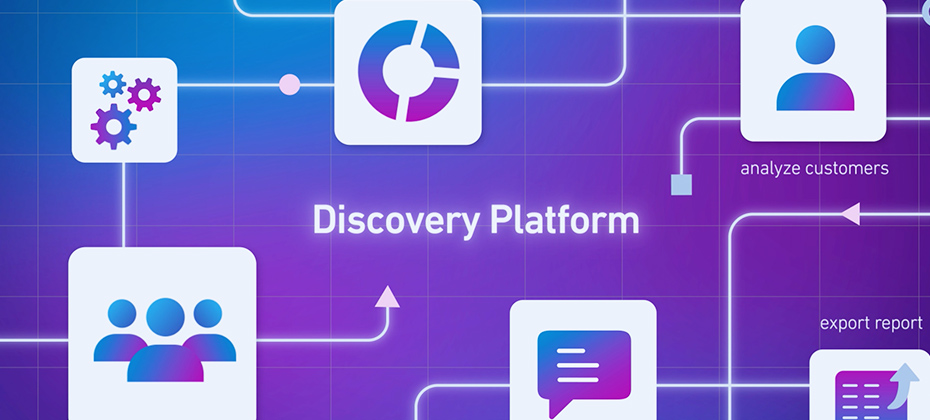
With Discovery Platform, you can find meaningful consumer insights and activate that data to reach growth audiences using content messaging that speaks to their motivations and interests. Take your marketing campaigns from audience discovery to media planning, execution and reporting.

Experian Marketing Services and Data Quality President Genevieve Juillard recently sat down with Zach Rodgers, host of the AdExchanger Talks podcast to discuss the future of identity, the importance of data transparency and privacy, and our recent acquisition of Tapad. Genevieve focused on the opportunity for our industry to reimagine an advertising ecosystem that is resilient and adaptable; one that takes advantage of emerging data and prioritizes data transparency and consumer privacy. She also discussed the importance of advertising strategies that put consumers at the heart of every decision and give them more control over their data. Genevieve shared with AdExchanger that Experian’s acquisition of Tapad, a global leader in digital identity resolution, was a natural fit for our company. Tapad’s approach and role in the ecosystem is very much aligned with Experian’s, which is to develop solutions that are resilient to industry and consumer changes. The combination of our capabilities supports interoperability across all types of identifiers, both online and offline, and will position us to help our clients navigate the post-third-party cookie world. To learn more about Experian’s plans to support an effective advertising ecosystem that will evolve with our dynamic industry, listen to the full podcast Embracing ‘Healthy Fragmentation’ In Ad Tech, With Genevieve Juillard.