The rise of streaming TV advertising is revolutionizing the marketing landscape, bringing together the best of traditional television’s broad audience reach and digital’s precise targeting capabilities. Marketers now have a new platform to explore, but it comes with its own set of challenges and opportunities.
To shed light on this topic, we hosted a panel discussion at Cannes, featuring industry leaders from AMC Networks, Disney, OMG, Paramount, Roku, and Experian.
In this blog post, we’ll explore the effectiveness of TV as a performance channel and audience targeting.
TV as a performance channel
Television has come a long way over the years. The evolution of linear TV to connected TV (CTV) is opening new possibilities for targeting and performance measurement, like what we’re accustomed to in search and display.
However, there’s still a way to go. What’s preventing us from fully realizing the potential of CTV? Let’s explore what’s holding us back.
Three challenges
Advertisers are captivated by CTV, a media platform that combines the best features of TV and digital advertising. With its unparalleled data and identity capabilities, alongside the immersive TV experience, it has the potential to be a powerful performance channel. However, we still face three challenges as performance dollars take center stage.
“CTV is a valuable household device that provides direct audience insights. However, to gain a comprehensive understanding of the household and the individuals in the household, we need different techniques. The implementation of such methodologies from user level profiles to algorithmic inferences are still evolving across different companies.”
Louqman parampath, vp, product, roku
Client education
Performance marketers and agencies are still primarily focused on social and search. It’s important to reassure them that CTV aligns with their established standards.
Optimize KPIs
We need to address the challenges around attribution and incrementality. We should optimize for the KPIs that performance marketers desire, which are different from the metrics commonly used in social media and search marketing.
Results-driven interactions
You should invest in interactive ad formats and novel experiences to give users clickable options that deliver the instant impact of performance marketing. While conversions and purchases can happen after seeing an ad thanks to view-through attribution, your goal should be to make video ad experiences feel like performance-based engagements.
This transition is crucial to building trust and familiarity among performance marketers and agencies.
Strategies to effectively reach audiences across different mediums
There are various mediums to connect with consumers — TV, digital, and mobile offer multiple avenues. Which strategies should you prioritize?
Data interoperability
When it comes to buying unified audiences, programmatically is the easiest route. By prioritizing data interoperability, you can ensure a seamless buying experience across all screens.
“At Disney, we focus on data interoperability with industry solutions such as The Trade Desk/UID2, Google PAIR, and Experian and the LUID, making it effortless to buy unified audiences programmatically across all screens. With an identity graph as the foundation of our tech stack, we help our clients reach their target audience across linear, digital, and streaming properties.”
jamie power, SVP, addressable sales, disney
Advanced targeting capabilities in linear TV
Don’t limit your perspective on television consumption to traditional streaming platforms alone. While streaming is popular, it’s equally exciting to see advanced targeting capabilities integrated into linear television. Viewer habits are shifting, with appointment TV becoming a thing of the past. Today, viewers have more options to watch a variety of programming, regardless of its age.
“Streaming has become another platform for viewers to consume programming, and it’s exciting to see digital targeting capabilities being applied to linear TV. Viewer behavior has changed, with more opportunities to consume programs at different times, so it’s important to use targeting capabilities like linear addressable to effectively reach the audience across multiple channels.”
evan adlman, Evp, commercial sales & revenue operations, amc networks
While live premieres still attract a substantial audience, utilize linear addressable targeting to reach viewers across channels. By doing so, you can ensure your message reaches the right viewers at the right time. The viewership landscape has diversified – it’s time to adjust our strategies.
Make TV viewing patterns predictable
To bring predictability to the unpredictable and fragmented landscape of TV, advertisers can create products that simplify and unify the viewing experience. This allows users to effortlessly transition between episodes, resulting in a cohesive and engaging viewing journey.
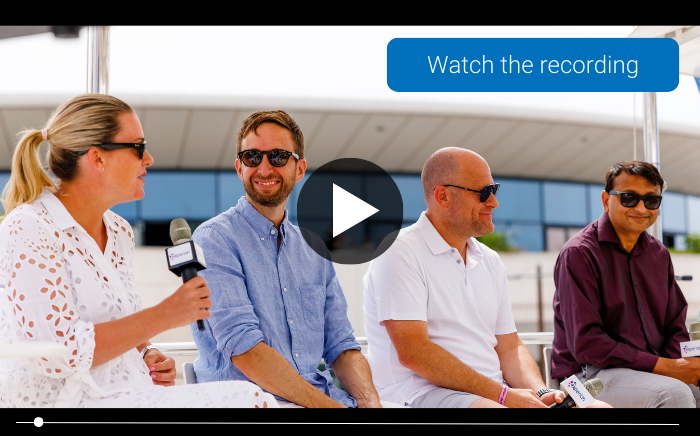
Watch our Cannes panel for more on the future of streaming TV advertising

We hosted a panel in Cannes that covered the future of streaming TV advertising. Check out the full recording below to hear what leaders from AMC Networks, Disney, OMG, Paramount, Roku, and Experian had to say.
Check out more Cannes content:
- Our key takeaways from Cannes Lions 2023
- Insights from a first-time attendee
- Four new marketing strategies for 2023
- The future of identity in cookieless advertising
- Maximize ad targeting with supply-side advertising
Follow us on LinkedIn or sign up for our email newsletter for more informative content on the latest industry insights and data-driven marketing.
Latest posts

Up next in our Ask the Expert series, Ben Rothke, Senior Information Security Manager, reviews two certifications that should be part of your information security strategy: Service Organization Control (SOC) 2 Type 2 and International Organization for Standardization (ISO) 27001. Tapad, a part of Experian, is 27001 and SOC 2 Type 2 compliant. Two information security certifications you can trust Seals from Good Housekeeping and Underwriters Laboratories give consumers confidence that they can trust the product that they’re buying. For IT solutions or service providers, what, or who can you turn to for that seal of approval? There are many equivalent third-party attestations you can use. But which should you trust? The International Organization for Standardization (ISO) 27001 The American Institute of Certified Public Accountants (AICPA) System and Organization Controls (SOC) International Organization for Standardization (ISO) 27001 is an international standard for information security from the ISO. ISO 27001 is globally acknowledged and sets requirements for controls, maintenance, and certification of an information security management system (ISMS). This international standard provides organizations with a framework to identify, manage and reduce risks related to the security of information System and Organization Controls (SOC) The SOC, as defined by the AICPA, is a set of audit reports. SOC reports, like 27001 certificates, are used by service organizations to give their customers the confidence they have adequate information security controls in place to protect the data that they handle. SOC 2 is an assessment of controls at a service organization regarding security, availability, processing integrity, confidentiality, and privacy. The purpose of the report is to provide extensive information and assurance to a broad range of users about the controls at a service organization that are relevant to the security, availability, and processing integrity of the systems that process user data, as well as the confidentiality and privacy of the information processed by these systems. Why ISO 27001 and SOC 2 are important The value of these third-party attestations is two-fold: Organizations can show they have passed an independent external audit Third-party attestations save organizations the time of having to do their own audits In addition to 27001 and SOC 2 Type 2 compliance, we are also certified with ISO 27017 and 27018, which are add-ons to 27001 that are specific to cloud computing. We take the security and privacy of our customers’ data as seriously as they do. Every cloud service provider (CSP) has a responsibility matrix that details what security and privacy tasks they are responsible for and which ones the customer is responsible for. Any cloud customer that needs to be made aware of what their security tasks are is putting themselves at risk. So, when you want to engage a CSP, ask them for their attestations. They worked hard for them and will be proud to share their compliance. We’re powered by decades of setting standards in marketing services At Experian, we’re a privacy-first business. We’re highly focused on respecting people, their data, and their privacy. We continue to show our dedication to information security by completing these security audits every year. The constant changes to data compliance regulations can be challenging to navigate, but you don’t have to do it alone. Contact us today. We will be your guide so you can ethically and confidently reach your customers. Contact us today About our expert Ben Rothke, Senior Information Security Manager Ben Rothke, CISSP, CISA, is a Senior Information Security Manager at Tapad, a part of Experian. He has over 25 years of industry experience in information systems security and privacy. His areas of expertise are in risk management and mitigation, security and privacy regulatory issues, cryptography, and security policy development. Ben is the author of Computer Security – 20 Things Every Employee Should Know (McGraw-Hill), and writes security and privacy book reviews for the RSA Conference Blog and Security Management magazine. Latest posts

Experian kicks off the AdTech year at CES What better way to jump-start start 2023 than a trip to Las Vegas for the Consumer Electronics Show (CES). Our team was thrilled to participate in this annual kick-off with the AdTech community. The uniqueness of what CES has become for our industry can be defined as the intersection between technology brands, digital, television, and AdTech. CES creates the space necessary for marketing and advertising leaders to collaborate to drive rewarding outcomes for the year ahead. Our goal in attending CES was to connect with our partners, clients, and industry leaders to build relationships, form strategic plans, and listen. The opportunity to learn about our industry’s challenges and goals enables us to develop initiatives, drive success, and support our clients and partners. Keep reading for our 2023 CES AdTech recap. “I have been to CES too many times to mention the number; this year was as energetic, collaborative, engaged, and effective as I can ever recall. Our presence was first-class and meticulously organized, which made our interactions as robust as possible. It's a team effort, and we appreciate all the work that goes into this event. “ – Greg Koerner, Vice President of Digital Advertising Sales Our CES AdTech recap Supporting publishers and advertisers is top of mind for us. Many of our conversations focused on the technologies we deliver or collaborate with our partners to provide. Clean rooms and activation were two common themes throughout our discussions. Clean rooms Consumer privacy, regulatory requirements, and data deprecation are driving the AdTech industry to talk about and explore clean rooms. There’s a need to address data collection, storage, analysis, and sharing. Clean rooms are a potential solution that can standardize data and address interoperability issues. Activation In 2023, we predict that digital activation will increase. We continue to see increased demand for environments where alternative identifiers are being transacted (like demand side platforms and video). Social platforms will continue to experience volatility and advertisers will shift their focus to demand-side, video, and supply-side platforms. Download our 2023 Digital audience trends and predictions report to learn where you should activate your audiences in 2023. We can help plan your 2023 digital activation strategy. How we support clean rooms and activation Our Consumer Sync and Consumer View products support these areas and can help you understand people better–so you and your customers can connect with confidence. What is Consumer Sync? Consumer Sync, our consumer identity product, enables signal agnostic collaboration across marketers and technologies, bringing together digital devices, IDs, households, and attributes. Consumer Sync’s Resolution and Collaboration solutions can help you gain a better understanding of your consumers and make identities actionable in any environment. What is Consumer View? Consumer View, our data discovery product, offers marketers a robust, privacy-first understanding of their customers and prospects. Grounded in consumer identity, Consumer View provides the data foundation to engage consumers where, when, and how they want. Consumer View’s Audience and Attribution solutions provide expansive coverage so that you can fill in the gaps to better understand your prospects. Additionally, our collaborative efforts with strong partnerships across the clean room ecosystem and with our activation partners help our clients serve the best ads, at the best times, to the right audience. “CES is back and was a great way to kick off the new year! We were able to meet with a high volume of clients to eagerly talk about building new solutions for the TV space. We are excited to see where these conversations lead in the next few months.” – Ali Mack, Senior Director of TV Advertising Sales Let’s navigate what’s new in our industry, together We can help you connect with your consumers in innovative, impactful ways. Contact us to continue the conversation and learn more about our Consumer Sync and Consumer View products. We can help you take advantage of the opportunities on the horizon.
Tap into our collaboration with ARF’s DASH study for one-of-a-kind TV audiences Understanding the importance of aligning campaigns with the media usage habits of consumers, Experian Marketing Services has partnered with The Advertising Research Foundation (ARF) and its DASH (Device and Account Sharing) universe study to create an innovative solution for marketers and advertisers. A leading industry organization dedicated to furthering the scientific practice of advertising and marketing, the ARF conducts independent research and assists in establishing rigorous standards of practice. Its 400+ members include leading marketers, media companies, advertising agencies, and research and measurement firms. What does DASH data reveal? The ARF’s DASH study was developed with National Opinion Research Center (NORC) and seven industry sponsors, including Experian. DASH measures, in granular detail, how American households and individuals connect to and consume TV, use digital devices, and interact with and share streaming media and eCommerce accounts. DASH also contains a cohort of repeat respondents to uncover the dynamics of complex media actions, such as cord cutting. DASH produces an unbiased, nationally projectable data set, which, when combined with Experian's Marketing Data enables the creation of one-of-a-kind audience segments based on TV, media, and device usage at scale. In addition, pairing DASH data with Experian Marketing Data yields insights for industry partners that unlock how consumers engage with media and technology across their devices and eCommerce accounts. How do we make DASH audiences – and why? By combining the ARF’s DASH data set with Experian Marketing Data, we developed one-of-a-kind TV audiences that reflect how viewers interact with digital devices and eCommerce accounts. We have created this resource so our customers can align their marketing campaigns with media usage. These audience segments also yield insights that help marketers reach their audiences with the right messages and content. “Television viewing behavior has undergone a massive transformation, making it challenging for advertisers to reach their target audience and optimize frequency. These audiences give advertisers invaluable tools for managing their campaigns in an increasingly fragmented environment.” – Doug McLennan, Director of Product Management, Experian Explore our DASH audiences to advance your digital and TV ad campaign strategy TV usage and viewing behavior audiences These audience segments allow marketers to reach unique and targeted viewers, like frequent streamers or those who watch exclusively on larger screens. Ad Avoiders Ad Acceptors Household/Family Viewing – Co-Watchers Household/Family Viewing – Co-Watchers with Children Household/Family Viewing – Co-Watchers without Children Household/Family Viewing – Solo Watchers TV Enthusiasts – Paid TV High Spenders Viewing Device Type – Screen Size – Small Viewing Device Type – Screen Size – Large With our new TV audiences, you can target viewers with precision, accuracy, and confidence, enabling you to maximize your marketing efforts. We are excited to offer these new segments and look forward to continuing our work with the ARF to develop new resources that help you connect with your target audiences. “DASH has established itself as a reliable and unbiased calibration set – a “true North” – for media measurement. Our collaboration with Experian puts the power and precision of DASH in the hands of marketers and advertisers as well.” – Paul Donato, Chief Research Officer, ARF Our DASH audiences can be found on the shelf in your demand-side platform of choice for easy accessibility, with availability across all offline and online channels. Connect with us to learn more. For more information on our partner ARF, visit www.thearf.org.