The rise of streaming TV advertising is revolutionizing the marketing landscape, bringing together the best of traditional television’s broad audience reach and digital’s precise targeting capabilities. Marketers now have a new platform to explore, but it comes with its own set of challenges and opportunities.
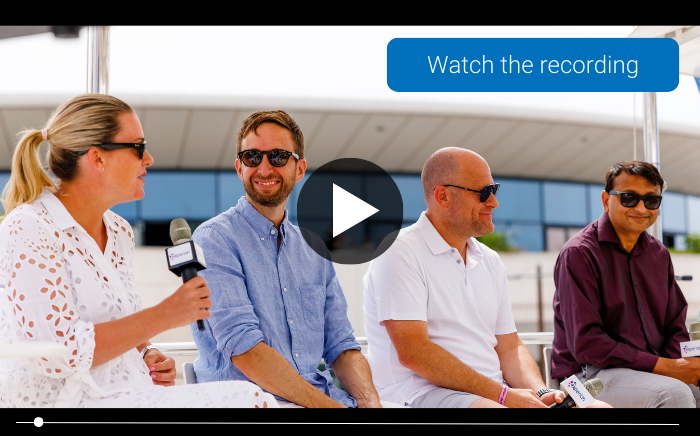
To shed light on this topic, we hosted a panel discussion at Cannes, featuring industry leaders from AMC Networks, Disney, OMG, Paramount, Roku, and Experian.
In this blog post, we’ll explore the effectiveness of TV as a performance channel and audience targeting.
TV as a performance channel
Television has come a long way over the years. The evolution of linear TV to connected TV (CTV) is opening new possibilities for targeting and performance measurement, like what we’re accustomed to in search and display.
However, there’s still a way to go. What’s preventing us from fully realizing the potential of CTV? Let’s explore what’s holding us back.
Three challenges
Advertisers are captivated by CTV, a media platform that combines the best features of TV and digital advertising. With its unparalleled data and identity capabilities, alongside the immersive TV experience, it has the potential to be a powerful performance channel. However, we still face three challenges as performance dollars take center stage.
“CTV is a valuable household device that provides direct audience insights. However, to gain a comprehensive understanding of the household and the individuals in the household, we need different techniques. The implementation of such methodologies from user level profiles to algorithmic inferences are still evolving across different companies.”
Louqman parampath, vp, product, roku
Client education
Performance marketers and agencies are still primarily focused on social and search. It’s important to reassure them that CTV aligns with their established standards.
Optimize KPIs
We need to address the challenges around attribution and incrementality. We should optimize for the KPIs that performance marketers desire, which are different from the metrics commonly used in social media and search marketing.
Results-driven interactions
You should invest in interactive ad formats and novel experiences to give users clickable options that deliver the instant impact of performance marketing. While conversions and purchases can happen after seeing an ad thanks to view-through attribution, your goal should be to make video ad experiences feel like performance-based engagements.
This transition is crucial to building trust and familiarity among performance marketers and agencies.
Strategies to effectively reach audiences across different mediums
There are various mediums to connect with consumers — TV, digital, and mobile offer multiple avenues. Which strategies should you prioritize?
Data interoperability
When it comes to buying unified audiences, programmatically is the easiest route. By prioritizing data interoperability, you can ensure a seamless buying experience across all screens.
“At Disney, we focus on data interoperability with industry solutions such as The Trade Desk/UID2, Google PAIR, and Experian and the LUID, making it effortless to buy unified audiences programmatically across all screens. With an identity graph as the foundation of our tech stack, we help our clients reach their target audience across linear, digital, and streaming properties.”
jamie power, SVP, addressable sales, disney
Advanced targeting capabilities in linear TV
Don’t limit your perspective on television consumption to traditional streaming platforms alone. While streaming is popular, it’s equally exciting to see advanced targeting capabilities integrated into linear television. Viewer habits are shifting, with appointment TV becoming a thing of the past. Today, viewers have more options to watch a variety of programming, regardless of its age.
“Streaming has become another platform for viewers to consume programming, and it’s exciting to see digital targeting capabilities being applied to linear TV. Viewer behavior has changed, with more opportunities to consume programs at different times, so it’s important to use targeting capabilities like linear addressable to effectively reach the audience across multiple channels.”
evan adlman, Evp, commercial sales & revenue operations, amc networks
While live premieres still attract a substantial audience, utilize linear addressable targeting to reach viewers across channels. By doing so, you can ensure your message reaches the right viewers at the right time. The viewership landscape has diversified – it’s time to adjust our strategies.
Make TV viewing patterns predictable
To bring predictability to the unpredictable and fragmented landscape of TV, advertisers can create products that simplify and unify the viewing experience. This allows users to effortlessly transition between episodes, resulting in a cohesive and engaging viewing journey.
Watch our Cannes panel for more on the future of streaming TV advertising

We hosted a panel in Cannes that covered the future of streaming TV advertising. Check out the full recording below to hear what leaders from AMC Networks, Disney, OMG, Paramount, Roku, and Experian had to say.
Check out more Cannes content:
- Our key takeaways from Cannes Lions 2023
- Insights from a first-time attendee
- Four new marketing strategies for 2023
- The future of identity in cookieless advertising
- Maximize ad targeting with supply-side advertising
Follow us on LinkedIn or sign up for our email newsletter for more informative content on the latest industry insights and data-driven marketing.
Latest posts
NEW YORK & LOS ANGELES / BUSINESS WIRE / Jan. 30, 2017– Tapad, part of Experian, and Rubicon Project (NYSE: RUBI) announced today a new global partnership offering a unified, cross-device campaign delivery solution within an automated advertising marketplace. Tapad is the leading provider of unified, cross-screen marketing technology solutions and Rubicon Projectoperates one of the largest advertising marketplaces in the world. The Tapad Device Graph™, which enables buyers to expand their high-value display data signals to associated mobile devices, will be integrated across Rubicon Project’s leading advertising exchange and Orders platform, significantly improving consumer mobile reach. The new global partnership will empower Buyers within Rubicon Project’s exchange to find and engage audiences across their entire digital experience. Rubicon Project operates one of the world’s largest mobile exchanges connecting to approximately 1 billion unique mobile devices globally. “We’re excited to partner with Tapad to continue to provide our customers the very best data for managing their advertising businesses,” said Harry Patz, Chief Revenue Officer, Rubicon Project. “Cross-device delivery is crucial for buyers today with more than 81% of internet users currently relying on more than one device for digital access[1]. Through our partnership, buyers will be able to extend their desktop private marketplace campaigns to mobile, allowing them to find and engage their audience across devices, anywhere in the world. The net result will also benefit sellers; the increase in mobile reach will better position publishers and app developers to strategically capitalize on their inventory, ultimately increasing bid rates and mobile revenue across the board.” “Our partnership with Rubicon Project marks the first time advertisers and publishers alike are able to use cross-device solutions at significant scale outside of Google and Facebook,” said Pierre Martensson, GM of Tapad’s Data Division and APAC. “Our Device Graph will help Rubicon Project’s advertisers make more informed buying decisions and find the audiences who matter most.” Barry Adams, VP of Commercial Development at Bidswitch, said, “As digital advertising moves away from desktop and increasingly toward a mobile-first model, cross device data becomes critical to finding consumers. The rich data buyers will now be able to leverage at scale through the Tapad and Rubicon Project integration will enable us to provide a state-of-the-art cross-screen solution for the 150+ buying platforms that use our service, and the tens of thousands of advertisers they represent.” For more information about Rubicon Project’s inventory, please visit www.rubiconproject.com. For more information about Tapad’s cross-platform advertising solutions, please visit https://www.experian.com/marketing/consumer-sync. Get started with us

Tapad expands linear TV analytics solution, enabling optimal reach and frequency across TV and digital platforms NEW YORK, Jan. 24, 2017 /PRNewswire/ — Tapad, now a part of Experian, has partnered with WideOrbit, the leading provider of advertising management software for media companies, to develop the industry's first programmatic TV-buying platform powered by a device graph. Tapad is the leading provider of unified, cross-screen marketing technology solutions and was first to market with a device graph, the Tapad Device Graph™. WideOrbit's robust supply platform and industry-leading footprint offers access to premium TV inventory on top networks, reaching more than 99 million households across local affiliates. The partnership pairs Tapad's demand-side technology with WideOrbit's supply-side inventory. As a result, marketers can leverage cross-device audiences in their TV buys for the first time. Additionally, integrating the Tapad Device Graph™ with digital feedback loops and audiences both accelerates optimization and enables precise audience discovery for TV marketers. "The integration of WideOrbit's quality TV supply takes orchestrated cross-screen media buys to the next level," said Marshall Wong, Tapad's SVP of TV market development. "Marketers can now optimize TV campaigns within days instead of weeks. This also untethers them from buying against generic demographics like age and gender. By allowing brands to employ their own CRM or third-party data, we can move them much closer to audiences who will take action." "Integrating Tapad's device graph with WideOrbit's programmatic marketplace delivers enormous value to marketers looking to add TV to cross-device campaigns," said Ian Ferreira, EVP of programmatic at WideOrbit. "Television still delivers the most efficient reach of any medium, and Tapad's platform now allows marketers to purchase premium broadcast inventory that extends the power of cross-screen campaigns to TV with a single, unified solution." "Our clients build lasting relationships with consumers through thoughtful and pioneering marketing," said Jeff Giacchetti, VP of digital at Mediavest Spark. "The strategic partnership of demand-side technology and supply-side inventory makes it easier for brands to find efficient, incremental reach and are critical in this endeavor." For more information about Tapad's cross-platform advertising solutions, please visit https://www.experian.com/marketing/consumer-sync Contact us today!

Personal skill development for marketers to foster a broader view of the industry is critical to marketing programs success.