Cuebiq’s mission, as an offline intelligence and measurement company, is to deliver the most accurate and reliable insights on how digital marketing efforts impact offline consumer behavior. This case study shows how Cuebiq, despite signal loss, partnered with Experian to continue delivering in-store lift analyses. To achieve this, Cuebiq used Experian’s Activity Feed to resolve digital ad exposures to in-store purchases, so that marketers could know the effectiveness of their clients’ media campaigns.
Activity Feed helped Cuebiq increase its match rates by using all the identifiers supported in Experian’s signal-agnostic Digital Graph, reducing its reliance on third-party cookies. By partnering with Experian, Cuebiq could help their clients, marketers, more accurately measure their campaigns and optimize their media.
What is Activity Feed?
Experian’s Activity Feed pulls together fragmented digital event data from all digital channels, including browsers like Safari and Firefox that restrict traditional tracking methods. Activity Feed ingests and ties this digital ad exposure data to household or individual profiles hourly, helping clients associate that data to offline purchase activity made by that household or individual. Activity Feed plays a crucial role in overcoming fragmented data and helping marketers accurately measure their cross-channel marketing efforts.
Challenge: Increasing match rates across digital platforms
Cuebiq wanted to enhance how well they connect digital ad exposures, across web, mobile and connected TV (CTV) to specific mobile ad IDs (MAIDs), of those who visited clients’ stores. They needed a single technology partner who could collect data across these environments and improve these connections, especially as iOS updates, like iOS 14.5, posed potential challenges.
With the ability to resolve exposures to households, individuals, and MAIDs to then facilitate attribution of digital exposures to offline store visitation, Cuebiq could continue to provide accurate reports on how online ads impact offline consumer behavior. This clarity in data enables their clients to fine-tune their marketing strategies.
Cuebiq’s key objectives included:
- Resolving digital exposures to MAIDs
- Increasing overlap of offline and online data
- Improving the effectiveness of offline measurement offerings
Activity Feed: The solution to increase match rates
Cuebiq used Activity Feed to resolve data from cookieless environments like Safari to a single household or individual and saw significantly higher match rates. Cuebiq was able to track cross-channel media exposures, resolve them to MAIDs, and then use the Activity Feed output to correlate in-store visitation and sales to their clients’ media campaigns. Cuebiq also implemented the Experian pixel, which they placed to track all their marketers’ impressions (mobile, CTV, web traffic, etc.). The Experian pixel collects information in real-time, such as:
- Timestamp
- Cookies
- Device ID (MAID/CTV) when available
- IP address
- User-Agent
- Impression ID
“Before we started working with Experian, we couldn’t fully maximize ad views across the complex digital landscape. In just a few weeks, they were able to maximize the match rate across the fragmented digital inventory, solving a huge problem when it comes to cross-channel attribution.”
Luca Bocchiardi, Director of Product, Cuebiq
Results
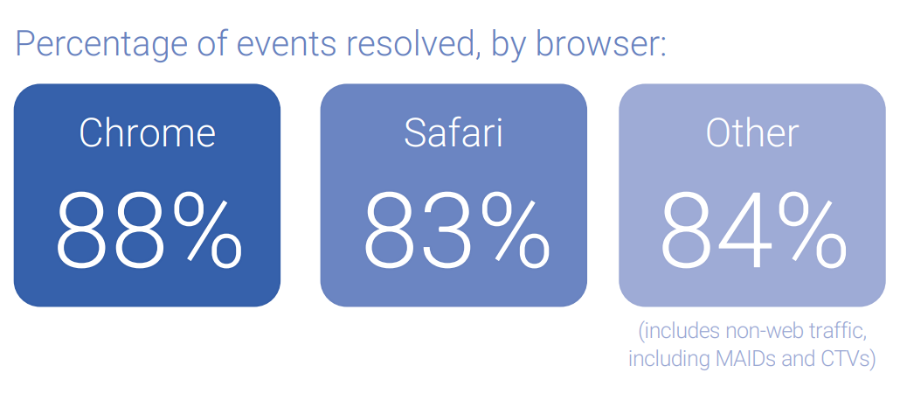
Activity Feed combines separate data streams and matches them back to a household. This enables Cuebiq to expand household IDs and accurately identify MAIDs that are seen in-store for cross-channel measurement. Over a 21-day period, Cuebiq passed ~1 billion events to Experian. Activity Feed resolved 85% of total events to a household, 91% of which were tied to MAIDs.
By implementing Activity Feed, Cuebiq was successfully able to:
- Gain clearer insights into the success of their client‘s campaigns
- Match consumer engagements in a privacy-compliant manner
- Tell the story of the key performance indicators (KPIs) related to their marketing efforts
Prepare for a cookieless future with higher match rates
Activity Feed is prepared for a cookieless future and uses alternative IDs, like ID5 IDs, hashed emails, and IPs for identity resolution, ensuring no reliance on third-party cookies. Experian remains fully committed to exploring a suite of next-generation solutions and prioritizing continued testing of different industry solutions, including the Google Privacy Sandbox, to help customers prepare for a future without cookies. We’ve identified six viable alternatives to third-party cookies, how these alternatives fall short, and how Experian can help you navigate these alternatives.
“Experian’s customer service is extremely efficient and collaborative. We trust them to keep putting our business first long-term.”
Luca Bocchiardi, Director of Product, Cuebiq
Download the full case study to discover how Cuebiq used Activity Feed to overcome their challenges. Your path to maximizing match rates and resolving data from cookieless environments starts here.
About Cuebiq
Cuebiq is transforming the way businesses interact with mobility data to providing a high-quality and transparent currency to map and measure offline behavior. They are at the forefront of all industry privacy standards, establishing an industry-leading data collection framework, and making it safe and easy for businesses to use location data for innovation and growth.
To learn more, visit their website at www.cuebiq.com
Latest posts

Lorem ipsum dolor sit amet, consectetur adipiscing elit. Curabitur vel dolor quis elit vestibulum bibendum eu in mi. Maecenas bibendum tristique lacus, sit amet tincidunt tellus dictum et. Vestibulum ante ipsum primis in faucibus orci luctus et ultrices posuere cubilia curae; Maecenas vel diam lacinia magna efficitur congue. Aliquam tempus, lectus nec ultrices sagittis, purus ipsum imperdiet felis, ac gravida enim massa vel augue. Quisque non neque at augue volutpat sodales nec eget ipsum. In sed consectetur odio, ut tincidunt ipsum. Sed non pellentesque nulla, non iaculis mauris. Etiam faucibus sit amet mauris eu efficitur. Lorem ipsum dolor sit amet, consectetur adipiscing elit. Integer sed blandit metus, at finibus ligula. Ut non rhoncus lacus. Nulla mattis est quis cursus laoreet. Nullam porta odio eu tortor consequat vulputate. Suspendisse nec massa ac neque ultrices eleifend. Integer porta tristique tempus. Nulla aliquet, erat tincidunt imperdiet vehicula, urna tortor molestie nulla, ut porttitor erat erat ac nunc. Nulla facilisi. Etiam a tellus in lectus vulputate maximus vitae eu nisl. Fusce eget libero non ipsum pellentesque egestas. Lorem ipsum dolor sit amet, consectetur adipiscing elit. Nulla ut metus sapien. Maecenas aliquam libero et ipsum eleifend, et maximus felis sagittis. Donec id massa et massa molestie varius. Quisque dignissim placerat augue vel mollis. Mauris accumsan, mi vel elementum suscipit, eros elit malesuada justo, ut tempor mi nunc quis tortor. Nullam ut laoreet mi. Nam euismod lectus id dictum consectetur. Praesent quis lacinia ipsum. Donec lobortis massa in erat interdum, consectetur consectetur purus posuere. Nullam feugiat, erat non hendrerit rutrum, velit ante rhoncus nibh, ac laoreet felis ante ac mauris. Etiam ex erat, vulputate vel nulla non, placerat dictum tellus. Praesent orci lacus, dictum in vestibulum non, semper ut tortor. Nullam vitae ornare ipsum, a cursus quam. Vivamus vitae vulputate lorem, ac scelerisque lectus. Fusce at lacus non enim fringilla consequat. Sed laoreet mi eget vulputate auctor. Proin placerat tempor nunc vel mollis. Ut quis mi ut lorem ultrices hendrerit nec vehicula felis. Vestibulum tempus sapien vel porta aliquet. Phasellus quis auctor augue. Morbi nec tellus in massa venenatis ornare. Vivamus eleifend lacus lacus. Suspendisse ac commodo orci, vel fringilla turpis. Proin enim turpis, egestas quis nulla a, ultrices volutpat massa. Nam luctus sapien odio, ac blandit ante accumsan et. Nunc luctus ligula odio, ac faucibus urna rutrum vitae. Donec eu lorem gravida nisi pretium consectetur. Morbi vel mauris non odio iaculis aliquam sed nec leo. Vestibulum sed libero quis ante hendrerit porttitor eget eu orci. Morbi est arcu, maximus eu lobortis sit amet, suscipit et felis. Morbi sodales mattis pretium. Curabitur sodales porttitor eros vitae efficitur. Nam id turpis tristique, aliquam sapien ac, convallis mi. Sed risus sapien, dapibus euismod mauris vitae, fringilla vulputate augue. Morbi efficitur, ex vitae semper mattis, tellus sem luctus lorem, eget viverra metus nibh eu neque. In eu orci est.

YouTube Embed Yoast FAQ Block FAQ Question #1 FAQ Answer #1 FAQ Question #2 FAQ Answer #2 FAQ Question #3 FAQ Answer #3 CTA Embed Button Test InfoGram Embed

Lorem ipsum dolor sit amet, consectetur adipiscing elit. Aliquam vitae nibh eu massa cursus eleifend quis in quam. Nunc mollis aliquam eros sed laoreet. Suspendisse et elit ut metus elementum aliquet ut sit amet metus. Vestibulum ante ipsum primis in faucibus orci luctus et ultrices posuere cubilia curae; Pellentesque fringilla, nibh eget convallis scelerisque, nisl nisl vestibulum ipsum, sit amet placerat neque nunc eget nisi. Cras cursus, sapien non interdum mollis, nibh augue efficitur eros, eget congue tellus nulla id lectus. Nullam vestibulum vitae erat sit amet mollis. Sed gravida tortor nec nibh blandit ultrices. Pellentesque habitant morbi tristique senectus et netus et malesuada fames ac turpis egestas. Nam justo lectus, tempus a velit at, tempus malesuada est. Aenean dictum tellus id lorem venenatis, quis sodales nisl tempus. In quis libero id est rhoncus dictum. Praesent ipsum dui, mattis vel augue ut, lacinia ultricies ex. Suspendisse sit amet gravida purus. Vivamus tempus tellus augue, ac placerat arcu efficitur non. Nam auctor at nulla sed porta. Vivamus lobortis eu nunc a efficitur. Vestibulum condimentum ante nec nisi imperdiet vulputate. Duis varius metus ac est fermentum congue. Aenean tincidunt ut erat non pharetra. Nulla elit orci, semper sed porttitor ac, convallis vitae velit. Praesent egestas blandit ullamcorper. Praesent a porta lectus. Aliquam et pellentesque lectus. Integer placerat mauris risus, ut semper dui commodo at. Vivamus efficitur pharetra ligula id rhoncus. Pellentesque gravida purus vitae viverra luctus. Vestibulum ante ipsum primis in faucibus orci luctus et ultrices posuere cubilia curae; In vitae augue nec odio fermentum ultrices a sed libero. Nulla ullamcorper nulla id sagittis convallis. Pellentesque cursus metus et orci iaculis, non laoreet nisi aliquam. Proin porta velit risus, ac ultricies lectus tincidunt at. Pellentesque scelerisque ullamcorper euismod. Phasellus eget velit malesuada, faucibus enim a, ultrices ante. Morbi ut diam non metus interdum placerat gravida quis arcu. Integer ultricies molestie nulla sed convallis. Curabitur mi dui, aliquam vel nibh rutrum, convallis tempor lacus. Cras porttitor laoreet varius. Ut tincidunt massa congue mauris lobortis euismod. Pellentesque a odio ut est consequat tristique ut in mi. Nullam sed ultricies justo, eu varius eros. Nunc ipsum nulla, vehicula at sagittis a, ornare ut nisi. Aenean imperdiet felis at aliquet porta. Nunc sed leo ut justo efficitur aliquet. Sed et urna vel urna maximus laoreet. In facilisis porttitor nisi in sagittis. Fusce magna sapien, molestie ac maximus eu, tincidunt sit amet massa. Praesent non mauris metus. Aliquam dapibus sit amet tortor at scelerisque. Ut vel dolor at nisi rhoncus finibus auctor non velit. Integer pellentesque venenatis diam, nec eleifend ipsum pellentesque quis. Vivamus vitae mi nisl. Curabitur lectus orci, ornare et ipsum venenatis, sagittis blandit mauris. FAQs Lorem ipsum dolor sit amet, consectetur adipiscing elit. Aliquam vitae nibh eu massa cursus eleifend quis in quam. Nunc mollis aliquam eros sed laoreet. Suspendisse et elit ut metus elementum aliquet ut sit amet metus. Vestibulum ante ipsum primis in faucibus orci luctus et ultrices posuere cubilia curae; Pellentesque fringilla, nibh eget convallis scelerisque, nisl nisl vestibulum ipsum, sit amet placerat neque nunc eget nisi. Cras cursus, sapien non interdum mollis, nibh augue efficitur eros, eget congue tellus nulla id lectus. Nullam vestibulum vitae erat sit amet mollis. Sed gravida tortor nec nibh blandit ultrices. Pellentesque habitant morbi tristique senectus et netus et malesuada fames ac turpis egestas. Nam justo lectus, tempus a velit at, tempus malesuada est. Aenean dictum tellus id lorem venenatis, quis sodales nisl tempus. In quis libero id est rhoncus dictum. Praesent ipsum dui, mattis vel augue ut, lacinia ultricies ex. Suspendisse sit amet gravida purus. Vivamus tempus tellus augue, ac placerat arcu efficitur non. Nam auctor at nulla sed porta. Vivamus lobortis eu nunc a efficitur. Vestibulum condimentum ante nec nisi imperdiet vulputate. Duis varius metus ac est fermentum congue. Aenean tincidunt ut erat non pharetra. Nulla elit orci, semper sed porttitor ac, convallis vitae velit. Praesent egestas blandit ullamcorper. Praesent a porta lectus. Aliquam et pellentesque lectus. Integer placerat mauris risus, ut semper dui commodo at. Vivamus efficitur pharetra ligula id rhoncus. Pellentesque gravida purus vitae viverra luctus. Vestibulum ante ipsum primis in faucibus orci luctus et ultrices posuere cubilia curae; In vitae augue nec odio fermentum ultrices a sed libero. Nulla ullamcorper nulla id sagittis convallis.