Loading...

JR TOC Review

Published: October 16, 2025 by joseph.rodriguez@experian.com

sdfsad sddfs sdfsdf sdsf sd sfsdfsdf s

asdf sa dsdfdsf ds dsf sdfsdf sdfsd sdf

In this article…

Loading…
How to Get Out of Debt in 5 Steps

This guest post is from Benjamin Feldman (@BWFeldman), writer and content strategist at ReadyForZero.com, a company helping people get out of debt. Is personal debt an impossible problem to fix? No way! Thousands – actually, millions – of people across the U.S. are struggling with personal debt right now, but the situation is not hopeless for any of them. I know, because just last year I was one of them. In January of last year, I had over $3,000 in credit card debt and a vowed to get it paid off before the year was over. I’m grateful that I was able to accomplish my goal and along the way I learned a few things that can help others who are still on their way to being debt free. If that includes you, keep reading to learn the 5 steps that will help you get out of debt: 1. See Your Big Picture For many people, one of the most intimidating parts of becoming debt free is actually coming to grips with how much you owe and figuring out your “big picture.” For example, if you have many different accounts (multiple credit cards and/or loans) you might not even know exactly how much you owe to each creditor and what the interest rates are on each one. So start by writing down each of your debts in order of the highest interest rate to lowest interest rate, along with the total balance for each debt. Be sure to include all debts (like student loans, car loans, mortgages, etc.) and list the entire balance and not just the monthly payment. Then you can move on to Step #2. 2. Get Lower Interest Rates This step is basically like super-charging your debt repayment. Why? Because you can save thousands of dollars if you get a lower interest rate. Some credit cards have rates as high as 25% – that is way too high! But if you followed Step #1, then you’ve got each of your accounts listed in front of you, and that makes it easy to identify the credit cards with the highest interest rates and attempt to get those lowered. Start by calling those credit card companies directly and when you get a customer service representative on the phone ask them politely if they can lower your rate. For anyone with a history of on-time payments, you can explain that you’ve been a loyal customer and always paid on time and that you would like them to reduce your interest rate. Many times this will work! If that doesn’t result in lower interest rates, another option is to see if there are any balance transfer offers or debt consolidation loans that would give you a lower rate. Just remember that some of these offers have hidden fees and interest charges, so be cautious and don’t sign up for one of these offers without reading the fine print first. (You can check out our Debt Consolidation resource center for more tips) 3. Make a Plan Alright, you’ve now completed Steps #1 and #2, which means it’s time to make a plan. This is not as hard as you might think. You simply need to decide how much you can pay each month toward all your debts. Then make sure the amount you can pay is greater than your minimum monthly payments (in other words, all your minimum payments combined should equal less than the total amount you can pay per month). What you’ll want to do next is allocate all your extra money each month to the account with the highest interest rate – because that will get you out of debt the fastest! If you have three credit cards and one has a 20% interest rate while the other two have a 10% interest rate, just pay the minimum on the other two while you dedicate all extra money toward the 20% card. And don’t worry, if you need help creating your plan, you can try using ReadyForZero’s free online tool for paying off debt. 4. Learn to Budget Wisely The next step is to examine your budget closely and see where you can save a little more money to add to your debt repayment. The most important part is to track your spending so you can see where each dollar goes. And look closely to find the things that you don’t really need to spend money on. Things like eating out at restaurants, buying new clothes, or buying music online. When you have debt, it’s an emergency – and that means you can’t afford those kinds of luxuries except on rare occasions. Another way to approach your budget is to look at all your fixed expenses (the things you pay every month) and try to figure out how they can be cut or eliminated. Check out these budgeting tips on how to reduce your fixed expenses, and in no time you’ll find yourself with additional flexibility in your budget. You can also read our blog post on how to make extra money from home, which can boost your income and make monthly budgeting easier. 5. Stay Motivated for the Long-Run The last step is the one that brings it all together. You cannot accomplish any goal without motivation, and getting out of debt is no different. You’ll need to cultivate motivation in order to stay focused and keep pushing forward! One of the best ways to do this is to confide in your friends and family and tell them about your goal of being debt free. Ask them to support you and encourage you, so that when things get hard you’ll think of them and that alone will be enough to help you keep going. If you’re excited and want more get-out-of-debt tips, or if you have further questions, check out our comprehensive guide on how to get out of debt. And no matter what, keep your head high and keep making those monthly payments! You will be debt free faster than you imagine. Photo: Shutterstock

Aug 09,2013 by

Experian Releases Findings from its New Metro Business Pulse Analysis

                      You’re sitting at home thinking about opening up a new business…maybe you’re just planning on relocating an existing office…or maybe you’re looking to do business with a new vendor. Whatever the situation may be, you have to ask the question, which cities are primed for new business opportunity? Where are businesses performing at a high level? Are businesses in City A paying their bills faster than City B? To help answer those questions and more, Experian released its new quarterly Metro Business Pulse analysis on the top metropolitan areas based on business credit data. The analysis focuses on the top 25th percentile of metropolitan areas based on the number of businesses in major industry groups, and looks at four leading indicators of business health including risk score, days beyond term (DBT), delinquency and bankruptcy. • Risk Score — We used our proprietary commercial risk score, which is based on a scale of 1 to 100 (with 100 being least risky) and predicts the likelihood of severe delinquency (more than 91 days past due) within the next 12 months • Days Beyond Terms — The weighted average number of days that businesses paid their bills beyond the contracted terms. • Delinquency — The average percentage of dollars that are considered delinquent or past due. • Bankruptcy — The average rate of businesses filing for legal protection under Chapters 7, 11, 13 or 15 of the bankruptcy code. According to the Q1 2013 analysis, Omaha, NE tops the list of DBT, paying their bills the fastest, with businesses in that area paying an average of 4.75 days beyond contracted terms, followed by San Francisco, Rochester, NY, Salt Lake City and Milwaukee to round out the top five. On the flip side, Florida metro areas are taking considerably longer to pay, having made up four of the bottom five in this category with Miami businesses being the slowest to pay. However, all is not bleak in Miami, as businesses in that area had the fifth lowest bankruptcy rate at 0.43 percent. Businesses in New York City topped the list with the lowest bankruptcy rate in Q1, followed by Nassau-Suffolk, NY, Baton Rouge, LA and Honolulu to make up the remaining top five. To view the full analysis, check out our Metro Business Pulse website. For more information on this report and other business-related insights, visit Experian.com/b2b.

Jul 22,2013 by

National credit default rates hit post-recession low in June 2013

The past several years have been somewhat of an uphill climb for our country’s economy and this has impacted the default rates for consumer credit. However, now that we’re out of the recession, consumers are managing their credit back to pre-recession levels. In June 2013, the S&P/Experian Consumer Credit Default Indices, a monthly comprehensive measure of changes in consumer credit defaults, showed that default rates have fallen at a national level, as well as, in all four major buckets it tracks including, bankcard, auto, first mortgage and second mortgage. Additionally, the national composite and first mortgage defaults rates hit new post-recession lows at 1.34 percent and 1.23 percent, respectively. Also, two of the five cities the indices focus on, New York and Miami, both saw decreases in default rates during the month. The other three cities, Chicago, Dallas and Los Angeles all saw marginal increases in June. However, all five cities remain below their levels a year ago. To view the full press release, visit http://bit.ly/14WuRzx.

Jul 19,2013 by

Public Sector: Study shows growing need to validate benefit determinations

A recent study conducted by the Governing Institute and commissioned by Experian confirms that government benefit agencies can greatly improve their eligibility verification processes through automated data analytics. Historically, assorted health and human service programs have been compartmentalized, with each benefit agency having its own data collection system, eligibility requirements and program rules. The technology to streamline processing by allowing one agency to match its data against other content repositories, though available, has not been in place. The result has been frequent re-entry of information causing processing delays, slowing response time and increasing manual labor costs. These shortcomings have limited agencies’ ability to detect and combat fraud. The Governing Institute survey of 150 state and local government leaders shows several areas of concern for benefit agencies. Notably, those surveyed cited a need to validate applicant information and the desire for reliable fraud detection and prevention tools. Nearly 70 percent of respondents cited the need for improved accuracy of their eligibility decision-making, and almost 60 percent of respondents believed that false income reporting was seen as the greatest cause of fraud. The study also found that while only 70 percent of benefit agencies report currently verifying information, even fewer re-verify an applicant once they are in the system. Yet, 88 percent of respondents described eligibility verification as either “very important” or “one of the most important” issues they face. And more than half the government officials responding (53 percent) believe that the issue of eligibility fraud will increase in importance to their agency over the next two years. The Governing Institute survey highlights the fact that benefit-eligibility verification is still in its early adoption stage. “A number of technology controls can help improve the fraud situation,” the analysts found. “These include fraud detection and monitoring.” However, a mere 26 percent of respondents are currently taking advantage of these types of systems.   The research points out the many obstacles agencies face when attempting to combat abuse. In addition to insufficient resources (budget and personnel), respondents cited difficulty integrating data from multiple sources and inadequate fraud-detection tools as the greatest hurdles to preventing eligibility fraud. According to the survey, 67 percent of respondents said they were either concerned or very concerned about fraud affecting their organizations and the programs they steward. Check out the results of the eligibility verification study and learn more about Experian’s Eligibility Assurance Framework solution.

Jul 02,2013 by

Experian Consumer Services Honored with the Best in Class Call Center Award

Experian Consumer Services (ECS) was recognized as the winner of the "Best in Class Call Center" category at the industry-leading Call Center Excellence Awards at the recent Call Center Week's Awards Luncheon. The winners were announced by CustomerManagementIQ.com, a division of the International Quality & Productivity Center (IQPC), in front of 1,200 customer service executives at the 14th Annual Call Center Week, the largest, most comprehensive call center event in the world. The Experian Consumer Services call center is comprised of hundreds of employees who deliver a personalized experience assisting customers with credit- and identity theft-related issues. The center is built on the philosophy of E3: Exceptional Experiences Every time, which allows the team to retain internal and external customers, attract large partners and drive continuous improvement at every touch-point. E3 is woven through everything Experian Consumer Services does, including hiring, training, policies, procedures, corrective action, recognition and rewards. ECS understands that loyal and happy employees make loyal and happy customers. Its vision for all of its contact centers is to continue to be a great place to work and the employer of choice in its communities. The ECS approach to call center strategy is not necessarily proof that “Culture trumps Strategy,” rather it’s the understanding that culture and strategy are interrelated. Treat your people right, engage them, educate them and they will in turn perform their best for the company and do what is right for the customer. "We would like to thank the International Quality & Productivity Center for this award and recognition of our team's commitment to providing the best possible service to our customers," said Doug Sash, senior vice president of customer engagement for Experian Consumer Services. "Our customer care representatives use their knowledge and skills to create an exceptional and valuable experience for each member who calls."

Jun 26,2013 by

5 Tips to Avoid a Financial “Burn” On Your Summer Getaway [Infographic]

Summer officially arrives on June 21. The busiest travel season of the year is on the horizon, and freecreditscore.com™ wants to help travelers mitigate post-vacation credit debt that can impact their credit long after a vacation ends. Here are five tips to avoid the pitfalls of a post-vacation credit sunburn:                                                   Save early. Each month, put away a small amount toward a vacation to avoid charging all travel expenses on a credit card. Charging all travel expenses to a credit card can take a long time to pay off, accruing interest and raising your credit utilization ratio (which isn't good for your credit score). Know credit card payment dates. Missing payments hurts your credit score. Traveling when a credit card payment is due? Set up a payment ahead of time using mobile banking. That way, even when lounging on the beach, you can rest assured that your credit card payment is made on time. Paying off credit card balances on time will help you establish a good payment history. Select a card with travel benefits. Planning to do a lot of traveling? Do some research and consider switching to a credit card that offers better travel-related rewards that can save money on airfare, hotels and car rentals. Don't run up a credit balance just for points, however; that could raise your credit utilization ratio. Go old school. Bring traveler's checks. Use traveler's checks to avoid relying on a credit card when vacationing abroad – and to protect against credit card theft. They're replaceable, convenient and won't impact your credit report if stolen. Check your credit before and after travel. Approach credit proactively. Check your credit report before and after a trip. If your identity has been compromised while you were traveling, the sooner suspicious or fraudulent activity is detected, the sooner you can take action to resolve the problem. Staying on top of your credit score as part of overall credit understanding is important. freecreditscore.com provides quick, easy and inexpensive access to personal credit scores, daily credit report monitoring, alerts to key changes and educational materials. It also features its innovative Score Planner, which is free to both members and nonmembers. To learn more about creditworthiness, visit freecreditscore.com.

Jun 19,2013 by

Latest Post Related Post

Read Moreio55 Button 2- Learn more Primary button Secondary button Related Posts

Mar 27,2025 by qamarketingtechnologists

Insights from Reuters Next: Building a More Inclusive Financial System with Data and AI

Today, we stand at the forefront of a digital revolution that is reshaping the financial services industry. And, against this backdrop, financial institutions are at vastly different levels of maturity; the world’s biggest banks are managing large-scale infrastructure migrations and making significant investments in AI while regional banks and credit unions are putting plans in place for modernization strategies, and fintechs are purpose-built and cloud native.  To explore this more, I recently had the privilege of attending the annual Reuters NEXT live event in New York City. The event gathers globally recognized leaders across business, finance, technology, and government to tackle some of today’s most pressing issues.  On the World Stage, I joined Del Irani, a talented anchor and broadcast journalist, to discuss the future of lending and the pivotal role of data and AI in building a more inclusive financial system. Improving financial access Our discussion highlighted the lack of access to traditional financial systems, and the impact it has on nearly 100 million people in North America alone. Globally, the problem affects over one billion people. These people, who are credit invisible, unscoreable, or have subprime credit scores, are unable to secure everyday financial products that many of us take for granted.  What many don’t realize is, this is not a fringe subset of the population. Most of us, myself included, know someone who has faced the challenges of financial exclusion. Everyday Americans, including young people who are just starting out, new immigrants and people from diverse communities, often lack access to mainstream financial products.  We discussed how traditional lending has a limited view of a consumer. Like looking through a keyhole, the lender’s understanding of the person in view is often incomplete and obstructed. However, with expanded data, technology, and advanced analytics, there is an opportunity to better understand the whole person, and as a result have a more inclusive financial system.  At Experian, we have a unique ability to connect the power of traditional credit with alternative data, bringing a more holistic understanding of consumers and their behaviors. We are dedicated to leveraging our rich history in data and our expertise in technology to create the future of credit and ultimately bring financial power to everyone. The future of lending After spending two days with over 700 industry leaders from around the world, one thing is abundantly clear: much like the early days of the internet, today, we are at the cutting-edge of a technical revolution. Reflecting on my time at Reuters NEXT, I am particularly excited by the collective commitment to drive innovative, and smarter ways of working.  We are only beginning to scratch the surface of how data and technology can transform financial services, and Experian is positioned to play a significant role. As we look to the future, I am excited about the ways we will create new opportunities for businesses and consumers alike.    
Dec 13,2024 by Scott Brown

Powering the Advertising Ecosystem with Our Identity and Activation Capabilities

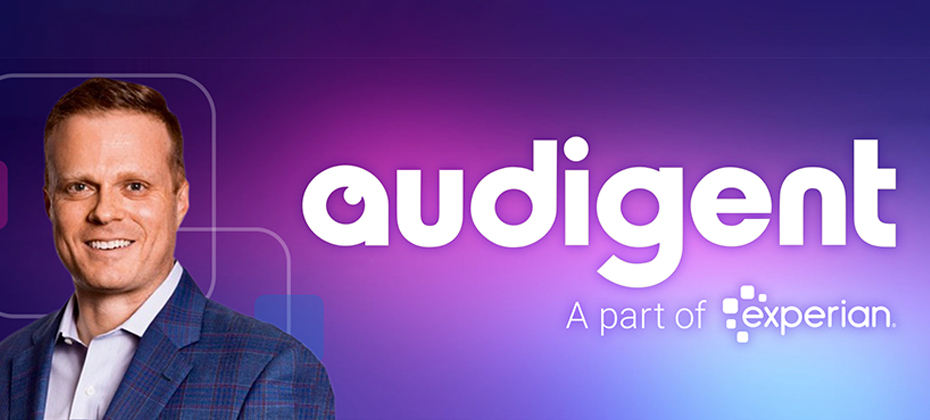
The advertising ecosystem has seen significant transformation over the past few years, with increased privacy regulation, changes in available signals, and the rise of channels like connected TV and retail media. These changes are impacting the way that consumers interact with brands and how brands understand and continue to deliver relevant messages to consumers with precision.   Experian has been helping marketers navigate these changes, and as a result, our marketing data and identity solutions underpin much of today’s advertising industry. We’re committed to empowering marketers and agencies to understand and reach their target audiences, across all channels. Today, we are excited to announce our acquisition of Audigent—a leading data and activation platform in the advertising industry.   With Audigent’s combination of first-party publisher data, inventory and deep supply-side distribution relationships, publishers, big and small, can empower marketers to better understand their customers, expand the reach of their target audiences and activate those audiences across the most impactful inventory.      I am excited to bring together Audigent’s supply-side network as a natural extension to our existing demand-side capabilities. Audigent’s ability to combine inventory with targeted audiences using first-party, third-party and contextual signals provides the best of all worlds, allowing marketers to deliver campaigns centered on consumer choices, preferences, and behaviors.    The addition of Audigent further strengthens our strategy to be the premier independent provider of marketing data and identity, ultimately creating more relevant experiences for consumers.   To learn more about Experian and Audigent, visit https://www.experian.com/marketing/ and https://audigent.com/.  

Dec 04,2024 by Scott Brown

test