
Stacked vs. Unstacked Car Insurance: Key Differences

Quick Answer
If you’re injured in an accident caused by an uninsured or underinsured driver, your policy may cover your medical costs up to a certain point. Stacking insurance allows you to increase that limit by combining coverage from multiple vehicles.

If you're in an accident with an uninsured or underinsured driver, your insurance may cover medical bills and property damage—but only up to your policy limits. If your state and insurer allow it, you may be able to increase those limits by combining coverage from multiple vehicles. This is known as stacking your insurance.
Stacked car insurance offers more robust protection by increasing your available coverage, while unstacked insurance keeps limits separate for each vehicle. Here's what to know.
What Is Stacked Car Insurance?
Each state has its own minimum car insurance requirements (see minimum coverage requirements by state). Depending on where you live, you may be required to purchase uninsured motorist coverage or a combination of coverage to protect against underinsured and uninsured drivers.
Even if stacked car insurance isn't required where you live, you may choose to purchase it for your own peace of mind. Stacked car insurance allows you to increase your coverage amount by combining coverage limits from multiple vehicles.
Learn more: How Much Car Insurance Do I Need?
Stacking on One Insurance Policy
This is when you stack coverage limits from multiple cars that are on the same insurance policy.
Example: Let's say your policy includes your car and your spouse's. Each vehicle is covered for up to $20,000 for bodily injuries caused by an uninsured or underinsured driver. Stacking your insurance allows you to combine that coverage to $40,000. That effectively doubles the amount that your insurer will pay if your claim is approved.
Stacking Across Multiple Insurance Policies
If you have more than one car, you might have two insurance policies in your name.
In this case, it may be possible to stack the coverage limits from both policies. If you get hurt in an accident caused by an uninsured/underinsured driver, you could combine your coverage limits to pay for resulting medical expenses.
Example: Using the $20,000 bodily injury limits from the above example, stacking across multiple policies would allow you to add coverage from the policy for the car you were driving during the accident ($20,000) to coverage from the car on the second policy in your name ($20,000) for $40,000 in total coverage.
Pros and Cons of Stacked Insurance
Stacked car insurance can provide benefits that could save you money.
Pros
-
It provides extra coverage. The main advantage of stacked auto insurance is that it increases your coverage amount if you have a run-in with a driver who doesn't have adequate insurance. The additional coverage could significantly reduce your out-of-pocket costs if you're involved in an accident that results in steep medical bills.
-
It could reduce risk. The Insurance Information Institute (III) reports that 1 in 3 drivers nationwide are uninsured or underinsured. If you live in a state with a high percentage of uninsured drivers, stacking may help you mitigate risk.
Stacked insurance won't help in all cases. Review the drawbacks before making a decision.
Cons
-
It's more expensive. The amount you'll pay depends on your state, policy and insurance carrier. One 2025 analysis by QuoteWizard found that stacking insurance in Florida, for example, resulted in an average increase of $168 per year.
-
Not all states allow drivers to stack their insurance. Even if it is allowed, some insurers may refuse to offer it.
-
You can only stack insurance to increase bodily injury coverage. Property damage coverage limits cannot be stacked.
States That Allow Insurance Stacking
The following states allow insurance stacking, according to The Zebra:
- Alabama
- Arkansas
- Colorado
- Florida
- Hawaii
- Indiana
- Kentucky
- Mississippi
- Missouri
- Montana
- Nevada
- New Hampshire
- New Mexico
- Ohio
- Pennsylvania
- Rhode Island
- South Carolina
- Vermont
- Virginia
- West Virginia
- Wisconsin
- Wyoming
States Where Stacking Is Only Available With Multiple Policies
- Delaware
- Georgia
- New Jersey
- New York
- North Carolina
- Oklahoma
- Oregon
- Tennessee
- Texas
- Utah
Stop overpaying for insurance
Answer some questions about your current plan and get matched to personalized quotes.
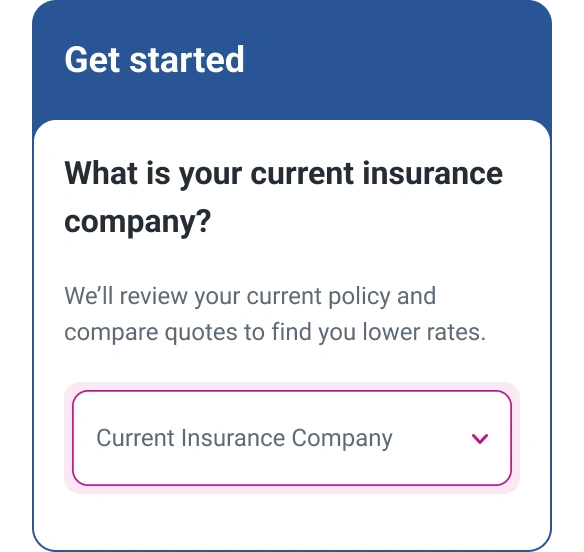
We’ll show you offers from our top insurance carriers and help you shop for better rates in the future.
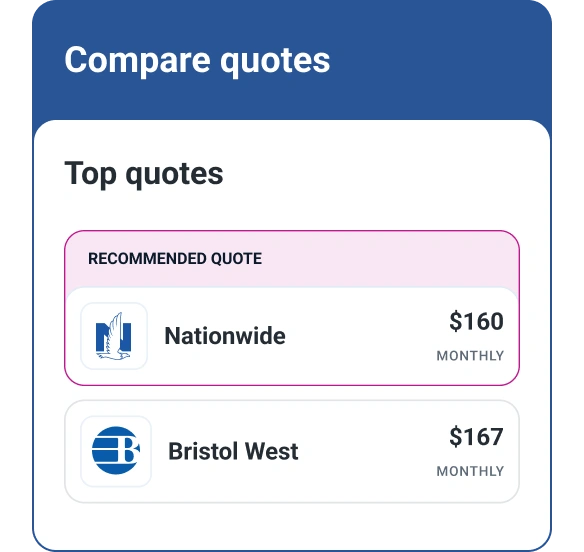
From switching your policy to canceling and requesting a partial refund on your old plan, we help you do it all.

What Is Unstacked Car Insurance?
If you have unstacked car insurance, it means you cannot combine your coverage limits. If one of your cars is involved in an accident caused by an uninsured or underinsured driver, your policy should state your bodily injury coverage limit for that vehicle.
Pros and Cons of Unstacked Insurance
Unstacked insurance has benefits to consider when deciding which policy is best.
Pros
-
It's less expensive. Higher coverage limits usually result in a more expensive policy. This is why unstacked car insurance is generally less expensive than stacked coverage. That may not be an issue for budget-conscious drivers who are comfortable assuming more risk.
Unstacked insurance has disadvantages you'll want to weigh as well.
Cons
-
It provides less coverage. The biggest drawback of unstacked insurance is that your coverage limits are lower. There's no way of knowing whether or not you'll be involved in an accident with an uninsured or underinsured driver. If you are, and you have unstacked coverage, you could face high out-of-pocket costs—especially if you're seriously injured.
Should I Get Stacked or Unstacked Insurance?
Every driver's insurance needs are different. Ask yourself the following questions when deciding between stacked versus unstacked insurance:
- Is stacked insurance allowed in your state?
- If it is permitted, have you found a reputable carrier that offers it?
- How much would stacked insurance increase your premiums?
When to Consider Stacked Car Insurance
- Your state has a high percentage of uninsured or underinsured drivers. According to the III, Mississippi, New Mexico and Washington, D.C., have the most uninsured motorists.
- You want to maximize your bodily injury coverage.
- You don't mind paying higher premiums.
When to Consider Unstacked Car Insurance
- You're looking to keep your insurance premiums low.
- You're comfortable with potentially higher out-of-pocket costs if you're involved in an accident with an uninsured or underinsured driver.
- Your state has a low percentage of uninsured or underinsured motorists. Maine, Utah and Idaho have the lowest numbers, according to the III.
Tip: After gathering multiple quotes, be sure to compare coverage limits and premiums to find the right auto insurance policy for you.
The Bottom Line
The main difference between stacked and unstacked auto insurance is that stacked coverage offers better protection against uninsured and underinsured motorists. If you or one of your passengers are hurt in an accident caused by one of these drivers, the medical bills could add up fast. Stacked car insurance allows you to combine coverage from multiple vehicles, which could significantly reduce your costs if you're injured in an accident.
No matter what type of car insurance you choose, maintaining healthy credit could help you avoid high premiums. In some states, insurers use credit-based insurance scores to help set premiums. You can check your credit report and FICO® ScoreΘ for free with Experian.
Don’t overpay for auto insurance
If you’re looking for ways to cut back on monthly costs, it could be a good idea to see if you can save on your auto insurance.
Find savings
About the author

Marianne Hayes
Marianne Hayes is a longtime freelance writer who's been covering personal finance for nearly a decade. She specializes in everything from debt management and budgeting to investing and saving. Marianne has written for CNBC, Redbook, Cosmopolitan, Good Housekeeping and more.
Read more from Marianne