Can You Get a Home Equity Loan With High Credit Card Debt?

Quick Answer
It may be possible to get a home equity loan if you have high credit card debt, but it’s also possible that your debt could disqualify you. If you do qualify, your lender may charge a higher rate of interest based on your credit card balances.

It's possible to qualify for a home equity loan with credit card debt, but high card balances can increase your debt-to-income ratio (DTI) and credit utilization. That can make it harder to qualify for the best rates and terms. Here's what you can expect if you're in this situation.
How Does a Home Equity Loan Work?
A home equity loan allows you to borrow against the equity you've built in your home. Your equity is the difference between the property's current market value and what you owe on your mortgage. If your home is worth $420,000, and you owe $230,000 on your loan, you have $190,000 in equity. Most lenders allow you to borrow up to 80% of your home's value (including your current mortgage balance).
A home equity loan is a type of second mortgage that uses your home as collateral. That means if you fail to repay the loan, the lender could foreclose on your house.
When you apply for a home equity loan, the lender will confirm the value of the house via a home appraisal. They'll also assess your credit history and ability to repay a new loan. That's where credit card debt could have an effect on your loan approval.
Learn more: Compare Current Home Equity Loan Rates
Can You Get a Home Equity Loan With High Credit Card Debt?
It's certainly possible to get a home equity loan with credit card debt, but your options may be limited. You might get stuck paying higher rates and fees, which can add up significantly over time.
Lenders typically require a credit score of at least 680 to qualify for a home equity loan. Others reserve their best interest rates for borrowers with a FICO® ScoreΘ of 720 or higher. Getting your credit score to that level may be difficult with high credit card debt. However, some lenders may be more willing to work with you if you have substantial home equity.
How Does Credit Card Debt Affect Home Equity Loan Approval?
Your credit health is a key factor that lenders consider when you apply for a home equity loan. They'll specifically look at your DTI and credit score, and credit card debt could have a negative effect on both of those factors.
Higher Debt-to-Income Ratio
Your debt-to-income ratio, or DTI, is the percentage of your gross monthly income currently being used for debt payments. Home equity lenders typically prefer a DTI of 43% or less, but high credit card debt can increase that number.
You can calculate your DTI by dividing your total monthly debt payments by your gross monthly income (use minimum payments for credit cards). Let's say your pretax monthly pay is $7,200, and your monthly debts look like this:
| Debt | Monthly Payment |
|---|---|
| Mortgage | $2,200 |
| Auto loan | $540 |
| Credit card 1 | $100 |
| Credit card 2 | $200 |
| Credit card 3 | $250 |
| Total | $3,290 |
Here's how to calculate your DTI:
-
Add up your monthly debt payments.
- $2,200 + $540 + $100 + $200 + $250 = $3,290
-
Divide your monthly debt total by your monthly gross income.
- $3,290 / $7,200 = 0.46
-
Multiply the result by 100 to get a percentage.
- 0.46 x 100 = 46%
A DTI this high could make it hard to qualify for a home equity loan. That's because lenders want reassurance that you can afford a new loan payment on top of what you're already paying.
Higher Credit Utilization and Potentially Lower Credit Scores
Your credit utilization rate reflects the amount of available credit you're currently using on revolving accounts, which include credit cards. High credit card balances can increase your utilization rate and, in turn, hurt your credit. That's because the total amount you owe makes up 30% of your FICO® Score.
Example: If your total credit limit across all your credit cards is $30,000, and you owe $15,000 all together, your credit utilization rate is 50%. This is considered a relatively high credit utilization ratio.
As far as your credit scores go, the lower your credit utilization, the better. Once it reaches the 30% mark, it usually starts to have a more pronounced negative effect on your credit. Those with the best credit scores tend to keep their credit utilization below 10%.
Ability to Afford the New Loan Payment
Lenders look at your overall financial situation, not just your credit card balances. They ultimately want to feel confident that you can handle a new loan payment—and that your existing expenses, including credit card payments, aren't stretching you thin.
They'll also consider your income sources to ensure you have steady, sufficient money coming in. You may have trouble qualifying if your debt weakens your ability to afford a new loan.
How to Improve Your Chances of Getting a Home Equity Loan
Here are some actionable ways to increase your odds of getting approved for a home equity loan, even if you have high credit card debt.
Improve Your Credit Score
Taking steps to increase your credit score can make you a more attractive borrower, whether you're applying for a home equity loan or any other type of financing. You could take a few simple steps toward that goal:
- Pay your bills on time every month. Your payment history makes up 35% of your FICO® Score, the score used by 90% of top lenders.
- Keep old accounts open. Closing old accounts reduces your available credit, which can increase your credit utilization rate and hurt scores. It can also eventually reduce the length of your credit history, which accounts for 15% of your FICO® Score.
- Limit new credit applications. Applying for new credit usually triggers a hard credit inquiry, which can result in a temporary drop in your credit score. That said, when you're rate shopping for a home equity loan, as long as you keep applications within a two-week period, you'll minimize credit score impact.
Get your FICO® ScoreΘ for free
Sign up and get instant online access to your FICO® Score for free.
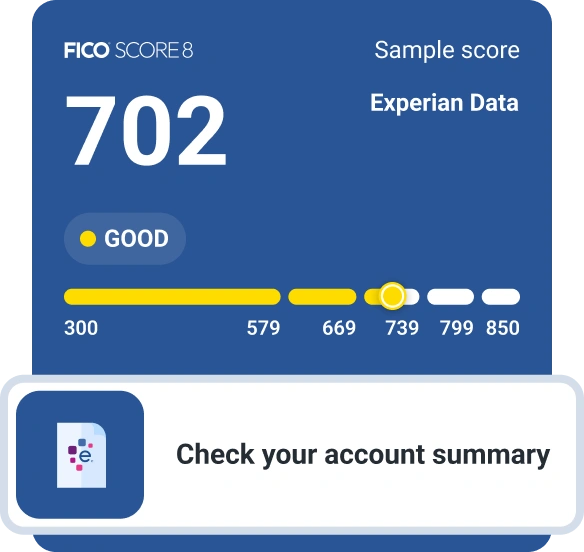
Checking your own credit won’t lower your credit scores.
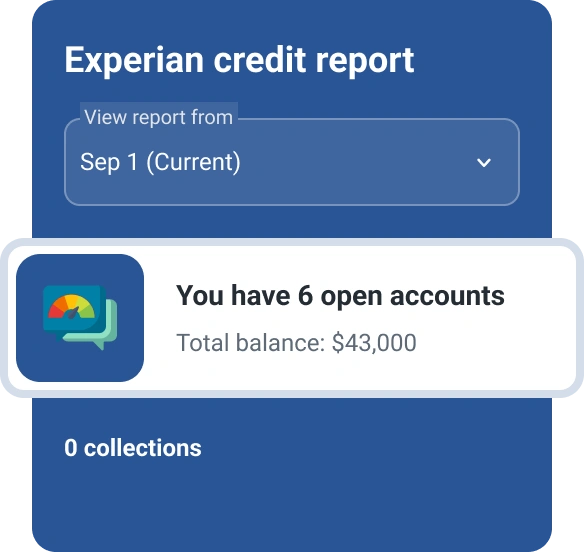
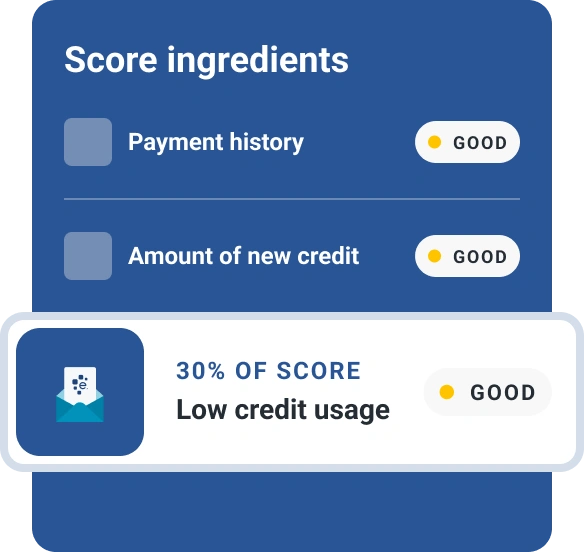
View specific factors that are affecting your score and how to improve it.
Pay Down Credit Card Balances Where Possible
Paying down credit card debt can improve your credit score and reduce how much you spend on interest. It might also make it easier to qualify for a home equity loan. Here are some potential ways to bring down your balances:
- Choose a debt repayment strategy like the debt snowball or debt avalanche.
- Consolidate your debt or consider a balance transfer credit card. However, keep in mind that it's best to limit new credit before applying for a new loan, so this strategy is typically best if your home equity loan is at least six months to a year off.
- Work with a nonprofit credit counselor.
Avoid Taking on Unnecessary New Debt
Assuming new debt can stretch your budget and make it even harder to pay off the balances you already have. Here are potential ways to avoid unnecessary debt:
- Build an emergency fund to reduce your dependence on credit cards.
- Revisit your budget to find extra opportunities to save money.
- Track your expenses to see where you might be able to cut back.
- Avoid lifestyle creep, which is when your spending increases as you make more money.
Frequently Asked Questions
The Bottom Line
It may be possible to get a home equity loan with credit card debt, but your options may be limited depending on your overall financial situation and the amount of equity you have in your home. Lenders may be reluctant to offer you a competitive interest rate, or approve your application at all.
Taking steps to pay down your debt and improve your credit score before applying can help put you in the strongest borrowing position. You can get your credit report and FICO® Score for free from Experian to see where you stand and where you may be able to improve.
Curious about your mortgage options?
Explore personalized solutions from multiple lenders and make informed decisions about your home financing. Leverage expert advice to see if you can save thousands of dollars.
Learn moreOn Ownup.com (NMLS# 1450805)

About the author

Marianne Hayes