 By LaToya Irby
8 Expenses You Should Not Put on a Credit Card
By LaToya Irby
Quick Answer
- It’s best to avoid using your credit card for transactions that come with high payment processing fees, cash advance penalties or debt risk.
- Carefully consider whether you want to risk interest charges and increasing debt before handing over your credit card.

Credit cards are a flexible and convenient payment tool. Using a credit card allows you to earn rewards, receive protection for purchases and access valuable perks. However, they're not the best option for certain expenses. Transactions you may want to avoid putting on a credit card include rent or mortgage payments, utilities and medical bills. Choosing another payment method can help you avoid unnecessary fees and expensive credit card debt.
1. Rent or Mortgage Payments
Many landlords accept credit cards for rent payments. However, you may have to pay a payment processing fee, often around 3% of the payment amount. These fees can quickly add up, especially because housing is a major expense for most households. And even if you earn rewards by using your credit card, you may wind up spending more in fees than you earn in rewards.
Better Ways to Pay
- Bank account payment (ACH transfer, electronic check)
- Cashier's check
- Money order
- Bill pay service
- Debit card, if there's no or a lower processing fee
Tip: Check with your landlord or property management company to confirm the rent payment options they offer. Some may not take money orders, for example.
Best credit cards of 2026
Compare cards from our partners with intro bonuses, cash back or points offers, and annual fees as low as $0.
Offers from our partners

Blue Cash Everyday® Card from American Express
Intro bonus:
As High As $200 Cash Back. Find Out Your Offer.
You may be eligible for as high as $200 cash back after spending $2,000 in purchases on your new Card in the first 6 months. Welcome offers vary and you may not be eligible for an offer. Cash back is received as Reward Dollars, redeemable for statement credit or for other select options. Terms Apply.
Intro APR:0% on Purchases and Balance Transfers for 15 months
Ongoing APR:19.74%-28.74% Variable
Rewards:
1% - 3% (cash back)
Earn 3% Cash Back on Groceries at U.S. supermarkets, on up to $6,000 per year in purchases (then 1%). 3% Cash Back on U.S. Online Retail purchases, on up to $6,000 per year in purchases (then 1%) 3% Cash Back on Gas at U.S. gas stations, on up to $6,000 per year in purchases (then 1%) Cash back is received as Reward Dollars that can be redeemed for a statement credit or for other select options.
Annual Fee:$0

Revel® Platinum Mastercard®
Ongoing APR:35.90% Fixed
Rewards:
N/A
Annual Fee:$49 - $125
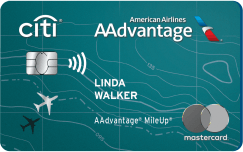
American Airlines AAdvantage® MileUp® Card
Intro APR:0% for 15 months on Balance Transfers
Ongoing APR:19.74% - 29.74% (Variable)
Rewards:
2x (Miles per dollar)
Earn 2 AAdvantage® miles for each $1 spent at grocery stores, including grocery delivery services. Earn 2 AAdvantage® miles for every $1 spent on eligible American Airlines purchases. Save 25% on inflight food and beverage purchases when you use your card on American Airlines flights
Annual Fee:$0
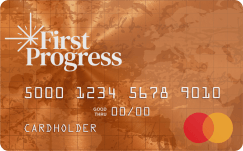
First Progress Select Secured Mastercard® Cash Back Rewards
Ongoing APR:17.74% Variable
Rewards:
1% - 10% (cash back)
Earn up to 10% Cash Back on everyday purchases at participating dining, grocery, retail, and other eligible merchants, plus 1% Cash Back on payments made to your First Progress Card.^^
Annual Fee:$39

Delta SkyMiles® Reserve American Express Card
Intro bonus:
As High As 125,000 Bonus Miles. Find Out Your Offer.
You may be eligible for as high as 125,000 Bonus Miles after you spend $5,000 in eligible purchases on your new Card in your first 6 months of Card Membership. Welcome offers vary and you may not be eligible for an offer.
Ongoing APR:19.74%-28.74% Variable
Rewards:
1x - 3x (Miles per dollar)
Earn 3X Miles on Delta purchases and earn 1X Miles on all other eligible purchases.
Annual Fee:$650

Delta SkyMiles® Platinum American Express Card
Intro bonus:
As High As 90,000 Bonus Miles. Find Out Your Offer.
You may be eligible for as high as 90,000 Bonus Miles after you spend $3,000 in eligible purchases on your new Card in your first 6 months of Card Membership. Welcome offers vary and you may not be eligible for an offer.
Ongoing APR:19.74%-28.74% Variable
Rewards:
1x - 3x (Miles per dollar)
Earn 3X Miles on Delta purchases and purchases made directly with hotels. Earn 2X Miles at restaurants worldwide including takeout and delivery in the U.S., and at U.S. supermarkets. Earn 1X Miles on all other eligible purchases.
Annual Fee:$350
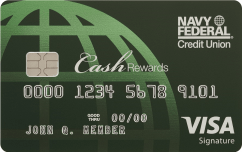
cashRewards Credit Card
Ongoing APR:10.65% - 18% Variable
Rewards:
1.5% (cash back)
When you open a cashRewards account, you'll earn 1.5% cash back on purchases
Annual Fee:$0
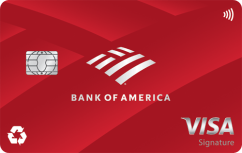
Bank of America® Customized Cash Rewards secured credit card
Ongoing APR:See Terms
Rewards:
1% - 6% (cash back)
Earn 6% cash back for the first year in the category of your choice. You’ll automatically earn 2% cash back at grocery stores and wholesale clubs, and unlimited 1% cash back on all other purchases. After the first year from account opening, you’ll earn 3% cash back on purchases in your choice category. Earn 6% and 2% cash back on the first $2,500 in combined purchases each quarter in the choice category, and at grocery stores and wholesale clubs, then earn unlimited 1% thereafter. After the 3% first-year bonus offer ends, you will earn 3% and 2% cash back on these purchases up to the quarterly maximum.
Annual Fee:$0
See all our best credit cards for 2026.
2. Utilities
Some utility providers also charge processing fees if you pay your bill using a credit card. The fee is often only a few extra dollars, but it can add up over time if you regularly pay your utility bills by credit card.
Better Ways to Pay
- Bank account
- Debit card
- Check
- Cash, if accepted, at a bill payment location
3. Income Taxes
Income taxes can also be a major expense for some people, particularly if you earned income as a contractor or small business owner and didn't pay enough in estimated taxes throughout the year. If you do pay your taxes with a credit card, you'll pay a fee of 1.75% or 1.85% depending on the provider.
Getting a low-rate personal loan or starting a payment plan with the IRS might be a better option than paying the fee plus taking on high-rate credit card debt.
However, if you can afford to pay off the balance in full and won't accrue interest, paying with a card might net you some rewards. For example, some of the best cash back cards offer 2% cash back on every purchase—slightly higher than the credit card processing fees.
Better Ways to Pay
- Bank account
- Check
- Money order
Learn more: How to Set Up an IRS Payment Plan
4. Medical Bills
Medical bills can be difficult to plan for and surprisingly expensive. Paying medical bills with a credit card might seem like a convenient option, and there are medical credit cards specifically for covering these types of bills. However, unless your card has an intro 0% annual percentage rate (APR) offer, you could accrue a significant amount of interest while paying off the balance.
In addition to paying interest, the high balance could also increase your credit utilization ratio and hurt your credit score. If you struggle to make your bill payments on time, the credit card issuer can report the late payment to the credit bureaus once you're 30 days past due.
Leaving medical bills off your credit card can protect your credit score, since many types of medical bills don't affect your credit score. Unpaid bills that get sent to collections won't appear in your credit report for a full year—and medical collections for under $500 don't get added to your credit report at all. Older medical collection accounts will be removed once they're paid.
Better Ways to Pay
- Bank account
- Debit card
- Check
- Payment plan
- Financial assistance or charity care, if available
Tip: Before putting a large medical bill on a credit card, ask your provider whether you qualify for financial assistance or an interest-free payment plan. This can help you make the expense more manageable without taking on high-interest credit card debt.
5. Cash Withdrawals
You can use your credit card to get a cash advance at an ATM or at the checkout, using a convenience check, from a bank teller or sometimes through your card issuer's app. It can be a quick and easy way to get extra cash to cover bills. However, cash advances should generally be a last resort.
When you get a cash advance, you may need to pay an additional cash advance fee. Cash advances also often have a higher APR than purchases or balance transfers, and interest typically starts accruing immediately, even if you regularly pay your credit card bill in full.
Better Ways to Pay
- Debit card at an ATM
- Bank withdrawal
- Early direct deposit
- Borrowing from family or friends
Learn more: How to Get Emergency Money
6. Peer-to-Peer (P2P) Payments
Peer-to-peer payment apps like Venmo and PayPal can be convenient to cover bills, split expenses with friends or pay for services. But they can also be expensive if you pay through them using your credit card.
You may be charged around 3% of the transaction amount for some transfers made with a credit card. Your card issuer might also treat the transaction as a cash advance, which means you won't earn rewards and could be charged additional extra fees and interest associated with the cash advance.
Better Ways to Pay
- Bank account
- Debit card
- Existing app balance
Learn more: Is It Safe to Use Peer-to-Peer Payments?
7. Online Bets
Online sports betting and gambling have grown in popularity. Whether you can use your credit card may depend on where you live, the betting platform and your card issuer. But even when it's an option, using your credit card can be risky because you're potentially taking on high-interest debt. Additionally, your card issuer might treat these transactions as cash advances, which means a cash advance fee, a higher APR and no grace period on interest.
Better Ways to Pay
- Bank account
- Debit card
8. Tuition
Some colleges and universities accept credit cards for tuition, school fees and other higher education costs. But the added payment processing fees can make using a credit card an expensive way to pay, and you'll pay a lot more in interest than you would using other methods.
Better Ways to Pay
- Financial aid, including federal student loans or scholarships
- Bank account
- Check
- Debit card
- School payment plan
Learn more: Options if You Didn't Receive Enough Financial Aid
The Bottom Line
Before using your credit card, check whether you'll be charged a transaction fee or whether the transaction could be treated as a cash advance. Make sure you can comfortably pay off the balance to avoid getting into debt.
Using a credit card when it makes sense can allow you to earn rewards and enjoy credit card benefits. If you're looking for the right card, Experian's card comparison platform lets you compare credit cards matched to your credit profile and spending habits.
Limited-time offer. Elevate every Hilton stay.
Unlock a world of elevated travel with the Hilton Honors American Express Aspire Card. Earn 200,000 Hilton Honors Bonus Points after you spend $6,000 in purchases within the first 6 months of Card Membership and enjoy premium benefits that make every stay more rewarding. Offer ends 01/13/27. Terms apply.
Learn more
On American Express’ website
Powered by


About the author
LaToya Irby
LaToya Irby is a personal finance writer who works with consumer media outlets to help people navigate their money and credit. She’s been published and quoted extensively in USA Today, U.S. News and World Report, myFICO, Investopedia, The Balance and more.
Read more from LaToya